%20Redacto%20logo_New.png)


5 Best Consently Alternatives & Competitors for Data Privacy


If you are searching for Consently alternatives, chances are you are not just looking for another cookie banner tool.
You are probably trying to solve a bigger compliance problem.
Maybe:
- your current CMP feels too limited
- cookie scanning is missing trackers
- you need better Google Consent Mode v2 support
- you are managing GDPR and DPDPA together
- or you want stronger consent logging and audit trails
I recently came across a team managing websites across Europe and India that started looking beyond Consently after their compliance workflows became harder to manage as traffic and regulations increased.
Consently is still a solid CMP for small businesses because it is affordable, beginner-friendly, and supports features like:
- multi-language consent banners
- policy generators
- DPDPA compliance
- Google Consent Mode v2
But it is not the perfect fit for every business.
In this guide, you will find:
- the best Consently alternatives for different use cases
- feature comparisons
- the pros and cons of each platform
- which CMP is best for SMBs, scaling teams, or advanced privacy workflows
- and how to choose the right platform based on your compliance needs and budget.
TL;DR
- Redacto is the best Consently alternative for DPDPA compliance, privacy governance, vendor risk management, and operational privacy workflows.
- CookieYes is the best low-cost alternative for simple GDPR and cookie consent compliance.
- Termly is best for beginners who also need privacy policy and legal document generators.
- Cookiebot is best for advanced cookie scanning, automated categorization, and consent enforcement.
- iubenda is best for businesses managing compliance across multiple countries and regulations.
What To Look For In A Consently Alternative?
Here are the things you should actually check before switching to a Consently alternative:
- Google Consent Mode v2 support because a weak setup can break your Google Ads tracking and analytics data.
- Cookie scanning quality because some CMPs completely miss third-party trackers and scripts running on your website.
- Consent logging because you should be able to prove when and how user consent was collected.
- DPDPA support because many CMPs still mainly focus on GDPR and ignore India-specific compliance workflows.
- Multi-language support if your website handles users across different countries and regions.
- Prior consent blocking because trackers should not load before users actually accept cookies.
- Ease of setup because you should not need a developer every time you update consent settings.
- Pricing scalability because some tools become expensive very quickly once your traffic or domains increase.
- Policy generators if you also want privacy policies, cookie policies, and legal pages in one platform.
- DSAR and governance workflows if your compliance needs go beyond basic cookie banners.
- Integrations with Shopify, WordPress, GTM, and analytics tools because manual setups become difficult to manage later.
- Audit readiness because privacy compliance is not only about collecting consent but also proving compliance when needed.
5 Best Consently Alternatives and competitors for Data Privacy
1. Redacto — Best Consently Alternative for DPDPA Compliance & Privacy Operations
If your business only needs a simple cookie banner, Consently may still be enough.
But if you are handling larger privacy operations across teams, vendors, audits, and multiple regulations, you will probably need something broader.
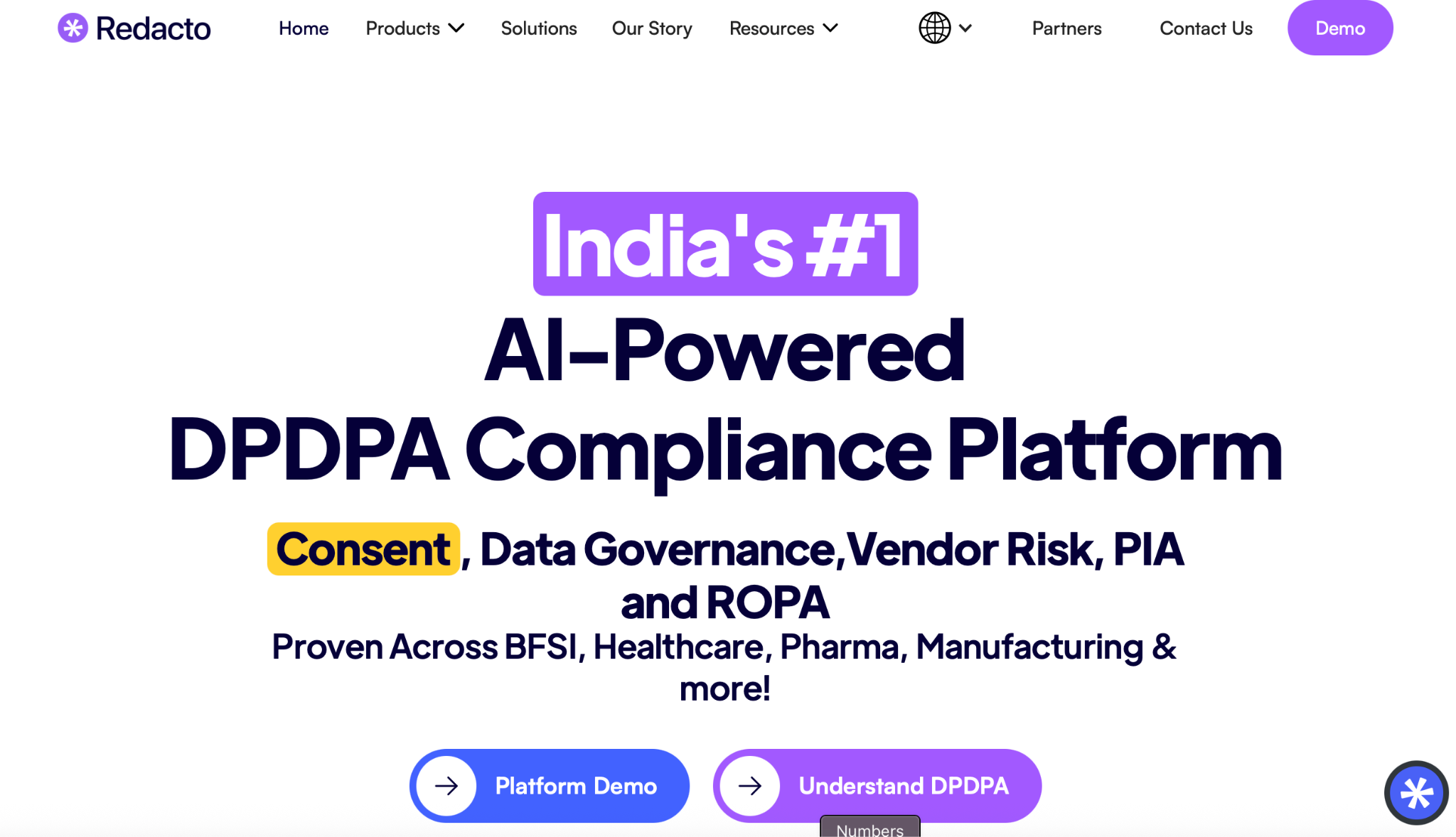
Redacto is an India-first AI DPDPA compliance platform built for businesses that need more than basic consent collection.
Along with consent management, it also focuses on governance, vendor risk, DSAR workflows, breach management, and operational privacy compliance.
The platform is positioned more as a full privacy operations and governance system instead of only a lightweight CMP.
Key Features
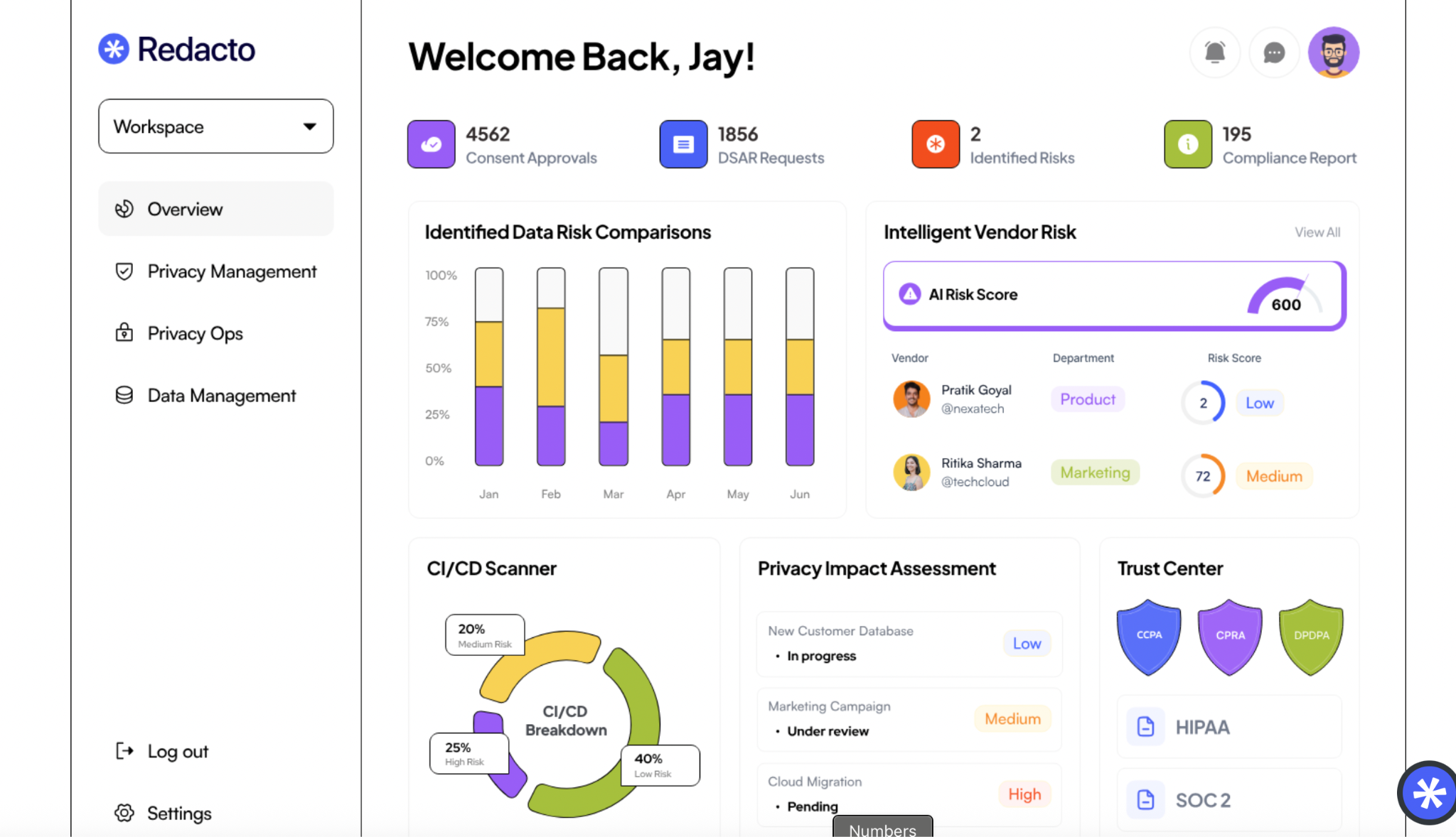
- Redacto supports multilingual DPDPA consent workflows, which is useful if your business collects consent across different Indian regions and languages.
- The platform includes AI-assisted Privacy Impact Assessments, so your team spends less time handling compliance documentation manually.
- You can manage vendor risk and third-party privacy assessments directly inside the platform instead of using separate workflows.
- Redacto also supports DSAR management, making it easier to handle user data access or deletion requests.
- The platform includes breach notification and incident management workflows for compliance tracking and audits.
- It can discover and map sensitive data across systems, which helps businesses understand where customer data actually exists.
- Redacto also supports 7000+ integrations, making it easier to connect with existing consent and compliance systems.
- You also get centralized audit dashboards along with SaaS, private cloud, and on-prem deployment support.
What Makes Redacto Different From Consently?
Pros
- Strong DPDPA-focused compliance workflows
- Broader governance and privacy operations support
- AI-powered automation reduces manual compliance work
- Includes vendor risk management and DSAR workflows
- Supports multilingual consent management
- Large integration ecosystem
Cons
- More advanced than what smaller websites may actually need
- Pricing is not publicly transparent
- May feel heavier compared to lightweight CMP tools
Best For
- BFSI companies
- Healthcare and HealthTech businesses
- Enterprises handling sensitive customer data
- Companies preparing for DPDPA operational compliance
- Teams needing governance and vendor risk workflows beyond cookie banners
If you are simply looking for a low-cost cookie banner tool, Redacto will probably feel too advanced.
But if your business is moving into broader privacy operations, DPDPA governance, audit readiness, vendor assessments, and operational compliance workflows, Redacto is one of the strongest Consently alternatives currently focused on the Indian privacy market.
2. CookieYes — Best Budget-Friendly Alternative to Consently
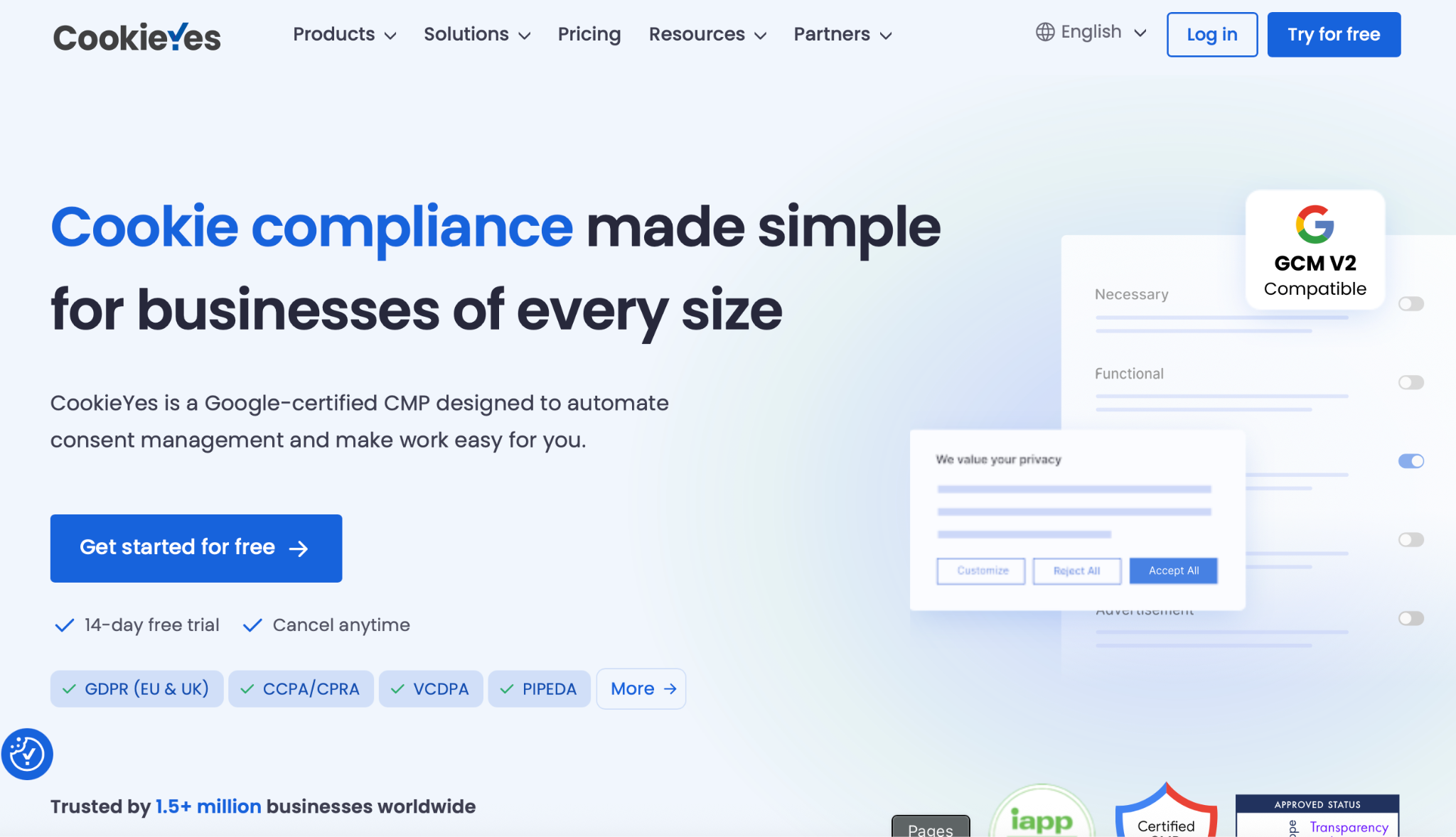
If you are moving away from Consently but still want something lightweight and easy to manage, CookieYes is probably the closest match.
The platform is mainly built for businesses that do not want to spend weeks configuring a CMP just to become compliant.
You install the banner, connect your website, and CookieYes handles things like cookie scanning, consent logging, auto-blocking, and consent updates in the background.
It also supports:
- GDPR
- CCPA/CPRA
- VCDPA
- PIPEDA
- Google Consent Mode v2
- IAB TCF v2.3
So if your main goal is handling website consent properly without moving into heavy enterprise privacy software, CookieYes fits that use case well.
Key Features
- CookieYes automatically scans your website for cookies and keeps scanning monthly, so you do not have to manually check whether new trackers were added later.
- The platform can automatically block non-essential cookies before users give consent, which is important if you run ad scripts, analytics tools, or marketing trackers.
- You also get centralized consent logs, which makes it easier to keep records of user consent instead of managing it manually.
- If you rely on Google Ads or Analytics, CookieYes supports Google Consent Mode v2 and integrates directly with Google Tag Manager.
- The platform also works with WordPress, Shopify, and Wix, so setup usually stays simple even if you are not technical.
What Makes CookieYes Different From Consently?
CookieYes and Consently are actually very close in terms of audience. Both are mainly designed for SMBs that want quick compliance without enterprise complexity.
The main difference is that CookieYes focuses more heavily on automated consent management and ecosystem integrations.
For example, CookieYes includes:
- scheduled monthly cookie scans
- stronger Google ecosystem integrations
- IAB TCF v2.3 support
- cookie auto-blocking workflows
while Consently focuses more on:
- lightweight setup
- multilingual DPDPA consent workflows
- simple compliance management
Pros
- Monthly cookie scanning reduces manual compliance work later
- Better fit if you rely heavily on Google Ads or Analytics tracking
- Auto-blocking helps prevent trackers from loading before consent
- Works well for Shopify and WordPress websites
- Strong balance between automation and simplicity
Cons
- Google Consent Mode and Google Ads integrations can still become confusing during setup for non-technical users.
- Cookie scanning may occasionally fail because of caching or hosting-related conflicts that require manual troubleshooting.
- Some users mentioned small usability limitations around managing older cookie scan results.
- Businesses wanting broader privacy governance workflows like vendor assessments or DPIA management may outgrow the platform later.
- Advanced operational privacy workflows are limited compared to larger compliance platforms.
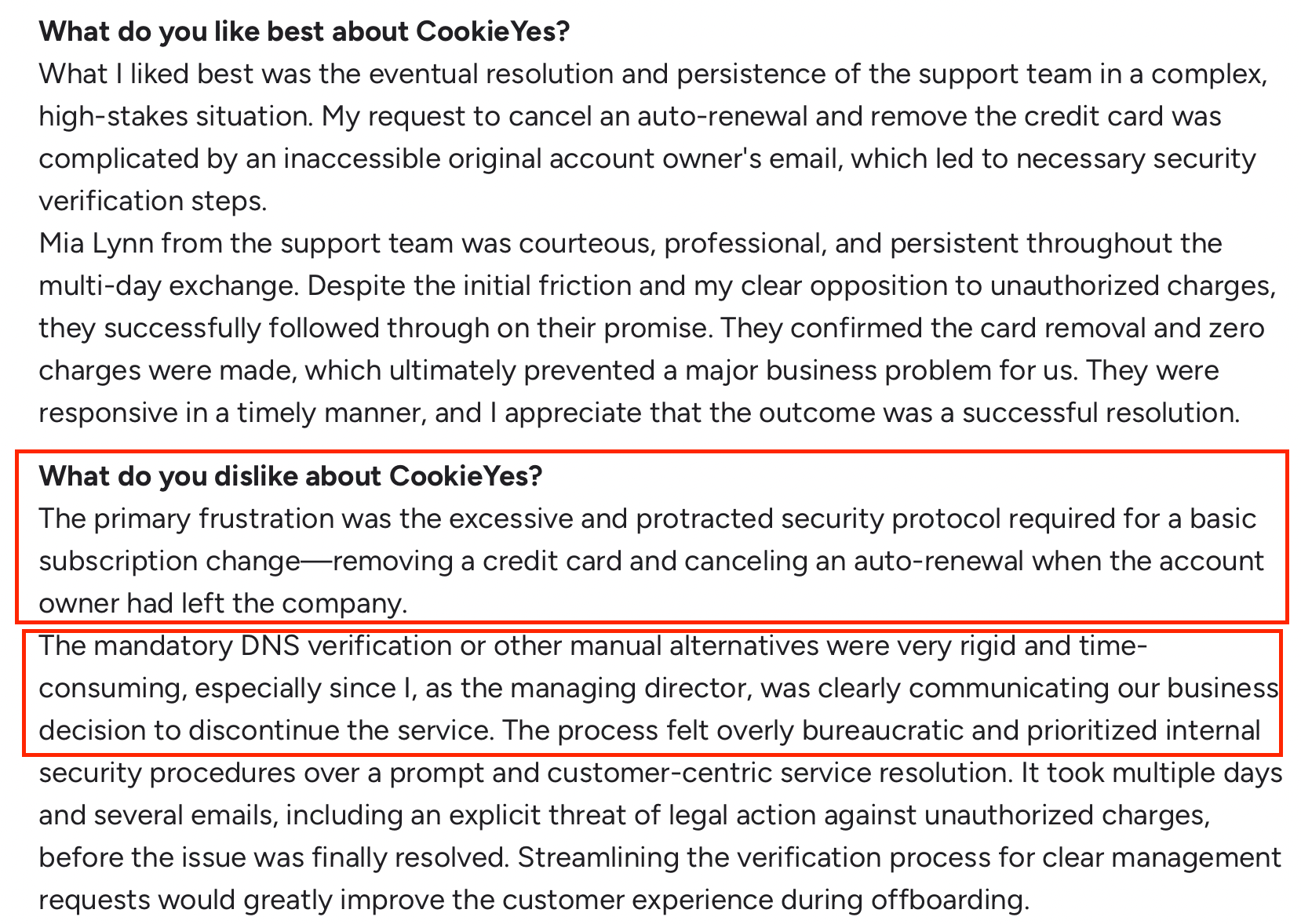
- Certain account management and verification workflows can feel overly strict during billing or ownership-related changes.
Best For
CookieYes is best for:
- ecommerce stores
- agencies
- WordPress websites
- Shopify stores
- SMBs that want more automation than Consently without moving into enterprise privacy platforms
If you like Consently’s simplicity but want stronger automation, better Google integrations, and more mature consent management workflows, CookieYes is one of the safest alternatives to consider.
It keeps the setup lightweight while solving some of the operational gaps businesses usually run into as website compliance grows.
3. Termly — Best Consently Alternative for Policy Generation & Beginner-Friendly Compliance
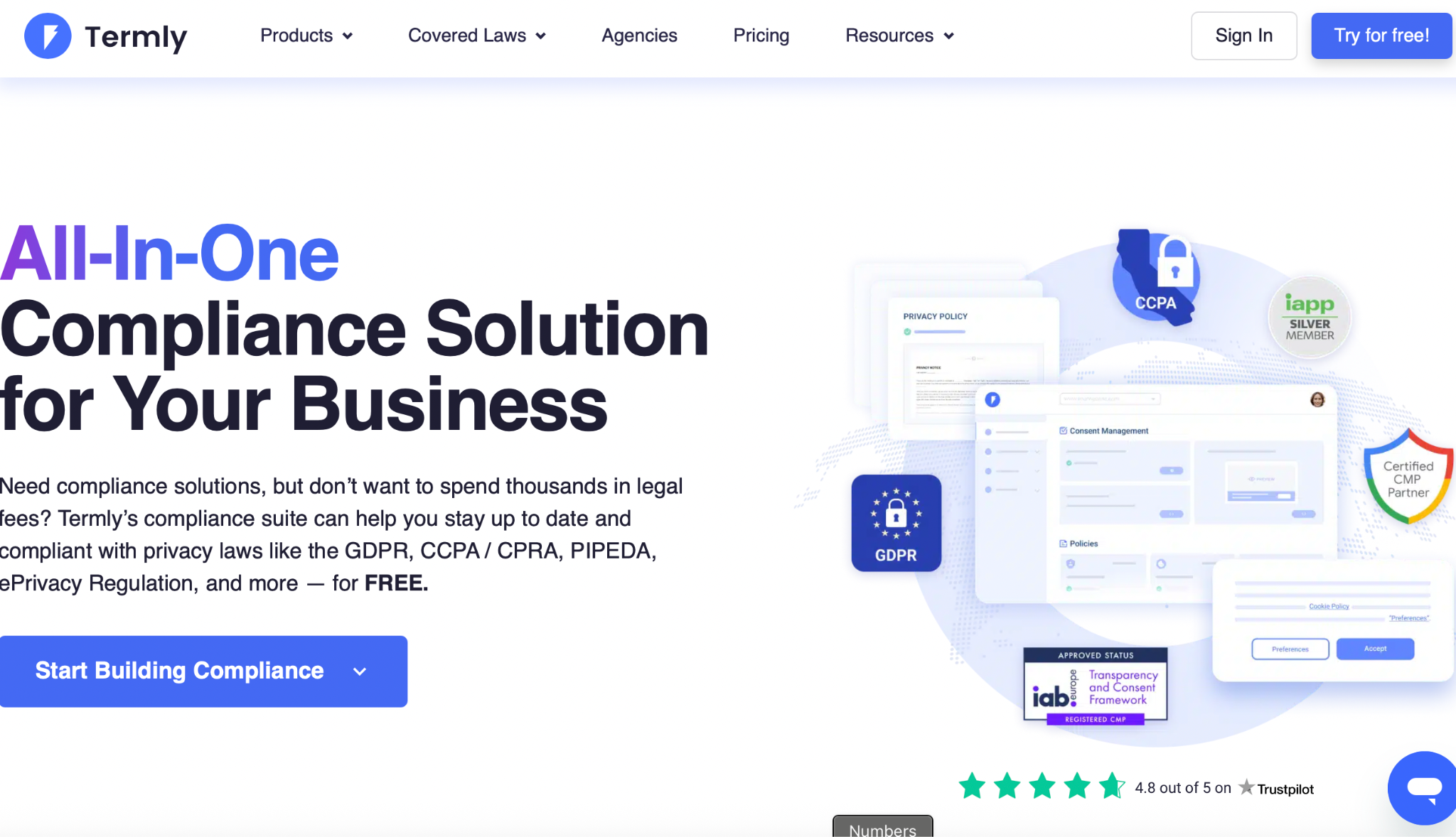
If you are looking for something more complete than a basic CMP, but still easy enough to manage without legal or technical teams, Termly is one of the strongest alternatives to Consently.
The platform combines:
- cookie consent management
- legal policy generators
- DSAR tools
- Google Consent Mode
- privacy compliance workflows
inside one dashboard.
That is the biggest reason many small businesses and agencies prefer it over lightweight CMPs.
Instead of using one tool for cookie banners and another for privacy policies, Termly tries to keep everything together in one compliance stack.
It currently supports laws like:
- GDPR
- CCPA/CPRA
- VCDPA
- PIPEDA
- POPIA
- Quebec Law 25
- ePrivacy Directive
- and multiple US state privacy laws
Key Features
- Termly lets you generate privacy policies, cookie policies, terms and conditions, disclaimers, shipping policies, return policies, and other legal pages directly inside the platform instead of using separate tools.
- The CMP also includes cookie scanning, cookie banners, consent logging, DSAR forms, Google Consent Mode v2 support, and IAB TCF 2.3 implementation.
- One thing Termly focuses heavily on is reducing manual compliance work. For example, the platform automatically updates policies when regulations change instead of forcing you to rewrite documents manually.
- It also stores EU user data inside the EU/EEA, which may matter if your business handles European users.
What Makes Termly Different From Consently?
The main difference is that Termly focuses much more heavily on legal policy generation and all-in-one compliance management.
Consently is more focused on:
- lightweight cookie consent
- multilingual banners
- simple website compliance
Termly focuses more on:
- legal document automation
- broader privacy law coverage
- DSAR workflows
- centralized compliance management
Pros
- Good option if you want both cookie consent and legal policies in one platform
- Automatically updates policies when regulations change
- Strong coverage across GDPR, US privacy laws, and international regulations
- Includes DSAR forms and broader compliance tooling beyond banners
- Better fit for agencies managing multiple compliance requirements together

Cons
- Banner and policy customization can still feel limited for businesses wanting highly custom legal workflows.
- Analytics and reporting around consent behavior are not very advanced yet.
- Managing multiple domains or websites can occasionally become confusing.
- Businesses needing highly specialized regional privacy policies may still need manual adjustments.
- There are issues when downgrading from a paid plan to the free plan, including banner removal and delayed support responses.
- Larger enterprises needing governance workflows, vendor risk management, or advanced operational privacy controls may outgrow the platform later.
Best For
Termly is best for:
- startups
- ecommerce brands
- agencies
- creators
- SMBs that want compliance workflows and legal policies together instead of managing multiple tools separately
If Consently feels too limited because you also need privacy policies, DSAR forms, legal pages, and broader compliance coverage, Termly is one of the most practical alternatives available.
It is especially useful for businesses that want compliance to stay simple without hiring legal teams or stitching together multiple tools.
4. Cookiebot — Best Consently Alternative for Advanced Cookie Scanning & Automation
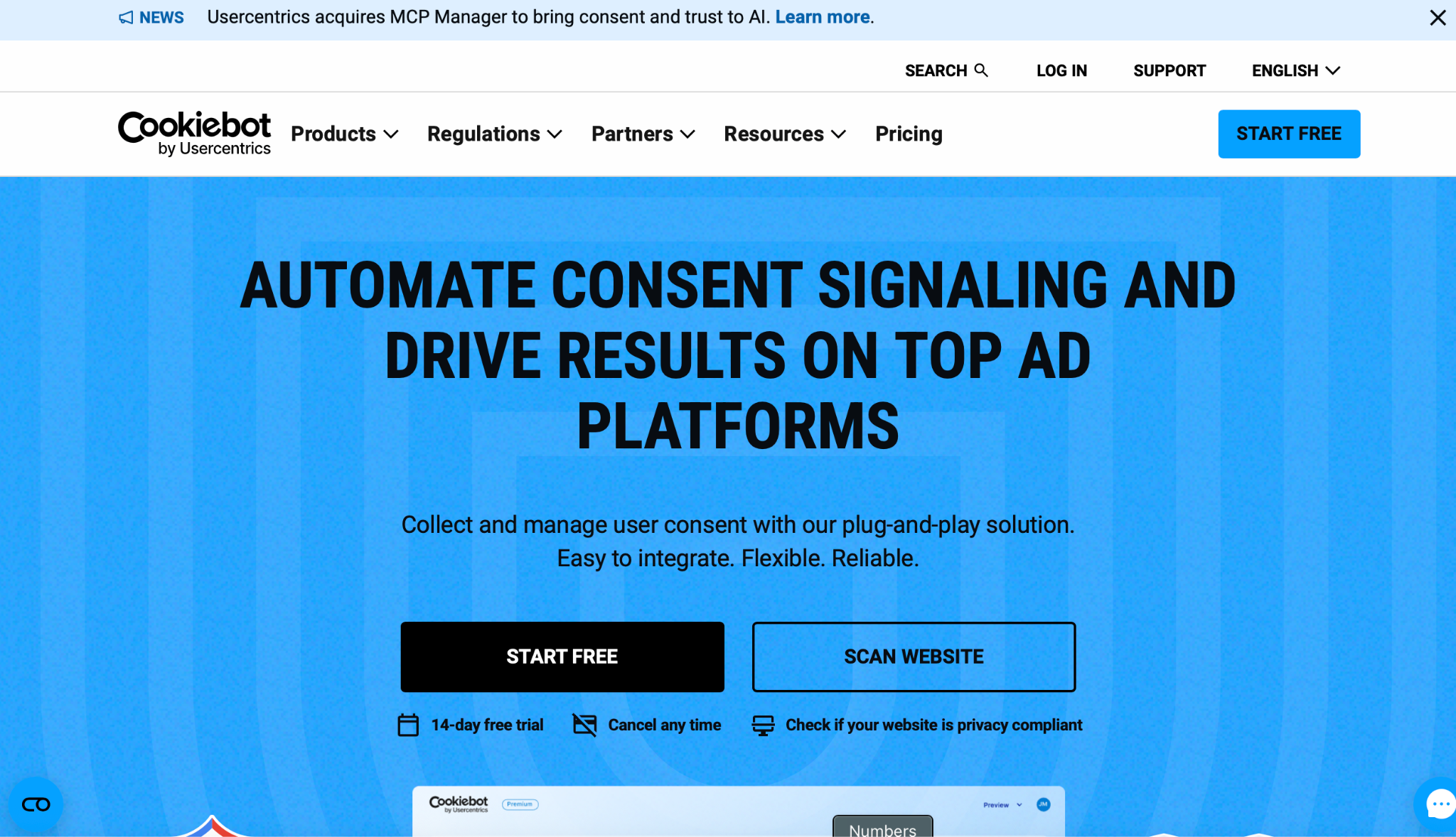
If your main problem with Consently is cookie detection and tracker management, Cookiebot is one of the strongest alternatives available.
The platform focuses heavily on automated scanning, consent signaling, and ongoing compliance maintenance instead of only showing a cookie banner on your website.
Cookiebot is now part of the Usercentrics ecosystem and is widely used by businesses that manage:
- multilingual websites
- multiple trackers
- ad-tech platforms
- complex analytics setups
The platform currently supports:
- GDPR
- CCPA
- LGPD
- VCDPA
- Google Consent Mode
- Microsoft UET Consent Mode
- IAB TCF v2.3
It is also a Google-certified CMP partner with Gold Tier status.
Key Features
- Cookiebot automatically scans your website every month and detects cookies and trackers running across your pages, which helps reduce manual compliance work later.
- The platform focuses heavily on consent signaling for advertising and analytics platforms, so it works well if your website relies heavily on Google Ads, Analytics, GTM, or ad-tech integrations.
- You also get granular consent controls, which lets users choose exactly what type of tracking they want to allow instead of only accepting or rejecting everything.
- One thing many businesses specifically like about Cookiebot is the automation depth around scanning and categorization.
Cookiebot also supports:
- multilingual banners
- WordPress and Wix integrations
- customizable consent banners
- detailed compliance reports
- automated tracker categorization
What Makes Cookiebot Different From Consently?
The biggest difference is automation depth.
Consently mainly focuses on:
- lightweight consent management
- simple compliance workflows
- beginner-friendly setup
Cookiebot focuses more on:
- automated cookie discovery
- consent signaling
- ad-tech integrations
- continuous compliance scanning
- granular consent management
Pros
- Better fit for websites using multiple trackers and ad platforms
- Monthly automated scanning reduces ongoing compliance work
- Strong Google Ads, GTM, and analytics integrations
- Granular consent controls improve consent transparency
- Good option for multilingual websites
- Strong automation after initial setup
Cons
- Interface and dashboard feel outdated compared to newer CMP platforms.
- Subscription costs increase significantly for high-traffic or multi-domain setups.
- Banner customization controls still feel limited for some users.
- Initial setup and fine-tuning can feel technical for beginners.
- Website loading speed can be slightly impacted because Cookiebot runs as a third-party script.
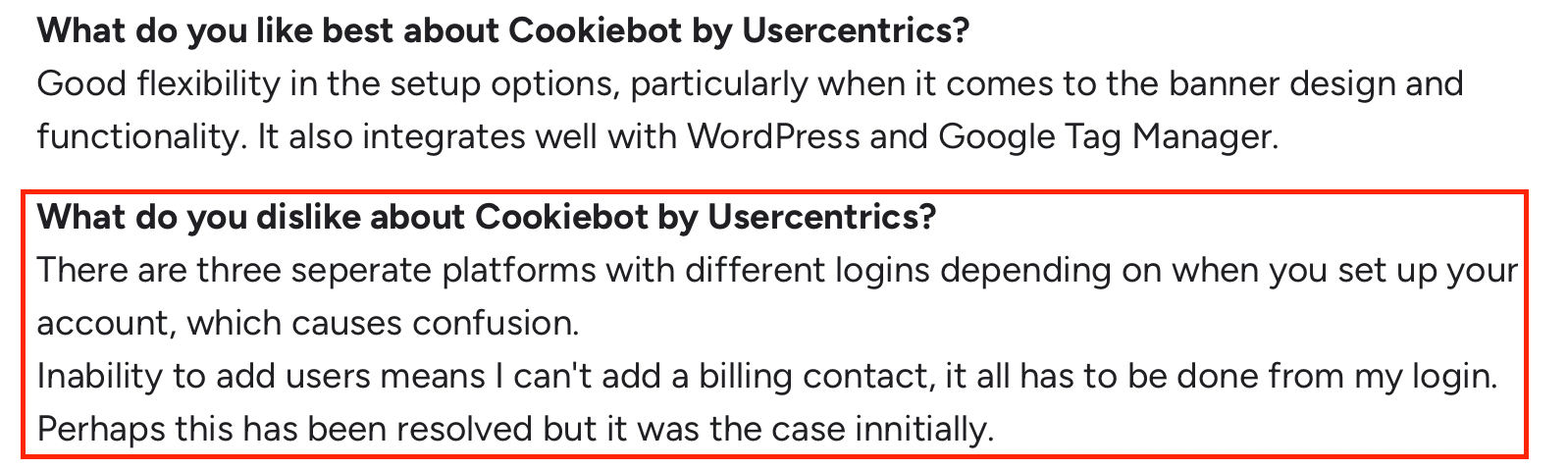
- User management and multi-instance workflows can become confusing.
- Login and account management experience feels unnecessarily complicated for some users.
- Cookiebot detects issues, but remediation still requires manual fixes by the team.
Best For
Cookiebot is best for:
- marketing-heavy websites
- ecommerce brands
- multilingual websites
- businesses relying on Google Ads and Analytics
- websites managing large numbers of cookies and third-party trackers
If your biggest challenge is managing trackers, consent signaling, and ongoing cookie compliance at scale, Cookiebot is a much stronger option than basic CMPs.
It is especially useful for businesses where compliance and marketing performance need to work together without constantly breaking analytics and ad tracking setups.
5. iubenda — Best Consently Alternative for International Privacy Compliance
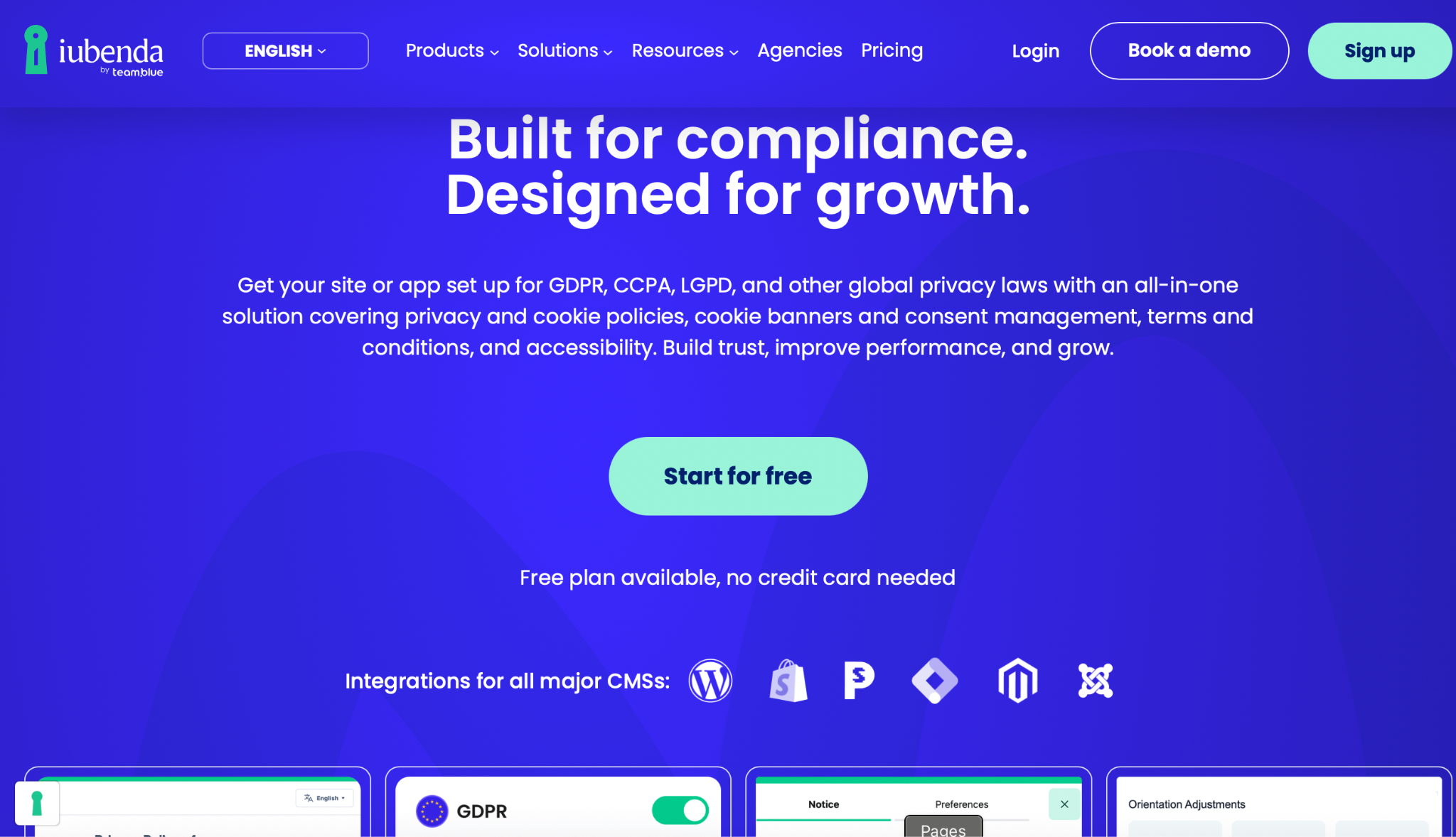
If your business operates across multiple countries, iubenda is one of the strongest alternatives to Consently.
The platform is built more like a complete compliance ecosystem instead of only a cookie banner tool. Along with consent management, iubenda also covers:
- privacy policies
- cookie policies
- terms and conditions
- accessibility compliance
- consent databases
- prior consent blocking
This makes it useful for businesses managing privacy compliance across different regions and regulations at the same time.
iubenda currently supports laws like:
- GDPR
- UK GDPR
- ePrivacy Directive
- CCPA and US privacy laws
- LGPD
- FADP Switzerland
The platform also supports 27 languages and integrates with major CMS platforms.
Key Features
- iubenda automatically blocks cookies before consent is collected, which helps businesses avoid compliance gaps caused by trackers loading too early.
- The platform also keeps consent records and syncs directly with Google Consent Mode, which matters if your marketing stack relies on Google Ads or Analytics.
- One thing iubenda focuses heavily on is keeping compliance workflows centralized. Instead of using separate tools for policies, consent banners, and legal pages, you manage everything from one dashboard.
The platform also includes:
- privacy and cookie policy generators
- terms and conditions generators
- customizable consent banners
- consent database management
- server-side tracking support
- multilingual compliance workflows
What Makes iubenda Different From Consently
The biggest difference is global compliance depth.
Consently is mainly focused on:
- simple consent management
- lightweight compliance workflows
- DPDPA-oriented website compliance
iubenda focuses more on:
- international compliance operations
- centralized legal documentation
- multi-region consent workflows
- scalable compliance management
Pros
- Better fit for businesses operating across multiple countries
- Keeps policies, consent banners, and legal workflows in one platform
- Strong Google Consent Mode integration
- Prior consent blocking helps reduce compliance gaps
- Good option for agencies and multi-site businesses
- Strong international privacy law coverage
Cons
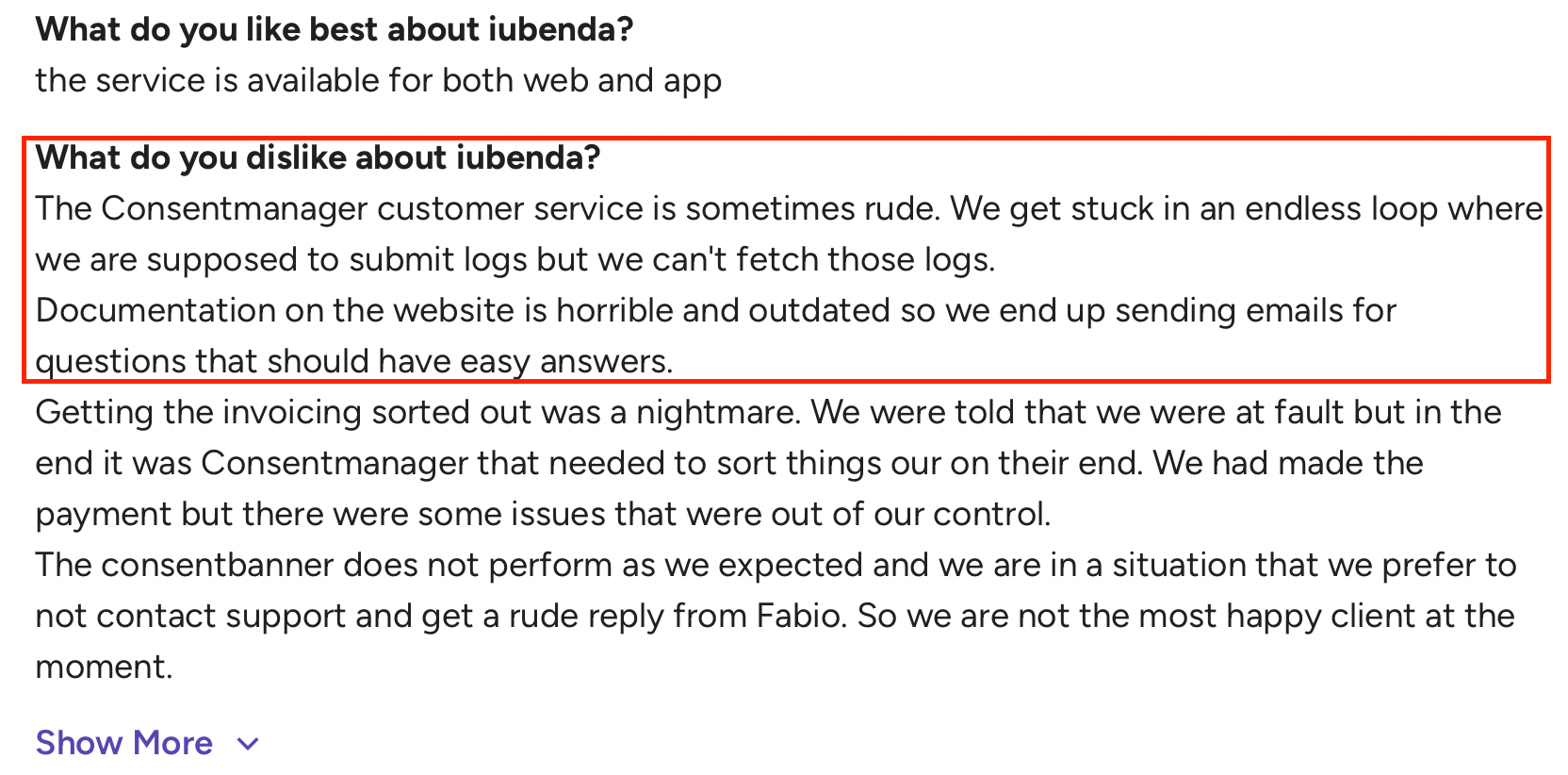
- WordPress plugin labels and dashboard terminology feel inconsistent.
- Integration setup requires adding code across multiple locations.
- Documentation feels outdated and unclear in some areas.
- Custom CSS and embedding controls can feel finicky.
- Admin interface has a learning curve for advanced configurations.
- Advanced workflows are not fully plug-and-play.
- Billing and invoicing workflows can become frustrating.
- Consent banner behavior may require additional troubleshooting in some setups.
- Support quality and responsiveness can feel inconsistent.
Best For
iubenda is best for:
- agencies
- ecommerce brands
- international businesses
- SaaS companies
- businesses managing multiple websites and privacy regulations together
If your business is growing beyond simple cookie consent and you need one place to manage policies, consent records, legal documents, and international compliance workflows, iubenda is one of the strongest alternatives to Consently.
It is especially useful for businesses handling multiple regulations across different countries without wanting separate tools for every compliance task.
Conclusion
Consently is still a good fit for businesses that simply want an easy and affordable way to manage cookie consent.
But privacy compliance usually does not stay simple for long.
As websites grow, teams often start dealing with:
- multiple privacy laws
- audit requirements
- consent tracking issues
- DSAR requests
- vendor reviews
- and more operational compliance work across teams
That is usually where lightweight CMPs start feeling limited.
And honestly, this is why there is no single “best” Consently alternative for everyone.
- Some businesses only need better cookie scanning and automation.
- Some need legal policy management.
- Some need stronger international compliance coverage.
- And some need full privacy operations and governance workflows.
So before choosing a platform, the better question to ask is:
“Will this tool still work for us as our compliance requirements become more complex?”
That answer will usually make the decision much easier.
Redacto is one of the few India-focused platforms built specifically for DPDPA compliance operations, including consent management, vendor risk assessments, DSAR workflows, privacy impact assessments, audit readiness, and governance management in one system.
You can book a demo to see how the platform handles real compliance operations at scale instead of only front-end consent collection.