%20Redacto%20logo_New.png)


11 Best Vendor Assessment Softwares For Enterprises in India


A vendor questionnaire can come back complete while the real risk stays hidden. You and I can see the problem when procurement records the contract but privacy does not record the data flow. Security may approve the vendor while the ROPA still shows an old processor or no processor at all.
Section 8(2) of the Digital Personal Data Protection Act, 2023 and Rule 6 of the Digital Personal Data Protection Rules, 2025 place processor work inside the Data Fiduciary’s compliance duty. Vendor intake must therefore connect to data mapping and review. Remediation needs an owner. Approval needs evidence.
This guide compares 11 vendor assessment softwares for that job.
Disclosure: We build Redacto. I still judged it by the same ROPA link and decision trail used for every tool here.
TL;DR - 11 Best Vendor Assessment Softwares
- Redacto - Best for DPDPA vendor assessment linked with data discovery and PIA records
- MetricStream - Best for enterprise risk teams with several risk domains
- OneTrust - Best for global privacy and third-party management in one program
- ServiceNow TPRM - Best for companies that already run risk work in ServiceNow
- UpGuard Vendor Risk - Best for continuous cyber monitoring across a vendor estate
- Privy by IDfy - Best for India-led privacy workflows with vendor checks
- LogicGate Risk Cloud - Best for teams that want to configure their own assessment process
- SecurityScorecard - Best for security ratings and vendor cyber signals
- SAP Ariba Supplier Risk - Best for SAP procurement teams
- Sprinto - Best for compliance teams that want vendor discovery and reassessment triggers
- Scrut - Best for cloud companies linking third-party risk with a control program
How I evaluated Vendor Assessment Software
I judged each tool by the work it can carry from vendor intake to a review record. A score alone is not enough. The system must show what data the vendor receives and why. It must name who accepted the risk. Changes after approval also belong in the record.
- Assessment logic: Can the team change questions by service and risk tier? Do data class and access alter the review?
- ROPA connection: Can vendor records link to processing activities and systems? Can the record also show purpose and data flow?
- Decision trail: Does the system retain answers and evidence? Can it also show approvals and exceptions? Review dates must remain visible.
- Monitoring: Can a change in access or cyber posture start a new review?
- India fit: Can the workflow support DPDPA duties without treating a global template as Indian law?
11 Best Vendor Assessment Softwares Detailed Comparison Table
Prices are indicative on 18 August 2026. Enterprise quotes change with vendor count, modules, users, and implementation.
1. Redacto
Redacto connects vendor assessment with the privacy record that gives the assessment context. Its Vendor Risk Management capability can sit beside AI-Driven Data Discovery & Mapping, PIA Automation, and Audit & Reporting.
A team can record the processor and map the data it receives. It can then assign a tier and route the review. The decision stays in the record.
This matters for ROPA work because a vendor name alone says little. The record needs the processing purpose and data categories. It should also name the systems and transfer path. Add the owner and retention trigger. Redacto is built for Indian the privacy function that want those facts near the vendor assessment.
Features
- Vendor intake and risk records: The intake captures the vendor owner and service. It also records the data involved and the review status so the assessment starts with business context.
- AI-Driven Data Discovery & Mapping: Discovery maps personal data to systems and vendors. The privacy team can use that map to confirm which processor relationships belong in the ROPA.
- Privacy Impact Assessment Automation: A team can route PIA questions to legal and security owners. Decisions and approvals remain linked to the processing change under review.
- Audit & Reporting: Reporting exports the assessment record and its approval trail. This gives reviewers evidence of who assessed the vendor and what happened next.
- Unified Consent Manager and Automated DSAR Management: These modules connect vendor records with consent and rights workflows. That link helps teams trace which processor may need to act after a withdrawal or request.
Pricing:
License-based; Contact sales / demo-based. Scope depends on licensed modules and deployment needs.
Pros
- Connects vendor review with DPDPA operations
- Keeps data mapping near the risk record
- Gives the privacy function one evidence path across PIA and vendor work
- Uses current India-first workflows
- Supports regulated teams in BFSI and healthcare
Cons
- Publishes no price for budget comparison
- Has less multi-jurisdiction depth than OneTrust
- Offers fewer public case studies than established GRC suites
- Needs legal owners to set the assessment standard
- Cannot replace contract or risk-acceptance judgment
Fit
Choose Redacto when the vendor review must update a DPDPA evidence system. When a global company spans regions, OneTrust can cover GDPR, support US state-law work, and keep one program model.
Who should not choose Redacto: A multinational team seeking one mature suite for many privacy regimes should assess OneTrust or Securiti before choosing an India-first platform.
2. MetricStream
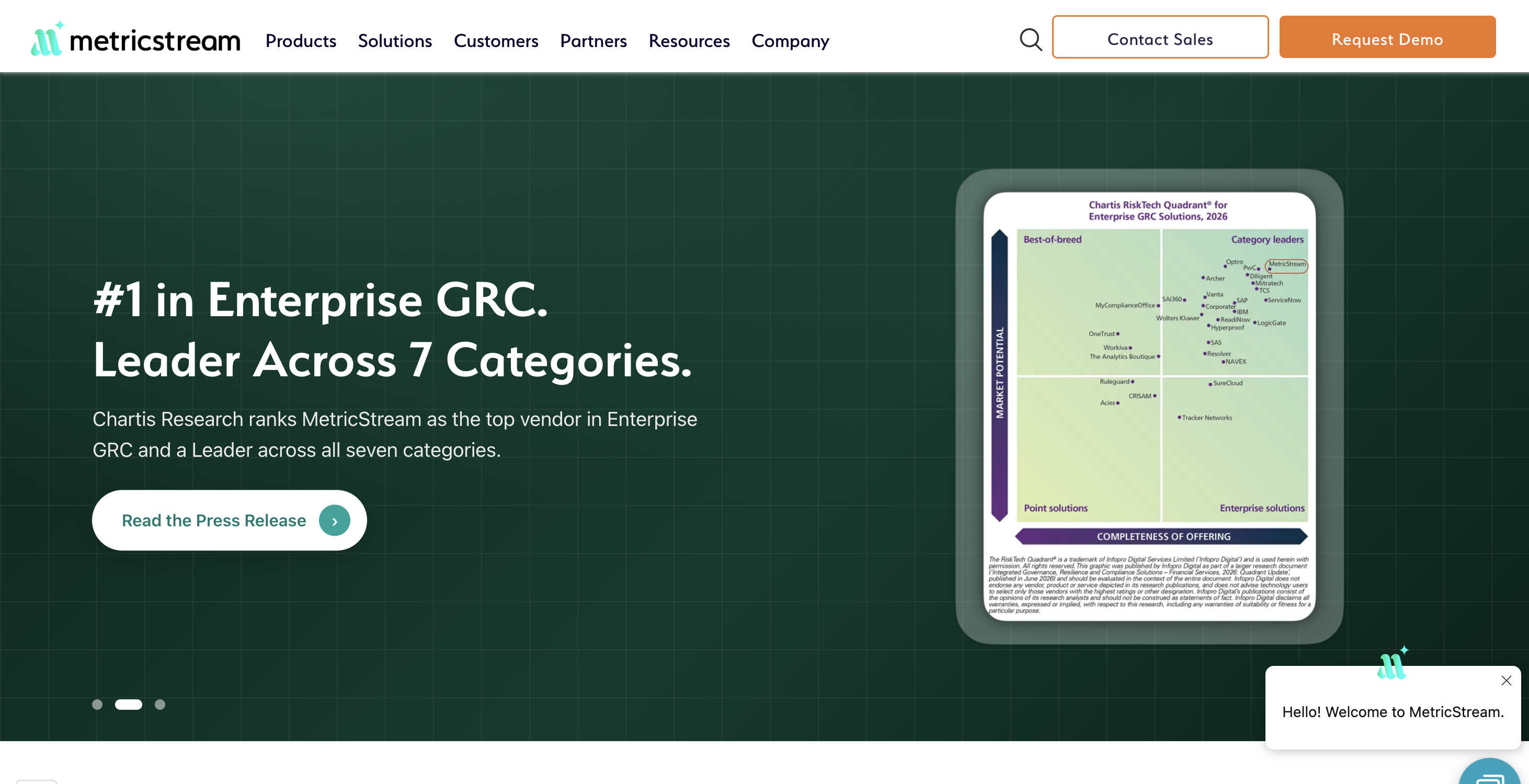
MetricStream treats the vendor as one source of enterprise risk. Teams can manage due diligence and assessments in a wider GRC model. Issues and controls stay with that record. Monitoring continues after approval.
The product suits a bank or large manufacturer where operational risk, cyber risk, resilience, and compliance teams all touch the same third party.
For ROPA work, the privacy team would configure processing activities and data fields inside that model or connect another privacy inventory. MetricStream can hold the governance trail. It is not a privacy-first ROPA tool by default.
Features
- Third-party portal and intake: Requesters submit vendor details through one portal. MetricStream stores services and contracts with ownership data before the review begins.
- Segmentation and scoring: Rules assign a tier from the engagement profile. That tier controls the questionnaire depth and review frequency.
- Assessment management: Teams can use set questionnaires or change them for each risk domain. Responses produce scores and can trigger another assessment when a threshold fails.
- Issue and remediation workflow: A failed control creates an issue with an owner and due date. The record follows the action through review and closure.
- Risk intelligence and reporting: External alerts can reopen a vendor review. Dashboards show assessment trends and open issues while privacy teams maintain the ROPA link through configured fields or an integration.
Pricing:
Enterprise subscriptions run about $75,000 per year in reported contracts. A free trial is unavailable. Final scope depends on modules and users. Implementation is separate.
Pros
- Handles several risk domains
- Supports complex approval chains
- Keeps issues and remediation near the assessment
- Fits enterprise governance teams
- Gives leaders portfolio reporting
Cons
- Requires configuration and implementation work
- Can exceed the needs of a small privacy team
- Does not create a DPDPA ROPA model out of the box
- Pricing is quote-led
- Business users may need training
Fit
MetricStream fits enterprises that already operate GRC as a shared service. Before rollout, privacy defines the vendor object, procurement confirms ownership, and the ROPA owner maps the handoff.
3. OneTrust
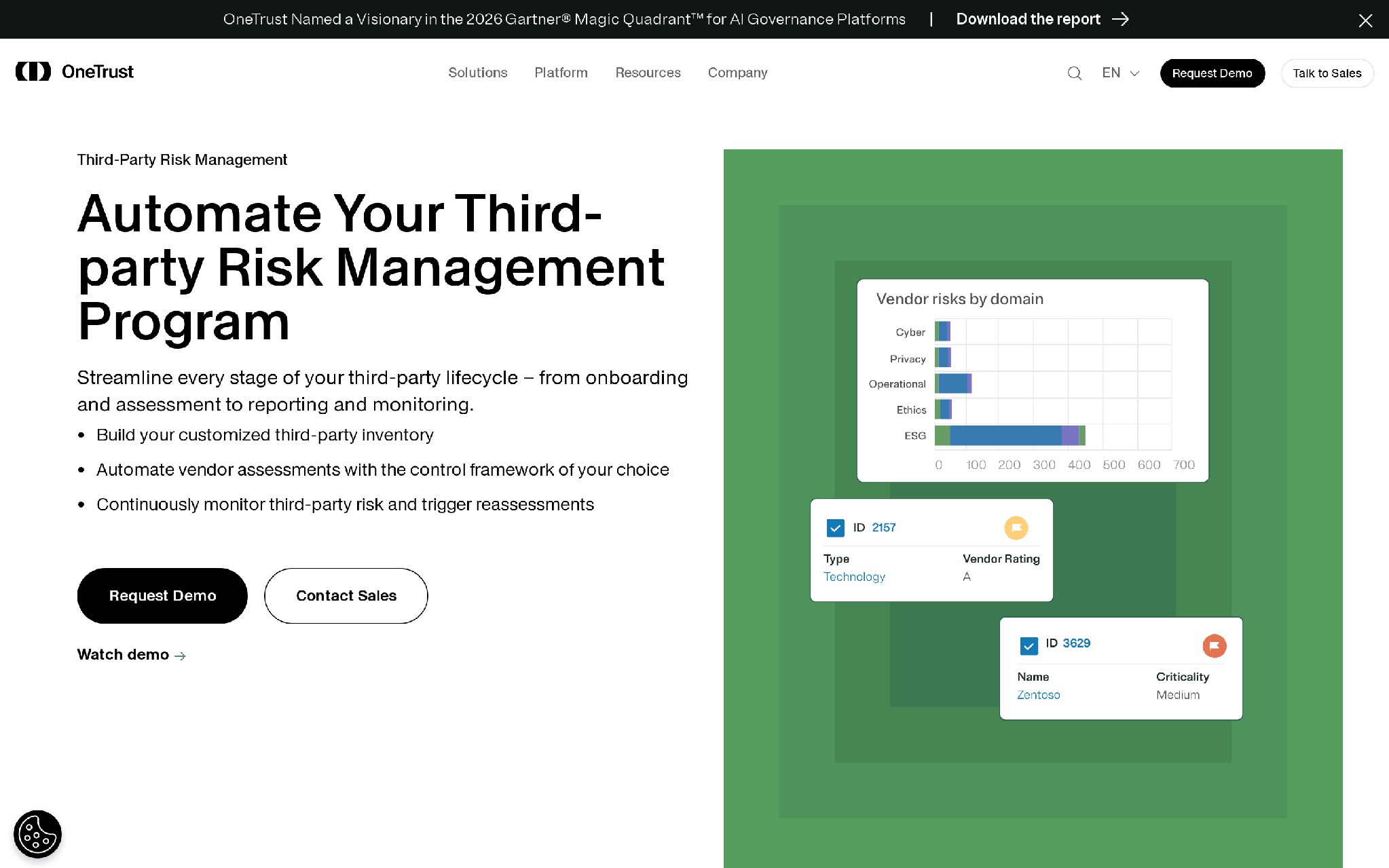
OneTrust combines a third-party inventory with assessment workflows, risk mitigation, and privacy operations. A team can tailor questionnaires and route follow-up work. It can also monitor third-party changes. Its privacy modules can connect a vendor record to data maps and processing activities.
That link helps ROPA maintenance. When a vendor starts processing another data class or enters a new region, the team can review the processing record and the vendor risk decision together.
Features
- Third-party inventory: OneTrust creates a vendor profile that holds ownership and relationship details. Teams can tier the profile so higher-risk processors receive more review.
- Conditional assessments: Questionnaire logic changes the next question from the vendor response. This keeps a low-risk supplier on a short path while a processor with sensitive data gets added checks.
- Risk mitigation workflows: Failed controls can create tasks and route them to named owners. Rules can also send a risk for acceptance before procurement proceeds.
- Data mapping and ROPA support: Privacy modules link the vendor to processing activities and data flows. A change in purpose or geography can then prompt a ROPA review.
- Continuous monitoring: Connected risk feeds watch for breach events and rating changes. A new signal can notify the owner or start reassessment.
Pricing:
Reported 2026 contracts have a median value near $10,514 per year. No free trial is published for enterprise TPRM. Admin seats and inventory size affect the quote.
Pros
- Connects privacy inventory with third-party governance
- Covers several jurisdictions
- Supports conditional questionnaires
- Offers a large integration estate
- Keeps reporting near risk records
Cons
- Contract scope can become hard to compare
- Implementation needs program design
- Teams may buy more modules than they use
- India-specific workflows need configuration
- Reported renewal costs can rise with inventory
Fit
OneTrust is the competitor-wins option for a multinational privacy office. It brings more global program depth than Redacto but asks the buyer to configure the Indian operating model.
4. ServiceNow Third-Party Risk Management
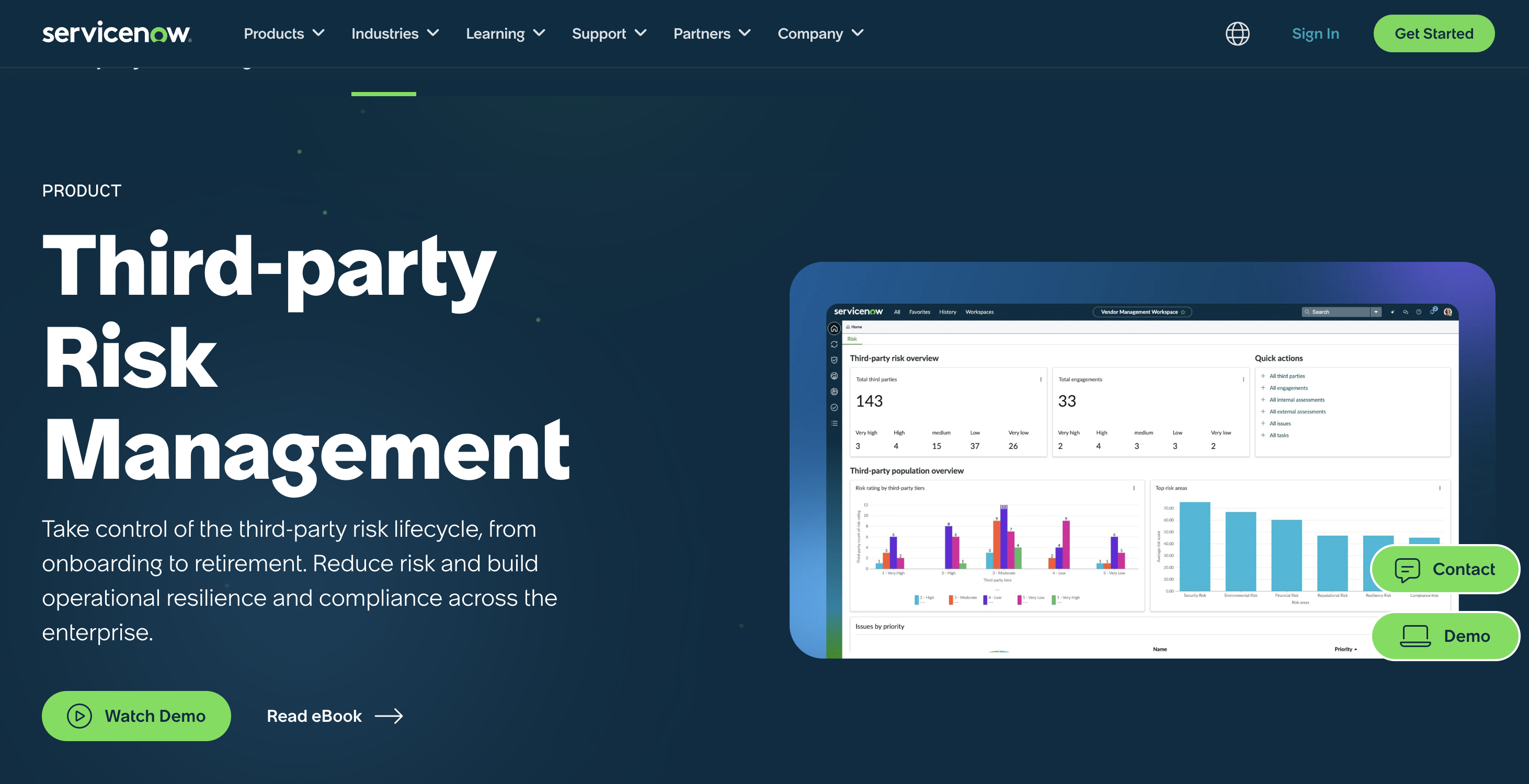
ServiceNow TPRM places vendor onboarding, assessments, remediation tasks, and monitoring in the same work platform that many enterprises use for IT and risk. A change can create an owner task. The response history remains attached.
ROPA support is indirect. Privacy teams can model processing records in IRM or connect a privacy system. The value comes from handoffs. A procurement event can start security and privacy work without email becoming the system of record.
Features
- Lifecycle due diligence: ServiceNow starts a request for onboarding or renewal. The workflow assigns reviewers and preserves their decision on the vendor record.
- Assessment design and scoring: Teams can use configured templates for each risk domain. Scores help them set review depth and decide which engagements need escalation.
- Third-party portal: Vendors receive questionnaires and exchange evidence through a portal. Internal reviewers can track responses without relying on email.
- Issue management: A failed response creates a remediation task with an owner and status. The audit trail shows escalation and closure.
- Continuous monitoring and platform links: Risk signals can reopen due diligence. IRM and CMDB links give security teams system context while privacy must connect the vendor to its processing record.
Pricing:
A public-sector schedule lists the base module near $4,000 per month. No free trial is published. Production quotes depend on IRM licenses and vendor volume.
Pros
- Fits existing ServiceNow estates
- Routes work across departments
- Keeps task history with the risk record
- Connects vendor events to IT records
- Supports large approval models
Cons
- Needs ServiceNow skills
- May require an IRM subscription
- Does not supply a DPDPA ROPA model by default
- Implementation can cost more than licenses
- A privacy-only team may find it too broad
Fit
ServiceNow makes sense when the company already uses it as a work system. If vendor assessment is the only use case, the licence is broad, implementation takes work, and value arrives slowly.
5. UpGuard Vendor Risk
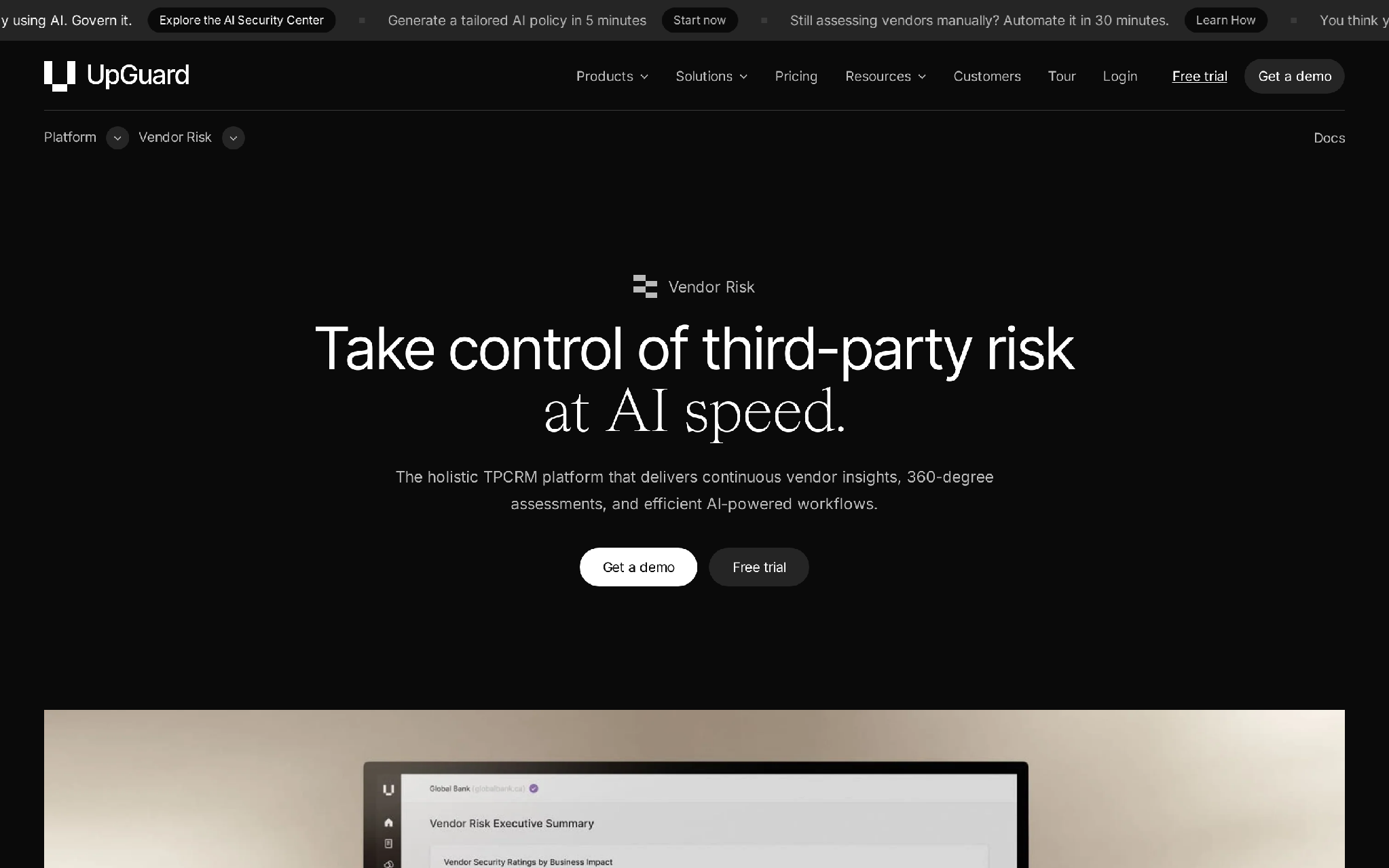
UpGuard combines questionnaires with security ratings and continuous monitoring. Teams can track internet-facing risk and request evidence. They can assign remediation. Monitoring continues after approval.
The ROPA connection is indirect. Privacy teams need to link the UpGuard vendor record to a processing inventory elsewhere. Its main value is the cyber signal that can trigger a reassessment.
Features
- Vendor inventory and tiering: UpGuard groups vendors by the risk of each relationship. The tier can change the assessment depth and notification rules.
- Security ratings: Internet-facing signals update the vendor score several times a day. Teams can see which domains or controls drive a change.
- Questionnaires and evidence: Reviewers can send set or custom questionnaires and request documents. Response logic identifies risks and keeps the exchange in an audit log.
- Remediation workflows: Findings can become requests with status tracking. Teams can record a waiver or verify the vendor response before closing the assessment.
- Fourth-party visibility: Supply-chain views identify shared downstream providers and concentration risk. Privacy still needs a separate ROPA record for purpose and data flow.
Pricing:
Standard costs $1,750 per month on annual billing and monitors 50 vendors. A free tier covers five vendors. A paid trial is available. Extra vendors cost $79 per month.
Pros
- Publishes a starting price
- Monitors vendors after onboarding
- Combines ratings with questionnaires
- Gives security teams fast portfolio views
- Supports remediation tracking
Cons
- Does not maintain a privacy ROPA
- External ratings cannot prove internal controls
- The starting plan may exceed a small-team budget
- Privacy purpose and retention need another record
- Higher vendor counts move buyers to quote-led tiers
Fit
UpGuard wins when the security team needs outside-in monitoring. When ROPA evidence matters, connect the privacy inventory, map the vendor identifier, and assign the update owner.
6. Privy by IDfy
Privy targets privacy operations under Indian data protection requirements. Its vendor workflow can help teams record processors, send assessments, track risk, and connect findings with data governance work.
A ROPA-style inventory gives the assessment its context. The team can show which activity uses the vendor. It can also show what data moves. Buyers should confirm the exact integration between vendor records and processing activities during a demo.
Features
- Vendor assessment workflow: Privy can record the processor and send assessment questions. Teams can track responses and risk findings through the review.
- Privacy data inventory: The inventory gives each vendor relationship a processing purpose and data context. That context helps the privacy team maintain its ROPA-style record.
- Risk follow-up: Reviewers can assign findings and track the next action. Buyers should confirm how exceptions and reassessment dates work in their planned setup.
- Consent and rights connection: Privacy workflows can show which vendor may receive data or support a request. This helps the team route withdrawals and Data Principal requests to the right owner.
- Compliance reporting: Reports collect assessment status and privacy records for review. Buyers should test the export and audit trail during the demo because public product detail is limited.
Pricing:
Reported contracts start near ₹5 lakh per year (about $6,000). No free trial is published. The quote changes with modules and data volume.
Pros
- Focuses on Indian privacy operations
- Connects vendor review with privacy records
- Covers more than questionnaire exchange
- Supports local compliance teams
- Gives teams one place for evidence
Cons
- Public pricing is absent
- Public product detail is thinner than global suites
- Cyber ratings are not its main strength
- Buyers need to verify integration depth
- Global regulatory coverage may need other tools
Fit
Privy deserves a place on an India-first shortlist. During the demo, change a vendor’s purpose, add a data class, and confirm that the processing record updates.
7. LogicGate Risk Cloud
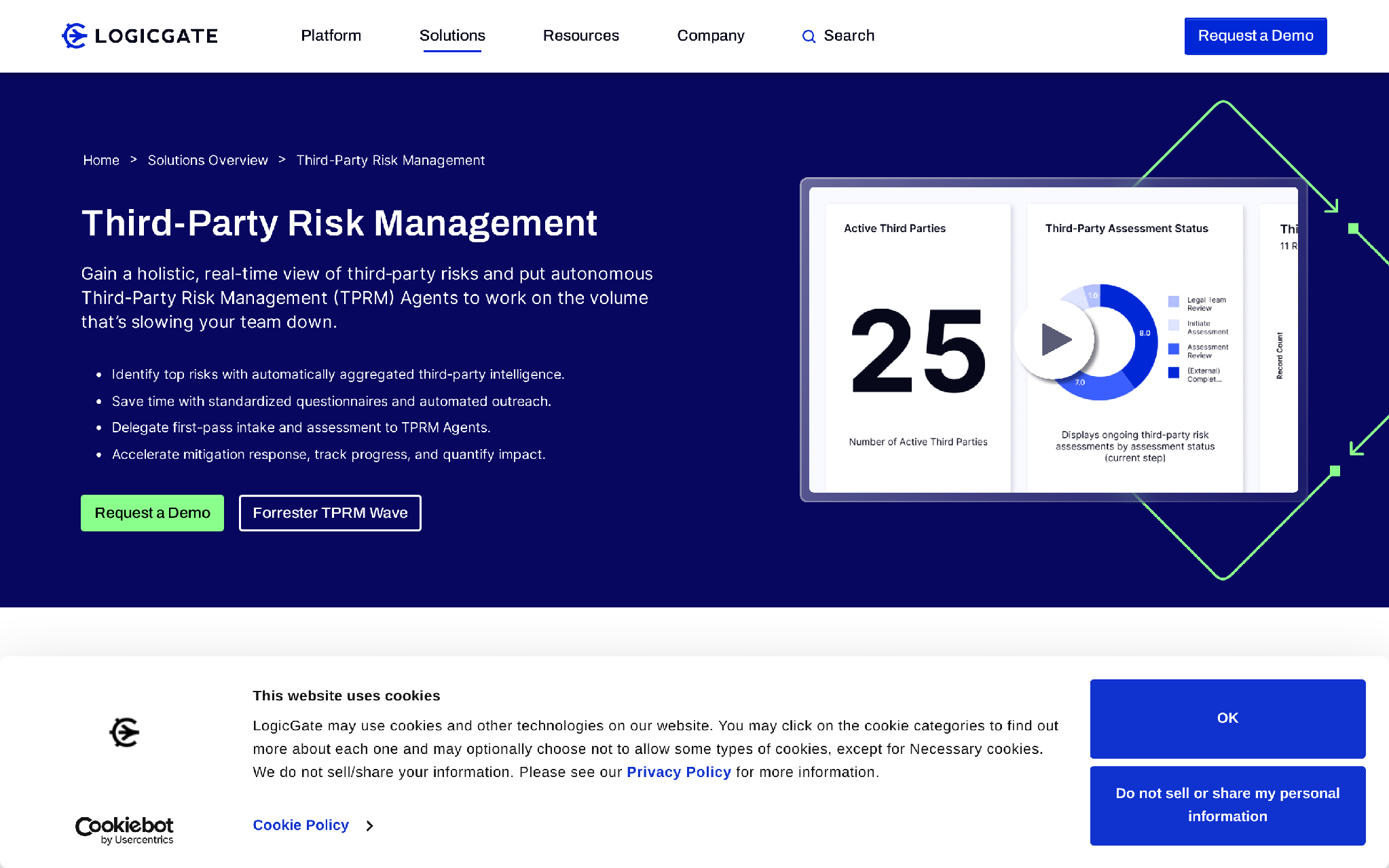
LogicGate lets risk teams build vendor intake and assessments. They can add scoring and exceptions. Remediation follows the same workflow. This suits companies with an assessment method that does not fit a fixed product template.
The same flexibility can model a ROPA link. Teams can add the processing purpose and data class. System and owner fields can sit on the same vendor relationship. They must govern that design so the record stays usable.
Features
- Configurable intake: LogicGate lets teams build request forms around their vendor model. Answers can route the request by service type or risk signal.
- Conditional questionnaires: Assessments can show or hide questions from earlier answers. Templates support standards such as SIG and NIST.
- Assessment findings: The assessment workflow creates linked findings from failed answers. Reviewers validate those findings before they move to remediation.
- Remediation and exceptions: Actions receive owners and dates. Risk acceptance stays in the same trail so an approver can see why work closed.
- Risk register and integrations: Findings can feed a risk register and dashboards. Privacy teams can add purpose and data fields or connect a ROPA system through the API.
Pricing:
Reported Risk Cloud subscriptions start near $15,000 per year. There is no free plan or trial. Demos are available. Application count and users change the quote.
Pros
- Adapts to an existing risk method
- Supports conditional workflows
- Connects findings to risk registers
- Keeps exceptions and approvals
- Works across several risk use cases
Cons
- Configuration creates ownership work
- A weak data model produces weak reports
- It is not an India privacy product
- ROPA fields need design
- Costs rise with applications
Fit
LogicGate fits teams that know the process they want to run. It is less suitable when the buyer expects a ready DPDPA workflow.
8. SecurityScorecard
SecurityScorecard gives teams security ratings and breach signals. Questionnaires add internal evidence. Portfolio monitoring continues between reviews. It can help a security team decide which vendors need review first and when a change should reopen an assessment.
It does not replace ROPA work. A rating does not show why the vendor processes personal data or when that data should be erased. Link its vendor identifier and findings to the privacy system of record.
Features
- Security ratings: SecurityScorecard measures observable cyber signals for each vendor. Portfolio views help teams rank which relationships need attention first.
- Questionnaire exchange: Teams can send assessments and compare answers with rating evidence. This gives the reviewer internal claims beside outside-in signals.
- Portfolio monitoring: Ratings and events continue after onboarding. An alert can prompt the owner to reopen the assessment before the next scheduled review.
- Breach and threat signals: Incident data adds another trigger for escalation. The signal supports review but does not prove how a vendor handles the company’s personal data.
- Remediation collaboration: Buyers and vendors can assign action plans and track progress. The ROPA remains in a privacy system that records purpose and data categories.
Pricing:
Reported contracts start near $16,500 per year for self-assessment and five vendors. A free account and 14-day trial are reported. Extra vendors add about $1,500 to $2,000 each year.
Pros
- Prioritises vendors by cyber signal
- Watches changes between assessments
- Supports a large vendor estate
- Gives vendors a remediation path
- Helps security teams compare exposure
Cons
- Ratings see only part of the control environment
- It does not maintain processing purposes
- ROPA updates need another system
- Vendor volume can raise cost fast
- Privacy teams still need contract review
Fit
SecurityScorecard works as a cyber evidence input. It should not become the only vendor decision record.
9. SAP Ariba Supplier Risk
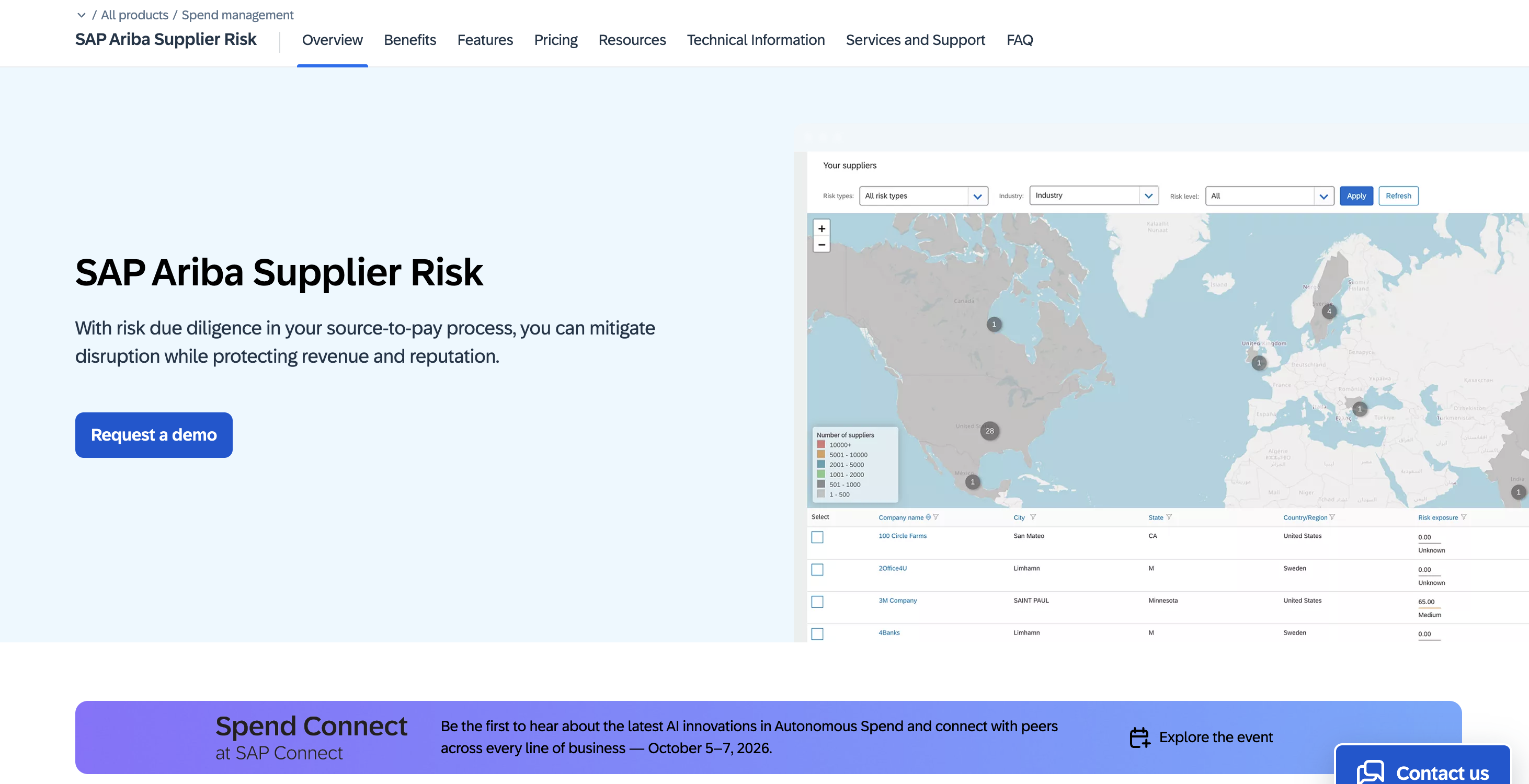
SAP Ariba Supplier Risk brings risk information into sourcing and supplier management. Procurement teams can screen suppliers and run engagement requests. They can gather due diligence. Risk monitoring continues during the relationship.
Its ROPA connection depends on integration. The privacy team needs the approved supplier and service data to update the processing inventory. SAP gives procurement a clear handoff point but does not turn that handoff into a privacy record by itself.
Features
- Supplier profile and onboarding: SAP Ariba keeps supplier details with the procurement relationship. A request can begin risk review before the supplier enters a sourcing flow.
- Engagement risk assessment: Teams send questionnaires and test controls for the planned engagement. Findings feed the residual risk score after review.
- Finding collaboration: Internal owners and suppliers can work on a finding in the assessment project. The record shows the response before approval.
- Risk exposure and alerts: SAP combines supplier context with incident feeds to calculate exposure. Alert subscriptions tell owners when a followed supplier changes.
- Procurement workflow links: Risk can appear in guided buying and sourcing decisions. Privacy still needs a handoff that writes the approved processor and data flow into the ROPA.
Pricing:
Reported SAP Ariba Supplier Management packages start near $50 per user each month before implementation. No free tier or trial is published for enterprise risk modules. Package and transaction scope affect the quote.
Pros
- Places assessment inside procurement
- Links risk to supplier lifecycle events
- Fits SAP data and approval models
- Supports enterprise supplier estates
- Gives sourcing teams a shared record
Cons
- Privacy mapping needs integration
- Implementation requires SAP skills
- It can be too large for a privacy-led project
- Public module pricing is limited
- Cyber monitoring may need another service
Fit
SAP Ariba suits procurement-led programs in an SAP estate. Privacy teams should make the ROPA update an explicit post-approval task.
10. Sprinto
Sprinto discovers vendors and assigns risk tiers. It gathers evidence. A risk change starts another review. Its model suits cloud companies that already use Sprinto for security compliance.
The product can connect vendor risks with the company risk register. A privacy ROPA still needs purpose, data category, and retention fields. Buyers should test whether those records live in Sprinto or pass to a privacy tool.
Features
- Vendor discovery: Sprinto finds vendors through browser and identity connections. It adds ownership and use context to the inventory as tools appear.
- Live risk profile: The profile uses access and data touched to assign a tier. That tier determines review depth and who signs off.
- Evidence workflow: Sprinto gathers questionnaires and proof for the review. A gap stays open until an owner supplies evidence and a reviewer verifies it.
- Change-led reassessment: A change in vendor posture can launch another review. The workflow assigns follow-up work and tracks it to closure.
- Risk-register link: Findings attach to the company risk record and its controls. Privacy teams should confirm where purpose and retention fields live for the ROPA handoff.
Pricing:
Reported platform subscriptions with TPRM start near $6,000 per year. No free tier or trial is published. A demo is available. Framework count and company size affect the quote.
Pros
- Finds vendors from connected systems
- Starts reviews from change signals
- Fits cloud compliance work
- Connects findings to a risk register
- Reduces spreadsheet handoffs
Cons
- Public pricing is absent
- Privacy inventory depth needs verification
- It targets security compliance first
- Large enterprises may need more procurement controls
- DPDPA workflow needs configuration
Fit
Sprinto fits a cloud security team that wants vendor review near its compliance controls. A privacy-led enterprise should test the ROPA handoff before selection.
11. Scrut
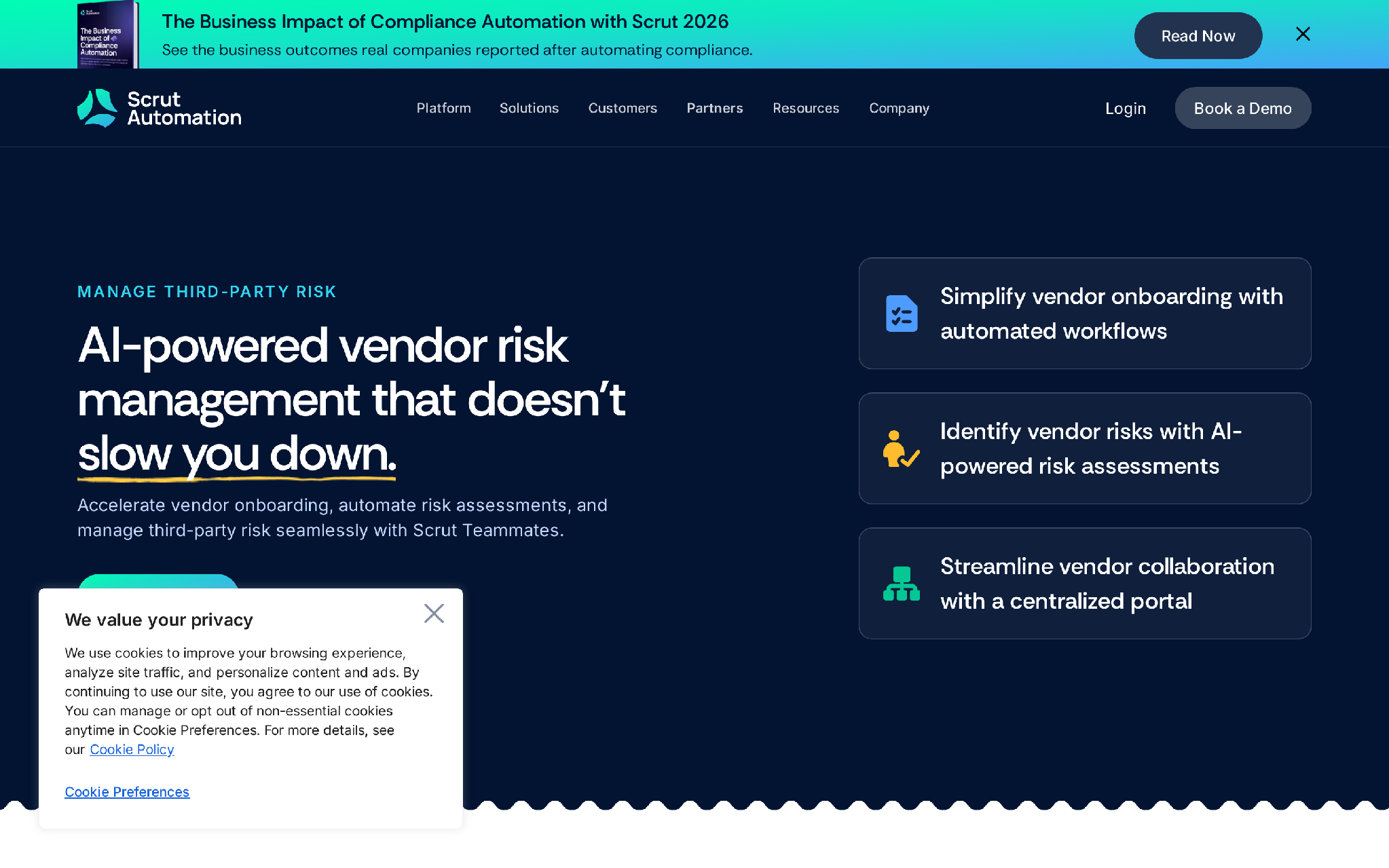
Scrut gives teams a vendor inventory and risk assessments. Evidence requests stay with the record. Findings can link to the risk register. It works well for cloud companies that manage SOC 2 or ISO 27001 controls and need vendor evidence in the same GRC system.
For ROPA work, the vendor record needs a connection to processing purpose and data flow. Scrut can carry the risk item. Privacy teams should verify whether the processing inventory sits inside the platform or in an integrated system.
Features
- Vendor discovery and intake: Scrut can identify vendors through SSO connections or accept a CSV import. Intake forms record the relationship before the assessment starts.
- Risk-based questionnaires: The platform can tailor questions to inherent risk and vendor context. Reviewers can validate answers against uploaded documents.
- Evidence repository: Contracts and control evidence stay with the vendor profile. This gives the assessor one record for the decision.
- Risk-register mapping: Findings connect to the company risk register and mapped controls. A privacy team still needs purpose and data-flow fields for ROPA work.
- Mitigation tracking: Findings create tasks for internal teams or vendors. Dashboards show pending work and keep the issue open until resolution.
Pricing:
India contract estimates range from ₹4 lakh to ₹8 lakh per year (about $4,800 to $9,600). No free tier or trial is published. Audit charges and services may sit outside the platform fee.
Pros
- Links vendor findings to risk work
- Fits cloud control programs
- Supports several frameworks
- Keeps evidence near controls
- Offers implementation support
Cons
- Pricing needs a sales call
- ROPA depth needs verification
- Procurement lifecycle features are limited
- Audit costs can sit outside the quote
- Global enterprises may need broader third-party intelligence
Fit
Scrut works for a cloud company that treats vendor risk as part of security compliance. It is less direct for a privacy office seeking a full processing inventory.
How vendor assessment should update the ROPA
A ROPA is not an express requirement under the Digital Personal Data Protection Act, 2023. It remains a useful operating record because it links a processing activity to its purpose, systems, data classes, retention, and processors. The vendor assessment should update that record through a defined handoff.
- Start with the service: Record what the business is buying and who owns it.
- Map the data flow: Identify the personal data sent to the vendor and the systems involved.
- Assign a tier: Use data sensitivity, access, business dependency, and transfer path.
- Run the assessment: Ask questions that follow from the tier and actual processing.
- Record the decision: Keep the evidence and accepted exceptions. Name the approver. Record the conditions and review date.
- Update the processing inventory: Add or amend the vendor, purpose, data class, and retention trigger.
- Monitor change: Reopen the review when access, service scope, control status, or ownership changes.
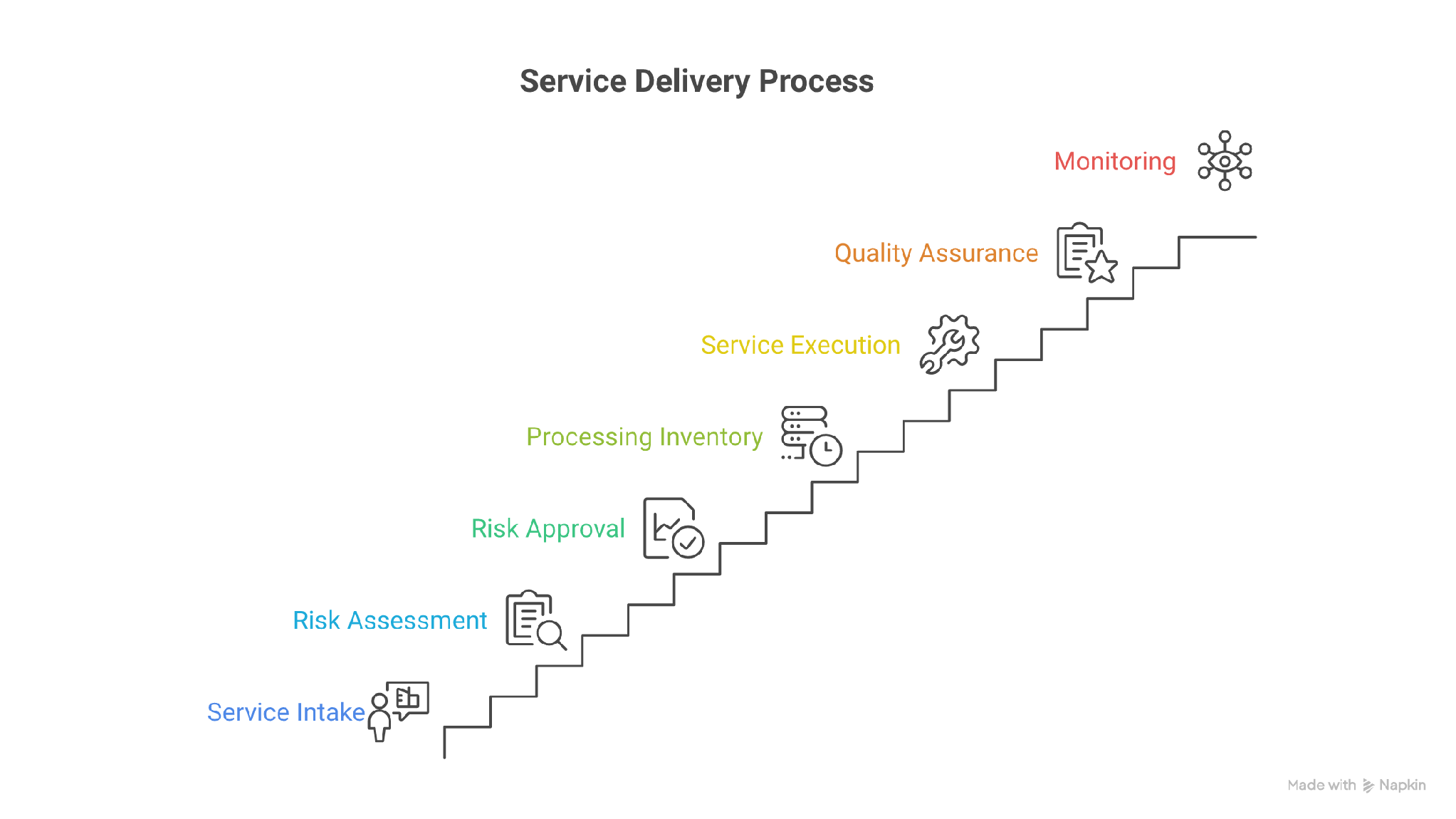
Rule 6 of the Digital Personal Data Protection Rules, 2025 names access controls and logs among its safeguards. It also covers monitoring and backups. Processor contracts belong in that control set. Rule 7 sets the breach notification workflow. A useful assessment turns those duties into evidence requests. Each gap needs an owner.
Match the tool to the handoff you own
- Pick Redacto when DPDPA privacy records and vendor evidence need to move together.
- Choose OneTrust when one global privacy program covers many jurisdictions.
- Use UpGuard or SecurityScorecard when outside-in cyber monitoring drives the review.
- Select MetricStream when third-party risk sits inside a larger enterprise GRC program.
- Stay with ServiceNow or SAP Ariba when those platforms already own the handoffs.
- Assess Sprinto or Scrut when a cloud compliance team owns vendor risk.
Before approval, the privacy owner should update the ROPA purpose and data categories. The service owner records the vendor and contract owner. Security attaches its control findings. If a risk remains open, the named approver records the exception and review date.
This week, take the 20 vendors that receive the most sensitive personal data. Check each assessment against its ROPA entry. Confirm the purpose and data classes first. Then check the contract owner and last decision. A missing review date means the handoff is incomplete. Fix that record before buying another tool.