%20Redacto%20logo_New.png)


Top 10 Third Party Vendor Risk Management Softwares in India


If you are searching for the best third party vendor risk management software in India, chances are you are not looking for another spreadsheet-based vendor checklist.
You are looking for a platform that can help manage vendor risk, compliance, security reviews, and continuous monitoring at scale.
With DPDPA, RBI outsourcing guidelines, and rising supply chain attacks, Indian companies now need better visibility into:
- vendor security risks
- compliance gaps
- third-party data access
- audit readiness
- continuous risk monitoring
In this guide, you will find the top third party vendor risk management software in India, including:
- enterprise-grade TPRM platforms
- cyber-focused vendor monitoring tools
- India-focused compliance solutions
- vendor governance and GRC platforms
This article compares each tool based on:
- DPDPA readiness
- vendor assessment capabilities
- automation features
- integrations
- scalability
- enterprise suitability
So you can choose the right TPRM platform based on your organization’s size, industry, and risk requirements.
TL;DR
- Redacto is the best choice if you want a DPDPA-focused platform that combines vendor risk management, consent governance, DPIAs, DSARs, breach workflows, and privacy operations in one place.
- MetricStream is a strong fit for large enterprises managing complex third-party risk, operational resilience, compliance, and enterprise-wide governance programs.
- OneTrust works well for organizations handling global privacy compliance, third-party governance, consent management, and multinational regulatory workflows.
- ServiceNow IRM is ideal if your organization already runs on the ServiceNow ecosystem and wants integrated IT, risk, compliance, and vendor governance workflows.
- UpGuard Vendor Risk is best for teams focused heavily on continuous vendor cybersecurity monitoring, attack surface visibility, and security ratings.
- Privy by IDfy is a strong India-first option for organizations operationalizing DPDPA across consent, data discovery, third-party risk, and audit workflows.
- SecurityScorecard is best for enterprises that want threat-informed third-party risk monitoring, vendor security benchmarking, and continuous cyber-risk visibility.
Why Vendor Risk Management Matters More After DPDPA
Vendor risk management is no longer just a procurement or cybersecurity task.
After DPDPA, it has become a major compliance and operational responsibility for Indian businesses.
Today, many organizations share customer and operational data with:
- cloud providers
- payment processors
- SaaS vendors
- outsourcing partners
- analytics platforms
- third-party service providers
The challenge is that even if a vendor mishandles personal data, your organization can still face compliance exposure, financial penalties, and reputational damage.
At the same time:
- RBI outsourcing guidelines are increasing scrutiny around third-party oversight in BFSI.
- Supply chain attacks are becoming more common across vendor ecosystems.
- Cross-border data processing creates additional compliance and audit challenges.
- Large enterprises now manage hundreds of vendors across departments, making manual tracking difficult.
This is why companies are moving toward dedicated TPRM platforms that help continuously assess, monitor, and document vendor risks instead of relying on spreadsheets and periodic reviews.
How We Evaluated These Vendor Risk Management Tools
We did not just look at feature lists or marketing claims.
We evaluated these vendor risk management tools based on what actually matters when you are managing third-party risk, compliance, and vendor oversight at scale in India.
- We checked whether the platform supports DPDPA workflows like vendor data agreements, DPIAs, audit trails, breach accountability, and RBI outsourcing compliance requirements.
- We looked at how well the tool handles vendor onboarding, security questionnaires, evidence collection, remediation tracking, and vendor offboarding workflows.
- We evaluated whether the platform gives you continuous visibility into vendor risks through security ratings, attack surface monitoring, fourth-party visibility, and supply chain monitoring.
- We analyzed the level of AI and automation available for risk scoring, assessments, evidence collection, and reducing manual compliance work.
- We checked how easily the software integrates with tools your teams may already use, including SAP, SIEM platforms, GRC systems, ServiceNow, ERPs, and ticketing systems.
- We considered whether the platform can scale for Indian enterprises with flexible deployment models, faster implementation, hybrid/on-prem support, and enterprise-ready workflows.
- We also evaluated usability because compliance teams need dashboards, reporting, and audit workflows that are actually easy to manage day to day.
Top 10 Third Party Vendor Risk Management Softwares in India
1. Redacto – Best for DPDPA-Focused Vendor Risk Management
Redacto is an India-focused privacy and vendor risk management platform designed to help organizations manage third-party risk, DPDPA compliance, data governance, and privacy operations from one platform.
The platform combines vendor assessments, consent management, DPIA automation, DSAR workflows, breach notification management, and data mapping, making it more suitable for organizations looking for privacy and vendor governance together instead of using separate tools.
Key Features
- Automated third-party vendor assessments
- AI-assisted Privacy Impact Assessment (DPIA) workflows
- Unified consent management
- Data discovery and mapping
- DSAR management workflows
- Breach notification and incident management
- Real-time compliance dashboards
- 7000+ plugins and consent integrations
- On-prem, private cloud, and SaaS deployment support
- AI-powered automation for privacy and compliance workflows
India/DPDPA Fit
Redacto is strongly positioned around Indian privacy and compliance requirements.
The platform focuses heavily on DPDPA operational workflows, vendor accountability, and audit readiness.
It also supports:
- DPDPA compliance workflows
- Vendor governance and processor accountability
- RBI and regulated-industry compliance needs
- Privacy impact assessments and audit trails
- Local deployment flexibility through hybrid/on-prem support
- Data governance and consent management workflows
Pros
- Built specifically with DPDPA workflows in mind
- Combines vendor risk, privacy, and compliance operations in one platform
- Faster implementation compared to many enterprise GRC suites
- Supports hybrid, on-prem, and SaaS deployments
- Strong fit for BFSI, healthcare, fintech, and regulated sectors
- Large integration ecosystem with 7000+ plugins
Cons
- More privacy and compliance focused than cyber-risk focused
Best For
- Indian enterprises preparing for DPDPA
- BFSI and regulated industries
- Organizations managing sensitive customer or vendor data
- Teams looking for combined privacy and vendor governance workflows
Potential Limitations
If your primary focus is continuous cyber-risk scoring, external attack surface monitoring, or vendor security ratings, you may still need to integrate dedicated cybersecurity monitoring platforms alongside Redacto.
2. MetricStream – Best for Large Enterprises Managing Complex Third-Party Risk
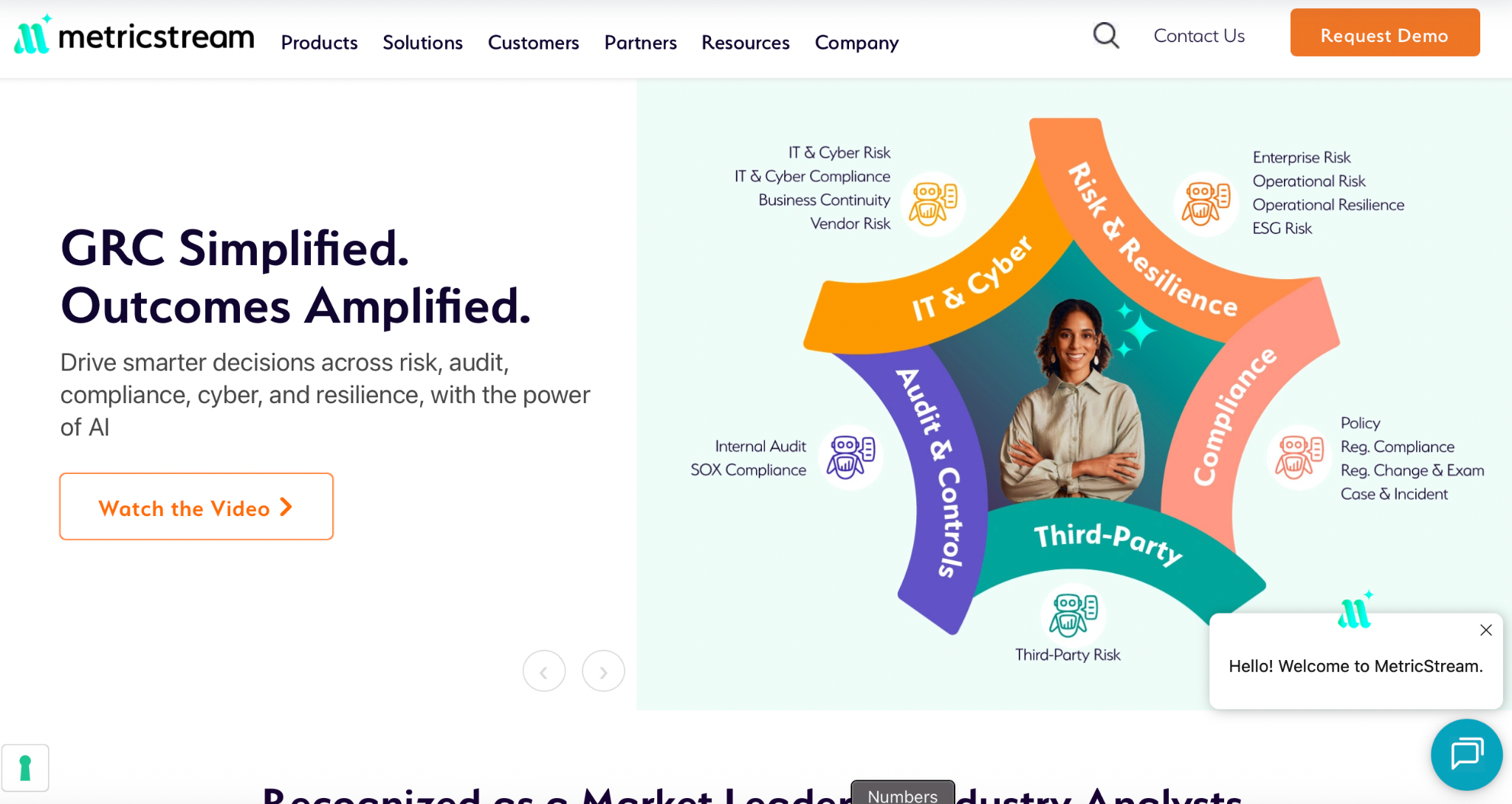
MetricStream is one of the most established enterprise GRC and third-party risk management platforms in the market.
The platform is designed for large organizations that need centralized visibility across enterprise risk, compliance, audit, cyber risk, operational resilience, and third-party/vendor governance.
Its Connected GRC platform helps organizations automate vendor onboarding, third-party assessments, continuous monitoring, policy enforcement, and risk reporting from one system.
MetricStream is especially popular among large enterprises, BFSI organizations, and highly regulated industries managing complex vendor ecosystems and multi-layered compliance requirements.
Key Features
- Third-party onboarding and risk assessments
- AI-driven risk intelligence and monitoring
- Third- and fourth-party risk management
- Compliance and policy management
- Audit and control testing workflows
- Real-time risk dashboards and reporting
- Regulatory change management
- IT and cyber risk management
- Operational resilience and business continuity workflows
- Integration with enterprise GRC ecosystems
India/DPDPA Fit
MetricStream has a strong enterprise presence in India and is widely used in regulated sectors like BFSI and financial services.
The platform supports:
- DPDPA and enterprise privacy governance workflows
- RBI outsourcing and operational risk oversight requirements
- Audit trails and compliance documentation
- Enterprise-scale vendor governance
- Risk and compliance reporting for regulated industries
- Hybrid enterprise deployment environments
Pros
- Strong enterprise-grade GRC and TPRM capabilities
- Supports multiple frameworks like ISO 31000, NIST, and ISO 27001
- AI-driven workflows and real-time risk visibility
- Highly structured risk management workflows
- Strong dashboarding and reporting capabilities
- Good fit for large vendor ecosystems and regulated industries
Cons
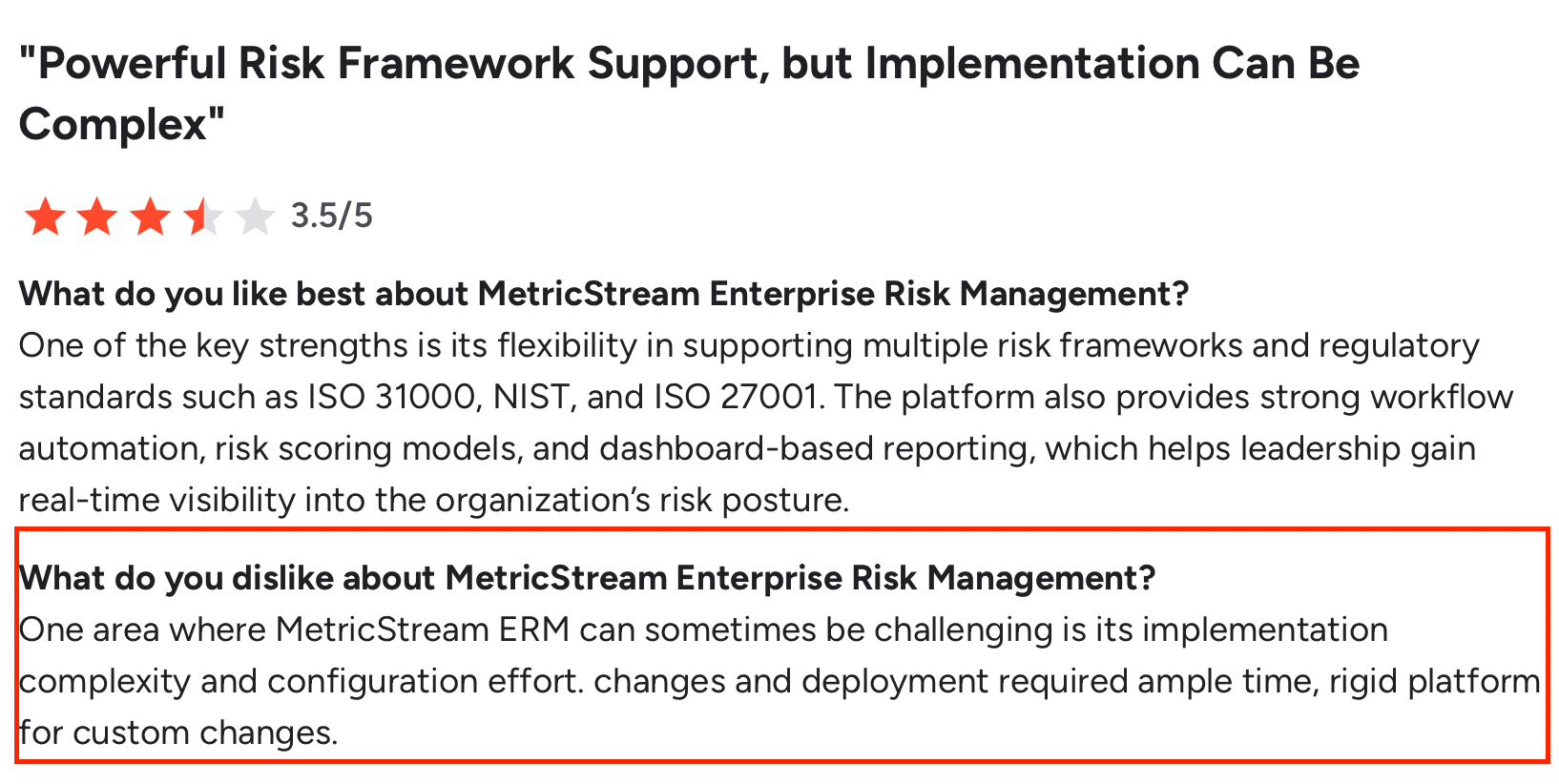
- Implementation and configuration can be complex
- Customization may require significant setup effort
- Some users report the platform feels rigid for dynamic risk workshops
- Navigation and reporting workflows can become difficult with large datasets
- Some functionalities may have a steeper learning curve for teams
Best For
- Large enterprises
- BFSI and regulated industries
- Organizations with mature GRC programs
- Enterprises managing large third-party and fourth-party ecosystems
Potential Limitations
MetricStream is built primarily for enterprise-scale governance and risk management.
Mid-sized companies or teams looking for lightweight vendor assessment workflows may find the platform heavier, more implementation-intensive, and more resource-demanding than simpler India-focused TPRM solutions.
3. OneTrust – Best for Global Privacy and Third-Party Risk Governance
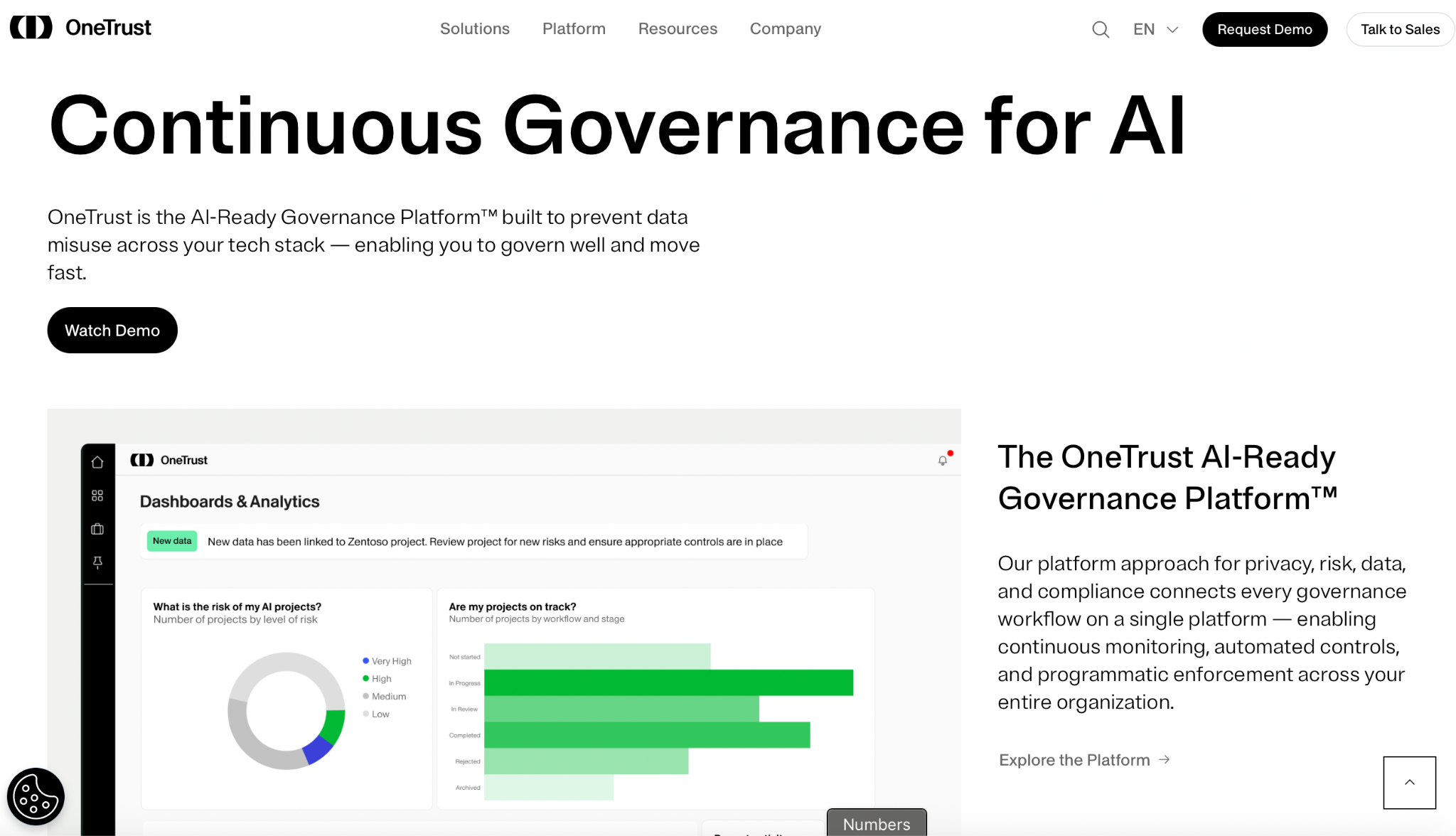
OneTrust is one of the most widely used privacy, compliance, and third-party risk management platforms globally.
The platform is designed to help organizations manage privacy operations, AI governance, consent management, third-party risk, compliance workflows, and data governance from one centralized system.
Its Third-Party Management solution helps organizations automate vendor intake, risk assessments, mitigation workflows, and continuous monitoring across large vendor ecosystems.
OneTrust is especially strong for enterprises managing global privacy regulations alongside vendor risk and compliance programs.
Key Features
- Third-party risk assessments and onboarding
- AI-infused third-party risk management workflows
- Privacy automation and data governance
- Consent and preference management
- DPIA and privacy assessment workflows
- DSAR automation
- Data mapping and RoPA management
- Continuous compliance monitoring
- AI governance and policy enforcement
- Integrations across enterprise tech stacks
India/DPDPA Fit
OneTrust is not India-specific, but it supports enterprise privacy and governance workflows that can be adapted for DPDPA compliance requirements.
The platform supports:
- DPDPA-aligned privacy operations
- Vendor governance and risk assessments
- Cross-border data governance workflows
- Privacy impact assessments and RoPA management
- Enterprise audit and compliance reporting
- Large-scale governance across multinational operations
Pros
- Comprehensive all-in-one privacy and governance platform
- Strong workflow automation and integrations
- Easy onboarding for workflows and privacy operations
- Good support for DSARs, DPIAs, RoPAs, and consent management
- Frequent regulatory updates and global compliance coverage
- Scalable for enterprise-wide privacy and third-party programs
- Modern UI with extensive templates and automation workflows
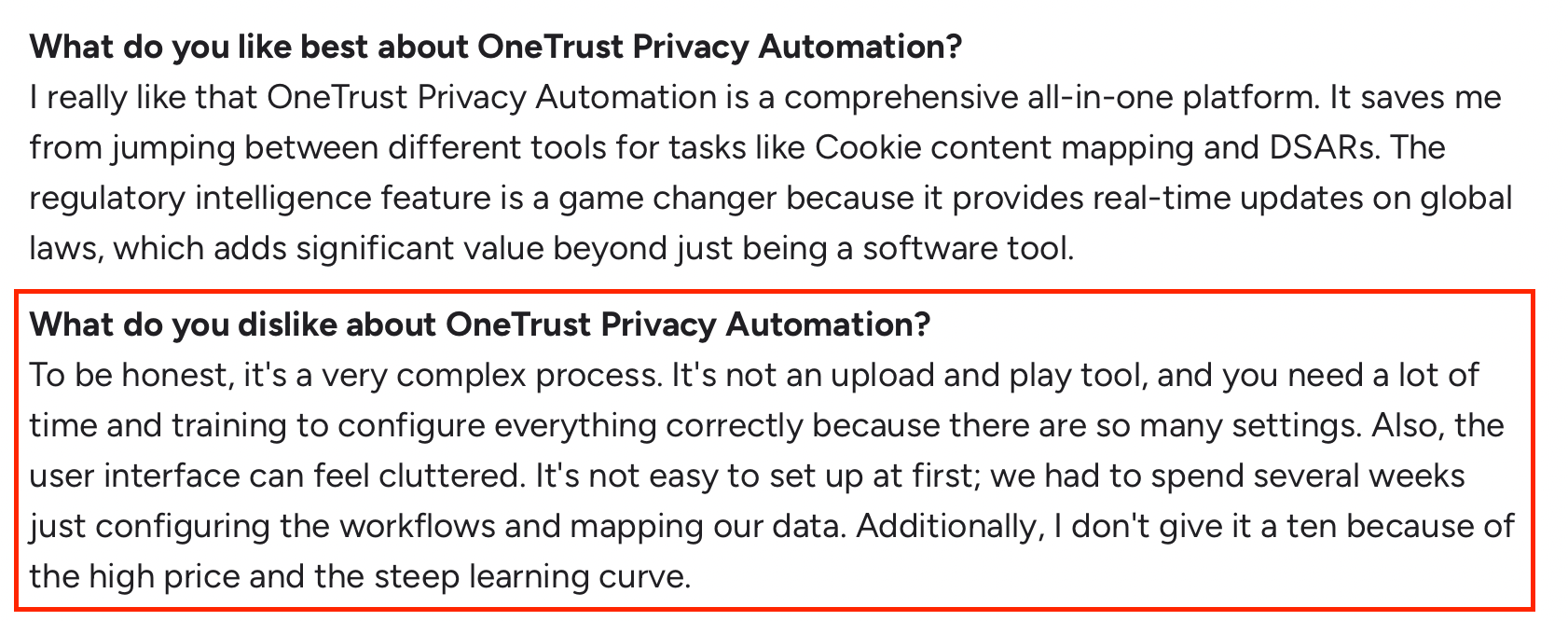
Cons
- Implementation and configuration can be complex
- Steep learning curve for new users and smaller teams
- Pricing can become expensive as modules scale
- Some users find the interface cluttered in advanced workflows
- Reporting and dashboard customization can feel limited in some areas
- Frequent UI changes may require retraining for teams
Best For
- Large enterprises and multinational organizations
- Privacy-heavy industries handling global compliance
- Organizations managing GDPR + DPDPA workflows together
- Teams looking for centralized privacy and vendor governance operations
Potential Limitations
OneTrust is a very broad governance platform, which means smaller companies or teams looking only for lightweight vendor risk management may find the implementation effort, configuration requirements, and pricing heavier than necessary.’
Top 5+ OneTrust Alternatives & Competitors for DPDPA Compliance in India (2026)
4. ServiceNow Integrated Risk Management (IRM) – Best for Organizations Already Using the ServiceNow Ecosystem
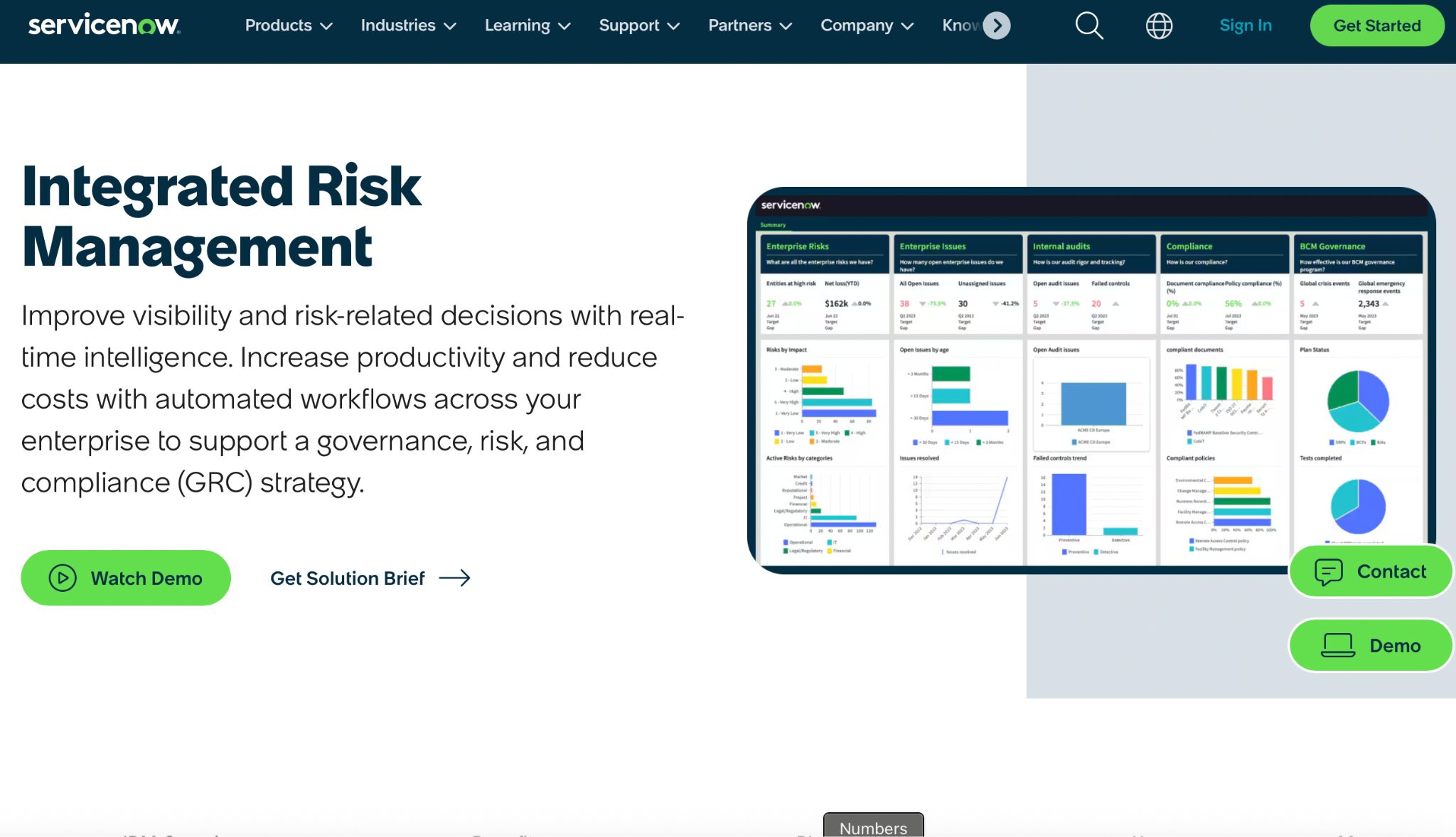
ServiceNow IRM (Integrated Risk Management) is an enterprise-grade governance, risk, and compliance platform designed to help organizations centralize risk management, policy governance, compliance monitoring, operational resilience, and third-party risk workflows.
The platform is especially powerful for enterprises already using ServiceNow products because it connects risk, IT operations, compliance, incidents, assets, vulnerabilities, workflows, and approvals inside one system.
Its third-party risk management capabilities help organizations automate vendor assessments, monitor vendor risk posture, manage compliance controls, and improve enterprise-wide visibility into operational and cyber risks.
Key Features
- Third-party risk assessments and monitoring
- Policy and compliance management
- Operational risk management
- Continuous control monitoring
- Risk scoring and heat maps
- AI-powered risk workflows and automation
- CMDB-based asset and risk mapping
- Audit trails and compliance reporting
- Dashboarding and analytics
- Low-code/no-code workflow customization
India/DPDPA Fit
ServiceNow IRM is widely used by large enterprises and regulated industries in India, especially organizations already managing IT, cybersecurity, and operational workflows through ServiceNow.
The platform supports:
- Enterprise compliance and audit workflows
- Vendor governance and third-party oversight
- Risk and control monitoring
- RBI and operational resilience requirements
- Cross-functional governance workflows
- Enterprise-scale deployment environments
Pros
- Strong integration with the broader ServiceNow ecosystem
- Centralizes policies, controls, audits, incidents, and risks in one platform
- Real-time monitoring and automated compliance workflows
- Deep CMDB integration for asset-level risk visibility
- Good dashboarding, analytics, and reporting capabilities
- Useful AI-assisted workflows for assessments and risk calculations
- Low-code/no-code capabilities improve workflow customization
Cons
- Initial setup and configuration can be complex
- Steep learning curve for first-time or non-technical users
- CMDB setup requires significant internal expertise
- Pricing may feel expensive without broader ServiceNow adoption
- Some workspace views lack full functionality compared to native views
- Support and documentation quality can be inconsistent in some cases
- Screen layouts and navigation may feel busy for large teams
Best For
- Large enterprises already using ServiceNow
- Organizations managing IT + GRC from one ecosystem
- BFSI, insurance, telecom, and enterprise IT teams
- Companies needing integrated operational and third-party risk management
Potential Limitations
ServiceNow IRM works best when deeply connected with the wider ServiceNow ecosystem. Organizations looking for a standalone lightweight TPRM tool may find the platform too implementation-heavy and resource-intensive compared to more focused vendor risk management solutions.
5. UpGuard Vendor Risk – Best for Cyber-Focused Third-Party Risk Monitoring
Vendor Risk is the third-party cyber risk management product offered by UpGuard.
It is designed to help organizations continuously assess, monitor, and reduce vendor cybersecurity risks across their third-party ecosystem.
The platform focuses heavily on:
- external attack surface monitoring
- vendor security posture visibility
- automated risk assessments
- security questionnaires
- breach monitoring
- continuous third-party monitoring
Unlike broader GRC-heavy platforms, Vendor Risk by UpGuard is more cybersecurity-focused and works well for organizations that want real-time visibility into vendor vulnerabilities, leaked credentials, exposed assets, SSL issues, and other external security risks.
Key Features
- Vendor risk assessments
- Vendor discovery and onboarding
- Security questionnaire automation
- AI-powered vendor security profiles
- Continuous vendor monitoring
- Security ratings updated multiple times daily
- External attack surface management
- Threat and breach monitoring
- Remediation and exception tracking
- One-click reporting and dashboards
- API and integration support
India/DPDPA Fit
Vendor Risk by UpGuard is not built specifically for DPDPA compliance, but it supports many vendor security and third-party cyber risk workflows that Indian enterprises now require under DPDPA, RBI outsourcing guidelines, and cybersecurity governance programs.
The platform supports:
- Vendor cyber-risk visibility
- Continuous third-party monitoring
- Security evidence collection and reporting
- Audit-ready vendor assessment workflows
- Support for frameworks like ISO 27001, NIST, DORA, and DPDP-related workflows
- Integration with broader GRC and compliance systems
Pros
- Strong external attack surface visibility across vendors
- Continuous monitoring helps detect vendor posture changes quickly
- Easy-to-understand dashboards and reporting
- AI-powered assessments reduce manual review effort
- Security ratings simplify risk communication with stakeholders
- Faster implementation compared to enterprise-heavy GRC tools
- User-friendly interface with strong SaaS usability
- Helpful automation for questionnaires and vendor reviews
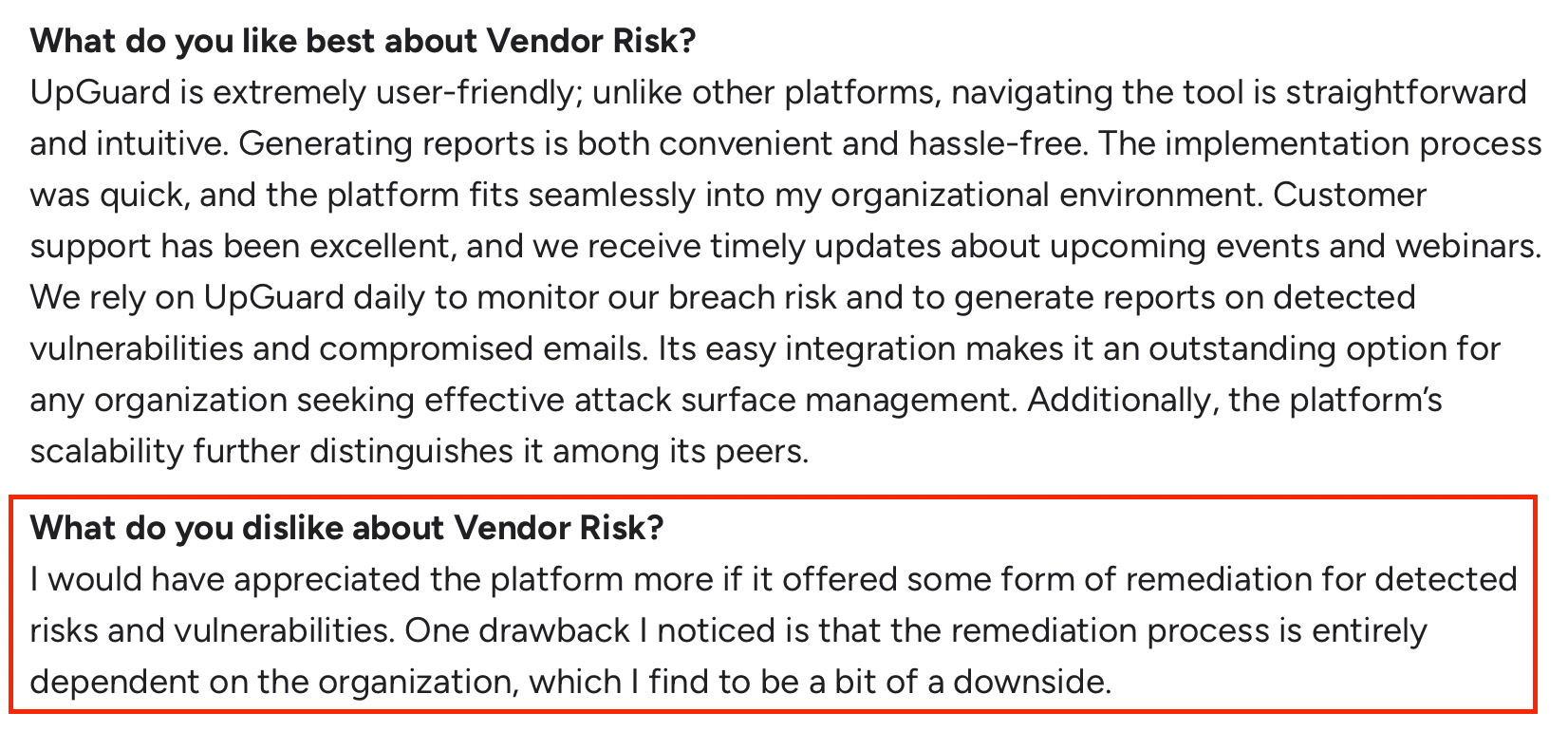
Cons
- Pricing may be expensive for smaller organizations
- Some users report occasional false positives in domain/IP mapping
- Remediation still depends heavily on internal teams and vendors
- Advanced users may want deeper granular controls and exports
- Some reporting workflows may feel high-level for technical security teams
- Certain integrations with SIEM and enterprise ecosystems could be deeper
Best For
- Cybersecurity and third-party risk teams
- BFSI, healthcare, SaaS, and technology companies
- Organizations focused on vendor cybersecurity posture
- Teams needing continuous vendor monitoring and security ratings
Potential Limitations
Vendor Risk by UpGuard is primarily designed for cyber-focused third-party risk management rather than broader privacy governance.
Organizations looking for deeper DPDPA workflows like consent governance, DPIAs, DSAR management, or privacy operations may still need a dedicated privacy or compliance platform alongside it.
6. KavachOne – Best for India-First Compliance and Cyber Risk Management
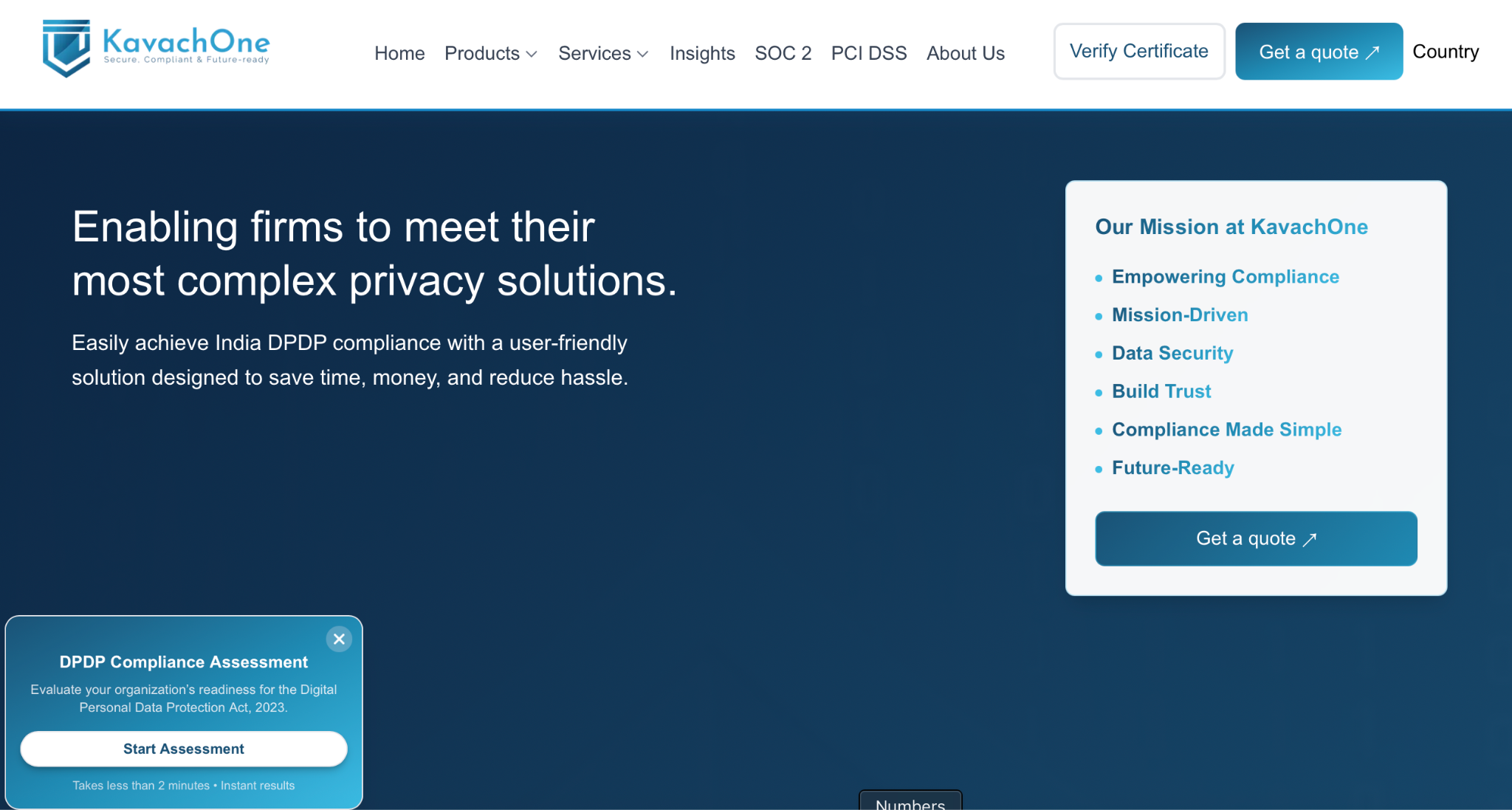
KavachOne is an India-focused cybersecurity, compliance, and privacy platform that helps organizations manage DPDP compliance, cyber risk, governance, consent management, DPIA workflows, and regulatory requirements.
Unlike many global GRC platforms built mainly for multinational enterprises, KavachOne focuses heavily on Indian regulatory and compliance requirements, making it more approachable for organizations looking for localized support and faster implementation.
The company also offers cybersecurity services, VAPT, compliance consulting, PCI DSS support, and governance solutions alongside its software products.
Key Features
- DPDP compliance platform
- Vendor and governance risk management workflows
- Consent management platform (ConsentiQo)
- DPIA lifecycle automation
- AI-powered PII discovery and scanning
- GRC and compliance management software
- Cybersecurity and VAPT services
- PCI DSS and SOC 2 compliance support
- Compliance assessments and audit workflows
- Data privacy and governance tools
India/DPDPA Fit
KavachOne is strongly positioned around Indian compliance and cybersecurity requirements.
The platform supports:
- DPDP compliance workflows
- Consent and privacy management
- DPIA and governance processes
- Local compliance and cybersecurity support
- Regulatory alignment for Indian businesses
- PCI DSS and cybersecurity governance programs
- India-based operations and support teams
Pros
- Strong India-first DPDP and compliance positioning
- Combines compliance, privacy, cybersecurity, and consulting services
- Useful for organizations needing implementation support alongside software
- Includes consent management and DPIA tooling
- Supports PCI DSS, SOC 2, ISO, and governance workflows
- Easier adoption for Indian mid-market organizations compared to heavier global GRC suites
- Local support and consulting availability
Cons
- Less globally established compared to enterprise GRC leaders like OneTrust or MetricStream
- Limited publicly available information around large-scale enterprise TPRM deployments
- Product ecosystem appears broader around compliance and consulting than dedicated enterprise-grade TPRM specialization
- Advanced continuous cyber monitoring capabilities may not be as mature as other cyber-focused platforms.
Best For
- Indian mid-market companies
- Organizations preparing for DPDP compliance
- BFSI, fintech, healthcare, and regulated industries
- Teams looking for compliance + cybersecurity support together
Potential Limitations
KavachOne is well-positioned for Indian compliance and governance workflows, but organizations managing very large global vendor ecosystems or requiring deep enterprise-scale third-party cyber risk intelligence may still prefer larger global GRC or cyber-risk platforms.
7. Privy by IDfy – Best for India-First DPDPA Compliance and Privacy Risk Management
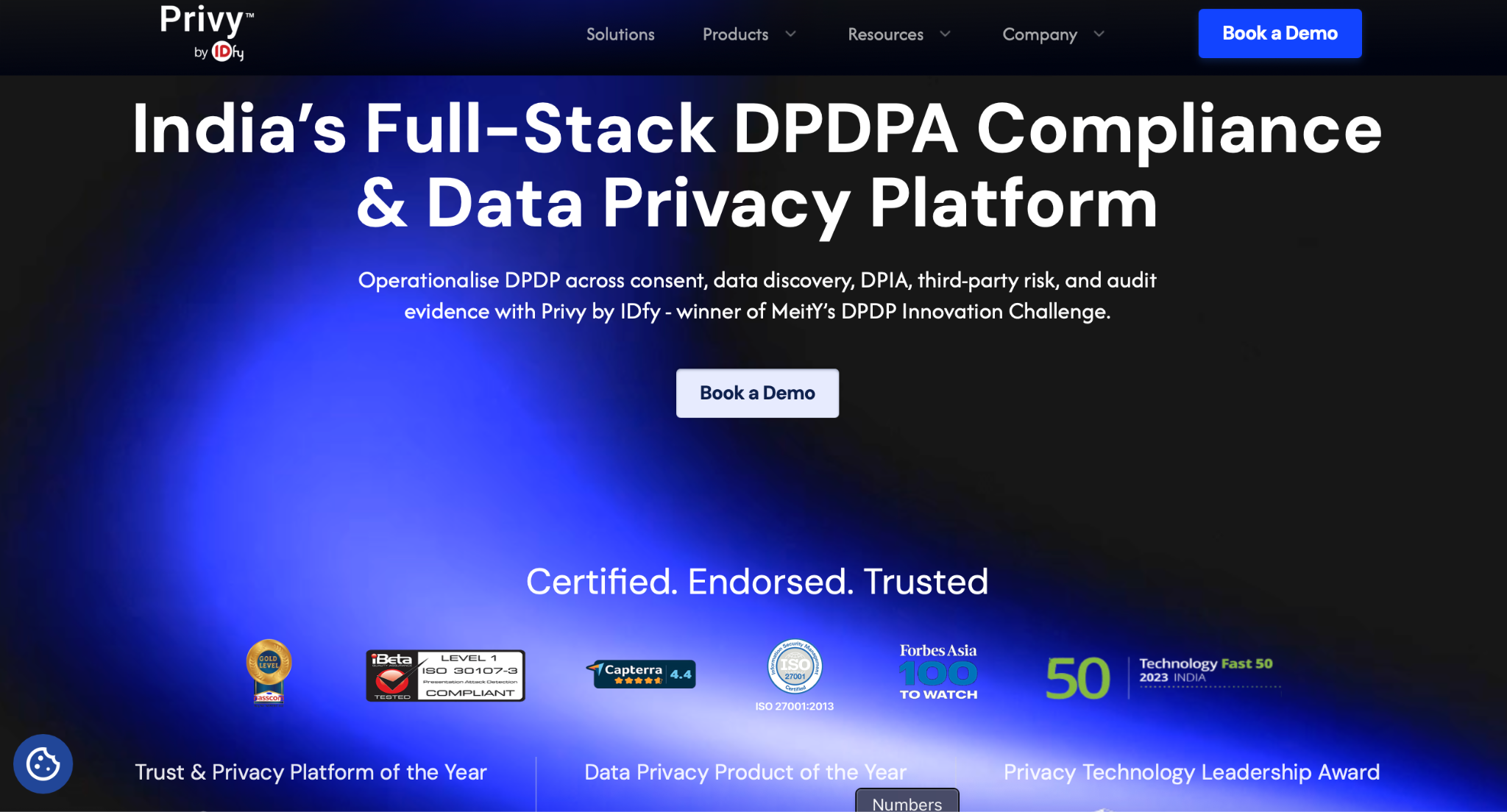
Privy by IDfy is an India-focused DPDPA compliance and data privacy platform built to help organizations manage consent, data discovery, DPIA, third-party risk, and audit evidence from one place.
It is positioned as a full-stack privacy platform for Indian enterprises that want to operationalize DPDP requirements instead of managing compliance through scattered spreadsheets, legal documents, and manual vendor reviews.
Key Features
- Consent lifecycle management
- Third-party risk workflows
- DPIA and privacy assessment support
- Personal data discovery and governance
- Data Principal Rights Management
- Cookie management
- Audit evidence management
- AI privacy co-pilot through Inspect AI
- Privacy gap detection and workflow visibility
- DPDPA-focused compliance modules
India/DPDPA Fit
Privy by IDfy has a strong India and DPDPA focus. It is positioned around India’s DPDP framework and was also listed as the winner of MeitY’s DPDP Innovation Challenge.
The platform supports:
- DPDPA compliance workflows
- Consent governance
- Third-party risk management
- DPIA and audit evidence tracking
- Personal data discovery
- Data Principal Rights workflows
- India-specific privacy implementation support
- BFSI, fintech, retail, and digital commerce use cases
Pros
- Built specifically for India’s DPDPA compliance needs
- Covers consent, data discovery, DPIA, third-party risk, and audit evidence in one platform
- Backed by IDfy’s identity and compliance experience
- Strong fit for BFSI and regulated Indian enterprises
- AI layer helps detect gaps and connect privacy workflows
- Recognized through MeitY’s DPDP Innovation Challenge
- Useful for companies that want privacy operations and vendor risk connected
Cons
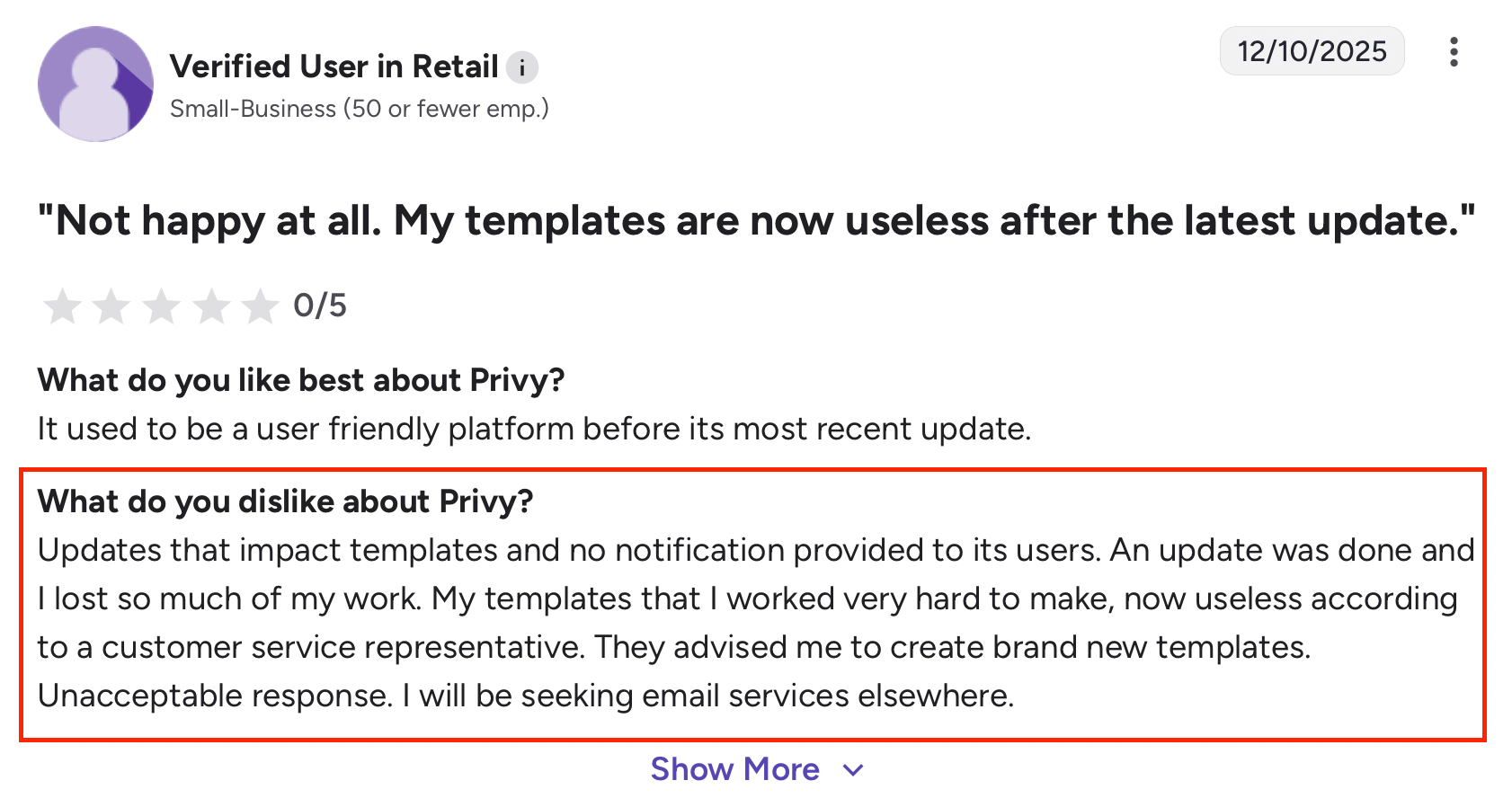
- Some users reported workflow and template disruptions after platform updates
- Dashboard organization and navigation can sometimes feel confusing
- Certain customization options may still feel limited
- Pricing may increase as usage and scale grow
- Advanced enterprise cybersecurity monitoring is not the platform’s core focus
Best For
- Indian enterprises preparing for DPDPA
- BFSI, fintech, retail, and digital commerce companies
- Privacy, legal, compliance, and risk teams
- Organizations that need consent, DPIA, data discovery, and third-party risk in one platform
Potential Limitations
Privy by IDfy is strong for DPDPA-led privacy and compliance workflows, but it may not replace dedicated cyber-risk platforms if your main requirement is continuous vendor security ratings, external attack surface monitoring, or threat intelligence.
8. LogicGate Risk Cloud – Best for No-Code Enterprise Risk and Third-Party Risk Workflows
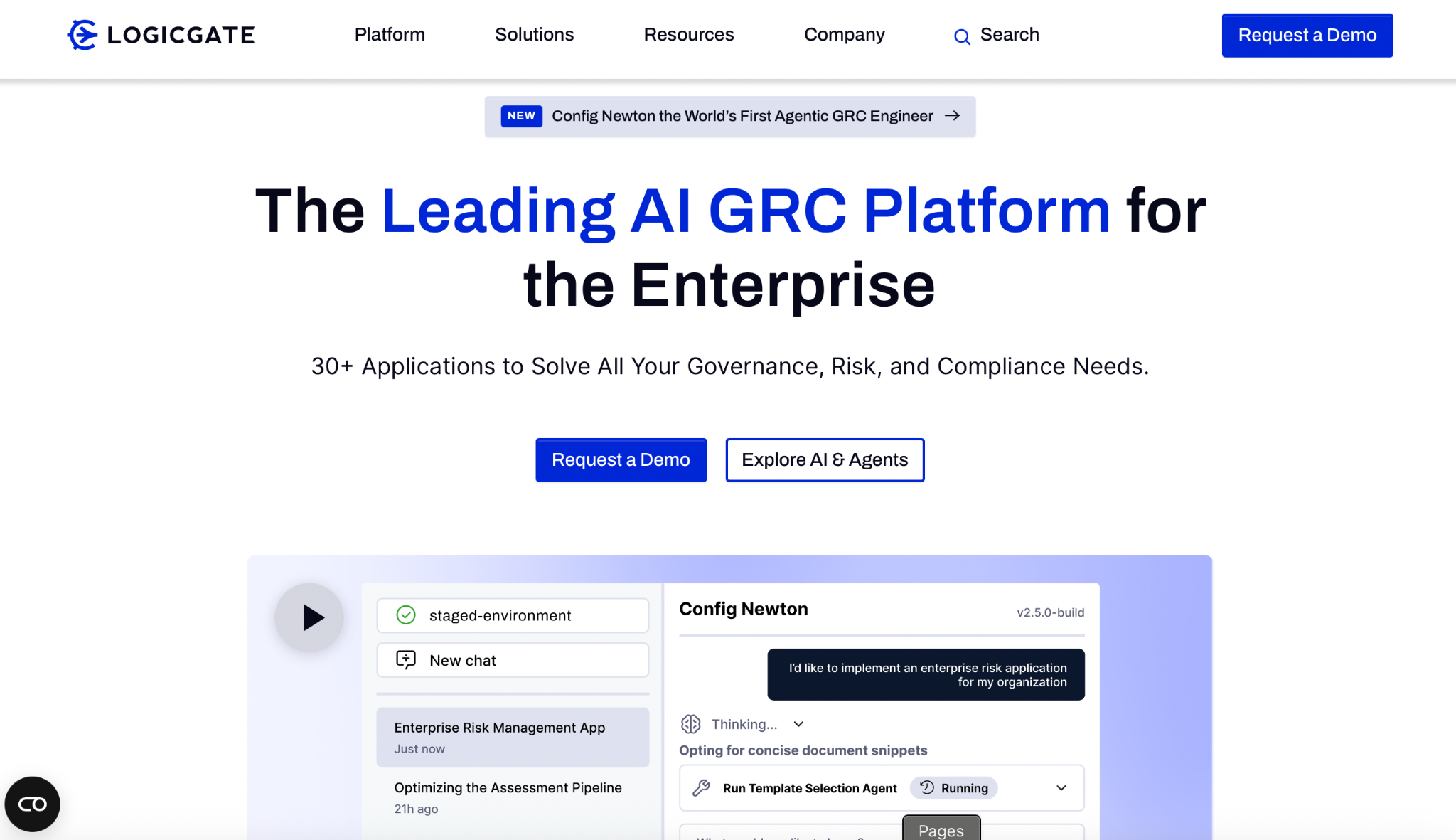
LogicGate Risk Cloud is a no-code GRC and third-party risk management platform designed to help organizations automate risk, compliance, audit, and vendor management workflows without heavy engineering effort.
The platform is known for its flexibility and workflow customization capabilities.
Instead of forcing organizations into rigid workflows, LogicGate allows teams to build and modify risk processes based on their own operational requirements.
Its Third-Party Risk Management solution is part of the broader Risk Cloud platform and supports vendor onboarding, risk assessments, evidence collection, workflow automation, and compliance management.
Key Features
- Third-party risk management workflows
- No-code workflow builder
- Automated evidence collection
- Vendor onboarding and assessments
- Risk and compliance automation
- AI-powered risk analysis through Spark AI
- Workflow automation and approvals
- Reporting and analytics dashboards
- Integration with enterprise tools and systems
- Audit and compliance management workflows
India/DPDPA Fit
LogicGate is not India-specific, but its flexible workflow engine makes it adaptable for DPDPA and enterprise privacy governance workflows.
The platform supports:
- Third-party risk and vendor governance workflows
- Compliance automation and audit readiness
- Risk assessments and evidence tracking
- Data privacy and governance use cases
- Integration with enterprise GRC ecosystems
- Customizable workflows for regulated industries like BFSI and healthcare
Pros
- Highly flexible no-code workflow customization
- Strong workflow automation and evidence collection
- Helps reduce spreadsheet-heavy GRC operations
- Good integration support across enterprise systems
- Centralized dashboard for risks, audits, and compliance tasks
- User-friendly for teams that want workflow flexibility without coding
- Strong automation capabilities for third-party risk processes
- Helpful training and onboarding resources
Cons
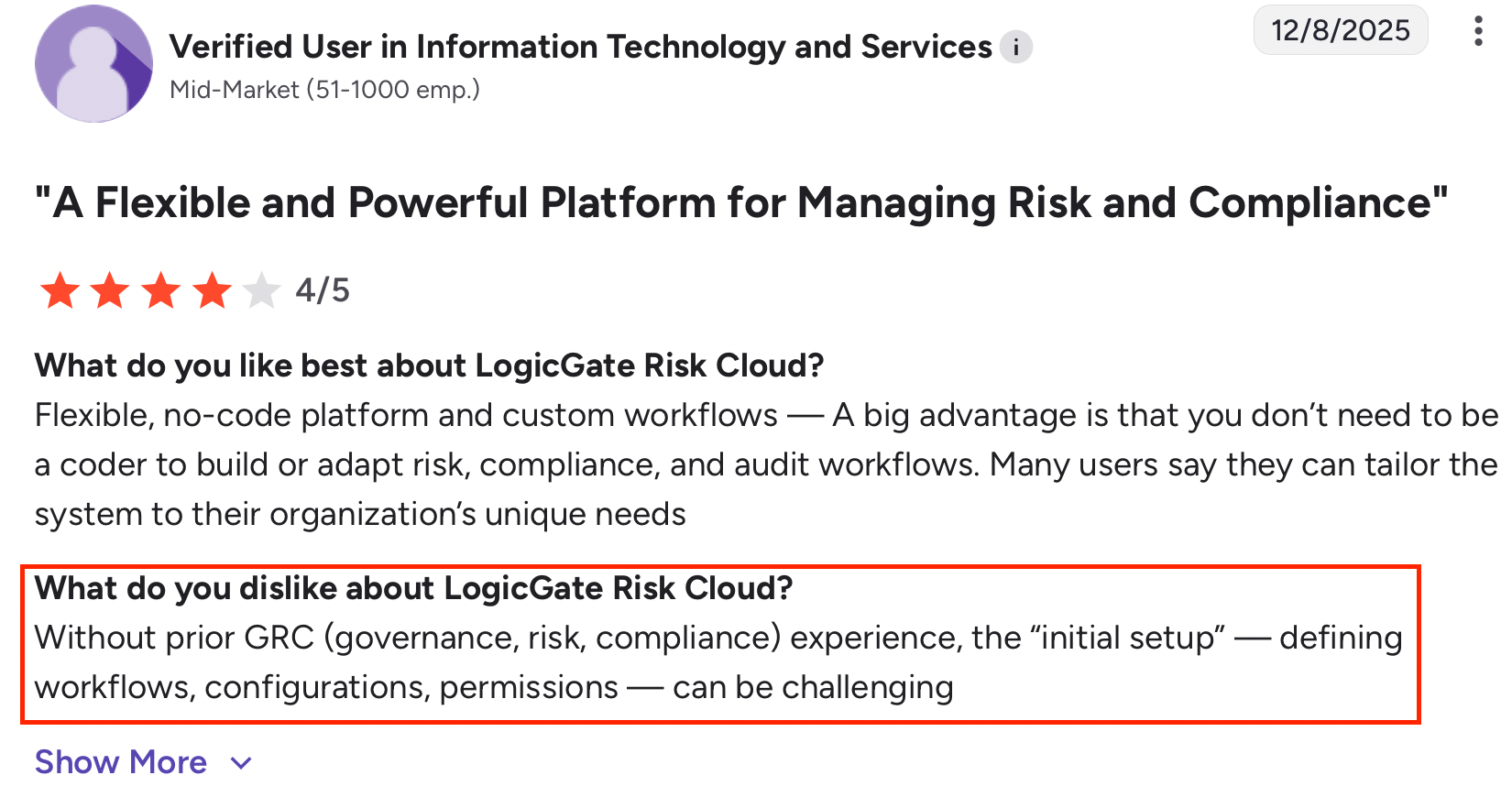
- Initial setup and workflow configuration can be time-consuming
- Learning curve can feel steep for non-GRC teams
- Advanced reporting may require additional configuration
- Build environment and workflow design can sometimes feel confusing
- Dashboard customization may require manual setup effort
- Some users report occasional platform performance slowdowns
Best For
- Mid-market and enterprise organizations
- Teams wanting flexible no-code GRC workflows
- Organizations managing complex third-party risk processes
- Compliance, audit, and enterprise risk teams
Potential Limitations
LogicGate Risk Cloud is highly customizable, but organizations without dedicated GRC ownership or workflow expertise may find the setup process overwhelming initially.
Teams looking for highly opinionated out-of-the-box DPDPA workflows may prefer India-focused compliance platforms instead.
9. SecurityScorecard – Best for Security Ratings and Threat-Informed Third-Party Risk Management
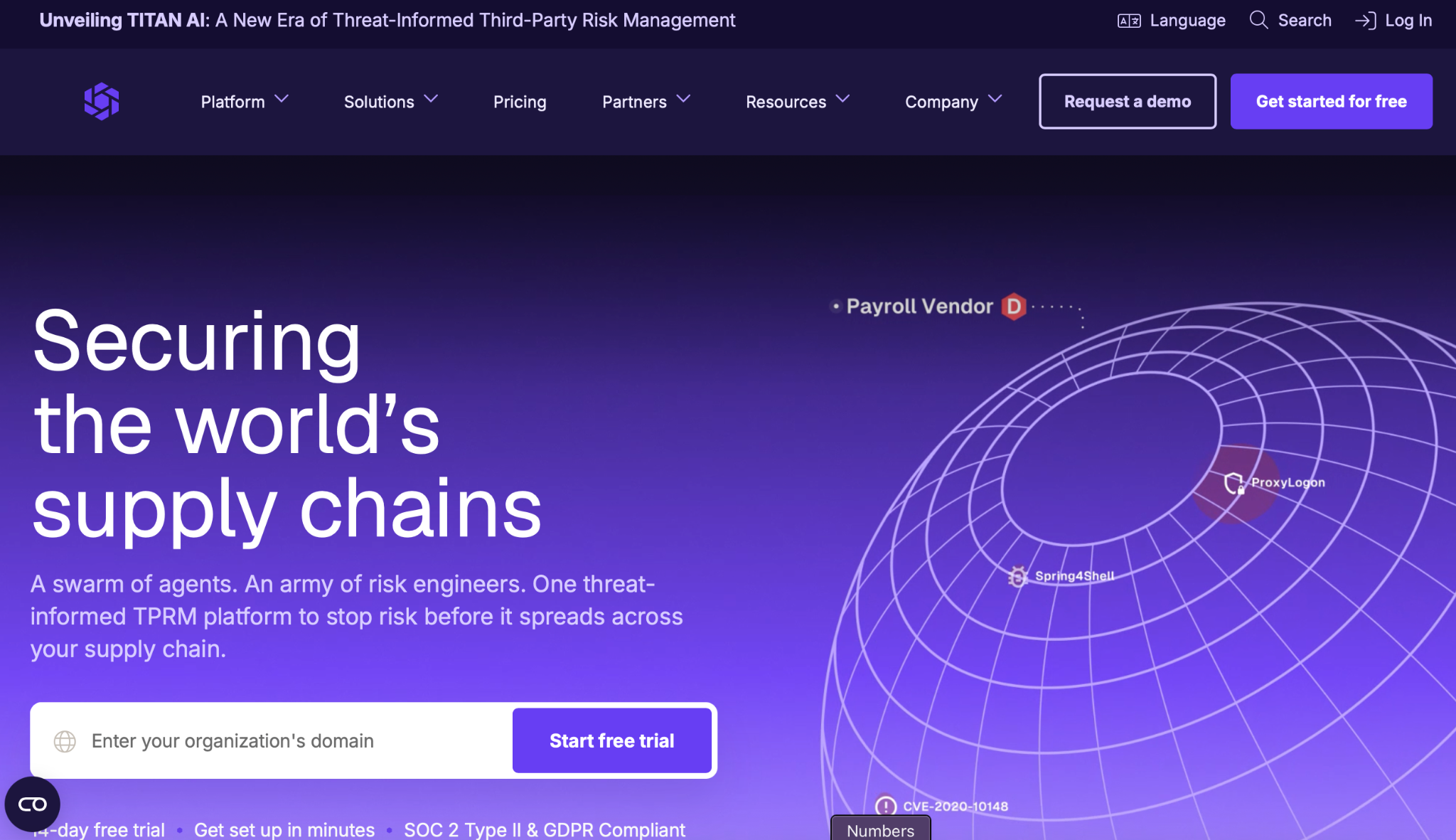
SecurityScorecard is a third-party risk management and security ratings platform designed to help organizations continuously monitor vendor security posture, reduce supply chain risk, and improve cybersecurity visibility across third-party ecosystems.
The platform is heavily focused on threat-informed TPRM and combines:
- security ratings
- continuous monitoring
- AI-powered risk analysis
- threat intelligence
- vendor assessments
- supply chain visibility
Its TITAN AI platform adds AI-driven workflows, automated assessments, threat detection, remediation support, and real-time third-party risk visibility.
Key Features
- Third-party risk management workflows
- Security ratings and scorecards
- Continuous vendor monitoring
- AI-powered TITAN platform
- Threat-informed TPRM
- Automated security questionnaires
- Real-time threat intelligence
- Vendor risk assessments
- Supply chain risk visibility
- Dark web and breach monitoring
- AI-assisted remediation insights
- Reporting and board-level dashboards
India/DPDPA Fit
SecurityScorecard is not India-specific, but it supports vendor cybersecurity governance workflows that are increasingly important under DPDPA, RBI outsourcing scrutiny, and enterprise cyber-risk programs.
The platform supports:
- Continuous vendor cyber-risk monitoring
- Third-party security assessments
- Compliance and audit readiness workflows
- Threat intelligence and breach monitoring
- Vendor security benchmarking
- Security posture visibility for large vendor ecosystems
Pros
- Strong vendor security ratings and benchmarking capabilities
- Excellent external attack surface visibility
- Continuous monitoring improves vendor oversight
- AI-powered workflows reduce manual assessment effort
- Useful board-level reporting and dashboards
- Easy implementation compared to traditional enterprise GRC tools
- Helpful integrations and API connectivity
- Good visibility into DNS health, vulnerabilities, credential leaks, and cyber posture
- Strong support experience mentioned by many users
Cons
- Some users report false positives or scoring inconsistencies
- Shared hosting or CDN-related risks can sometimes affect scores unfairly
- Certain integrations and onboarding workflows may require tuning initially
- Interface can feel overwhelming for non-technical users
- Some users wanted more flexible reporting and filtering controls
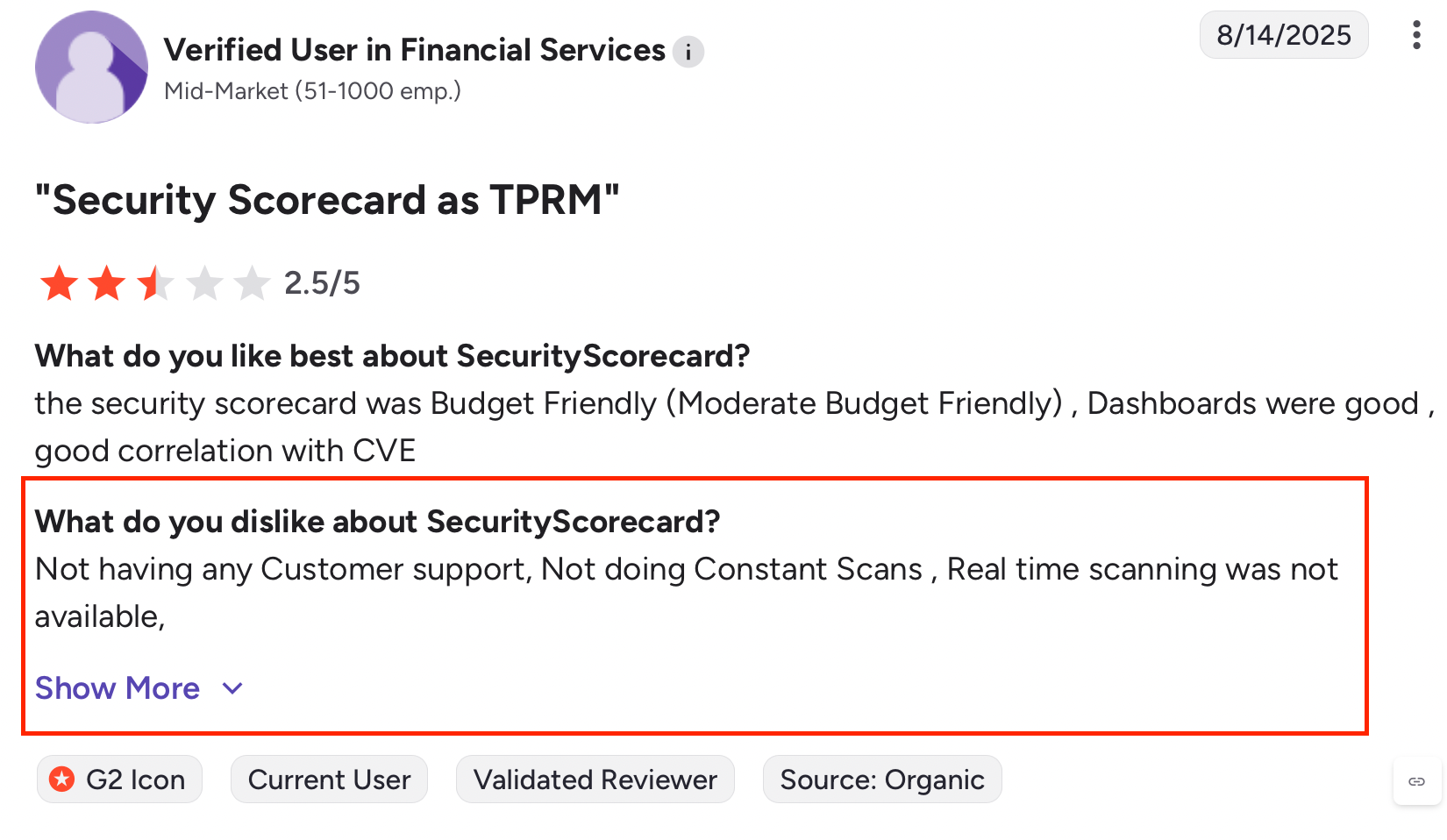
- Real-time scanning expectations may vary depending on workflows and configuration
Best For
- Cybersecurity and third-party risk teams
- Large vendor ecosystems and supply chain monitoring
- BFSI, healthcare, technology, and enterprise organizations
- Teams prioritizing continuous vendor security visibility and threat intelligence
Potential Limitations
SecurityScorecard is primarily focused on cybersecurity posture and threat-informed vendor risk monitoring.
Organizations looking for broader privacy governance, DPDPA consent workflows, DPIAs, DSARs, or operational privacy management may still require a dedicated privacy or compliance platform alongside it.
10. SAP Risk Management – Best for SAP-Centric Enterprise Risk and Compliance Management
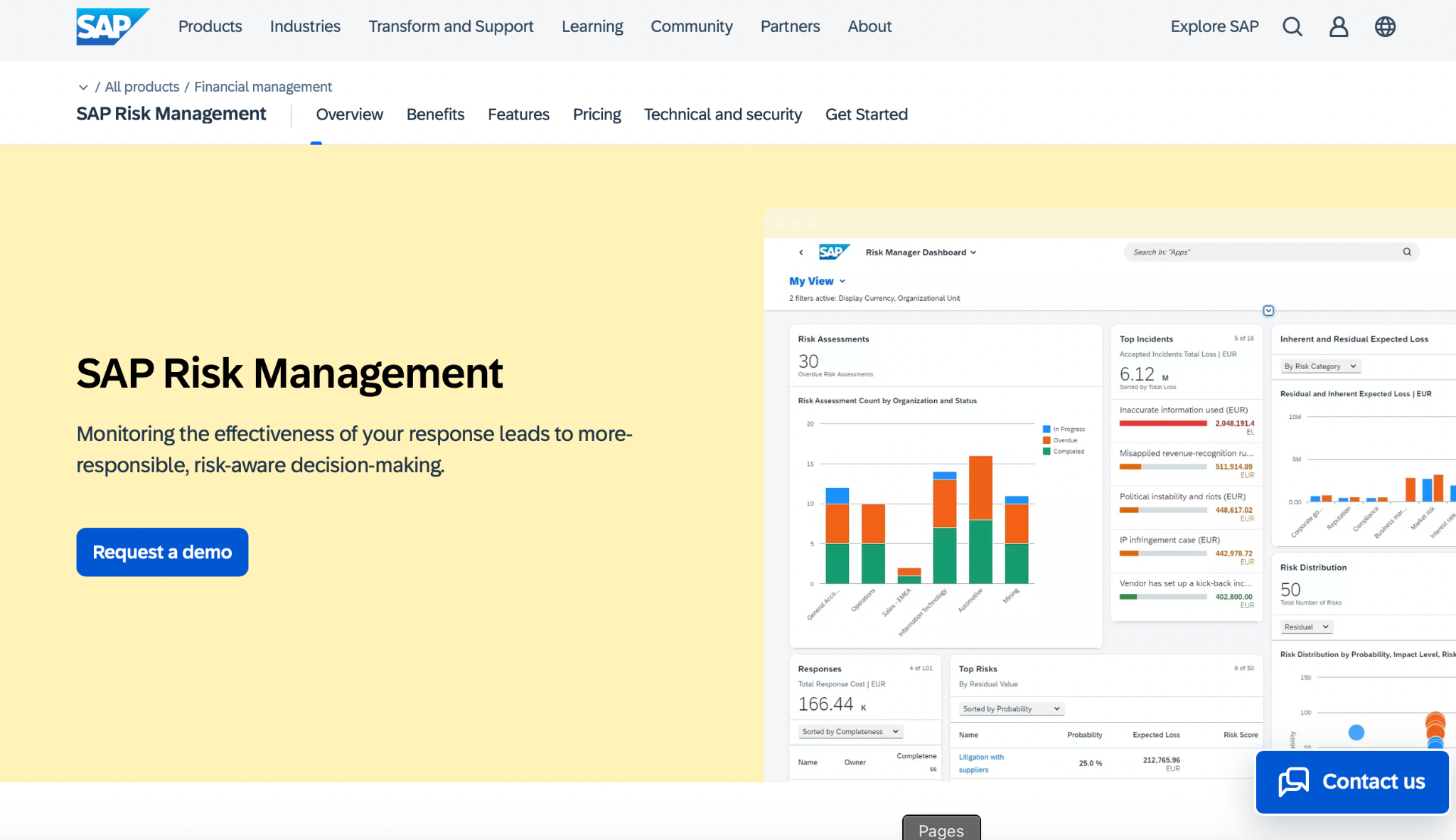
SAP Risk Management is an enterprise risk management (ERM) solution from SAP designed to help organizations identify, assess, monitor, and mitigate operational, financial, compliance, and business risks from a centralized platform.
The platform is especially useful for enterprises already running SAP ecosystems like SAP S/4HANA or SAP ECC because it integrates risk management directly into business operations, governance workflows, controls, and reporting systems.
It helps organizations monitor risk exposure, automate workflows, manage compliance requirements, and improve visibility into enterprise-wide risks through dashboards, analytics, and real-time monitoring.
Key Features
- Enterprise risk management workflows
- Risk identification and assessment
- Risk monitoring and analytics
- Key risk indicators (KRIs)
- Real-time risk visibility dashboards
- Workflow automation and escalation
- Risk scoring and analysis
- Integration with SAP S/4HANA and ECC
- Audit-ready reporting and compliance workflows
- Guided workflows and governance controls
India/DPDPA Fit
SAP Risk Management is not specifically built for DPDPA, but it supports enterprise governance, operational risk, compliance, and audit workflows that many regulated Indian organizations require.
The platform supports:
- Enterprise-wide risk governance
- Compliance and audit management
- Risk ownership and accountability tracking
- Real-time monitoring and escalation workflows
- Integration with broader SAP compliance ecosystems
- BFSI, manufacturing, telecom, and enterprise governance use cases
Pros
- Strong integration with SAP S/4HANA and SAP ecosystems
- Centralized enterprise risk visibility
- Real-time dashboards and monitoring capabilities
- Good workflow automation and escalation tracking
- Useful for large and complex enterprise environments
- Helps standardize risk management processes across teams
- Strong audit and compliance reporting support
- Reliable for enterprise-scale governance operations
Cons
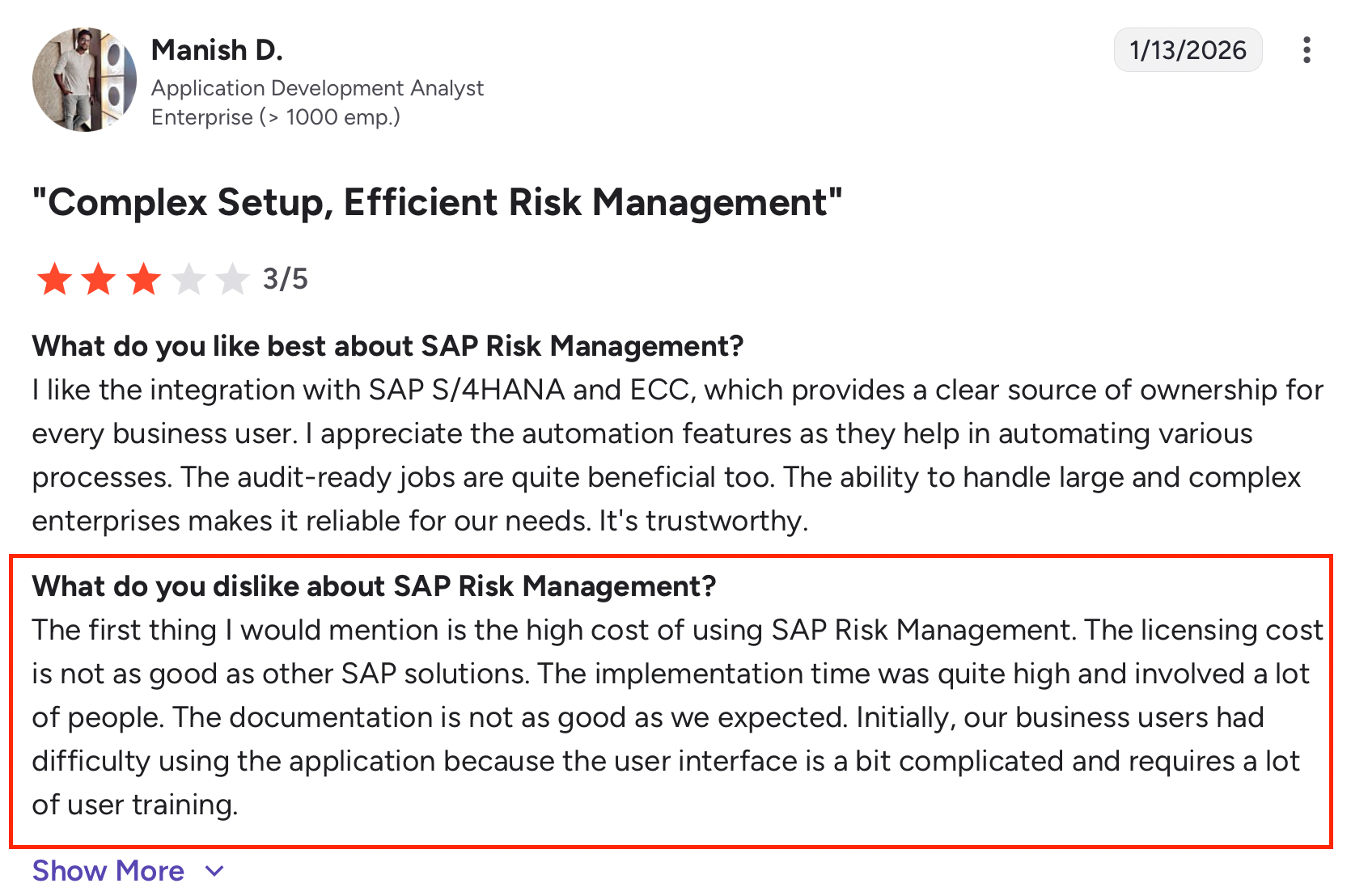
- High implementation and licensing costs
- Initial deployment can be time-consuming and resource-heavy
- User interface can feel outdated and complex
- Requires training for non-technical or business users
- Reporting customization may require advanced SAP expertise
- Integration with non-SAP systems can be challenging
- Customization flexibility may feel limited in some workflows
Best For
- Large enterprises already using SAP ecosystems
- Manufacturing, BFSI, telecom, and enterprise operations teams
- Organizations needing centralized enterprise risk management
- Companies managing operational, compliance, and financial risks at scale
Potential Limitations
SAP Risk Management works best inside SAP-heavy enterprise environments.
Organizations looking mainly for lightweight third-party vendor risk management or cyber-focused TPRM may find the platform broader, more implementation-heavy, and less specialized compared to dedicated vendor risk management platforms.
Which Vendor Risk Management Software Should You Choose?
Conclusion
Vendor risk management is no longer only about security. It now affects compliance, privacy, operational resilience, and supply chain governance as well.
With DPDPA increasing accountability around third-party data handling, manual vendor assessments and spreadsheet-based tracking are becoming harder to manage at scale.
Different tools fit different business needs:
- Enterprise teams usually need deeper GRC and workflow automation
- Mid-market companies often prioritize faster deployment and simpler operations
- Cyber-focused teams may prefer continuous monitoring and security ratings
- Privacy-focused organizations may prioritize DPDPA workflows and audit readiness
If you are looking for a DPDPA-focused platform that helps you manage vendor risk assessments, consent governance, DPIAs, privacy operations, and compliance workflows from one place, book a demo with Redacto.