%20Redacto%20logo_New.png)


5 Best DSAR Management Software With Privacy Management Tools


If you are searching for the best DSAR management software, chances are you are already struggling with manual privacy workflows.
You receive deletion requests, access requests, or correction requests, but the real problem starts when you need to find user data across:
- CRMs
- SaaS apps
- cloud storage
- support tools
- third-party vendors
Most teams today need more than a simple DSAR ticketing system. You also need:
- DSAR automation
- consent management
- data discovery
- DPIA/PIA workflows
- vendor risk management
- audit-ready compliance tracking
I recently saw a compliance team spend more time chasing data across systems than actually responding to the request itself.
That is becoming a common problem as privacy regulations like GDPR, DPDPA, and CCPA become stricter.
The challenge is that many DSAR tools only help with request intake, not full privacy operations.
This guide compares the best DSAR management software with privacy management tools for automation, governance, compliance workflows, and enterprise privacy management.
TL;DR
- Redacto is the best choice if you want a complete privacy management platform with DSAR automation, consent management, vendor risk, DPIAs, breach workflows, and strong DPDPA support. It is especially good for enterprises and regulated industries that need deeper privacy operations.
- OneTrust is a strong enterprise platform for managing global privacy compliance, governance, and large-scale regulatory workflows across multiple regions.
- DataGrail is a good fit if your company uses many SaaS tools and you want faster DSAR automation with less manual work.
- TrustArc works well for organizations that care more about audit readiness, structured governance, and operational compliance workflows.
- Ketch is best for teams focused heavily on consent management, customer preferences, and enforcing privacy choices across websites and marketing systems.
What Should You Look for in DSAR Management Software?
Choosing DSAR software is no longer just about handling request forms.
You need a platform that can actually help you manage privacy operations at scale without creating more manual work for your team.
Here are the most important things you should look for:
- You should look for end-to-end DSAR automation that handles request intake, identity verification, workflow routing, fulfillment, deletion, redaction, and audit logs without forcing your team to manage everything manually.
- You should choose a platform that also includes broader privacy management features like consent management, data mapping, RoPA, DPIA/PIA workflows, vendor risk assessments, and breach management instead of buying separate tools for each workflow.
- You need strong data discovery capabilities because user data is usually spread across CRMs, SaaS apps, cloud storage, internal databases, and third-party systems that are difficult to track manually.
- You should make sure the platform supports major privacy regulations like GDPR, CCPA/CPRA, DPDPA, and other global privacy workflows if your business operates across multiple regions.
- You should avoid tools that still depend heavily on manual coordination because DSAR requests become difficult to scale once request volumes increase across teams and systems.
- You should look for enterprise-ready features like auditability, integrations, deployment flexibility, scalability, and multi-region support if your compliance requirements are expected to grow over time.
Best DSAR Management Software With Privacy Management Tools
1. Redacto — Best AI-Powered DSAR Management Software With Privacy Management Tools for DPDPA Compliance
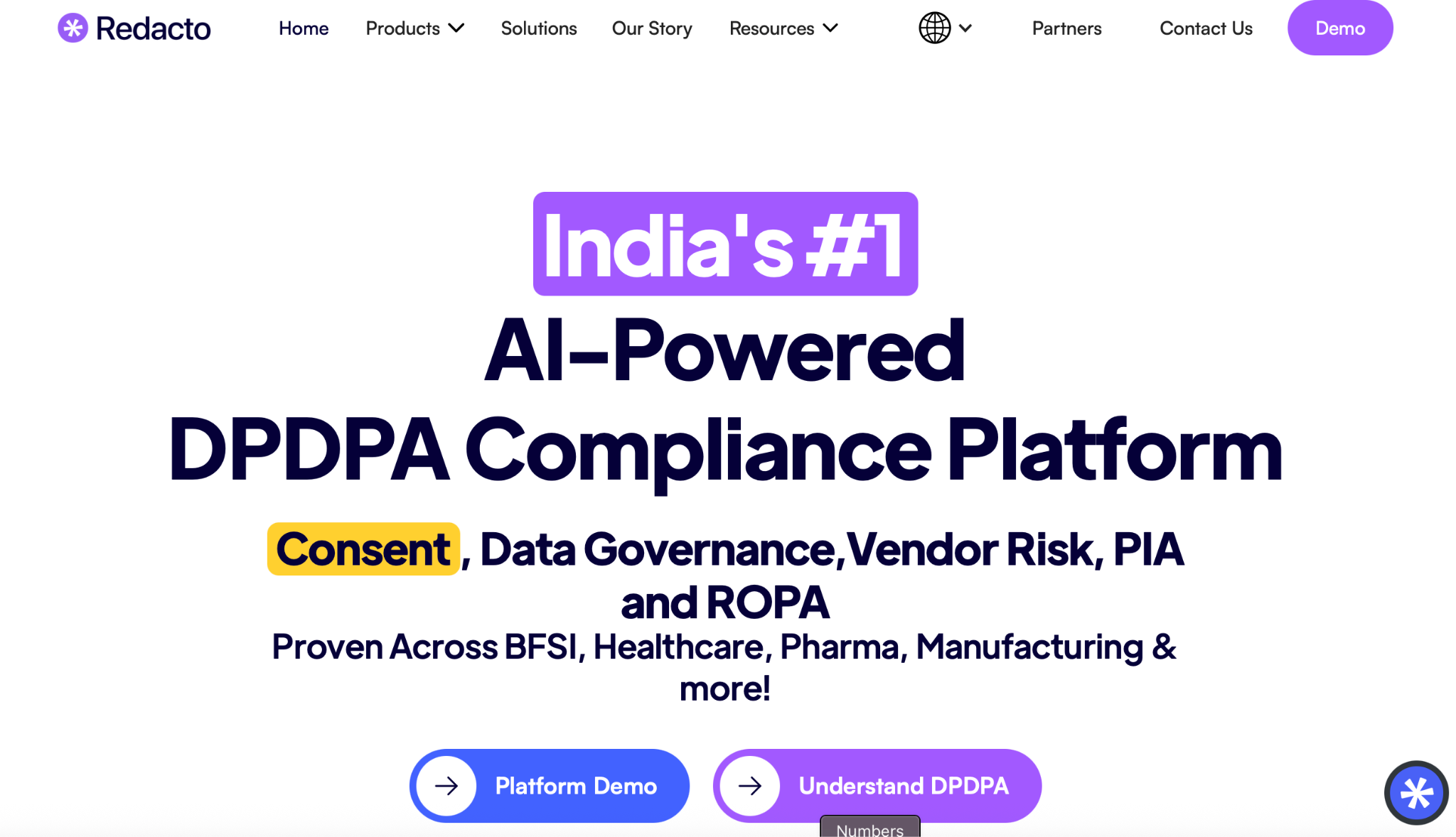
If you are looking for a DSAR management platform that also helps you manage broader privacy operations, Redacto is one of the strongest India-first platforms currently available.
Unlike many DSAR tools that mainly focus on request intake and ticket workflows, Redacto combines:
- DSAR automation
- consent management
- vendor risk management
- DPIA/PIA automation
- data discovery
- breach management
- governance workflows
inside one unified privacy platform.
This makes it a much better fit if you are trying to manage privacy compliance operationally instead of adding another standalone DSAR tool to your stack.
Redacto is especially built for organizations handling sensitive customer data across industries like:
- BFSI
- healthcare
- pharma
- ecommerce
- manufacturing
- fintech
where compliance workflows are usually more complex.
Key Features
- You can automate DSAR workflows for access, deletion, correction, and data subject requests instead of manually coordinating requests across multiple teams and systems.
- You get unified consent management with DPDPA-compliant multilingual consent workflows and 7000+ integrations to connect with your existing consent stack.
- You can use built-in data discovery and mapping features to identify sensitive data across SaaS apps, cloud systems, databases, and internal environments.
- You get AI-assisted DPIA and Privacy Impact Assessment workflows that reduce manual assessment work and improve compliance speed.
- You can automate vendor risk assessments and third-party reviews instead of spending days managing compliance questionnaires manually.
- You also get breach notification workflows, incident management, and real-time compliance dashboards for better operational visibility.
- You can deploy Redacto through SaaS, private cloud, or on-prem infrastructure depending on your security and compliance requirements.
What Makes Redacto Different
- Redacto is strongly focused on DPDPA workflows instead of treating Indian privacy compliance as a secondary feature.
- The platform combines DSAR management with broader privacy management capabilities instead of limiting you to basic request handling.
- Redacto focuses heavily on AI automation to reduce manual compliance operations across privacy teams.
- Compared to many enterprise privacy platforms, Redacto also puts stronger emphasis on integrations, deployment flexibility, and operational usability.
Pros
- Strong DSAR automation capabilities
- Unified privacy management platform
- Built specifically for DPDPA compliance workflows
- AI-assisted DPIA and vendor risk automation
- 7000+ integrations and plugins
- Supports SaaS, private cloud, and on-prem deployment
Cons
- Pricing is not publicly available
- More suitable for mid-market and enterprise teams than very small businesses
Best For
- Enterprises managing large-scale privacy operations
- Organizations preparing for DPDPA compliance
- BFSI, healthcare, pharma, and fintech companies
- Teams needing DSAR workflows together with broader privacy governance
If you only need a lightweight DSAR request tool, Redacto may feel broader than necessary.
But if you want DSAR management software with privacy management tools like consent governance, vendor risk management, DPIAs, breach workflows, and data discovery in one platform, Redacto is one of the strongest options to evaluate for enterprise privacy operations.
2. OneTrust — Best Enterprise DSAR Management Software for Global Privacy Operations
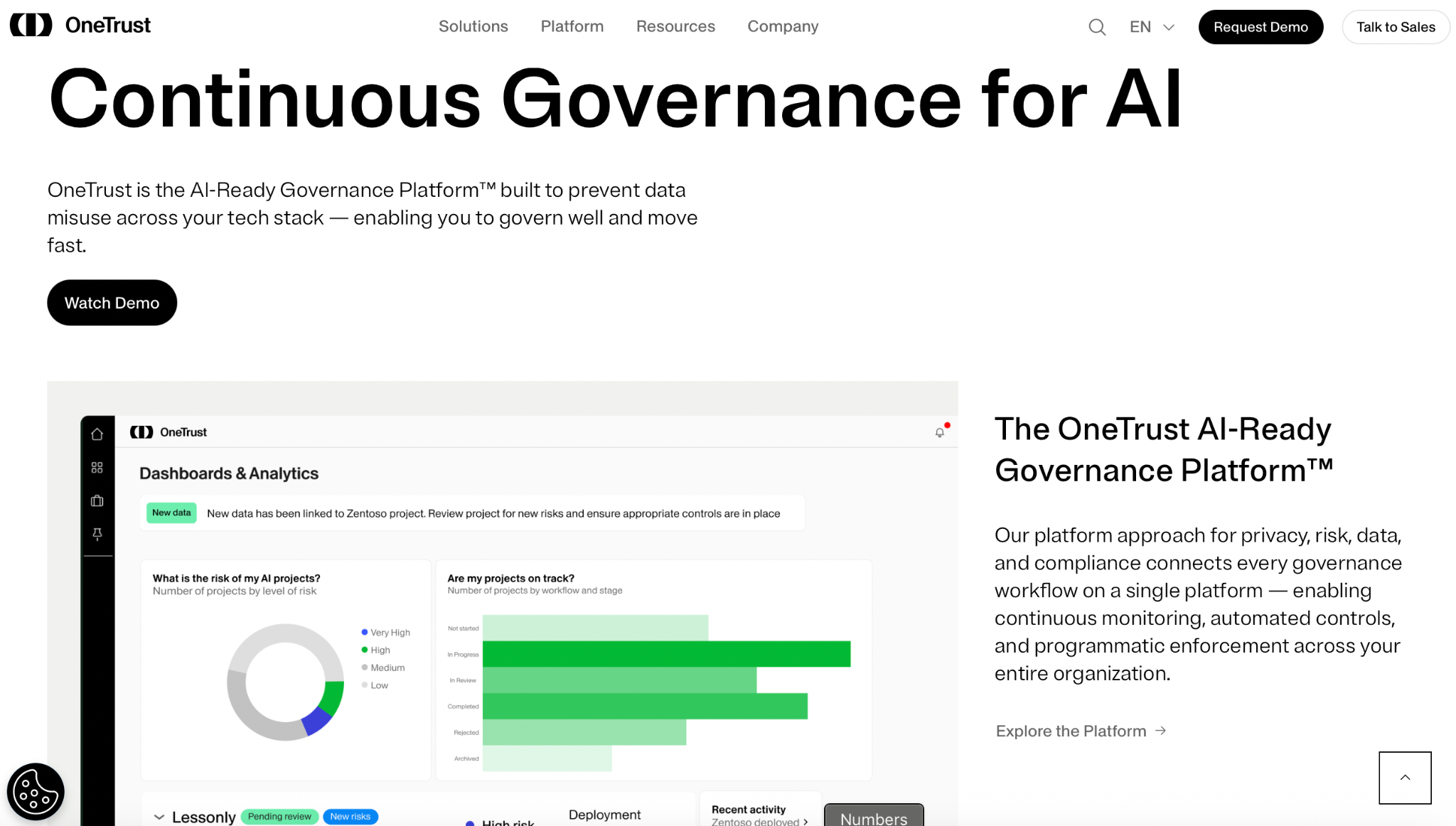
OneTrust is one of the biggest names in the privacy and compliance space, especially for enterprises managing large-scale global privacy operations.
If you are looking for DSAR management software with broader privacy management tools, OneTrust goes far beyond basic request handling. The platform combines:
- DSAR automation
- consent and preference management
- data mapping
- RoPA workflows
- DPIAs
- AI governance
- third-party risk management
- compliance automation
inside one large governance platform.
OneTrust is mainly built for organizations that need centralized privacy operations across multiple business units, regions, and regulations.
Key Features
- You can automate the full DSAR lifecycle including request intake, identity verification, workflow routing, data discovery, deletion, fulfillment, and audit tracking.
- You get consent and preference management tools that help manage consumer transparency and privacy choices across digital properties.
- You can use data mapping and RoPA workflows to maintain visibility into how personal data moves across systems.
- You get built-in DPIA and privacy automation workflows to reduce manual compliance operations.
- You can manage third-party risk assessments, mitigation workflows, and vendor compliance processes from the same platform.
- You also get AI governance and data use governance capabilities for organizations managing AI-related compliance and risk workflows.
- The platform supports integrations across large enterprise tech stacks for centralized privacy operations.
What Makes OneTrust Different
- OneTrust is heavily focused on enterprise-wide governance instead of only DSAR fulfillment workflows.
- The platform combines privacy, AI governance, risk management, consent management, and third-party governance inside one ecosystem.
- OneTrust is particularly strong for organizations operating across multiple regions and regulations that need centralized compliance operations.
- The platform also provides regulatory intelligence updates that help teams stay aligned with evolving privacy laws globally.
Pros
- Strong end-to-end DSAR automation
- Comprehensive privacy management ecosystem
- Powerful consent and data mapping capabilities
- Large integration ecosystem
- Strong auditability and governance workflows
- Helpful templates and configurable workflows
- Intuitive onboarding experience for many workflows and integrations
Cons
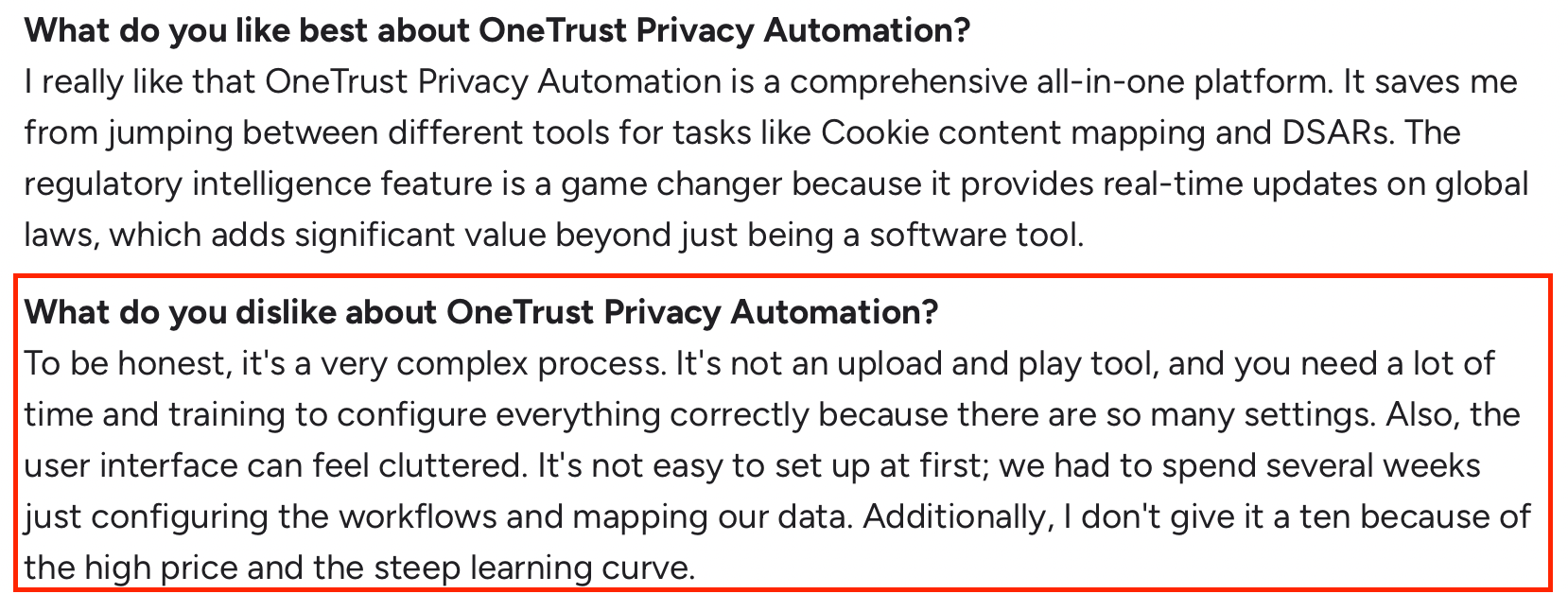
- Setup and implementation can be complex for new teams
- The platform has a steep learning curve due to the number of modules and settings
- Pricing can become expensive as more modules are added
- Some users mention the interface can feel cluttered
- Reporting and dashboard customization can feel limited in certain workflows
- Rights management and consent categorization may feel confusing initially
Best For
- Large enterprises
- Global privacy operations teams
- Organizations managing multiple regulations
- Companies needing centralized governance workflows
- Enterprises with large vendor ecosystems and complex compliance requirements
If you need a lightweight DSAR workflow tool, OneTrust may feel too large and configuration-heavy.
But if you want enterprise-grade DSAR management software with privacy management tools like consent governance, data mapping, third-party risk management, DPIAs, AI governance, and global compliance workflows, OneTrust remains one of the strongest enterprise platforms in the market.
Top 5+ OneTrust Alternatives & Competitors for DPDPA Compliance in India (2026)
3. DataGrail — Best DSAR Management Software for SaaS and Cloud-Based Privacy Operations
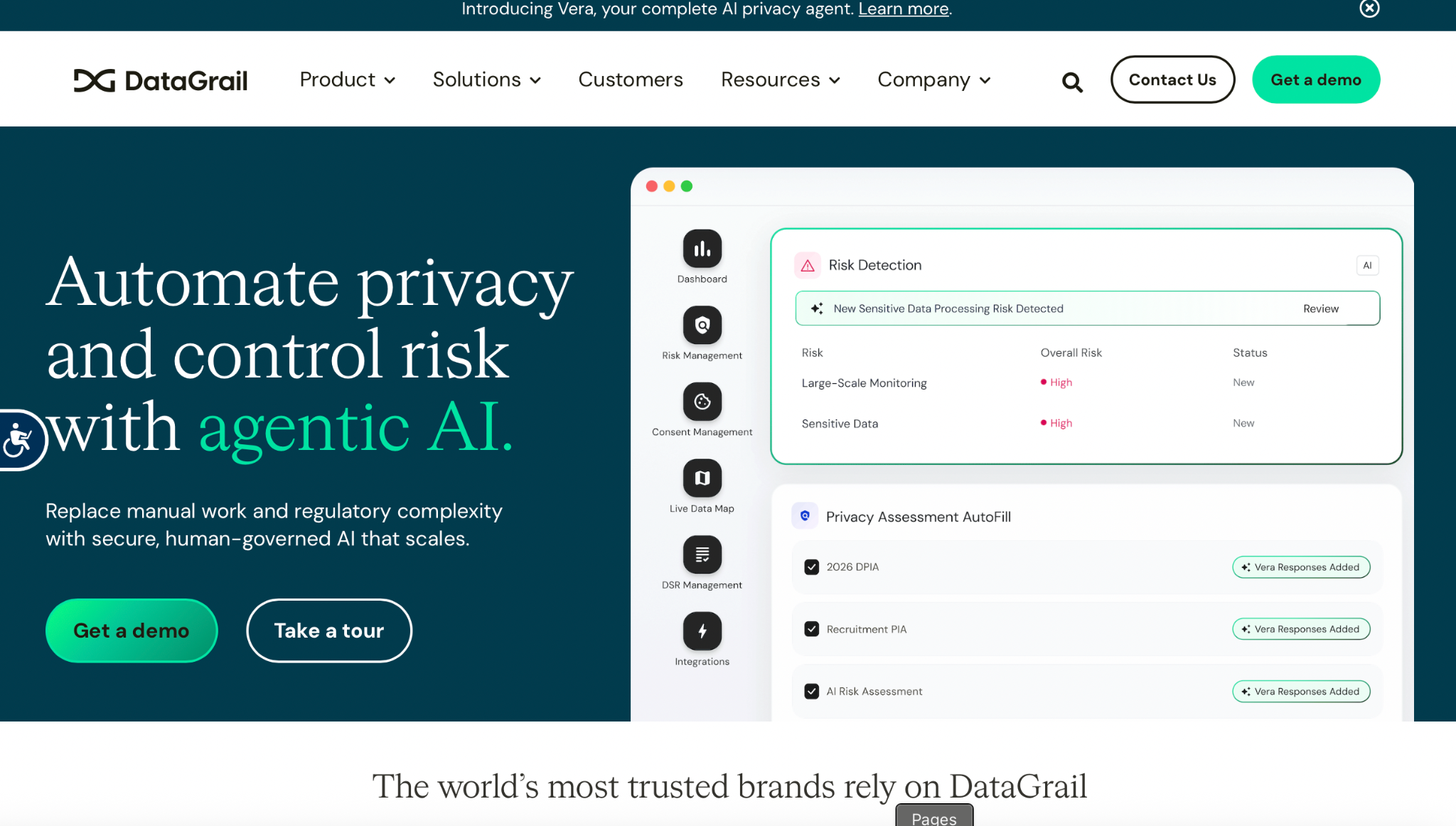
DataGrail is a strong choice if your biggest privacy challenge is managing DSAR requests and compliance workflows across a large SaaS and cloud application ecosystem.
Unlike traditional privacy platforms that focus heavily on governance documentation, DataGrail is more operationally focused. The platform combines:
- DSAR automation
- consent management
- data discovery
- DPIAs
- risk management
- live data mapping
- AI-powered privacy workflows
inside one automation-focused privacy platform.
DataGrail is especially popular with SaaS companies, tech companies, and mid-market organizations that need faster privacy operations without building large compliance teams.
Key Features
- You can automate the full DSAR process across 2,500+ integrations instead of manually searching through SaaS apps, databases, and cloud systems.
- You get Live Data Map capabilities that help you maintain visibility into systems, processes, and personal data movement across your organization.
- You can use automated consent management workflows with 24/7 consent enforcement and customizable consent banners.
- You get AI-powered privacy automation through Vera, DataGrail’s AI privacy agent, which helps automate recommendations, assessments, and operational privacy tasks.
- You can automate DPIA and PIA workflows to reduce manual assessment work and speed up compliance operations.
- You can use responsible data discovery tools to uncover sensitive personal information across structured and unstructured data sources.
- You also get risk management workflows that help identify and resolve privacy risks before they become larger compliance issues.
What Makes DataGrail Different
- DataGrail is strongly focused on automation and operational efficiency instead of heavily governance-driven privacy workflows.
- The platform is designed to reduce manual privacy work for smaller privacy teams managing large SaaS ecosystems.
- DataGrail puts heavy emphasis on integrations and automated data discovery, which is useful for organizations dealing with shadow IT and fragmented cloud systems.
- The platform also focuses heavily on usability, onboarding support, and automation accessibility for non-technical teams.
Pros
- Strong DSAR automation across SaaS systems
- 2,500+ integrations for automated data discovery
- Excellent consent management capabilities
- AI-powered privacy automation with Vera
- Simple and user-friendly interface
- Strong onboarding support and documentation
- Helpful live data mapping features
- Easy customization for consent workflows and banners
Cons
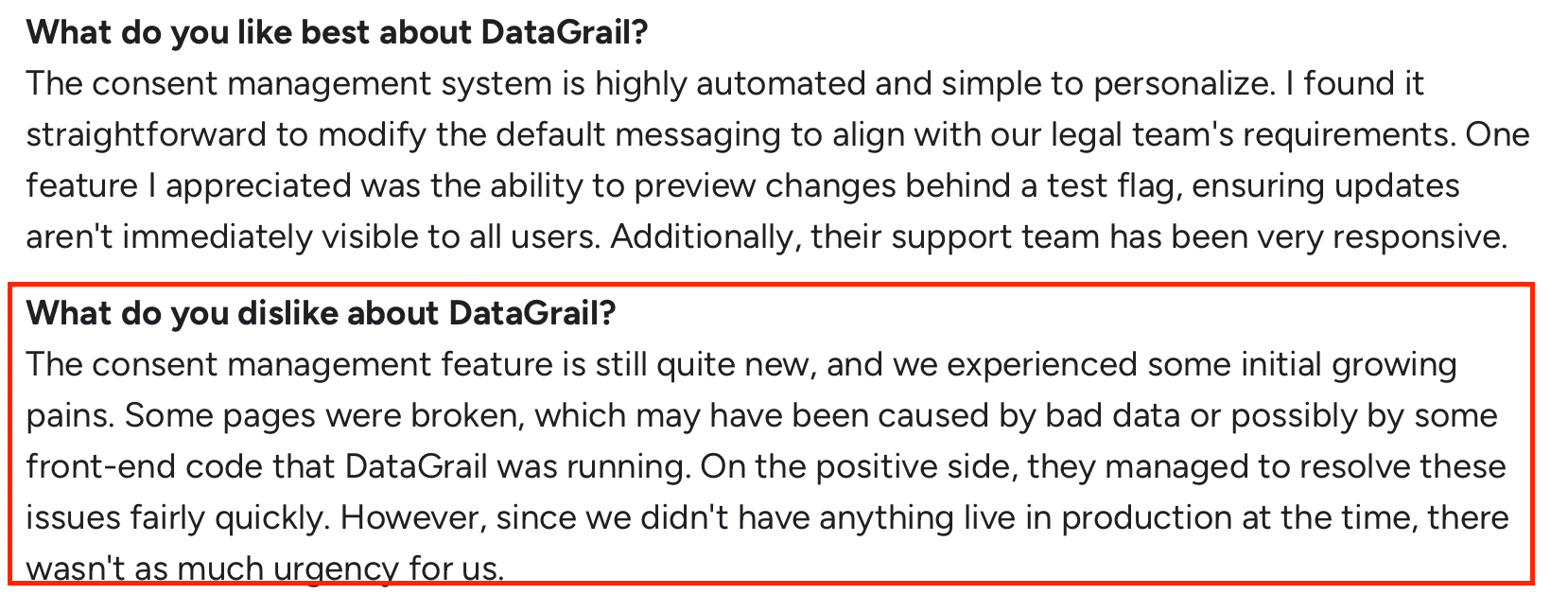
- Initial integrations can sometimes become technical during setup
- Some onboarding workflows may take longer if API issues appear
- Bulk processing for DSAR requests is limited in some workflows
- Certain features and labels could offer deeper customization
- Some consent management features still feel newer compared to more mature modules
- Assessment exports and reporting flexibility could improve
Best For
- SaaS companies
- Mid-market privacy teams
- Cloud-first organizations
- Companies managing large martech ecosystems
- Teams wanting automation-heavy privacy workflows
- Organizations needing strong consent management and data discovery
If your privacy team spends most of its time manually searching through SaaS tools, managing consent workflows, or handling repetitive DSAR operations, DataGrail is one of the strongest automation-focused privacy platforms to consider.
It is especially well suited for organizations that want DSAR management software with privacy management tools focused on integrations, automation, consent enforcement, and operational simplicity.
4. TrustArc — Best DSAR Management Software for Audit-Ready Privacy Governance
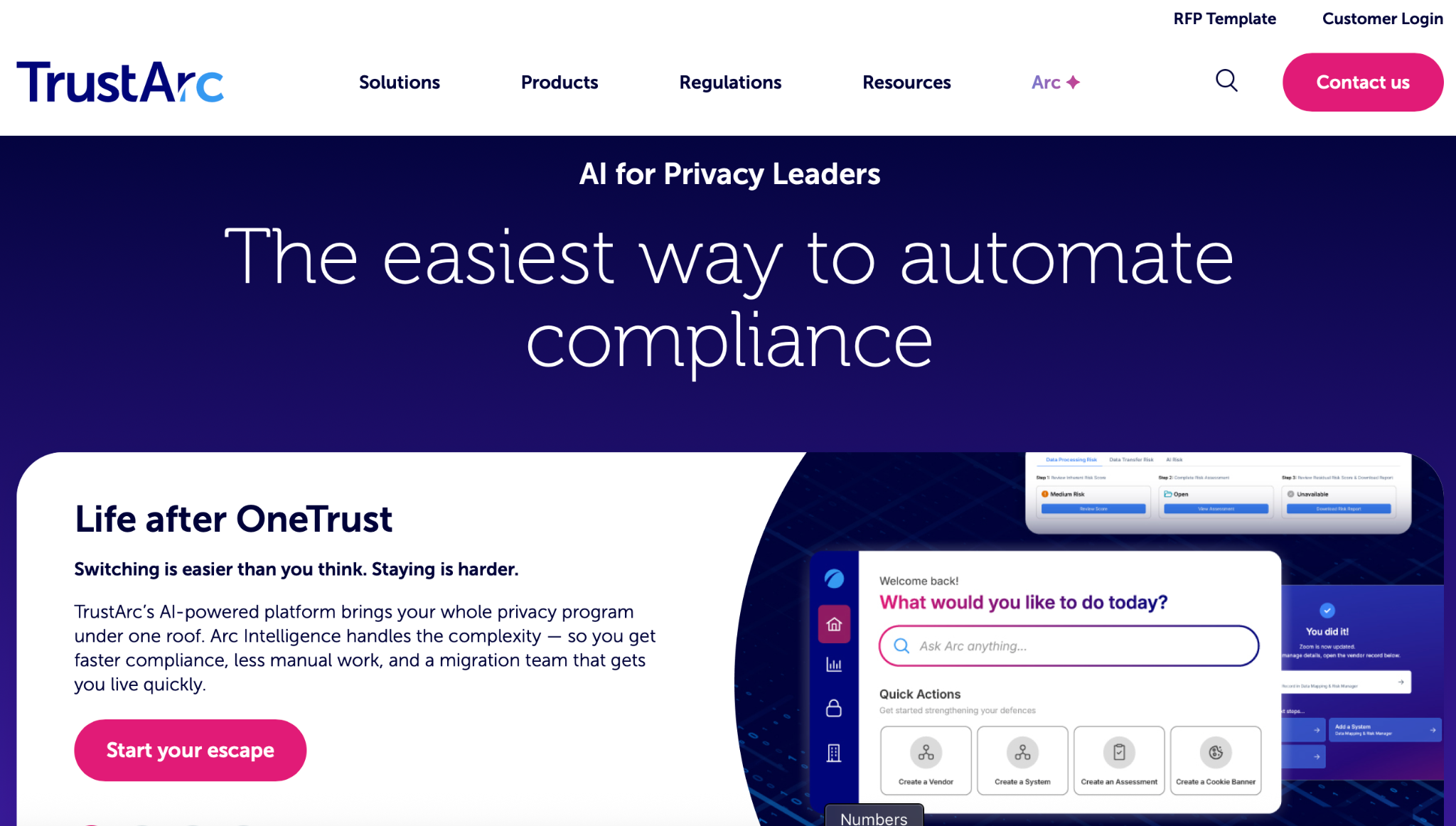
TrustArc is a strong option if you want DSAR management software with privacy management tools focused on governance, auditability, and structured compliance workflows.
Unlike lighter DSAR tools that mainly focus on request handling, TrustArc combines:
- DSAR automation
- consent management
- data mapping
- DPIAs and PIAs
- vendor risk management
- regulatory guidance
- cookie compliance
- AI-powered privacy workflows
inside one centralized privacy platform.
TrustArc is especially well suited for organizations that need operational privacy governance across multiple departments, regulations, and business units.
Key Features
- You can automate DSAR workflows and reduce manual coordination for access requests, deletion requests, and privacy operations.
- You get centralized privacy management for data mapping, compliance documentation, assessments, and governance workflows instead of managing spreadsheets and disconnected systems.
- You can use automated DPIA and PIA workflows to standardize risk assessments and privacy review processes across teams.
- You get cookie consent and consent management capabilities for GDPR, CCPA, and global privacy compliance workflows.
- You can manage vendor risk assessments and third-party privacy reviews from the same platform.
- You get access to regulatory intelligence, legal summaries, and 800+ operational templates to help manage evolving compliance requirements.
- You can also use AI privacy guidance and reporting tools to improve operational visibility and compliance management.
What Makes TrustArc Different
- TrustArc is heavily focused on operationalizing privacy programs instead of only handling DSAR tickets and requests.
- The platform is designed to centralize privacy workflows, assessments, risk management, and governance activities inside one system.
- TrustArc puts strong emphasis on auditability, process standardization, and repeatable compliance workflows for enterprise teams.
- The platform also focuses heavily on helping organizations scale privacy operations across multiple regions and regulations.
Pros
- Strong centralized privacy governance workflows
- Good DSAR automation capabilities
- Helpful DPIA and assessment workflows
- Strong vendor risk and data mapping support
- Useful regulatory intelligence and compliance templates
- Good support and onboarding experience
- Helps reduce spreadsheet-heavy privacy operations
- Easy setup for consent banners and cookie compliance workflows
Cons
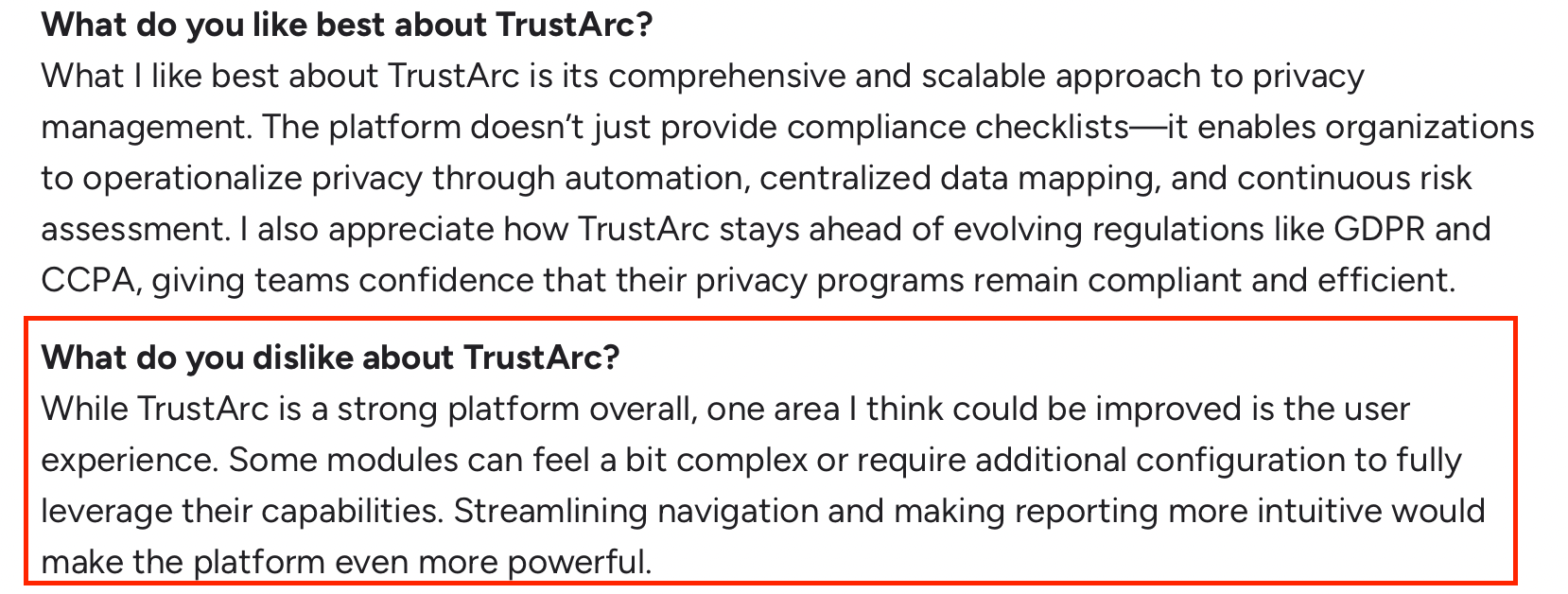
- Some modules can feel complex and require additional configuration
- Pricing may be expensive for smaller organizations
- Certain workflows still require support involvement for deeper customization
- Some users mention navigation and reporting could feel more intuitive
- Data mapping and linking workflows could improve further
- Localization support for some languages is limited
Best For
- Enterprise privacy teams
- Organizations needing audit-ready compliance workflows
- Companies managing global privacy operations
- Teams handling DPIAs, vendor assessments, and governance programs
- Businesses wanting centralized privacy operations
If your organization needs more than a standalone DSAR request tool, TrustArc is one of the stronger privacy governance platforms to evaluate.
It works especially well for teams that want DSAR management software with privacy management tools focused on audit readiness, structured compliance operations, regulatory guidance, and centralized governance workflows.
5. Ketch — Best DSAR Management Software for Consent Orchestration and AI-Ready Data
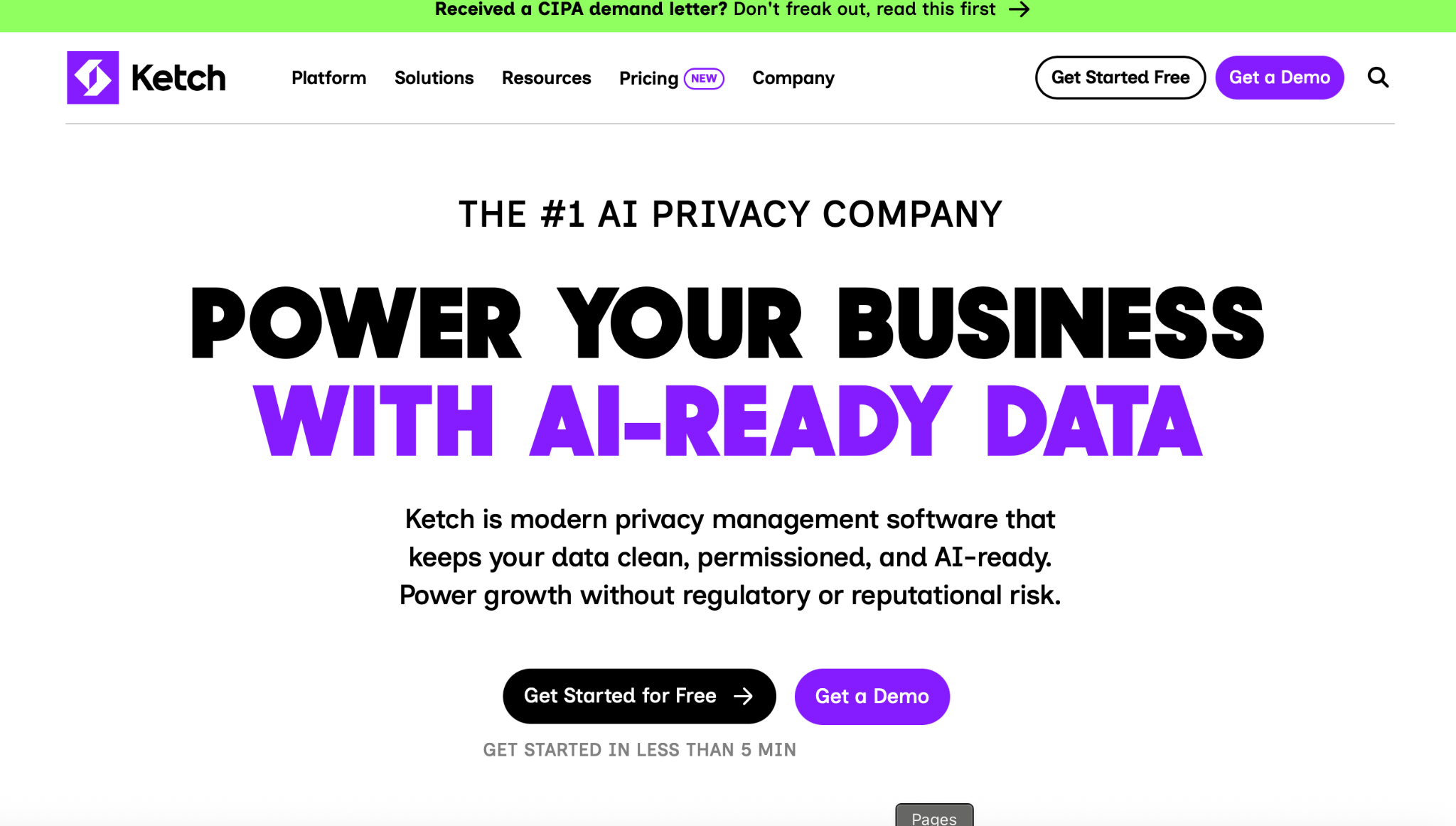
Ketch is a strong option if you want DSAR management software with privacy management tools that focus heavily on consent, preference management, data mapping, and downstream enforcement.
Unlike basic DSAR tools that only help you collect and process privacy requests, Ketch is built to connect privacy choices across your data systems.
This makes it useful if you need to manage:
- DSR automation
- consent management
- marketing preferences
- data mapping
- risk assessments
- website privacy compliance
- AI-ready data governance
Ketch is especially useful for teams that need privacy workflows connected across websites, mobile apps, marketing tools, analytics platforms, and customer data systems.
Key Features
- You can automate DSR workflows so your support, legal, and privacy teams do not have to manually manage every access, deletion, or data rights request.
- You get strong consent management tools that help you collect, manage, and enforce user choices across websites, mobile apps, CTV, OTT, and other digital channels.
- You can connect consent signals to downstream systems using APIs and integrations, so privacy choices are actually enforced across your business tools.
- You can use data mapping to understand your data footprint and assess privacy risks across different systems.
- You get marketing preference management to capture and manage user choices beyond basic cookie consent.
- You can verify website privacy compliance using tools like Data Sentry to detect privacy risks before they become bigger compliance problems.
- You also get risk assessment and reporting workflows to support privacy governance and regulatory readiness.
What Makes Ketch Different
- Ketch is especially strong in consent orchestration, meaning it does not just collect consent but helps enforce privacy choices across systems and apps.
- The platform is designed for fast implementation, with many customers moving from legacy tools to Ketch in a few weeks.
- Ketch is built for complex digital ecosystems where privacy choices need to flow across marketing, analytics, ecommerce, and customer data tools.
- The platform also puts strong focus on AI-ready data by helping teams keep data permissioned, governed, and usable without increasing regulatory risk.
Pros
- Strong consent and preference management capabilities
- Good DSR automation workflows
- Fast implementation compared to legacy platforms
- Clean and intuitive CMP interface
- Strong API-driven consent enforcement
- Good integrations with marketing and ecommerce tools
- Customizable privacy experiences across digital channels
- Strong support during onboarding and implementation
Cons
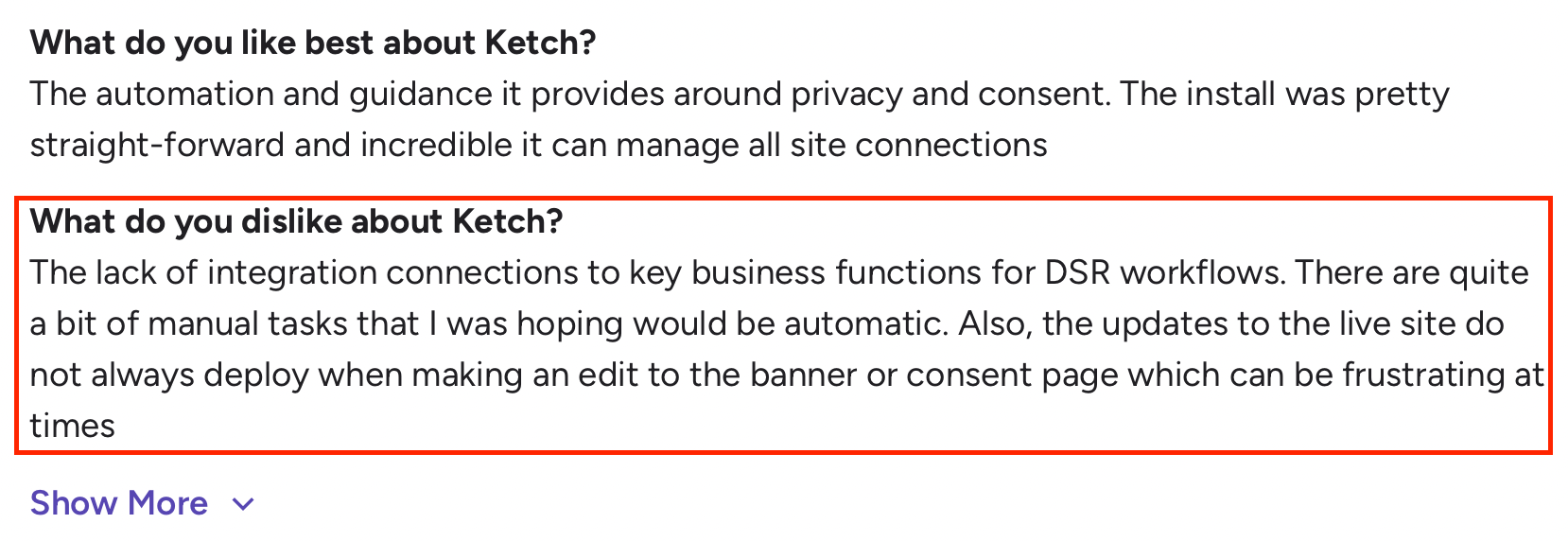
- Some DSR workflows may still require manual work depending on your integrations
- Tag and tracker management could offer more granular site-level control
- Some integrations may require engineering effort
- Cookie scraping and classification may miss smaller cookies in some cases
- Admin areas can feel less intuitive when managing many topics or troubleshooting errors
- Styling and behavior customization may require developer support in some setups
Best For
- Ecommerce and retail teams
- Marketing-heavy organizations
- Companies needing strong consent orchestration
- Businesses managing privacy across web, mobile, CTV, and OTT
- Teams that need consent signals connected to downstream systems
- Organizations preparing data for AI use with stronger permission controls
If your main priority is DSAR automation plus strong consent and preference enforcement, Ketch is one of the strongest tools to evaluate.
It is especially useful if you want DSAR management software with privacy management tools that connect user choices across websites, marketing platforms, analytics tools, and customer data systems instead of treating consent as a standalone banner.
Which DSAR Management Software Should You Choose?
The best DSAR management software depends on what you are trying to solve first. If you only need request intake, a lighter tool may work. But if you also need consent management, data discovery, DPIAs, vendor risk, breach workflows, and audit trails, you should choose a broader privacy management platform.
If your priority is India-first privacy compliance, Redacto gets the upper hand because it is built around DPDPA workflows and combines DSAR management with broader privacy operations.
If your priority is global enterprise governance, OneTrust is stronger.
If your priority is SaaS automation, DataGrail is a better fit.
If your priority is audit readiness, TrustArc makes more sense.
If your priority is consent enforcement, Ketch is the better choice.
Conclusion
You also saw that every platform in this list solves a different problem well:
- OneTrust is stronger for enterprise-scale governance
- DataGrail focuses heavily on SaaS automation
- TrustArc is built more around structured compliance operations
- Ketch stands out for consent orchestration and downstream enforcement
But if your organization is preparing for DPDPA compliance and wants a more unified privacy management approach, Redacto stands out as one of the strongest India-first platforms currently available.
If you want DSAR automation together with consent management, vendor risk management, PIAs, and privacy governance in one platform, Redacto is worth evaluating.
You can book a demo to see how the platform fits your compliance workflows.


.jpg)

.jpg)


