%20Redacto%20logo_New.png)


10 Best Data Privacy Management Platforms for Enterprises in India


If you are searching for the best data privacy management platforms in India, chances are your biggest challenge is no longer writing privacy policies.
It is managing compliance operationally across your organization.
Many enterprises already use GDPR tools, but DPDPA compliance often needs India-specific workflows for:
- multilingual consent management
- DSAR automation
- vendor risk assessments
- audit trails
- breach notification workflows
- Significant Data Fiduciary obligations
At the same time, customer data is spread across CRMs, cloud apps, internal systems, and third-party vendors, making compliance difficult to track and even harder to prove during audits.
I recently saw this during a discussion with an enterprise compliance team.
Their biggest challenge was not documentation. It was proving how consent, data requests, and vendor risks were actually being managed across systems.
With DPDPA penalties reaching up to ₹250 crore, enterprises can no longer depend on spreadsheets and manual workflows.
This is why enterprises are now evaluating dedicated data privacy management platforms.
In this guide, you will find the best platforms for:
- consent management
- DSAR automation
- vendor risk management
- DPIA workflows
- audit readiness
including India-native DPDPA platforms, AI PrivacyOps tools, and global enterprise privacy governance suites.
TL;DR
- Redacto is best for enterprises that want an India-first DPDPA platform with consent, DSAR, vendor risk, DPIA, and governance workflows in one place.
- Seqrite is best for organizations that want privacy compliance and cybersecurity managed together.
- Privy by IDfy is best for regulated industries needing strong DPDPA governance, audit readiness, and consent management.
- OneTrust is best for large enterprises managing global privacy, AI governance, and multi-region compliance workflows.
- Securiti is best for AI data discovery, DSPM, privacy automation, and multicloud governance.
- BigID is best for enterprise-scale data discovery, AI governance, and unstructured data intelligence.
- TrustArc is best for structured privacy operations, DSAR automation, and audit-focused compliance programs.
- IBM Guardium is best for real-time database monitoring, threat detection, and compliance visibility.
- PrivacyEngine is best for organizations needing DPDP workflows, privacy training, risk management, and governance tracking.
- miniOrange is best for enterprises that want DPDP privacy workflows alongside identity, access, and data-security capabilities.
How We Evaluated These Data Privacy Management Platforms
I evaluated each option on practical readiness, including consent, data requests, DPIA, vendor risk, discovery, reporting, and implementation support.
Please verify the latest scope, certifications, support, and pricing directly with each provider before deciding.
- The first filter was whether the provider clearly addresses DPDPA or India-specific privacy readiness, instead of only relying on broad GDPR or global privacy messaging.
- Consent management was reviewed based on support for consent collection, withdrawal, recordkeeping, preference management, and audit trails.
- Data principal request support was considered where providers explained workflows for access, correction, erasure, grievance, or withdrawal-related requests.
- The review also looked at DPIA, privacy assessments, risk reviews, breach support, reporting, and vendor or third-party risk workflows.
- Each provider was categorized as software-led, consulting-led, or hybrid, because Indian businesses may need different levels of tooling and advisory support.
- Data discovery, integrations, deployment flexibility, pricing clarity, and sector suitability were also considered, especially for BFSI, healthcare, fintech, ecommerce, SaaS, and manufacturing.
- Because product capabilities and service scope can change, buyers should verify the latest details directly with each provider before making a decision.
10 Best Data Privacy Management Platform For Enterprises in India
1. Redacto — Best India-First Data Privacy Management Platform for DPDPA Compliance
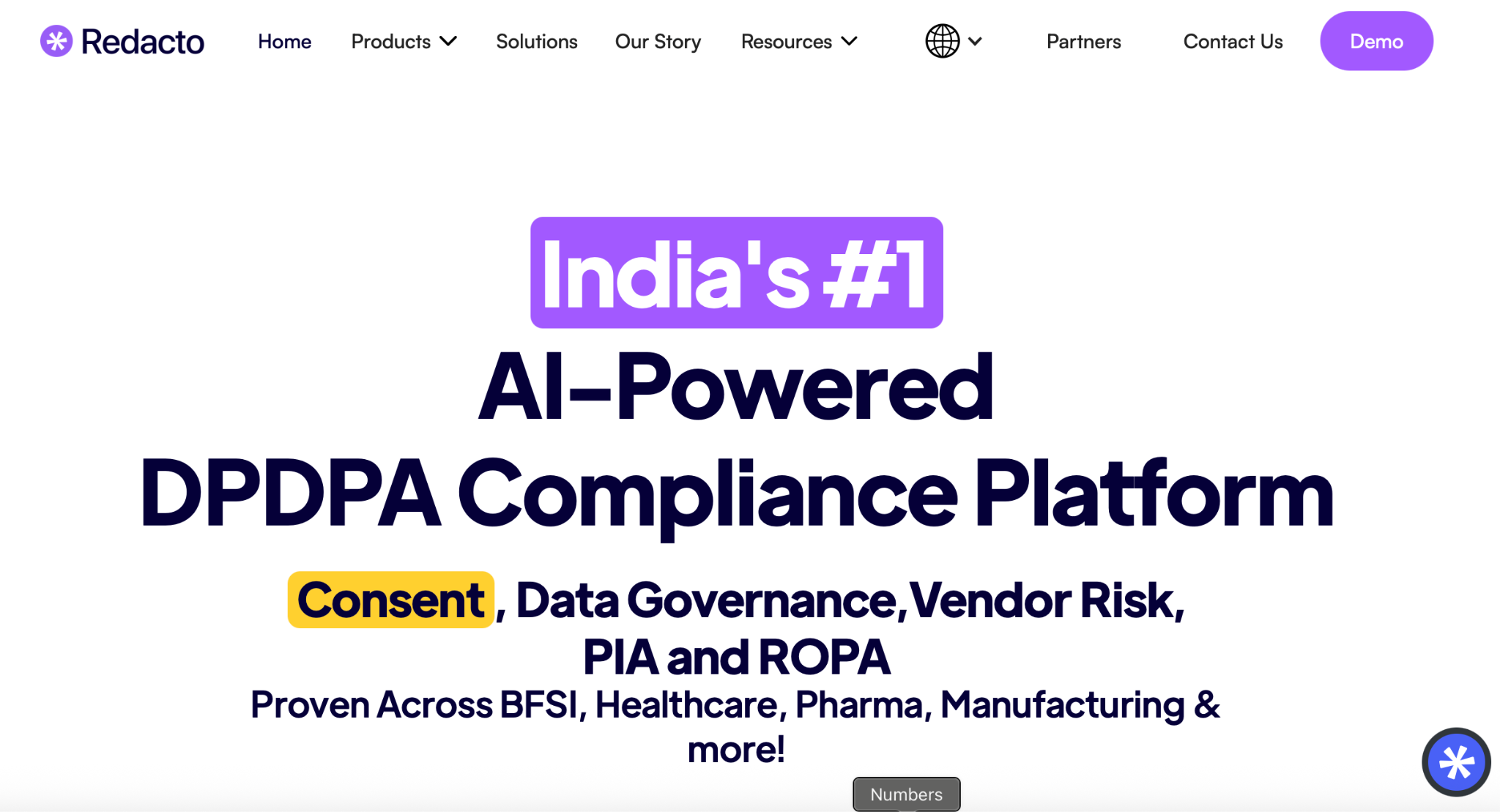
Redacto is an India-first AI-powered data privacy and governance platform built specifically for enterprises preparing for DPDPA compliance at scale.
What makes Redacto stand out is that the platform focuses heavily on operational privacy workflows instead of just policy management.
Many enterprises already have legal documentation in place, but struggle with actually managing consent records, vendor assessments, DSARs, breach workflows, and audit readiness across systems.
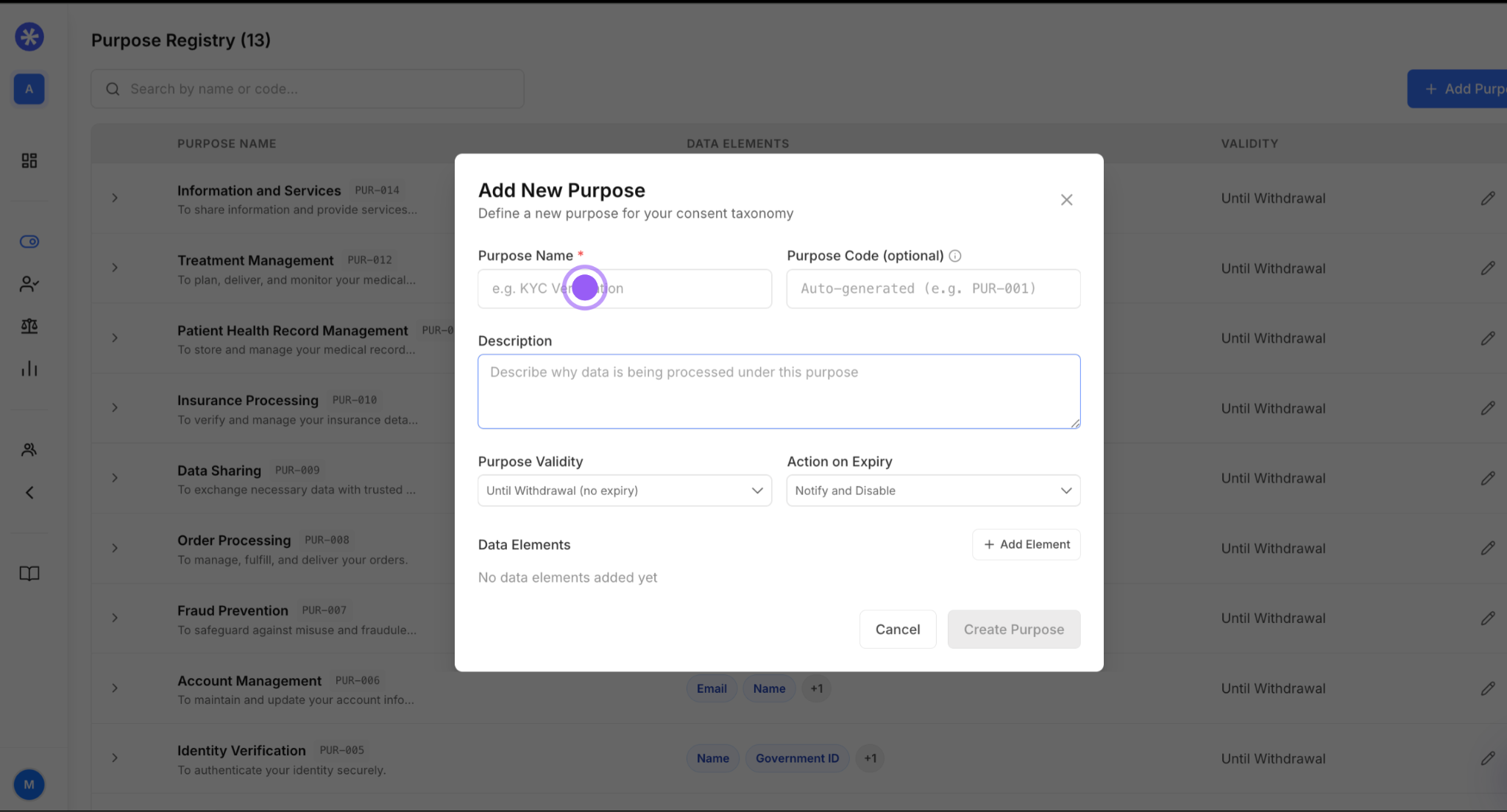
Redacto is designed to solve those operational gaps.
The platform combines:
- Consent management
- Data discovery & mapping
- Vendor risk management
- DPIA/PIA automation
- DSAR workflows
- breach notification management
- governance reporting
inside one unified platform.
Redacto also supports multilingual consent workflows and offers 7000+ integrations/plugins, which can significantly reduce deployment effort for enterprises dealing with fragmented systems.
One area where the platform feels particularly strong is vendor risk automation.
According to the company, enterprises have reduced vendor assessment timelines from days or weeks to minutes using AI-assisted workflows.
Key Features
- AI DPDPA compliance workflows
- Unified consent management with multilingual support
- Automated DSAR management
- Vendor risk assessments and remediation workflows
- Privacy Impact Assessment (PIA/DPIA) automation
- Data discovery and mapping
- Real-time breach notification dashboards
- SaaS, private-cloud, and on-prem deployment support
- 7000+ consent integrations/plugins
Best For
- BFSI
- healthcare
- pharma
- ecommerce
- manufacturing
- enterprises looking for India-specific DPDPA workflows with faster deployment
Pros
- Built specifically around Indian privacy compliance workflows
- Strong focus on operational usability instead of only governance documentation
- Flexible deployment options for regulated industries
- Faster implementation compared to many global privacy suites that often require heavy customization for DPDPA workflows
Cons
- Compared to global incumbents like OneTrust or TrustArc, Redacto is still a newer platform in the enterprise privacy market, so some multinational enterprises may still evaluate larger global ecosystems alongside it.
2. Seqrite — Best for Enterprises Looking for Combined Privacy + Cybersecurity Management
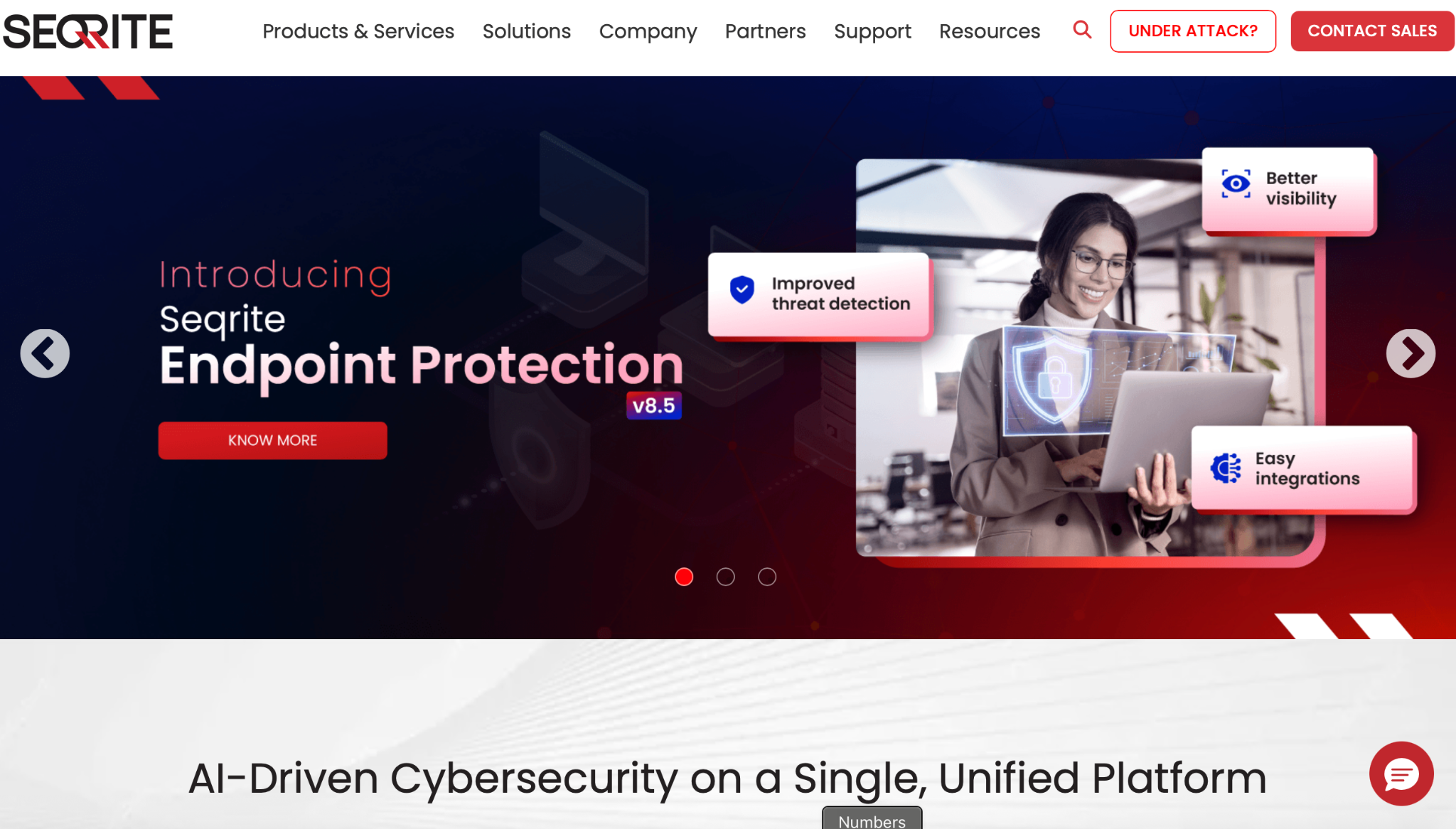
Seqrite is primarily known as an enterprise cybersecurity platform, but its growing data privacy and DPDP compliance capabilities make it one of the stronger India-native options for enterprises that want privacy and security managed together.
What makes Seqrite different from many traditional privacy platforms is its broader security-first approach.
Instead of focusing only on consent and governance workflows, the platform combines:
- data privacy
- endpoint security
- DLP
- discovery & classification
- governance
- monitoring
- threat detection
inside a unified platform. This makes Seqrite particularly useful for enterprises where privacy, cybersecurity, and compliance teams work closely together.
The platform supports:
- data discovery & classification
- consent governance
- policy management
- dashboards & reporting
- alerting & investigations
- AIsecurity operations
- cloud and on-prem deployments
Seqrite also positions itself strongly around AI-powered automation through its GenAI security analyst called SIA, which helps reduce operational complexity for enterprise security teams.
Key Features
- Data discovery and classification
- Consent and governance management
- Endpoint protection and DLP
- AI monitoring and investigations
- Centralized dashboards and reporting
- Cloud, hybrid, and on-prem deployment support
- Policy and posture management
- Threat intelligence and MDR services
Best For
- BFSI
- healthcare
- manufacturing
- enterprises wanting combined cybersecurity and privacy operations
- organizations already managing large endpoint environments
Pros
- Easy centralized management across endpoints and security operations
- Lightweight deployment with minimal system performance impact according to users
- Strong visibility features for monitoring systems and cloud activity
- Affordable compared to many global enterprise security suites
- Good customer support experience highlighted in multiple reviews
Cons
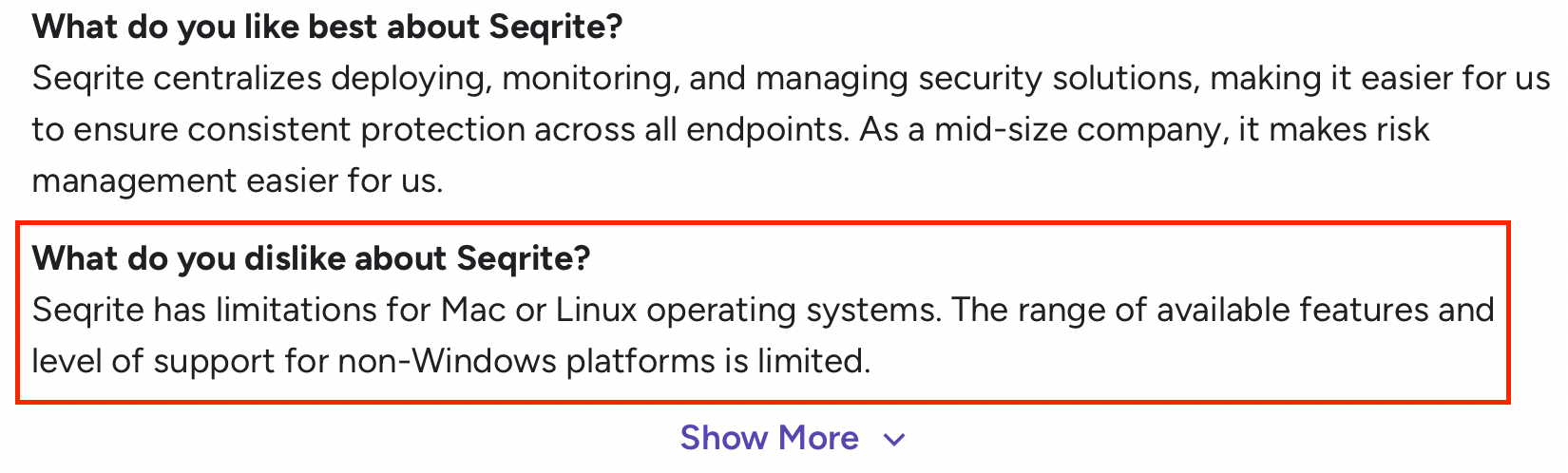
- Some users reported limited feature depth for Mac and Linux environments
- Privacy governance workflows may feel less specialized compared to dedicated PrivacyOps platforms
- Enterprises needing highly advanced consent governance may still evaluate more privacy-focused platforms alongside Seqrite
3. Privy by IDfy — Best for BFSI and Regulated Enterprises Preparing for DPDPA
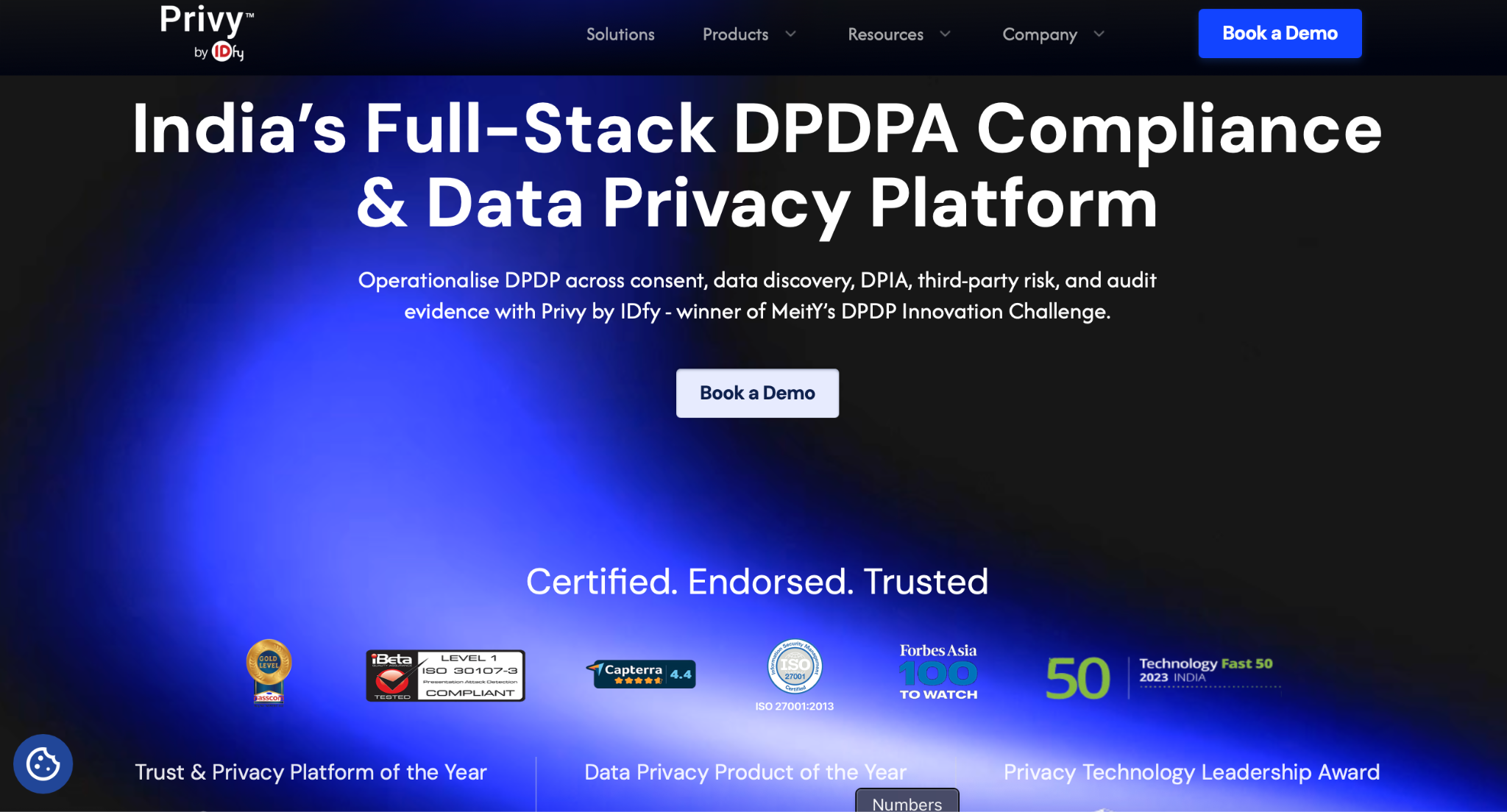
Privy by IDfy is one of the most DPDPA-focused privacy management platforms currently available for Indian enterprises.
Unlike many global privacy tools that later adapted to DPDPA, Privy was built specifically around India’s evolving privacy and consent ecosystem.
The platform focuses heavily on helping enterprises operationalize privacy workflows across:
- consent governance
- data discovery
- DSAR management
- DPIA workflows
- third-party risk
- audit readiness
One thing that stands out immediately is Privy’s strong alignment with India’s regulatory ecosystem.
The platform was the winner of MeitY’s DPDP Innovation Challenge and positions itself heavily around India-specific compliance implementation.
Privy also benefits from IDfy’s larger trust and RegTech infrastructure, which gives it a strong enterprise credibility advantage in regulated industries like BFSI, fintech, and financial services.
The platform includes:
- multilingual consent governance
- cookie management
- automated data rights workflows
- AI-powered privacy monitoring through InspectAI
- personal data discovery & governance
- continuous compliance management
Privy appears particularly strong for enterprises that need privacy operations tied closely with audit evidence, governance visibility, and regulator-facing workflows.
Key Features
- Consent lifecycle management
- Automated DSAR workflows
- AI privacy co-pilot (InspectAI)
- Cookie consent management
- Personal data discovery & governance
- Continuous compliance monitoring
- Third-party risk workflows
- Audit-ready privacy operations
- DPDPA-focused governance workflows
Best For
- BFSI
- fintech
- insurance
- regulated enterprises
- organizations needing strong audit and governance visibility
Pros
- Strong DPDPA-specific workflow coverage compared to many global platforms
- Helpful governance visibility for enterprise compliance teams
- Strong enterprise credibility in BFSI and fintech sectors
- AI-powered compliance insights through InspectAI
- Multiple enterprises highlighted implementation and compliance support positively
Cons
- Enterprises outside regulated sectors may find some workflows more governance-heavy than needed
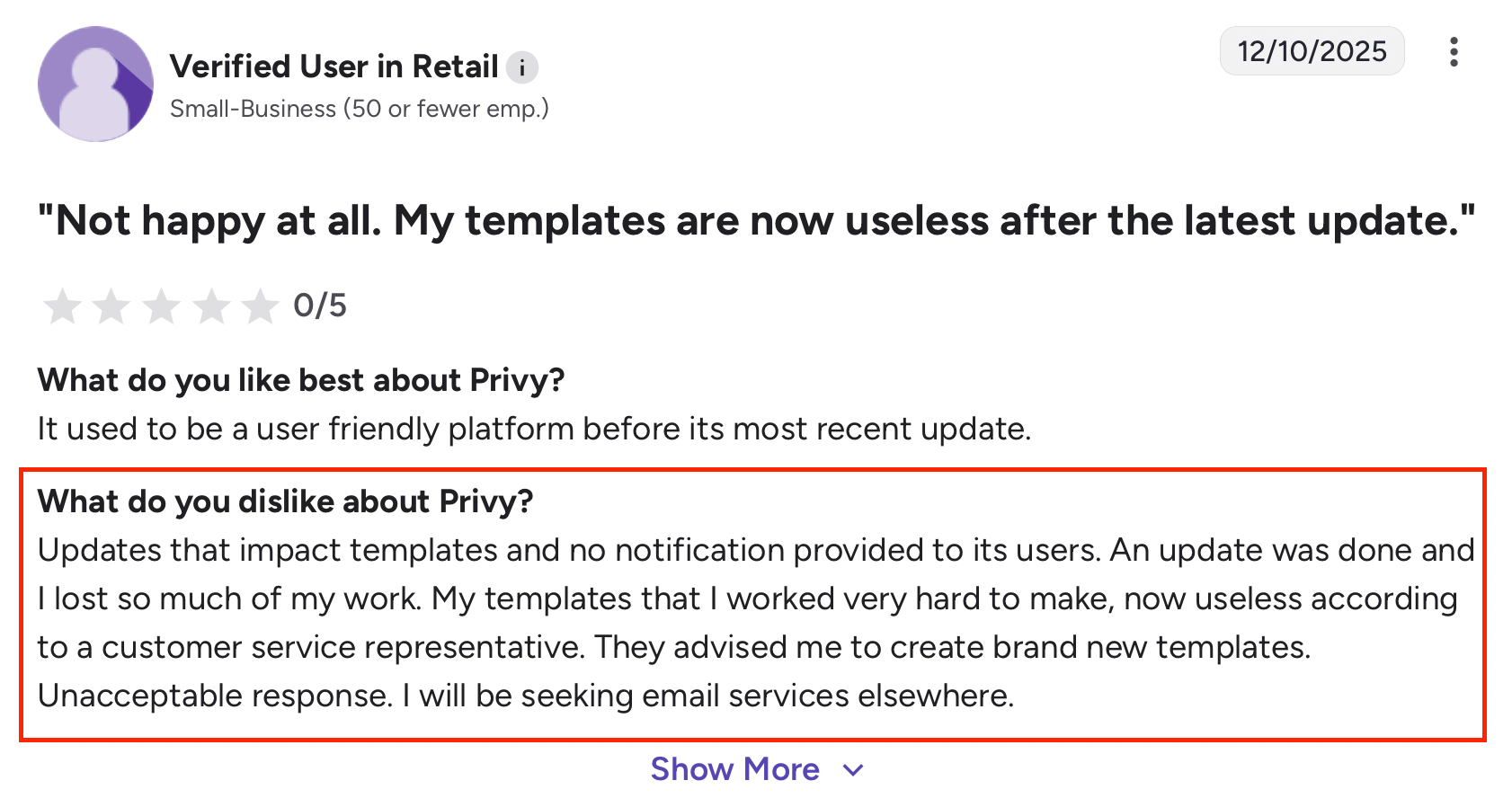
- Some users mentioned dashboard and layout organization could improve
- Certain customization and template flexibility areas may require additional refinement depending on enterprise use cases
- Pricing may become expensive as deployment scale increases across teams and workflows
4. OneTrust — Best for Large Enterprises Managing Global Privacy, Risk, and AI Governance
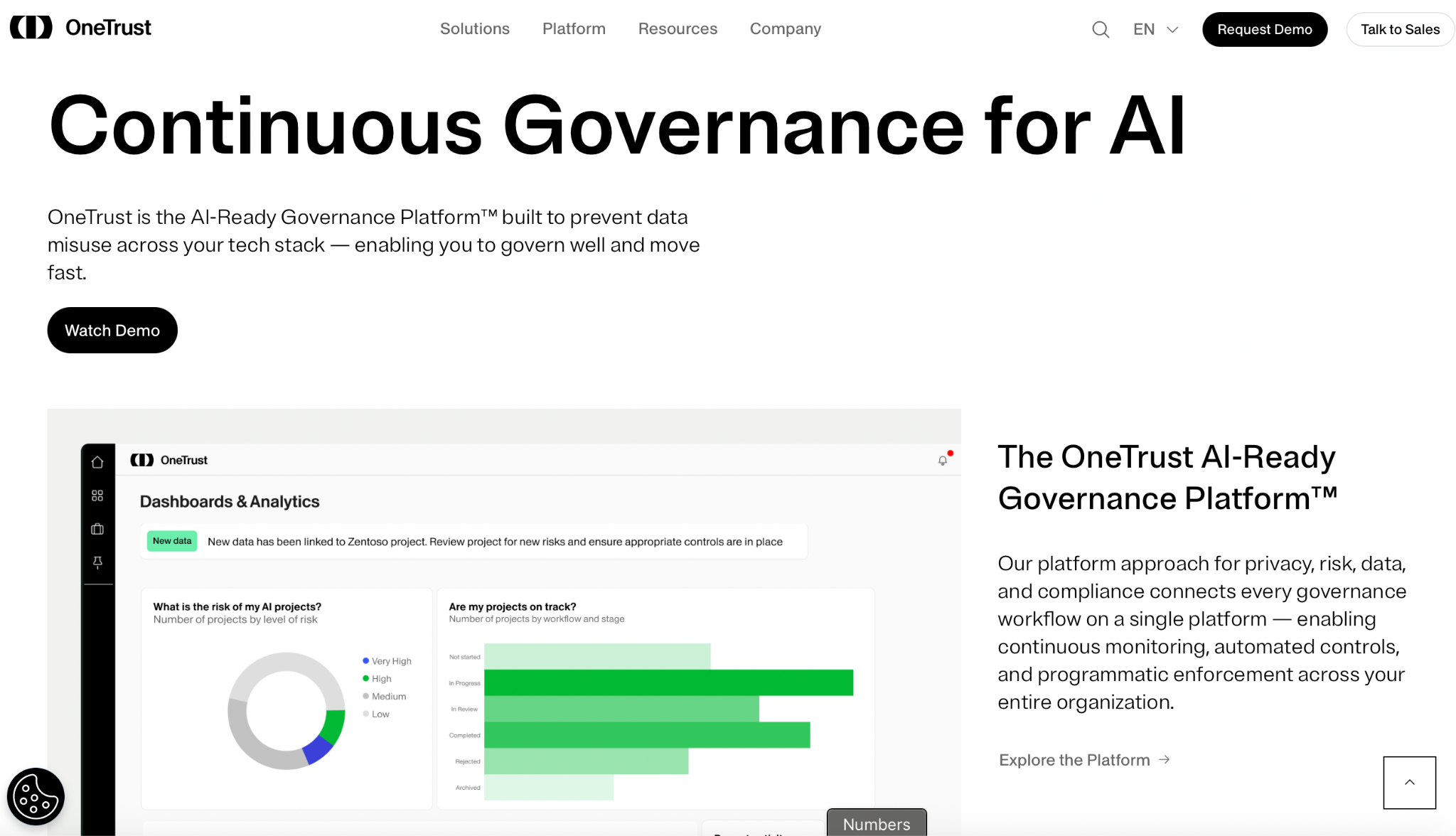
OneTrust is one of the most mature enterprise privacy management platforms in the market.
It is built for large organizations that need to manage privacy, consent, third-party risk, data governance, AI governance, and compliance workflows from one central platform.
For Indian enterprises, OneTrust makes the most sense when you are not only preparing for DPDPA, but also managing global regulations like GDPR, CCPA, DORA, and other regional privacy laws.
The platform covers:
- privacy automation
- consent and preference management
- DSAR workflows
- data mapping
- DPIA and RoPA
- third-party risk management
- AI governance
- tech risk and compliance
- policy enforcement
What makes OneTrust strong is its depth.
You get a large privacy ecosystem with pre-built workflows, regulatory intelligence, automation templates, integrations, and reporting features.
This is useful if your organization has multiple business units, regions, brands, vendors, and data systems to manage.
But that depth also creates complexity.
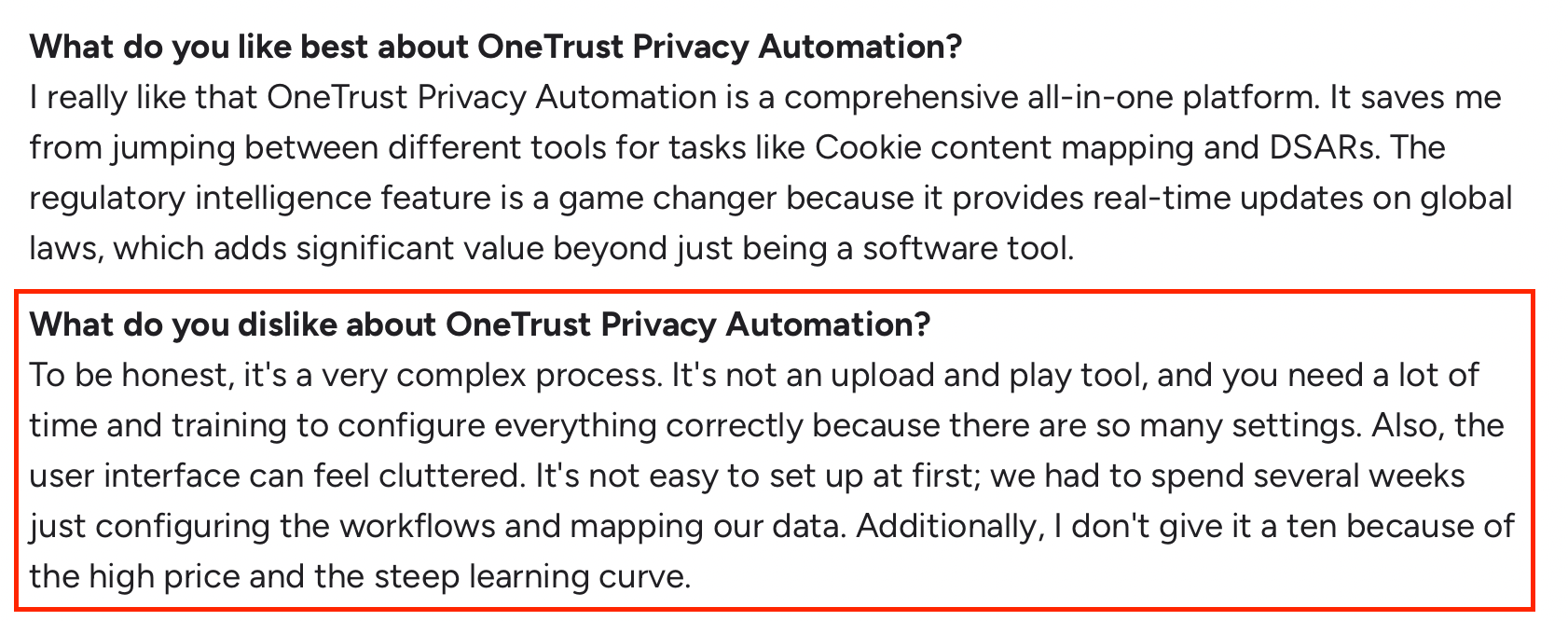
OneTrust is powerful, but it is not always a quick “plug-and-play” tool. Teams often need proper implementation support, training, and time to configure workflows correctly.
Key Features
- Privacy automation and workflow management
- Consent and preference management
- DSAR and rights request handling
- DPIA, RoPA, and data mapping
- Third-party risk management
- AI governance and data use governance
- Regulatory intelligence across global laws
- Integrations with enterprise systems
- Dashboards, reports, and audit evidence
Best For
- large enterprises
- multinational companies
- privacy teams managing multiple regulations
- enterprises with dedicated compliance and implementation teams
- organizations that need privacy, AI governance, and third-party risk in one platform
Pros
- Centralizes privacy workflows across consent, DSARs, RoPA, DPIA, and vendor risk
- Strong integration capabilities with common enterprise systems
- Pre-built templates help reduce manual compliance work
- Regulatory intelligence helps teams track changing privacy laws
Cons
- Can feel complex for teams new to privacy technology
- Setup may take weeks if workflows and data mapping are heavily customized
- Pricing can become expensive as you add more modules
- Reporting and dashboards are basic in certain areas
Top 5+ OneTrust Alternatives & Competitors for DPDPA Compliance in India (2026)
5. Securiti — Best for AI-Powered Enterprise Privacy and Data Governance
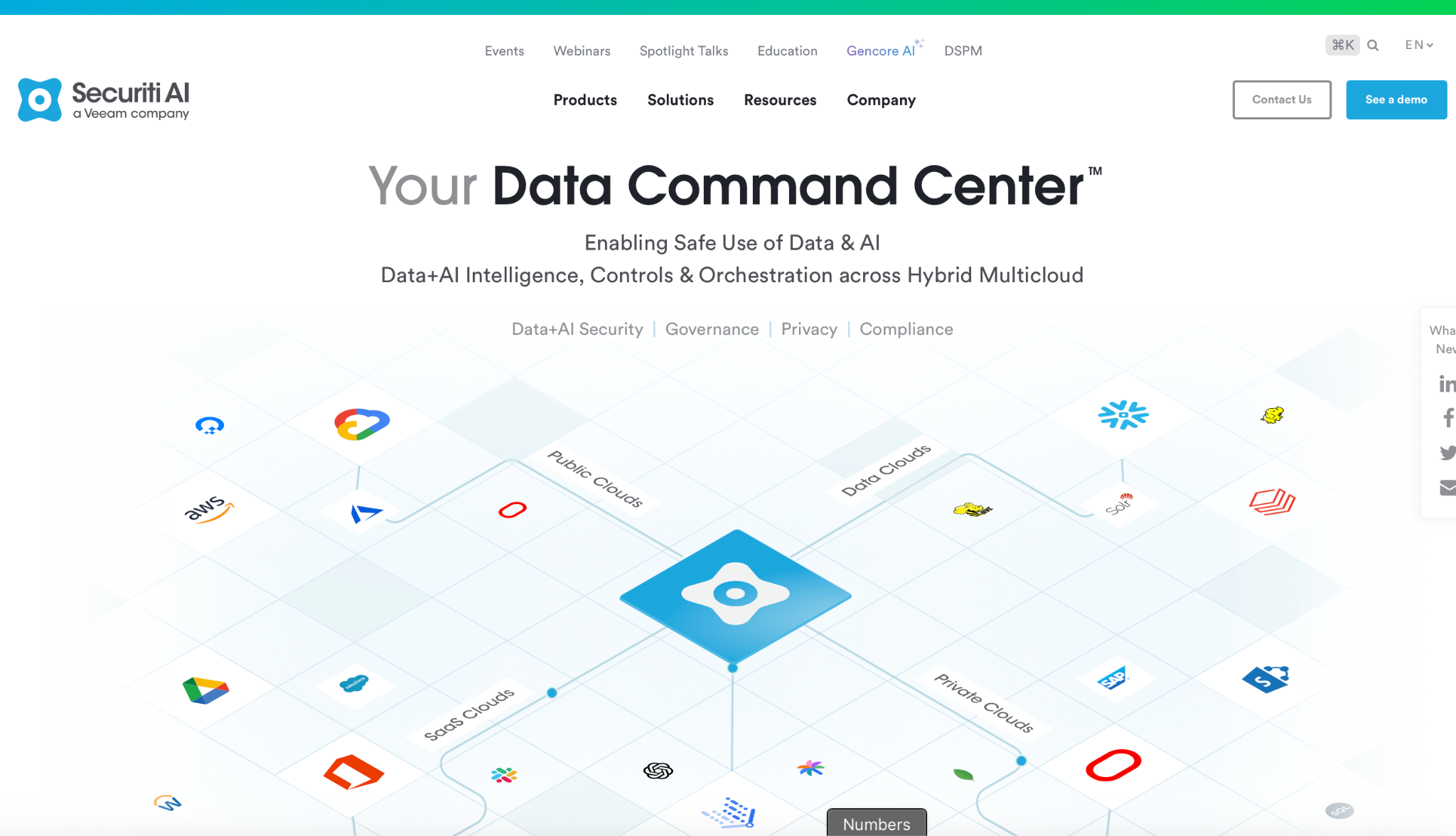
Securiti is one of the strongest enterprise platforms for organizations managing privacy, security, governance, compliance, and AI risk across large hybrid environments.
What makes Securiti different from many traditional privacy tools is its broader “Data Command Center” approach. Instead of treating privacy, governance, and security as separate functions, the platform combines them into one unified data intelligence and orchestration layer.
The platform supports:
- data discovery & classification
- consent management
- DSAR automation
- data mapping
- DPIA and assessment automation
- breach management
- AI governance
- compliance management
- DSPM (Data Security Posture Management)
Securiti appears particularly strong for enterprises dealing with massive multicloud environments, large SaaS ecosystems, and complex enterprise data estates.
One feature that stands out consistently is the platform’s Data Command Graph, which helps organizations map relationships between data systems, users, policies, and sensitive information across environments. T
his gives privacy and security teams much better visibility into how enterprise data is actually flowing.
The platform also integrates with thousands of cloud, SaaS, and enterprise systems, making it useful for large organizations managing fragmented infrastructure.
Key Features
- AI-powered data discovery and classification
- Data mapping automation and RoPA management
- DSAR automation
- Consent lifecycle management
- Breach and incident management
- AI governance and compliance workflows
- Third-party and assessment automation
- DSPM capabilities
- Hybrid multicloud integrations
- Data Command Graph for enterprise data visibility
Best For
- large enterprises
- multinational organizations
- enterprises with hybrid or multicloud environments
- organizations managing AI governance alongside privacy
- enterprises needing large-scale data visibility and classification
Pros
- Strong hybrid cloud and multicloud discovery capabilities
- Automated remediation workflows help reduce manual operational effort
- Excellent integrations with enterprise systems like SAP, Salesforce, Office 365, SharePoint, and ServiceNow
- AI cookie detection and classification capabilities
- Good centralized visibility across privacy, governance, and compliance workflows
Cons
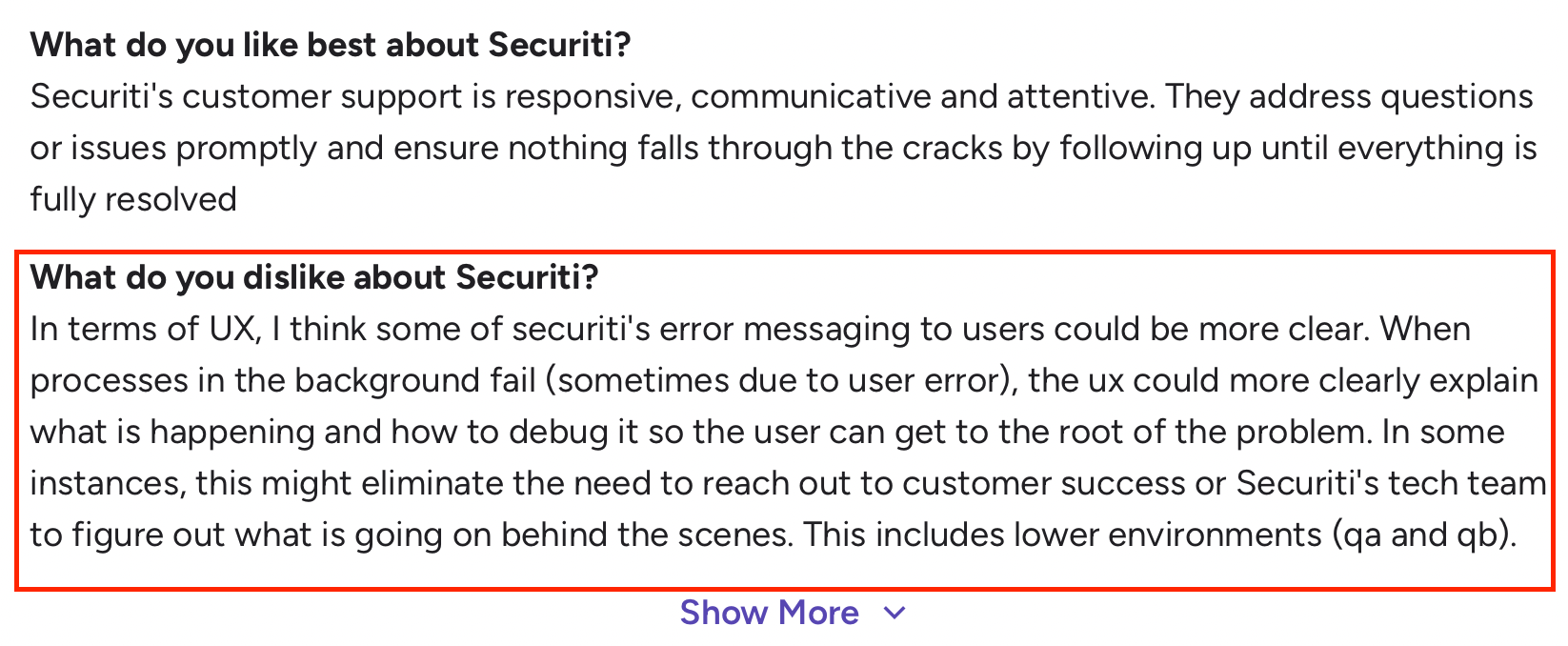
- UI can sometimes feel complex for large-scale deployments
- Some bulk configuration and onboarding workflows may still require manual setup
- Certain discovery and remediation configurations could be simplified further
- Frequent feature rollouts can sometimes make the platform feel overwhelming
- Enterprises may need technical expertise during large implementations
5 Best Securiti.ai Alternatives for DPDPA Compliance in Indian Enterprises
6. BigID — Best for Enterprise Data Discovery, Classification, and AI Data Governance
BigID is one of the most advanced enterprise platforms for organizations that need deep visibility into sensitive data spread across cloud, SaaS, on-prem, and AI environments.
What makes BigID different from many traditional privacy platforms is its heavy focus on:
- data discovery
- AI-driven classification
- DSPM (Data Security Posture Management)
- AI governance
- risk remediation
- enterprise-scale data intelligence
Instead of focusing only on consent and privacy workflows, BigID is designed to help enterprises understand exactly:
- where sensitive data exists
- who has access to it
- how it flows across systems
- how it is being used in AI environments
The platform supports:
- data discovery & classification
- consent and privacy management
- DSAR automation
- data minimization
- AI governance
- risk remediation
- cross-border data monitoring
- data retention & deletion
- vendor and compliance management
One area where BigID stands out strongly is unstructured data governance. The platform can classify and contextualize:
- emails
- chats
- files
- code repositories
- cloud storage
- vector databases
- AI training datasets
across enterprise environments using AI-powered classification models.
BigID also positions itself heavily around AI governance and AI risk management. This includes:
- AI security posture management
- shadow AI detection
- AI access governance
- AI-ready data labeling
- AI compliance monitoring
which is becoming increasingly important for enterprises deploying copilots, LLMs, and agentic AI systems internally.
For Indian enterprises, BigID is usually a stronger fit when the primary challenge is large-scale data visibility, AI governance, or enterprise data classification rather than only operational DPDPA workflows.
Key Features
- AI-powered data discovery and classification
- DSPM and data security posture management
- AI governance and AI risk management
- DSAR automation
- Consent and preference management
- Data minimization and retention workflows
- Cross-border data transfer monitoring
- Data masking and redaction
- Unstructured data governance
- Enterprise-scale integrations across cloud, SaaS, and on-prem systems
Best For
- large enterprises
- multinational organizations
- enterprises managing massive structured and unstructured datasets
- organizations deploying AI systems and copilots
- enterprises prioritizing data discovery and AI governance
Pros
- Strong AI-powered data classification and discovery capabilities
- Helpful centralized visibility into sensitive enterprise data
- Good support for data privacy, access governance, and compliance workflows
- Strong cloud and SaaS integration ecosystem
- Multiple users highlighted the platform’s intuitive UI and enterprise-scale visibility features positively
Cons
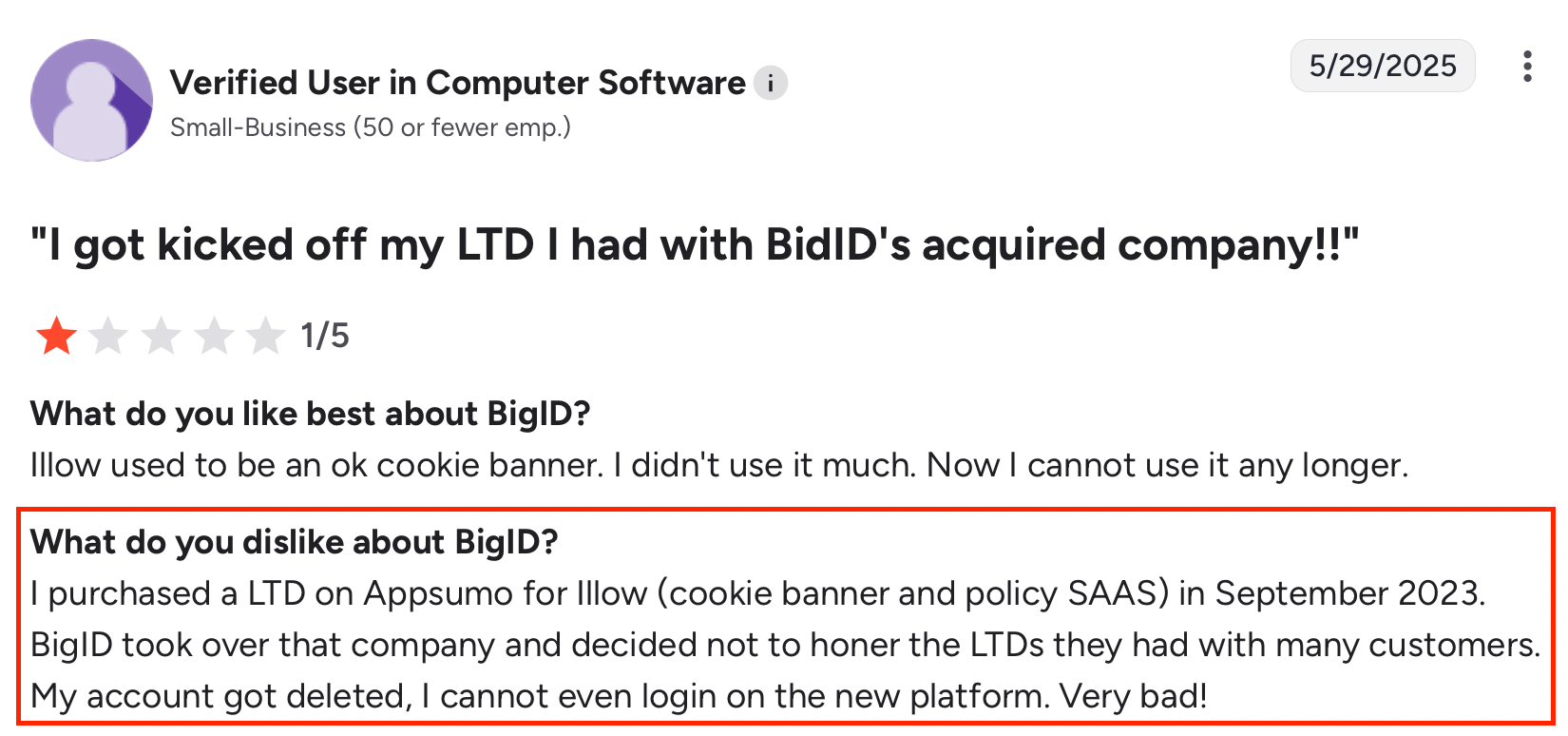
- Some users reported occasional platform latency and slower response times
- Advanced workflows may require technical expertise during implementation
- Certain detailed file-level investigations can become cumbersome at scale
- Some remediation and workflow areas may still require additional refinement depending on enterprise use cases
7. TrustArc — Best for Mature Privacy Program Management and Global Compliance

TrustArc is a mature privacy management platform built for enterprises that want to centralize privacy operations, risk assessments, cookie consent, vendor management, and regulatory guidance in one place.
For Indian enterprises, TrustArc is a good fit if you need to manage DPDPA along with global privacy laws like GDPR, CCPA, and other regional regulations.
The platform supports:
- privacy program management
- cookie and tracker consent
- data request automation
- data mapping
- vendor risk management
- DPIA and privacy assessments
- regulatory guidance
- AI privacy support
TrustArc is especially useful when your privacy team wants structure.
Instead of managing DSARs, PIAs, vendor reviews, and data maps through spreadsheets and email threads, TrustArc gives you a more repeatable workflow.
The platform also offers regulatory guidance, operational templates, and AI assistance for privacy teams, which can help enterprises reduce manual work and keep privacy programs more organized.
Key Features
- Privacy program management
- Data request automation
- Cookie and tracker consent management
- Data mapping and vendor risk management
- Privacy, vendor, and risk assessments
- AI support for privacy leaders
- Regulatory guidance and compliance templates
- Certifications and assurance services
- Global privacy regulation support, including India DPDP Act coverage
Best For
- large enterprises
- privacy teams managing multiple regulations
- organizations needing structured privacy program management
- enterprises that want vendor risk, DSARs, PIAs, and cookie consent in one platform
- global companies operating in India
Pros
- Centralizes privacy work across DSARs, DPIAs, vendor assessments, data mapping, and cookie consent
- Helps create repeatable workflows instead of fragmented manual processes
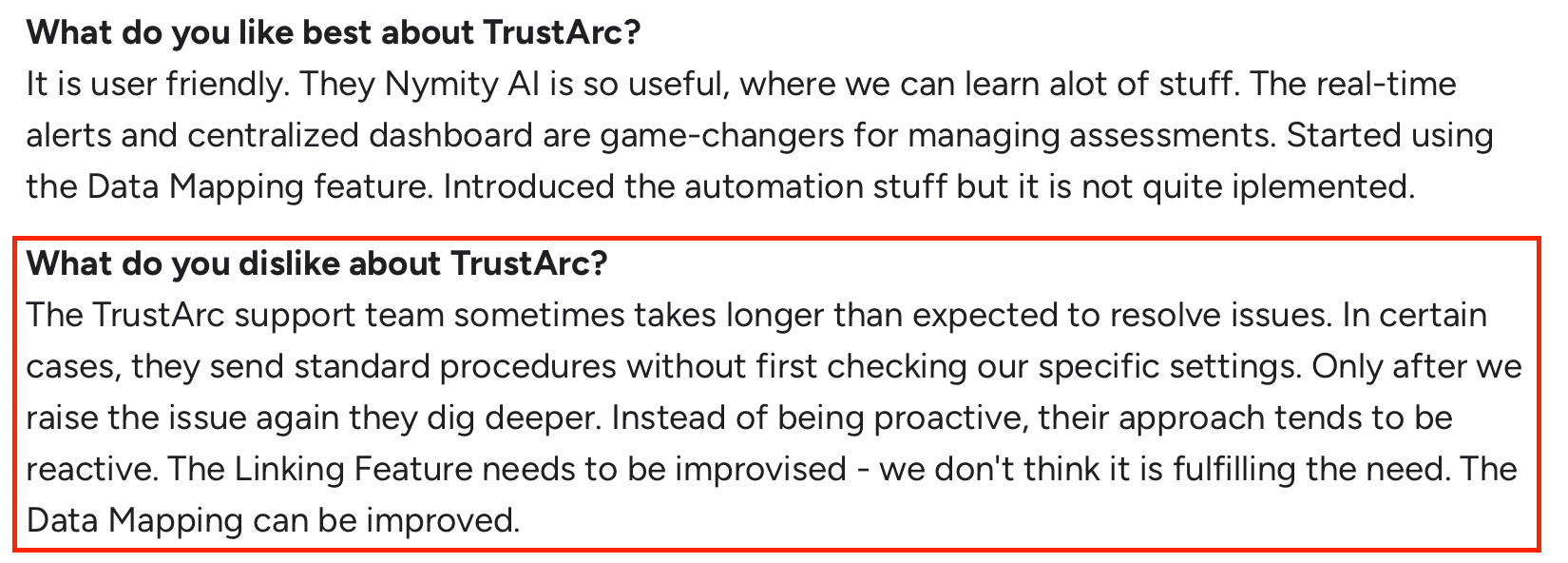
- Users highlight strong onboarding and helpful support
- Useful AI functionality for reports, privacy guidance, and compliance visibility
- Good option for enterprises managing global privacy programs
Cons
- Requires upfront setup and configuration to get full value
- Pricing may be high for smaller teams or emerging markets
- Some users want more self-service customization options
- Data mapping and linking features may need improvement in certain use cases
- DPDPA-specific workflows may need more configuration compared to India-native tools like Redacto, Privy, or Seqrite
8. IBM Guardium — Best for Security-First Data Protection and Compliance Monitoring
IBM Guardium is a strong fit for enterprises that want to secure sensitive data, monitor database activity, and simplify compliance across hybrid cloud and SaaS environments.
Unlike privacy-first platforms, Guardium is more security-focused.
It helps you discover and classify sensitive data, monitor access in real time, manage vulnerabilities, detect suspicious activity, and generate compliance reports.
The platform supports:
- sensitive data discovery
- data classification
- real-time activity monitoring
- user access tracking
- vulnerability management
- compliance reporting
- long-term audit data retention
- hybrid cloud and SaaS visibility
For Indian enterprises, IBM Guardium makes sense if your biggest concern is protecting sensitive data and proving security controls during audits.
It can support privacy programs, but it is not mainly built around consent, DSAR, or DPIA workflows like Redacto, Privy, OneTrust, or TrustArc.
Key Features
- Sensitive data discovery and classification
- Real-time database activity monitoring
- User access and policy change tracking
- Vulnerability assessment and threat detection
- Prebuilt compliance templates and reports
- Long-term audit data retention
- Centralized security policy management
- Hybrid cloud and SaaS environment support
Best For
- large enterprises
- BFSI and regulated sectors
- security-first compliance teams
- enterprises with complex database environments
- organizations needing strong audit and activity monitoring
Pros
- Excellent visibility into who is accessing sensitive data and when
- Strong audit logs and compliance reporting
- Useful real-time alerts for suspicious activity
- Broad coverage across complex data environments
- Mature enterprise-grade data security platform
Cons
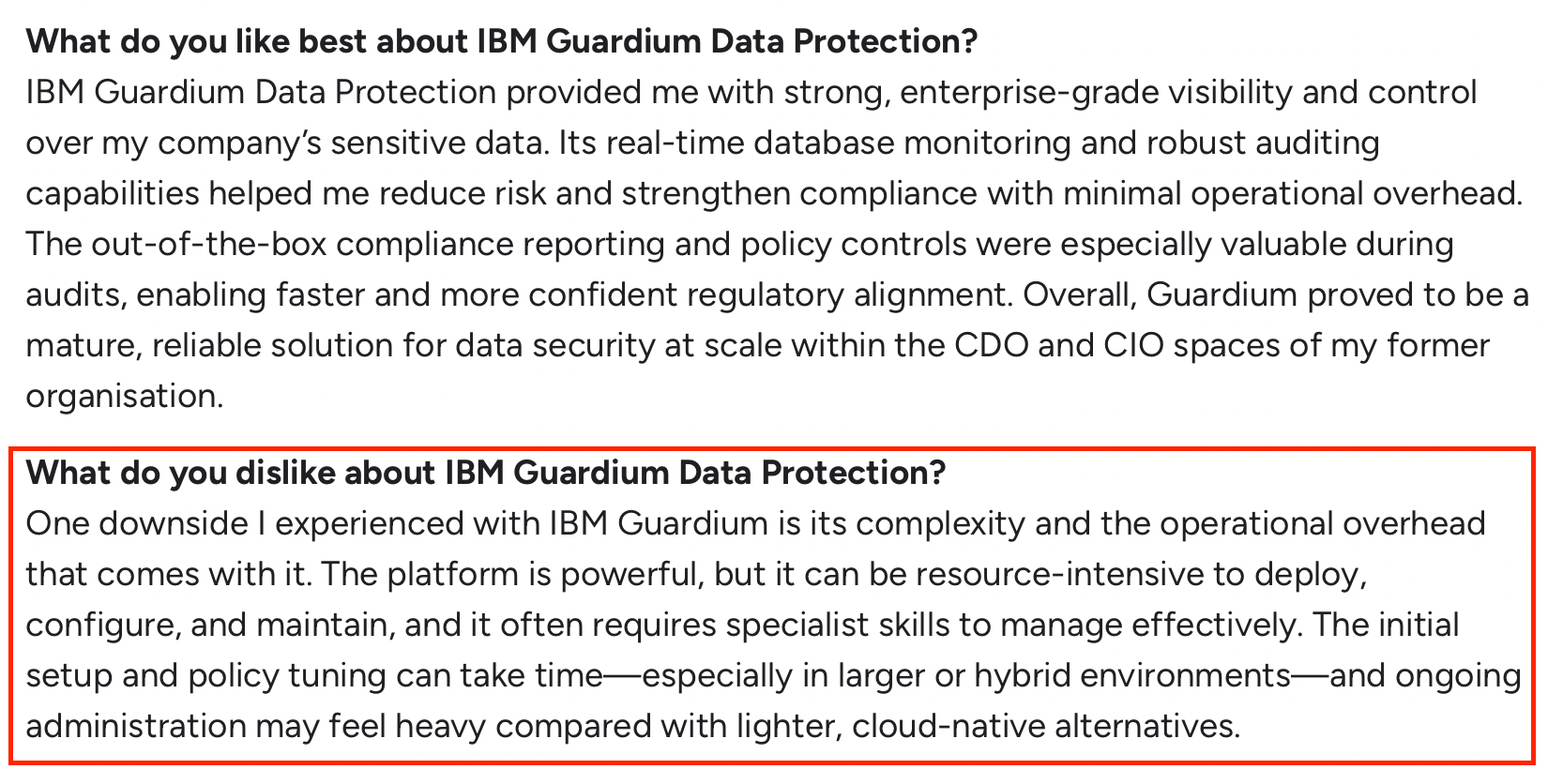
- Initial setup and configuration can be complex
- Requires technical expertise to tune policies and alerts
- UI can feel dated compared to newer privacy platforms
- Can be resource-heavy if not optimized well
- Not ideal if your main need is consent management, DSAR automation, or DPDPA-specific workflows
9. PrivacyEngine — Best for DPDP Training, Risk Management, and Privacy Program Operations
PrivacyEngine is a privacy operations platform built for organizations that want to manage DPDP, GDPR, risk assessments, breach workflows, training, and audit evidence from one place.
For Indian enterprises, PrivacyEngine is useful because it has a dedicated India-focused DPDPA offering. The platform supports workflows around:
- consent notices
- data principal rights
- breach reporting
- children’s data
- vendor and cross-border data management
- DPDP training
- risk management
- Significant Data Fiduciary governance
What makes PrivacyEngine different is its focus on turning compliance into a live operating program.
Instead of only storing policies or assessment templates, it helps teams assign owners, track actions, manage risks, document evidence, and keep leadership updated on DPDP readiness.
It also includes training modules, which can be useful if you need to educate internal teams on DPDP responsibilities instead of keeping privacy knowledge limited to legal or compliance teams.
Key Features
- DPDP readiness and gap analysis
- Consent and notice management
- Data principal request management
- Breach and incident management
- Vendor and cross-border data management
- RoPA and DPIA workflows
- Risk management dashboards
- DPDP training modules
- Governance, reporting, and audit evidence
Best For
- mid-market and enterprise teams
- DPOs and compliance teams
- BFSI, fintech, SaaS, and healthcare companies
- organizations needing DPDP training plus operational workflows
- teams migrating from spreadsheet-based privacy management
Pros
- Easy-to-use templates for DPIAs, risk assessments, policies, and supplier due diligence
- Built-in training modules help educate employees and track completion
- Strong audit trails for privacy actions, risks, incidents, and documentation
- Helpful support team with quick responses, according to users
- Good fit for GDPR and DPDP program management
Cons
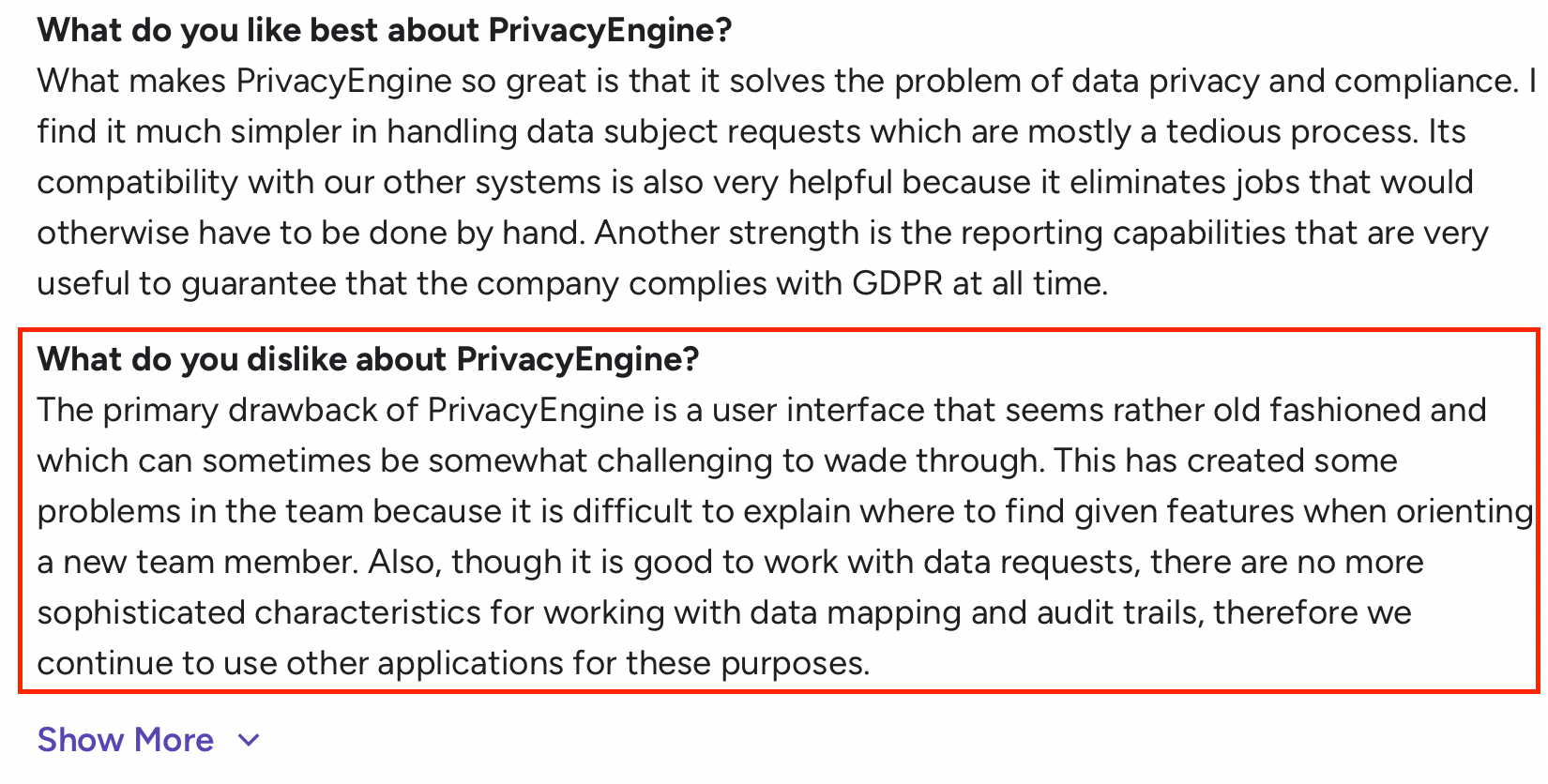
- Reporting and dashboard customization could be more flexible
- Advanced features may have a learning curve at first
- Some areas can feel slightly slow or dated compared to newer platforms
10. miniOrange — Best for Data Privacy, Consent, and Identity Security in One Platform
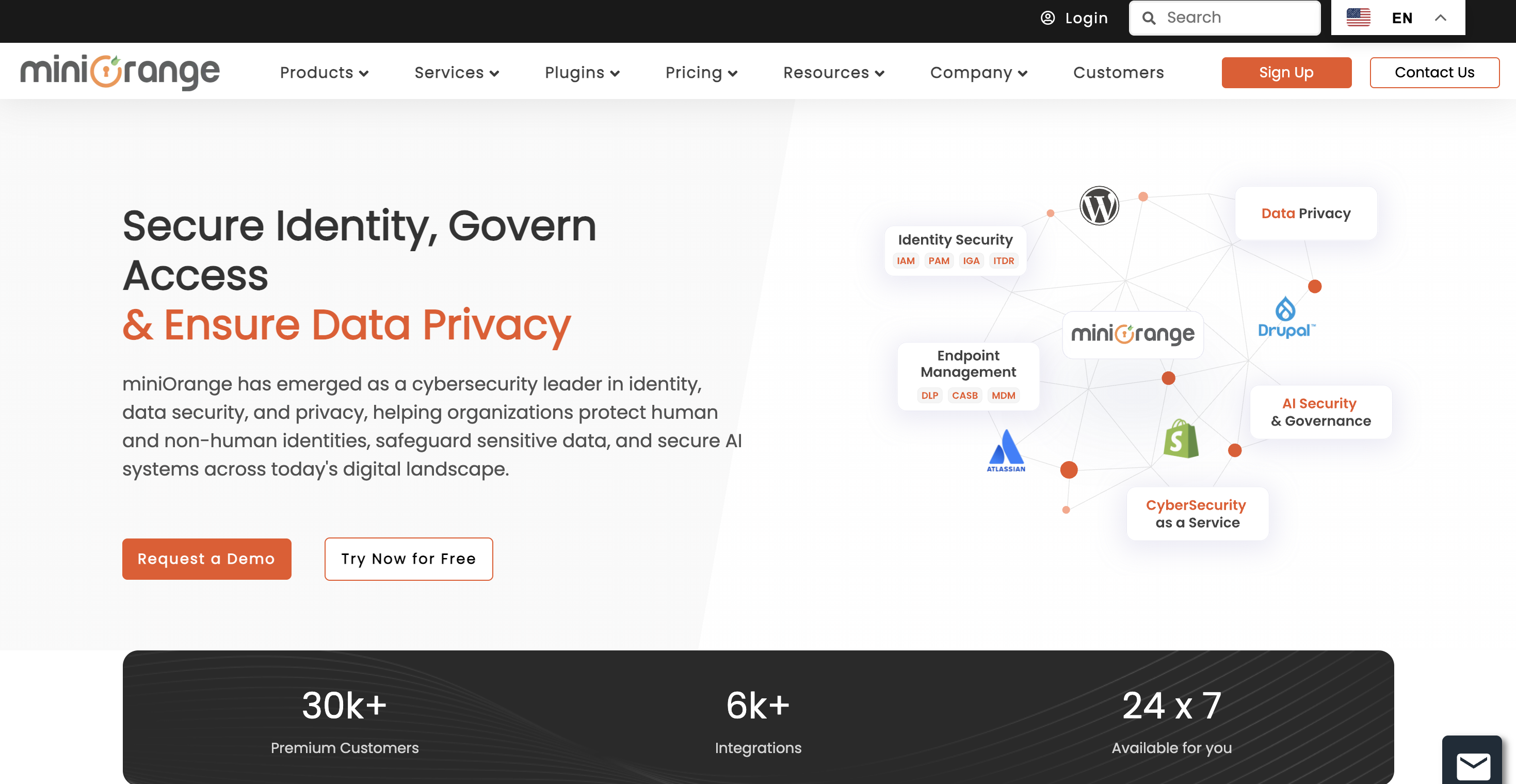
miniOrange combines privacy management with its broader identity and cybersecurity products. It is suitable for enterprises that want to manage DPDP compliance while also addressing access control, data security, and identity governance.
Its data privacy software covers the main operational areas of a privacy program:
- data discovery and classification
- cookie and consent management
- Data Principal and DSAR workflows
- DPIA, PIA, and privacy gap assessments
- RoPA and data-flow mapping
- third-party privacy assessments
- breach and incident management
- compliance reporting and audit trails
For Indian enterprises, miniOrange directly supports DPDP Act requirements such as consent records, Data Principal requests, breach notifications, and data-retention controls. It also supports GDPR and CCPA/CPRA, making it relevant for companies operating across multiple regions.
One distinction is the connection between privacy and security. miniOrange also provides IAM, privileged access management, data loss prevention, endpoint management, and cloud access security. This may suit organizations that prefer to buy privacy and identity-security capabilities from the same provider.
Key features
- Automated personal and sensitive data discovery
- AI-assisted data classification and labelling
- Cookie banners and consent lifecycle management
- Preference centres and consent audit trails
- Self-service Data Principal request portal
- Access, correction, deletion, and portability workflows
- DPIA, PIA, and privacy gap assessments
- RoPA, data mapping, and compliance reporting
- Third-party privacy assessments
- Breach response and notification workflows
- Support for DPDP, GDPR, and CCPA/CPRA
Best for
- Indian enterprises preparing for DPDP compliance
- BFSI, healthcare, ecommerce, EdTech, and travel companies
- Teams managing privacy and identity security together
- Organizations requiring consent, DSAR, DPIA, and breach workflows
- Businesses operating under Indian and international privacy regulations
Pros
- Covers the main operational requirements of a privacy program
- Direct support for DPDP Act workflows
- Combines privacy software with identity and access security products
- Supports structured and unstructured data discovery
- Offers both software and privacy implementation services
- Broad integration coverage across enterprise and cloud systems
Cons
- The wider product portfolio may require careful scoping during evaluation
- Enterprises may need multiple miniOrange products to cover privacy, identity, endpoint, and data-loss requirements
- Public pricing for the data privacy platform is not clearly listed
- Buyers should confirm which capabilities are included in the base privacy platform and which require separate services
Which Data Privacy Management Platform Should You Choose?
Conclusion
DPDPA compliance is no longer just a legal or policy discussion.
Enterprises now need operational privacy infrastructure that can actually manage consent, vendor risk, DSARs, breach workflows, audit readiness, and governance across systems.
In this guide, you saw:
- what enterprise data privacy management platforms actually do
- which features matter most for DPDPA compliance
- the difference between India-native and global privacy platforms
- which tools fit different enterprise use cases best
One thing becomes clear very quickly during evaluation: most privacy challenges are operational now, not theoretical.
That is why it is important to:
- start with data discovery and consent workflows first
- test platforms against real DPDP use cases, not just demo environments
- evaluate deployment complexity and integration effort early
- involve legal, compliance, security, and engineering teams together during evaluation
If your enterprise is looking for a faster, India-first approach to DPDPA compliance with consent management, vendor risk, DPIA, DSAR, and governance workflows in one platform, Redacto is one of the strongest platforms to evaluate in 2026.