%20Redacto%20logo_New.png)

How to Automate Vendor Risk Management: A Guide to Smarter, Faster Risk Scoring Solutions


Managing vendor risks manually is like trying to track hundreds of moving pieces with a spreadsheet. As businesses work with an average of 110-220 vendors and applications in 2025, manual processes simply can't keep up with the scale and complexity of modern third-party relationships.
Automated vendor risk management transforms this challenge into a manageable, strategic advantage. Instead of spending weeks chasing questionnaires and manually scoring responses, smart automation gives you real-time insights and continuous monitoring of your entire vendor ecosystem.
What Is Automated Vendor Risk Management?
Automated vendor risk management uses AI and technology to streamline how you evaluate, monitor, and score third-party vendors. Rather than relying on spreadsheets and periodic manual assessments, automation provides continuous oversight of vendor security postures, compliance status, and operational risks.
Key Benefits
Speed and Efficiency: Manual vendor assessments typically take weeks or months. Automation reduces this to hours or days. Teams report cutting assessment times from 50 hours per vendor to just a few hours weekly across their entire portfolio, with case studies showing organizations achieving these improvements through platforms like Vanta.
Scalability: Growing vendor ecosystems don't have to mean proportionally larger risk teams. Automation allows you to assess and monitor hundreds of vendors without increasing headcount.
Accuracy: Automated vendor risk scoring solutions apply consistent criteria across all vendors, eliminating subjective variations and human error.
Core Processes to Automate
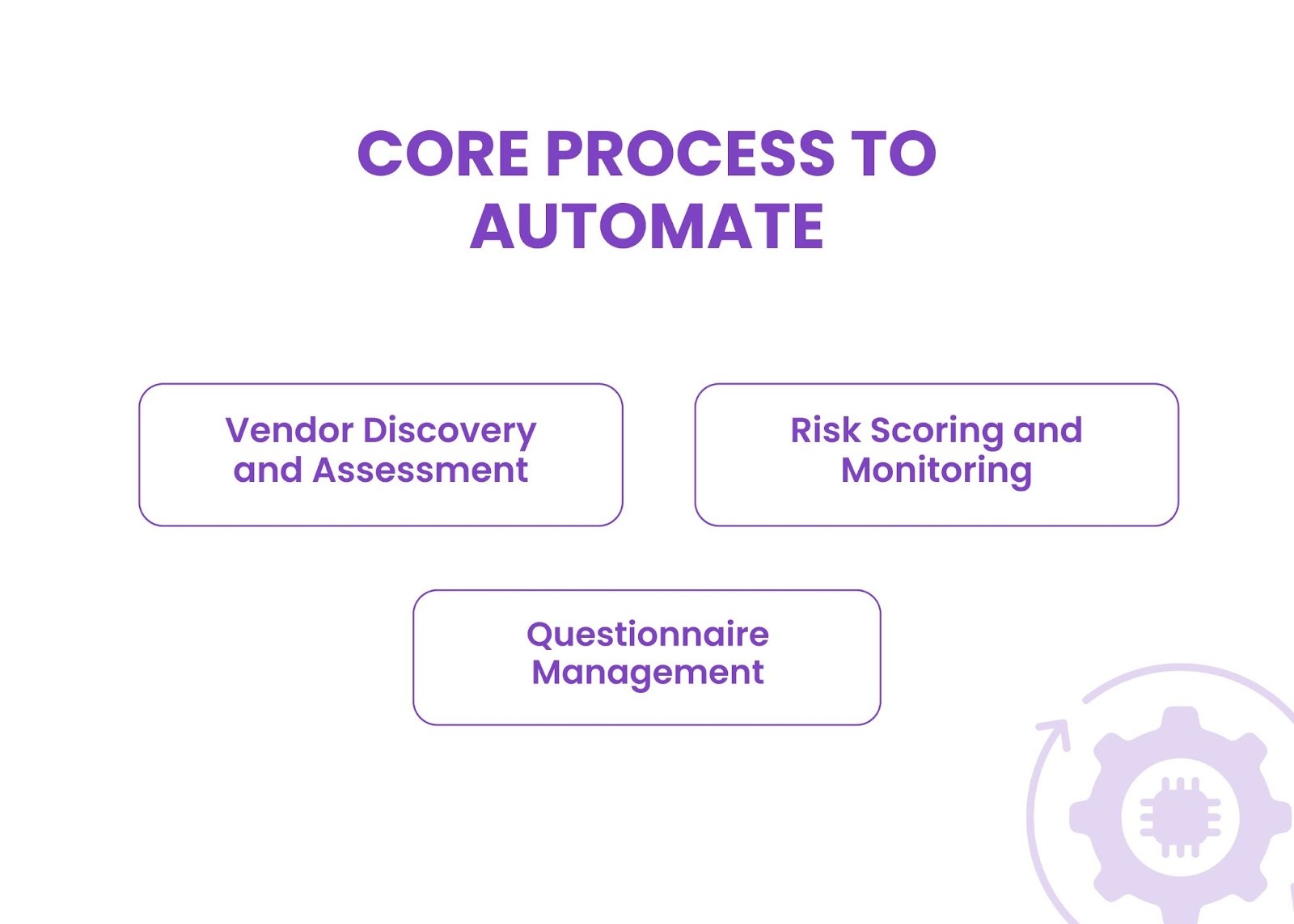
Vendor Discovery and Assessment
Automated discovery tools scan your technology stack to identify connected vendors and services. AI-powered assessment tools analyze vendor documentation, security certifications, and public records to generate comprehensive risk profiles, addressing shadow IT and undocumented vendor relationships.
Risk Scoring and Monitoring
Automated vendor risk scoring solutions use machine learning to analyze security incidents, compliance history, financial stability, and operational metrics. Continuous monitoring systems scan for security incidents, compliance changes, and operational disruptions affecting your vendors.
Questionnaire Management
AI-powered questionnaire tools auto-populate responses based on previous assessments and vendor documentation. Smart systems reference historical responses and suggest answers based on similar vendors or industry standards, reducing questionnaire fatigue for both vendors and internal teams.
Step-by-Step Implementation Guide
Step 1: Assess Current State and Define Goals
Document existing vendor risk management processes and identify pain points. Establish clear objectives for automation, such as reducing assessment time, improving risk visibility, or ensuring compliance with frameworks like GDPR, DPDP, or SOC 2.
Step 2: Select the Right Platform
Evaluate vendor risk management solutions based on your specific needs. Key capabilities should include automated discovery, AI-powered assessments, continuous monitoring, and integration with existing systems.
Step 3: Implement and Train
Begin with a pilot group of high-priority vendors before expanding to your entire portfolio. Ensure your risk management team understands how to interpret automated insights and when to escalate issues for manual review.
Best Practices for Success
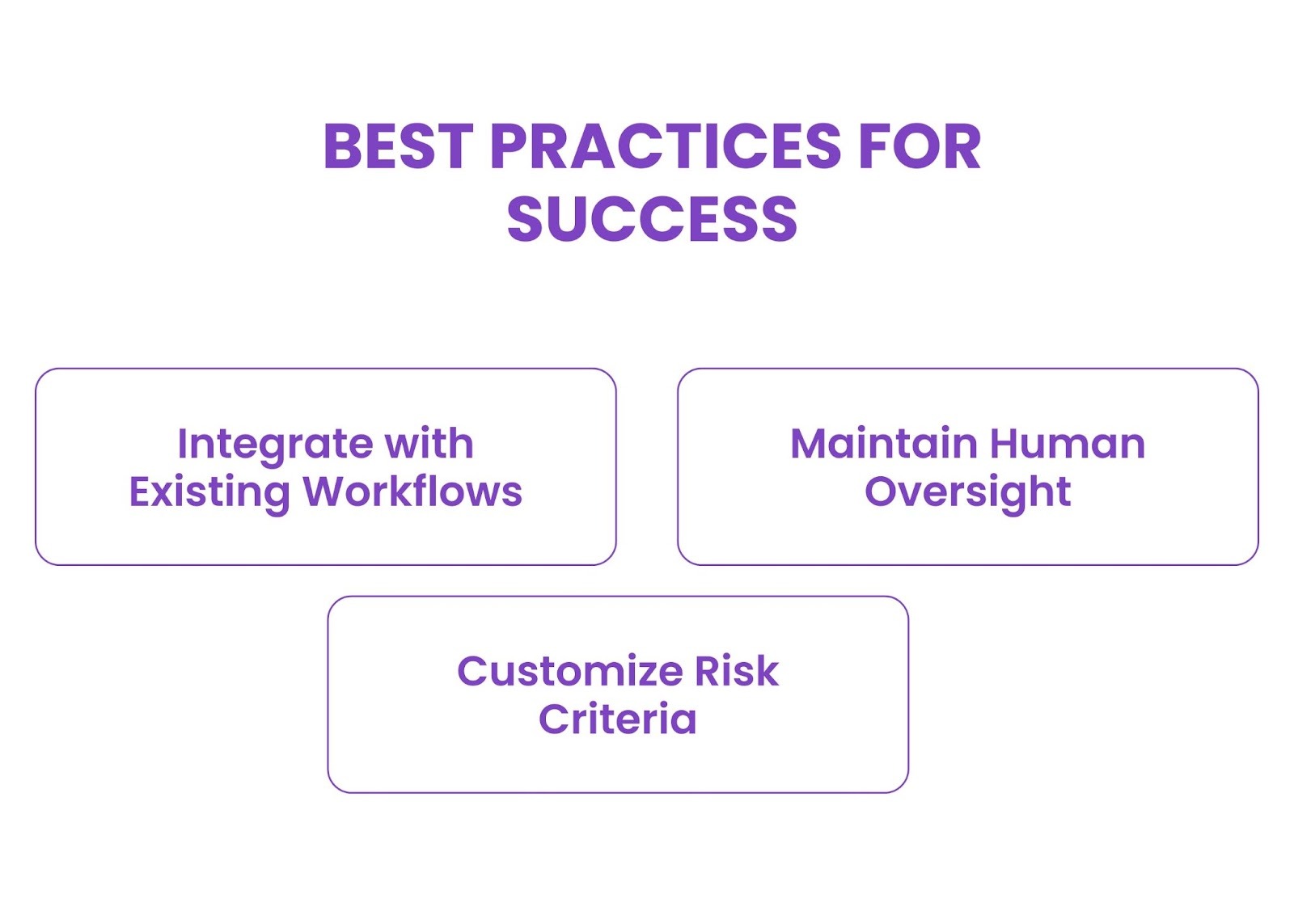
Integrate with Existing Workflows: Connect your automated vendor risk management platform with procurement systems, security tools, and compliance frameworks to ensure risk insights inform business decisions.
Maintain Human Oversight: While automation handles routine tasks, complex risk scenarios still require human judgment. Establish clear escalation criteria for when automated assessments need manual review.
Customize Risk Criteria: Configure risk scoring to reflect your organization's specific risk tolerance and industry requirements. Ensure automated assessments provide clear, actionable recommendations rather than just scores.
Measuring Automation Success
Track time savings in vendor assessments and faster onboarding cycles. Many organizations see 50-60% reductions in manual effort after implementing automation, with some platforms reporting reductions in audit completion time of up to 50%. Monitor improvements in risk detection accuracy and compliance coverage.
Conclusion
Automated vendor risk management isn't just about efficiency; it's about building resilience in an increasingly complex business environment. Organizations that embrace automation gain competitive advantages through faster vendor partnerships, better risk insights, and more proactive threat management.
The technology exists today to transform your vendor risk program. Starting with core automation capabilities allows you to realize immediate benefits while building toward a fully automated risk management ecosystem.
Ready to transform your vendor risk management with intelligent automation? Contact Redacto to learn how our AI-powered platform streamlines vendor assessments, automates risk scoring, and provides continuous monitoring of your third-party ecosystem. Connect with us via WhatsApp for an immediate consultation on automating your vendor risk management.
Frequently asked questions
Automated vendor risk management uses AI and technology to streamline vendor assessments, risk scoring, and continuous monitoring without manual intervention.
Automation handles routine tasks and continuous monitoring, but complex risk scenarios still require human oversight for final decisions and relationship management.
SaaS providers, cloud services, payment processors, and high-volume vendors benefit most due to standardized security controls and frequent assessment requirements.
Automated risk scoring analyzes security incidents, compliance records, financial stability, and operational metrics using machine learning algorithms to generate objective, comparable risk scores.
Implementation may take several months, depending on the vendor's portfolio size and system complexity. Starting with a pilot group allows faster deployment.
Automation reduces questionnaire fatigue, provides faster response times, and creates consistent evaluation criteria, improving the overall vendor experience.

Contact Us
.jpg)