%20Redacto%20logo_New.png)

Automated Data Discovery: Streamlining Sensitive Data Detection with AI



Modern organizations face a growing challenge: scattered sensitive data across countless systems and platforms. Critical information like customer credit card numbers, employee social security numbers, and patient health records may sit unprotected in forgotten spreadsheets, legacy databases, and cloud storage accounts.
Manual data discovery methods struggle to keep pace with today's data explosion. Organizations need smarter approaches to identify, classify, and protect sensitive information before it becomes a compliance violation. Automated data discovery tools offer a solution by using artificial intelligence to scan, analyze, and secure data at scale.
Understanding Automated Data Discovery
Automated data discovery uses artificial intelligence to find sensitive information across your organization's digital environment. Unlike manual processes that require IT teams to search systems individually, automated sensitive data discovery tools work continuously in the background.
These tools scan databases, file shares, email systems, cloud storage, and applications to identify PII, PHI, financial data, and other regulated content. AI-powered engines recognize patterns that indicate sensitive data in any format.
Key Benefits of AI Data Discovery
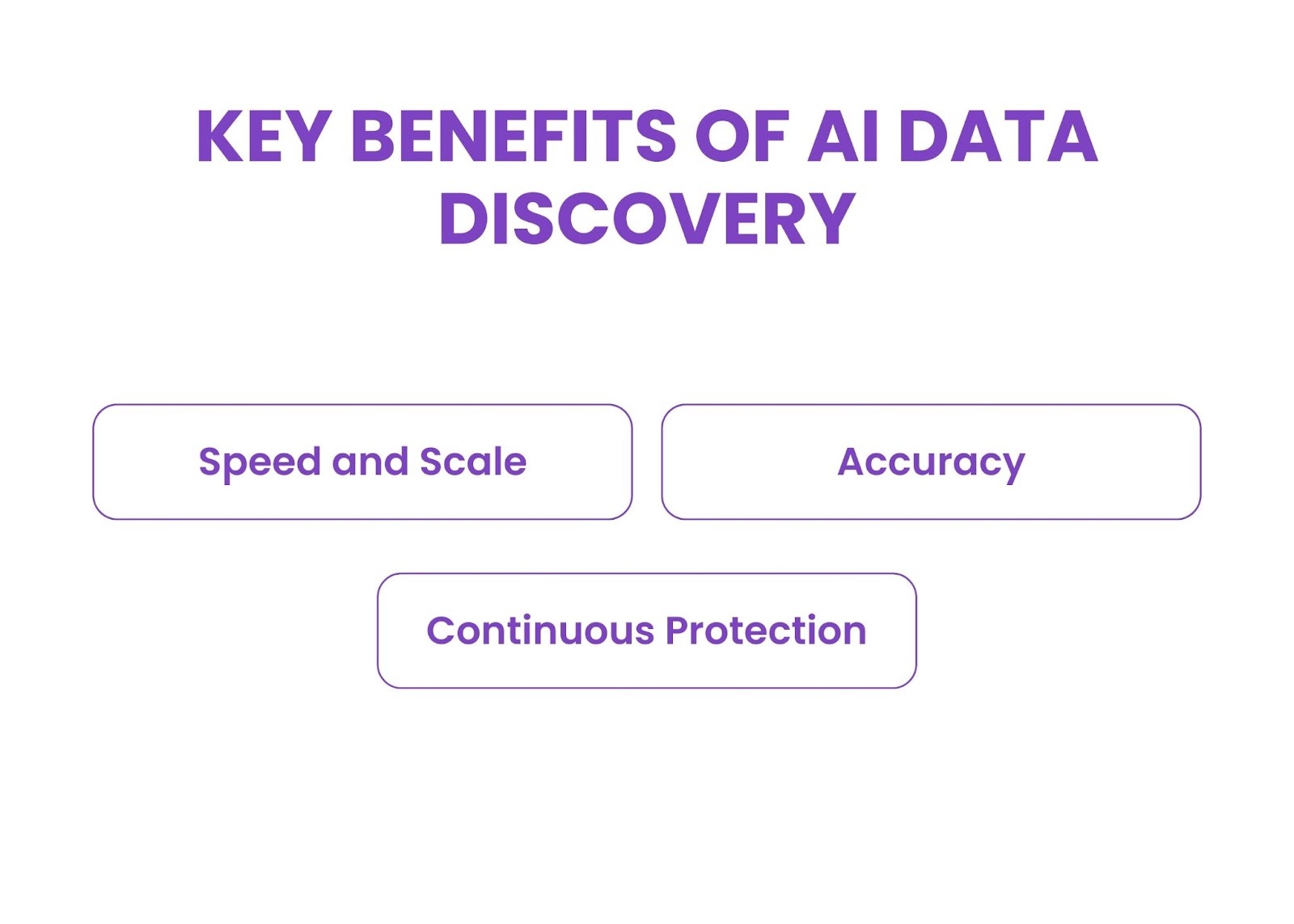
Speed and Scale: Automated tools process thousands of files per hour, significantly faster than analysts. While manual discovery may take months, AI-powered solutions scan enterprise environments in days.
Accuracy: Machine learning algorithms reduce human error by consistently applying classification rules and improving detection over time.
Continuous Protection: Unlike one-time audits, automated discovery runs continuously, identifying new sensitive data as it enters systems.
Essential Components of Data Discovery Automation
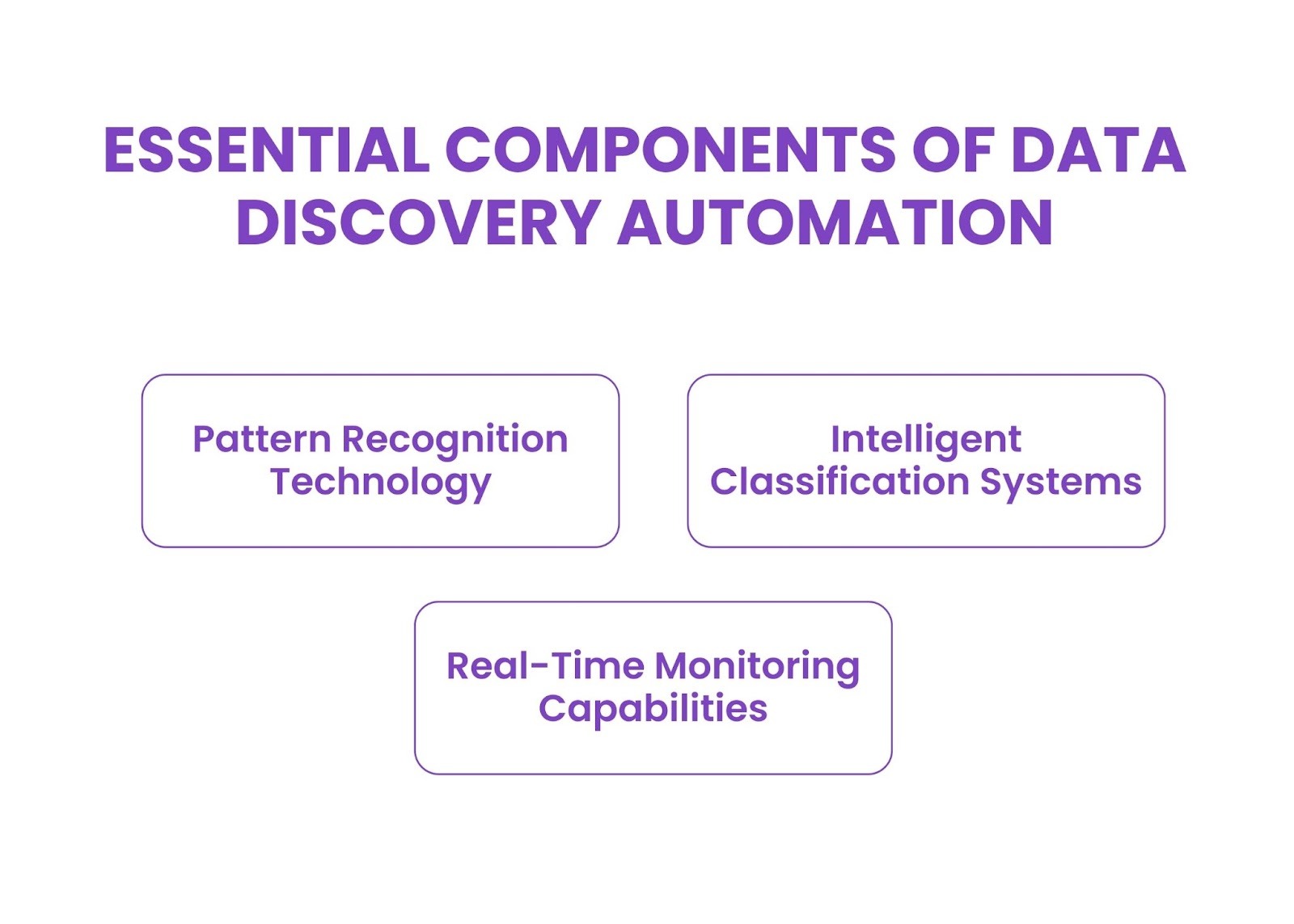
Pattern Recognition Technology
The foundation of automated data discovery lies in sophisticated pattern recognition. These systems identify sensitive data by recognizing specific formats and contextual clues, such as social security numbers by their nine-digit format or credit card numbers by their standard format (typically 15-16 digits).
Advanced automated data discovery tools analyze structured data in databases, unstructured content in documents, and semi-structured data.
Intelligent Classification Systems
Once sensitive data is identified, automatic data classification engines categorize it based on regulatory requirements and business policies. Classification levels include public, internal, confidential, and restricted data.
Modern classification systems understand compliance frameworks like GDPR, CCPA, HIPAA, and India's DPDP Act, automatically tagging data according to regulatory requirements.
Real-Time Monitoring Capabilities
Real-time monitoring ensures continuous visibility as data moves and changes. These capabilities track data creation, access attempts, file transfers, and policy violations.
Effective monitoring systems alert security teams immediately when sensitive data is accessed inappropriately or moved to unauthorized locations.
Implementation Best Practices For Data Discovery
Planning Your Discovery Strategy
Start with a comprehensive data assessment to understand where sensitive information resides. Focus on high-priority systems like customer databases, financial applications, HR systems, and legacy file shares.
Choosing the Right Tools
Best tools for automated data discovery and classification should offer support for multiple data sources, pre-built compliance templates, customizable policies, and detailed reporting capabilities.
Phased Deployment Approach
Implement automated discovery gradually: start with a pilot phase, expand to additional systems, then deploy organization-wide with training.
Continuous Validation
Regular validation ensures effectiveness through accuracy reviews, policy updates, and performance monitoring.
Regulatory Compliance Benefits
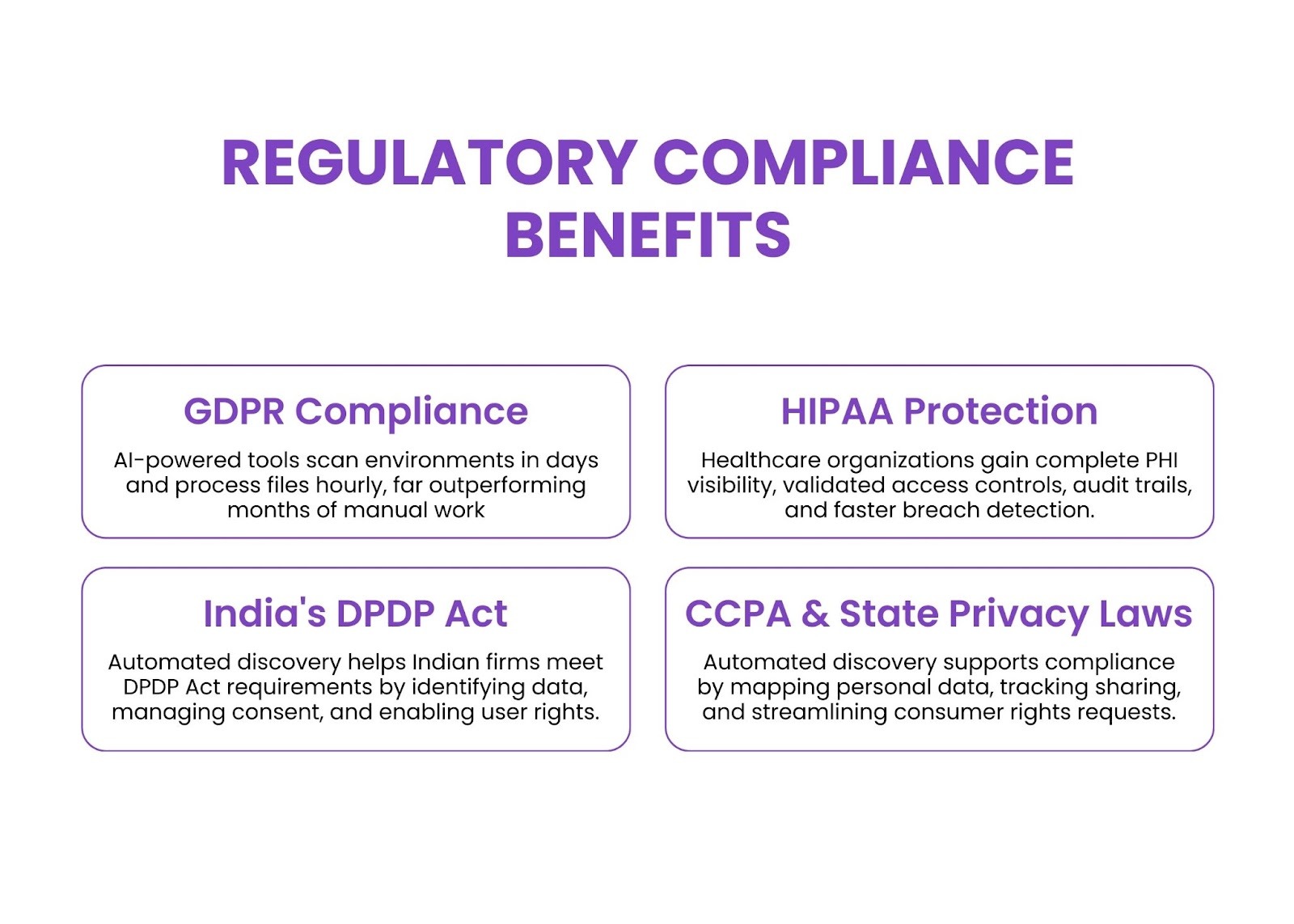
GDPR Compliance
European data protection regulations require detailed personal data processing records. Automated discovery helps by creating data inventories, identifying processing bases, and supporting access requests.
HIPAA Protection
Healthcare organizations benefit from complete PHI identification, access control validation, audit trail creation, and breach detection capabilities.
CCPA and State Privacy Laws
Automated data discovery methods support compliance by mapping personal information categories, tracking data sharing, and implementing consumer rights requests.
India's DPDP Act
Organizations in India can prepare for the Digital Personal Data Protection Act through automated discovery by identifying personal data, implementing consent management, and supporting data rights.
Overcoming Common Challenges In Data Discovery
False Positives and Accuracy
Automated systems may initially generate false positives. Address this through regular tuning of classification rules, user feedback, and machine learning model training.
Performance Impact
Large-scale discovery can impact system performance. Minimize disruption by scheduling scans during off-peak hours, implementing incremental scanning, and monitoring resource usage.
User Adoption and Training
Successful implementation requires user buy-in through clear communication of benefits, comprehensive training, clear escalation procedures, and recognizing compliance efforts.
Conclusion
Automated data discovery represents a shift from reactive to proactive data protection. Organizations implementing these technologies gain comprehensive visibility into their sensitive data landscape while reducing manual effort and improving compliance posture.
Success requires choosing the right tools, implementing strategically, and maintaining continuous improvement. As regulatory requirements evolve and data volumes grow, automated discovery becomes essential for data governance.
Ready to transform your data discovery approach? Redacto's AI-powered data discovery platform helps organizations automatically identify, classify, and protect sensitive information across their digital environment.
Contact our team to learn how automated data discovery can strengthen your data protection strategy. You can also reach us on WhatsApp for immediate assistance.
Frequently asked questions
Automated data discovery uses AI and machine learning to scan, identify, and classify sensitive data across enterprise systems, eliminating manual search processes.
Yes, leading tools support hybrid environments, scanning both cloud-based and on-premises systems through APIs and connectors.
Pilot projects take 2-4 weeks, while enterprise-wide deployments typically require 3-6 months, including planning and phased rollout.
Modern AI-powered tools achieve high accuracy rates, often exceeding 95% for structured data and 85-90% for unstructured content.
Tools support major privacy regulations, including GDPR, CCPA, HIPAA, PIPEDA, and India's DPDP Act with pre-built templates.
Modern tools minimize performance impact through intelligent scanning, off-peak scheduling, and incremental processing.

Contact Us
.jpg)

.jpg)


