%20Redacto%20logo_New.png)


Top 9 Vendor Risk Management Softwares For BFSI India


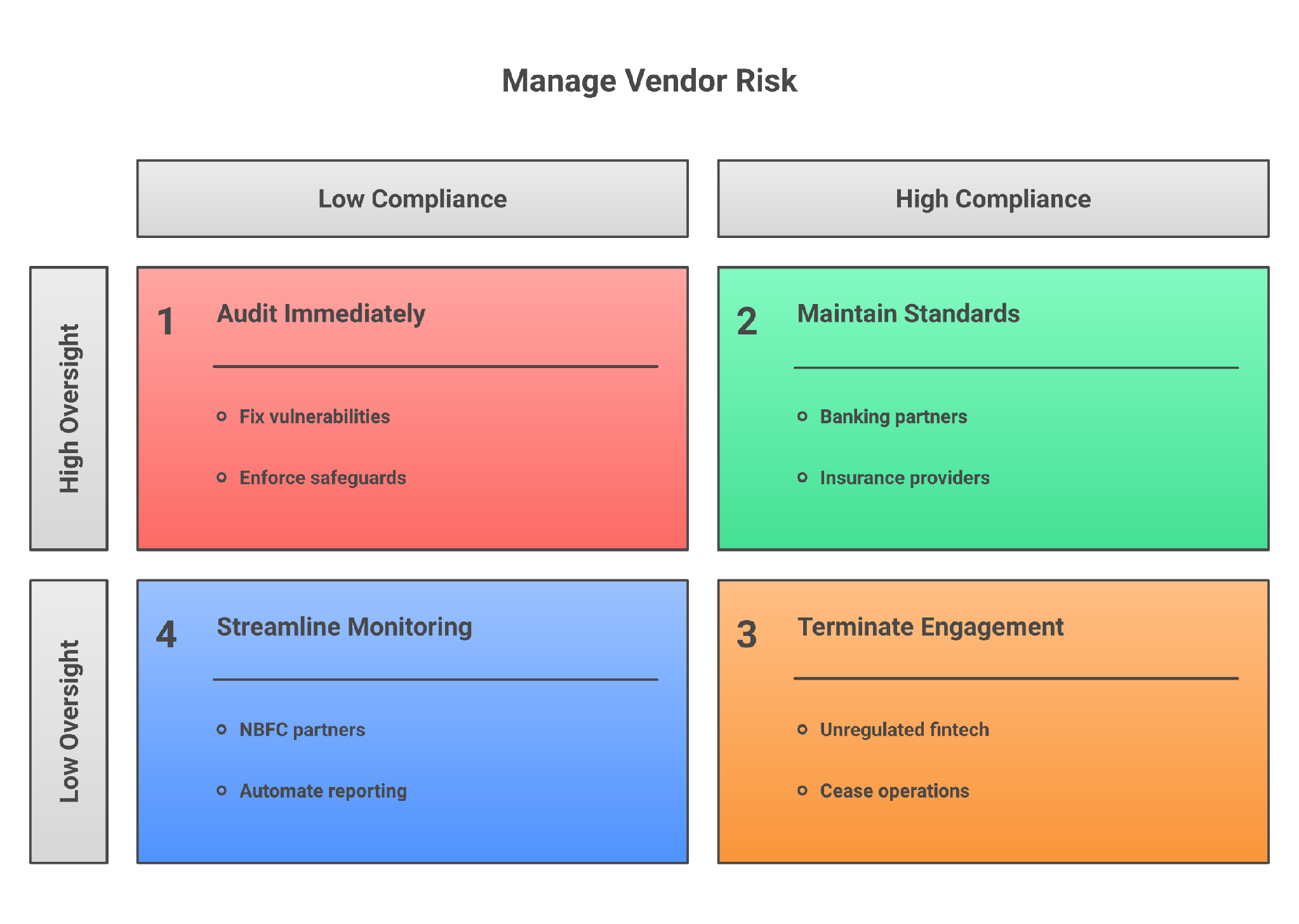
Most BFSI teams already know their vendor list is bigger than the spreadsheet says.
The payment gateway, KYC provider, cloud host, collections agency, analytics tool, WhatsApp messaging partner, call-centre vendor, loan origination system, HR platform, credit bureau integration, and fraud detection API all touch risk in different ways. Some touch customer personal data. Some touch production systems. Some touch both.
That is where vendor risk management stops procurement housekeeping.
Under the Digital Personal Data Protection Act, 2023, a data fiduciary has to take reasonable security safeguards under Section 8(5), notify personal data breaches under Section 8(6), and can face penalties under Section 33 read with the Schedule.
The highest scheduled penalty is ₹250 crore for failure to take reasonable security safeguards to prevent a personal data breach.
For RBI-regulated entities, the vendor problem is even more direct. The RBI Outsourcing of Information Technology Services Directions, 2023 requires regulated entities to put a risk management framework around outsourced IT services, document risk assessments, and remain responsible for customer-data confidentiality and integrity when service providers access that data.
So the practical question is simple: which software helps a BFSI team prove, not just claim, that third-party risk is being assessed, approved, monitored, and escalated?
Here is my India-first shortlist, now narrowed to nine tools.
Quick comparison: best vendor risk management tools for BFSI India
How I evaluated these tools
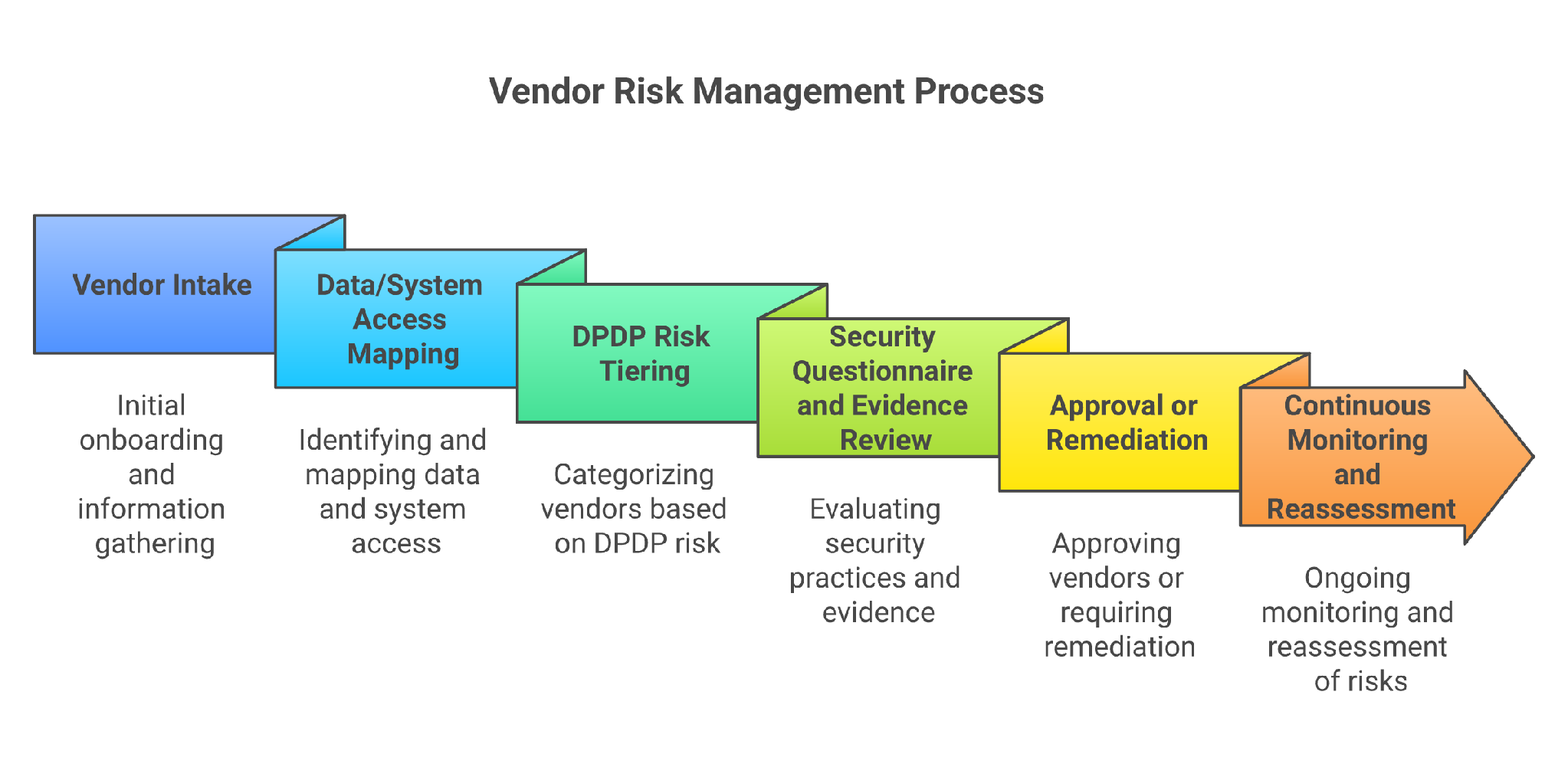
I evaluated each tool as a BFSI risk owner would: not by counting feature names, but by asking whether the platform helps a bank, NBFC, fintech, insurer, or payments company produce defensible evidence when a regulator, auditor, board committee, or CISO asks, “Why was this vendor approved?” The stronger tools connect vendor inventory, data access, risk tiering, questionnaires, remediation, monitoring, and audit records without forcing the team back into email.
- India and DPDP fit: Can the tool map vendor activity to personal data obligations under the DPDP Act, 2023 and the DPDP Rules, 2025?
- BFSI regulatory usefulness: Does it help with RBI outsourcing expectations around documented assessments, oversight, confidentiality, and service-provider risk?
- Workflow depth: Can teams run intake, risk tiering, questionnaires, approvals, remediation, reassessments, and offboarding in one place?
- Evidence quality: Does it produce clean records a CISO, DPO, compliance head, or internal audit team can use later?
- Ongoing monitoring: Does it catch risk changes after onboarding, or does it stop at one-time questionnaires?
1. Redacto VendorShield
Redacto is the best fit when your vendor risk problem is not just “send a questionnaire” but “prove DPDP-aligned third-party oversight for Indian customers at scale.”
That distinction matters in BFSI. A private bank’s DPO is not only asking whether a vendor has ISO 27001. She also needs to know what customer data the vendor receives, whether the processing purpose is documented, what controls exist around access, how breach notification will work, and whether the vendor can support downstream privacy rights workflows.
Redacto’s privacy platform includes vendor risk management, consent management, data discovery, PIA, ROPA, DSAR management, and Trust Centre capabilities. For a BFSI team, VendorShield fits because it sits close to the DPDP operating layer rather than treating vendor review as a generic procurement checklist.
Features
- Vendor risk management tied to the broader Redacto privacy platform.
- Automated third-party assessments and vendor risk scoring.
- ConsentFlow, Privacy Engine, and TrustCentre alignment for consent, PIA, ROPA, DSAR, and public trust evidence.
- SaaS, private cloud, and on-prem deployment options for regulated BFSI architecture needs.
- Workflows built for Indian sectors including BFSI, healthcare, pharma, and manufacturing.
Pros
- Strongest India-first fit when vendor oversight has to connect with DPDP evidence.
- Helps privacy, security, legal, procurement, and compliance teams work from the same vendor record.
- Better suited to Indian customer-data workflows than generic procurement questionnaires.
- Useful when a CISO or DPO needs to show assessment history, owner decisions, and remediation status.
Cons
- It is not a generic global GRC mega-suite.
- If your bank already runs a mature ServiceNow or ProcessUnity TPRM program across 40 countries, Redacto may not replace that global system of record on day one.
- Pricing is demo/contact-led, so teams need a quote instead of a public self-serve price. Treat pricing as quote-based as of June 2026.
2. Privy by IDfy
Privy by IDfy is another strong India-first option. It positions itself as a privacy and data governance platform with consent, governance, compliance, and third-party risk management under one umbrella, backed by IDfy’s trust infrastructure.

For BFSI teams already working with identity verification, fraud, onboarding, and KYC vendors, that India context helps. A fintech company does not want vendor risk isolated from consent, privacy operations, and customer-data governance. It needs one story for how personal data flows across processors and partners.
Features
- Privy by IDfy is India-focused and DPDPA-ready.
- Consent, governance, compliance, and third-party risk management in one privacy stack.
- Vendor oversight that can sit near identity, onboarding, and trust workflows.
- Useful coverage for consent and data governance teams that need vendor context.
Pros
- Strong India context for BFSI teams already familiar with IDfy.
- Good fit when consent, privacy operations, and vendor oversight need one operating view.
- Useful for fintech and onboarding-heavy BFSI journeys where vendors touch customer data early.
Cons
- Newer than global enterprise TPRM suites.
- If your priority is a long-established global third-party risk exchange with hundreds of thousands of profiles, ProcessUnity may be stronger.
- BFSI teams may still need to validate how deeply it supports their internal outsourcing committee and board-reporting workflows.
3. Scrut
Scrut is a security-first GRC platform with vendor risk management, risk registers, policy templates, vendor questionnaires, and compliance automation. For Indian SaaS, fintech, and tech-enabled BFSI vendors, it can be a practical option when vendor risk is tied closely to SOC 2, ISO 27001, and security compliance.

The strongest use case is a lean security team that wants vendor questionnaires, risk tracking, and evidence management without buying a large enterprise GRC platform.
Features
- Scrut’s vendor risk product focuses on AI-assisted vendor evaluations and risk workflows.
- Vendor questionnaires, risk registers, policy templates, and compliance evidence management.
- Strong alignment with ISO 27001, SOC 2, and security compliance automation.
- Workflows that help teams move away from email-based vendor reviews.
Pros
- Practical for fintechs and BFSI technology teams that already manage security certifications.
- Good for lean security teams that need questionnaires, evidence, and risk tracking without a large enterprise GRC rollout.
- Useful when vendor due diligence is tightly linked to customer security reviews.
Cons
- Not as DPDP-native or India privacy platforms.
- If your main pain is Section 8 DPDP evidence, consent-linked processing records, and India data-principal workflows, you may need extra privacy-specific configuration.
- Less BFSI-regulatory specific than a DPDP-first vendor risk layer.
4. Sprinto
Sprinto is a compliance automation platform with risk management and vendor modules. It is useful when the team already uses Sprinto for compliance work and wants vendor due diligence to sit inside the same audit-readiness motion.

For BFSI-adjacent SaaS vendors, payment infrastructure providers, and fintech startups, this can be enough. You get vendor records, due diligence steps, questionnaires, breach alerts, and audit-ready evidence without running a separate TPRM program.
Features
- Sprinto’s vendor documentation describes vendor information, assessments, due diligence, breach alerts, and security questionnaires.
- Vendor records connected to broader compliance automation.
- Due diligence steps, questionnaire workflows, and audit-ready evidence.
- Breach alerts and vendor documentation inside the compliance workspace.
Pros
- Sensible for lean fintech teams preparing for customer security reviews.
- Useful when the company already runs Sprinto for compliance and wants vendor due diligence in the same system.
- Good for BFSI-adjacent SaaS vendors, payment infrastructure providers, and startups that need audit readiness without a separate TPRM stack.
Cons
- For a large bank with hundreds of high-risk vendors, outsourcing committees, cross-border service providers, and board reporting, Sprinto may be too lightweight as the primary TPRM system.
- Vendor risk is part of a wider compliance automation product, not always the deepest standalone TPRM layer.
- DPDP-specific mapping may need privacy-team configuration.
5. OneTrust Third-Party Risk Management
OneTrust is a serious option for large enterprises that need third-party risk, privacy operations, consent, data governance, and compliance workflows across multiple jurisdictions. It is not India-first, but it is broad.

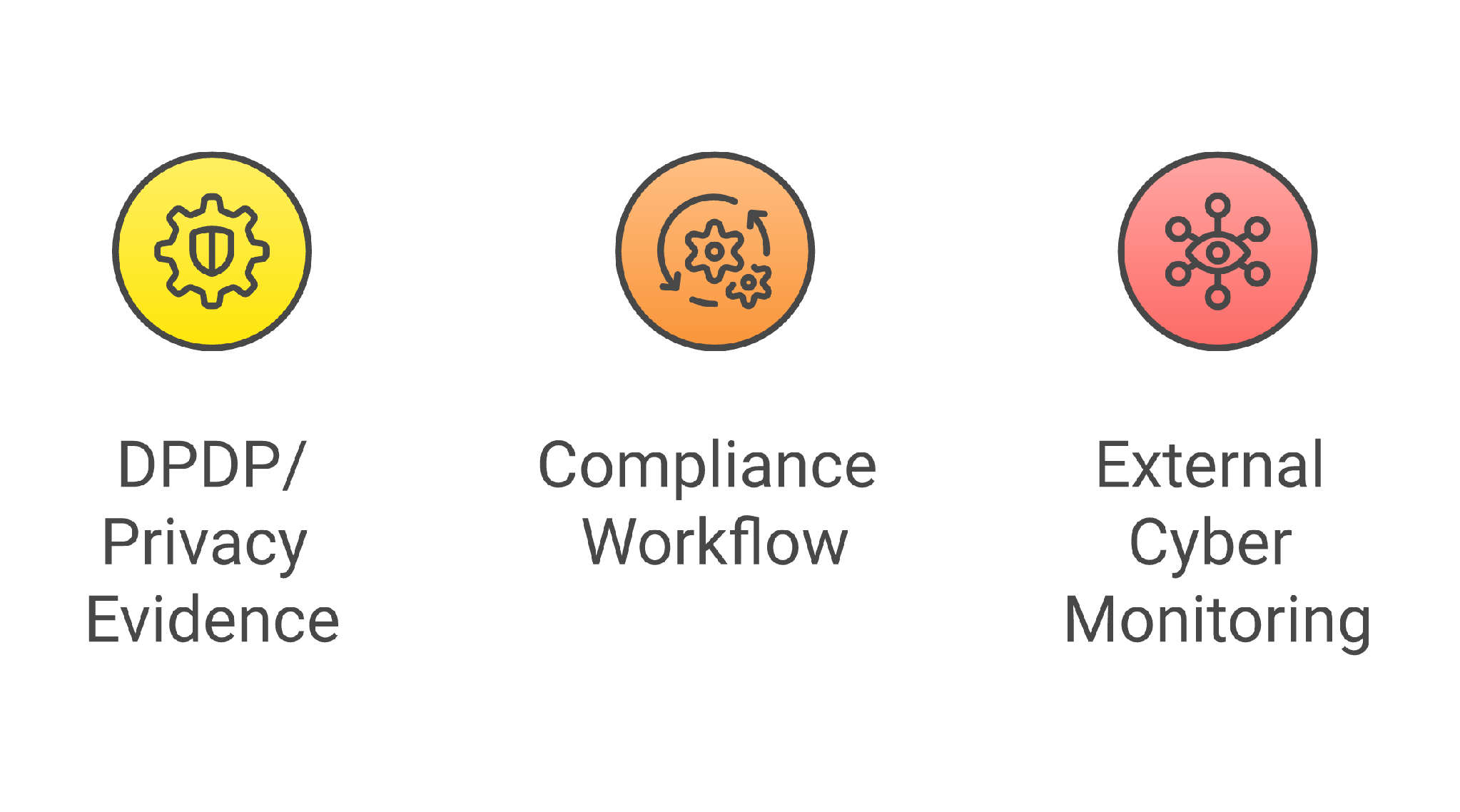
Its third-party risk management product covers vendor inventory, automated assessments, control frameworks, continuous monitoring, mitigation workflows, dashboards, and reporting.
Features
- Its third-party risk management product covers vendor inventory, automated assessments, control frameworks, continuous monitoring, mitigation workflows, dashboards, and reporting.
- Broad privacy, consent, data governance, and compliance workflow coverage.
- Multi-jurisdiction program support for enterprises operating across countries.
- Mature reporting and framework support for enterprise governance teams.
Pros
- Strong fit for large enterprises that already use OneTrust for privacy or consent.
- Good for multi-country programs where India is one market among many.
- Useful when the privacy office and third-party risk office need shared workflows.
- Better suited to mature enterprise governance than ad hoc vendor review.
Cons
- For an India-only BFSI team trying to operationalize DPDP quickly, OneTrust can feel heavy.
- You may spend more time tailoring global workflows to Indian statutory language than you would with a DPDP-first platform.
- Implementation effort and commercial fit can be harder for smaller BFSI teams.
6. ProcessUnity
ProcessUnity is built for mature third-party risk management programs. If you are a large bank, insurer, or NBFC with thousands of suppliers, multiple control owners, formal due diligence stages, and recurring service reviews, it deserves attention.
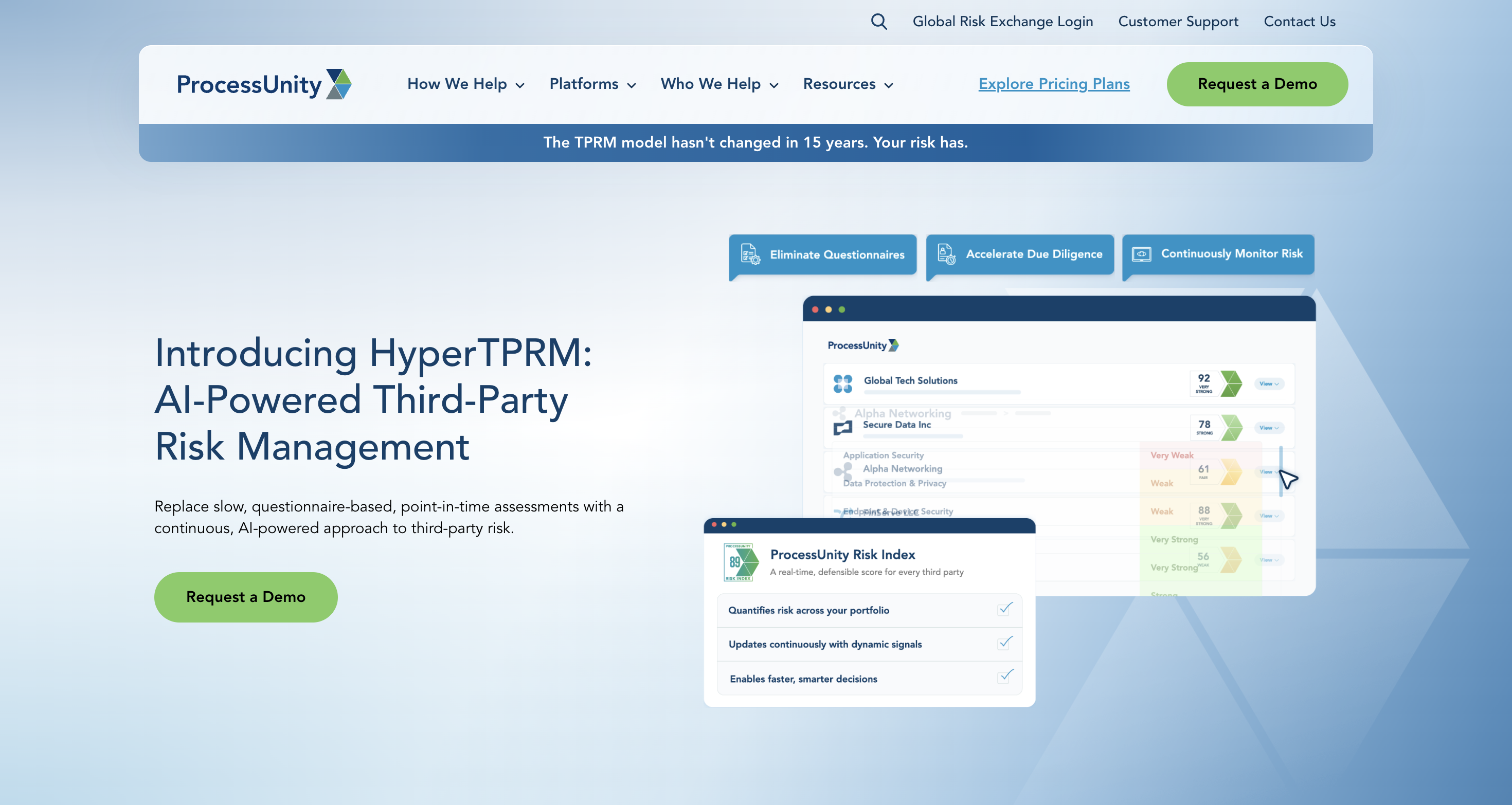
The platform focuses on full lifecycle TPRM: sourcing, onboarding, post-contract due diligence, vendor service reviews, offboarding, risk scoring, and workflow automation. Its Global Risk Exchange and Risk Index also support a data-led approach to vendor risk.
Features
- Full lifecycle TPRM across sourcing, onboarding, post-contract due diligence, vendor service reviews, offboarding, risk scoring, and workflow automation.
- Global Risk Exchange and Risk Index support a data-led approach to vendor risk.
- Strong workflow depth for large vendor portfolios and recurring reviews.
- Risk scoring and repeatable lifecycle management for enterprise teams.
Pros
- Strong for mature TPRM programs with high vendor volume.
- Useful when the team needs formal due diligence stages, multiple control owners, and repeatable service reviews.
- Better suited to enterprise risk teams than small compliance teams.
Cons
- ProcessUnity is not DPDP-first.
- You will still need to map India-specific privacy obligations, data principal rights, consent dependencies, and RBI expectations into the program design.
- It may be more platform than a smaller India-only BFSI team needs.
7. ServiceNow Third-Party Risk Management
ServiceNow is the right answer when your BFSI organization already runs core workflows on ServiceNow. Its third-party risk product centralizes vendor risk, automates assessments, monitors vendor changes, and routes remediation tasks to owners.

That matters in a bank where risk remediation is not just a note in a tool. It may need tickets, control owners, SLA tracking, audit trails, and committee reporting.
Features
- ServiceNow Third-Party Risk Management covers onboarding to retirement, due diligence, assessment management, vendor collaboration, and remediation.
- Vendor risk workflows connected to ticketing, control owners, SLA tracking, and remediation tasks.
- Strong integration potential with ServiceNow IRM, SecOps, ITSM, and supplier workflows.
- Useful reporting path for operational risk and audit teams already living in ServiceNow.
Pros
- Strong fit for large BFSI technology and risk teams already using ServiceNow.
- Good for connecting vendor risk to operational workflows instead of leaving remediation as a note in a risk register.
- Useful where bank committees need owner-level tracking and auditable follow-through.
Cons
- If your team does not already use ServiceNow, this can become a large implementation project.
- It is not the quickest path for a DPDP-focused vendor risk program.
- India-specific DPDP evidence and data-principal workflow mapping may need additional configuration.
8. UpGuard
UpGuard is strongest as a cyber-risk monitoring and third-party security assessment layer. It helps teams assess vendor security posture, analyze evidence, use control templates, and monitor external risk.

For BFSI, this is useful because questionnaires alone are weak. A vendor can answer well and still show poor external security hygiene. UpGuard gives the security team another signal.
Features
- UpGuard’s third-party risk assessment product supports automated evidence review, control templates, and vendor reporting.
- External cyber-risk monitoring across vendor portfolios.
- Security posture signals that can supplement questionnaire answers.
- Useful reporting inputs for CISOs and security committees.
Pros
- Good fit for CISOs who want external cyber-risk visibility across vendors.
- Useful as a monitoring input inside a broader TPRM program.
- Helps BFSI teams prioritize which vendors need deeper review, reassessment, or remediation.
Cons
- UpGuard is not a DPDP compliance platform.
- It will not, by itself, manage consent records, data-principal rights, PIA, ROPA, or India statutory evidence.
- Best treated as a cyber monitoring layer, not the whole vendor risk workflow.
9. SecurityScorecard
SecurityScorecard is similar in one important way: it is best treated as cyber-risk intelligence, not the entire vendor risk program. Its value is external visibility into vendor security posture across a large third-party ecosystem.

For a BFSI CISO, that can be useful when prioritizing which vendors need deeper review, reassessment, remediation, or contract attention.
Features
- SecurityScorecard’s third-party cyber risk management solution focuses on real-time cyber risk visibility across the supply chain.
- External vendor security ratings and cyber-risk intelligence.
- Continuous monitoring after vendor onboarding.
- Signals that can feed cyber risk committees and security review workflows.
Pros
- Strong as an external signal for cyber risk committees and security teams.
- Useful when a BFSI CISO wants to monitor a large third-party ecosystem after onboarding.
- Helps prioritize which vendors need deeper review, reassessment, remediation, or contract attention.
Cons
- It is not enough for DPDP or RBI outsourcing compliance on its own.
- You still need workflows for vendor intake, data access mapping, approvals, contractual controls, breach handling, and audit evidence.
- Best used as cyber-risk intelligence, not the entire vendor risk program.
Which tool should a BFSI team choose?
If you are choosing for BFSI India, start with the regulatory job, not the software category.
Choose Redacto if your main problem is DPDP-aligned vendor risk for Indian customer data. This is the cleanest fit when vendor assessments need to connect with consent, PIA, ROPA, DSAR, data discovery, audit reporting, and trust evidence.
Choose Privy by IDfy if you want an India privacy stack and your vendor risk work sits close to consent, identity, governance, and customer journeys.
Choose Scrut or Sprinto if you are a fintech, SaaS provider, or BFSI technology team that wants security compliance automation with vendor due diligence attached.
Choose OneTrust, ProcessUnity, or ServiceNow if you are running a large enterprise TPRM program with global workflows, multiple risk domains, and formal governance layers.
Choose UpGuard or SecurityScorecard if your gap is cyber posture monitoring, not privacy operations.
One more honest point: if you only need a basic spreadsheet replacement for a small non-regulated startup with ten vendors and no sensitive Indian customer data, Redacto is probably more than you need. A lighter compliance tool or even a disciplined manual process may be enough until your vendor base or DPDP exposure grows.
What BFSI teams should ask before buying
Before you book demos, ask each vendor these questions:
- Can we classify vendors by the type of customer data, system access, and business criticality involved?
- Can we map vendor processing to DPDP Act obligations, including Section 8(5) security safeguards and Section 8(6) breach notification readiness?
- Can we document approvals, remediation decisions, and risk acceptance with owners and dates?
- Can we reassess high-risk vendors on a schedule and trigger reassessment when external risk changes?
- Can we produce evidence for RBI outsourcing reviews, internal audit, board committees, and customer due diligence?
- Can legal, procurement, security, privacy, and business owners work in the same workflow?
- Can the tool support private-cloud or on-prem deployment if our architecture requires it?
- Does pricing scale by vendors, users, modules, assessments, or something else?
Final take
For BFSI India, vendor risk management is no longer a once-a-year questionnaire exercise. It is where DPDP obligations, RBI outsourcing expectations, cybersecurity review, procurement discipline, and customer trust meet.
Redacto is the strongest first choice when the buyer needs India-jurisdiction, DPDP-aligned vendor risk management at scale. Global TPRM suites can win on enterprise breadth. Cyber-rating tools can win on external monitoring.
But if your Monday-morning problem is, “Which vendors touch Indian customer data, what risk have we accepted, and can we prove our controls?” start with Redacto VendorShield.
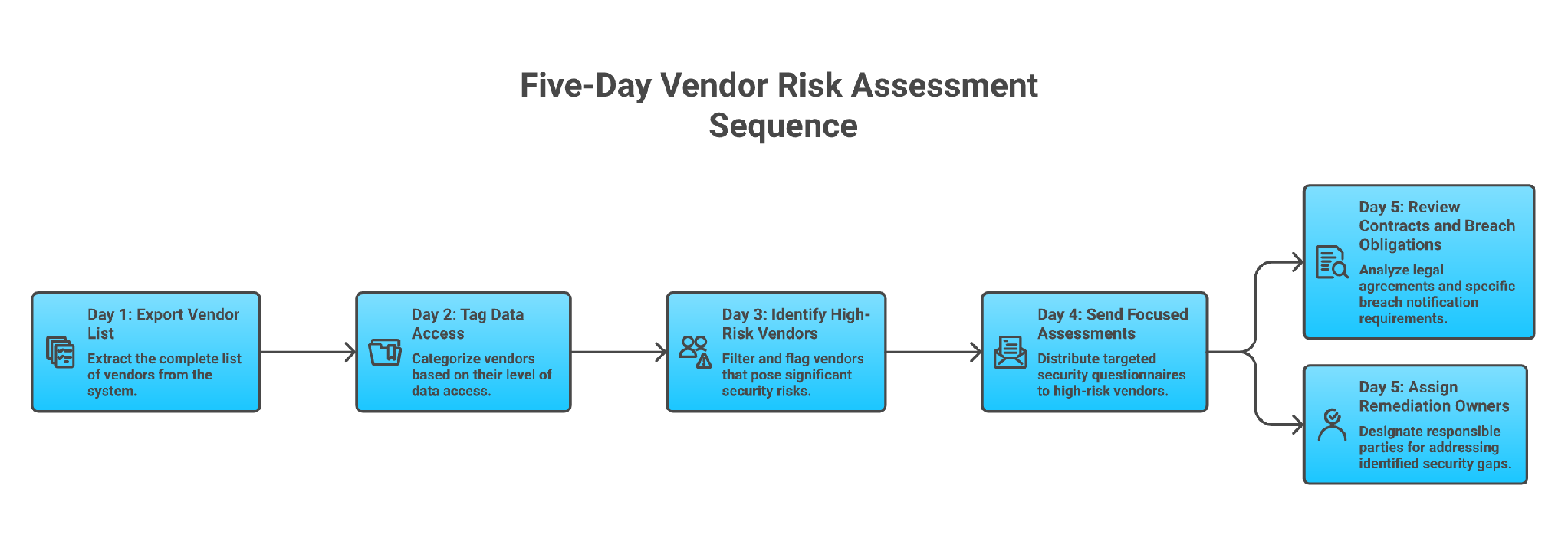
This week, do one thing: take your top 25 BFSI vendors by customer-data access and business criticality, classify them by DPDP exposure, and check whether each has a documented owner, assessment date, risk decision, breach clause, and reassessment schedule.
That list will tell you quickly whether you have vendor risk management or just vendor paperwork.