%20Redacto%20logo_New.png)


How a Customer-Facing Trust Center Accelerates Deals (Reduce Your Sales Cycle)


Enterprise deals stall for many reasons. But one of the most avoidable reasons is the security review. A prospect asks for your SOC 2 report, your security questionnaire, and your DPA. Your team scrambles to find the right documents, emails them over, and then waits for follow-up questions.
A well-built trust center software removes almost all of that friction.
Why Security Reviews Slow Down Sales
Every enterprise buyer goes through some form of vendor security assessment before signing a contract. In regulated industries like banking, fintech, and healthcare, this process is especially thorough.
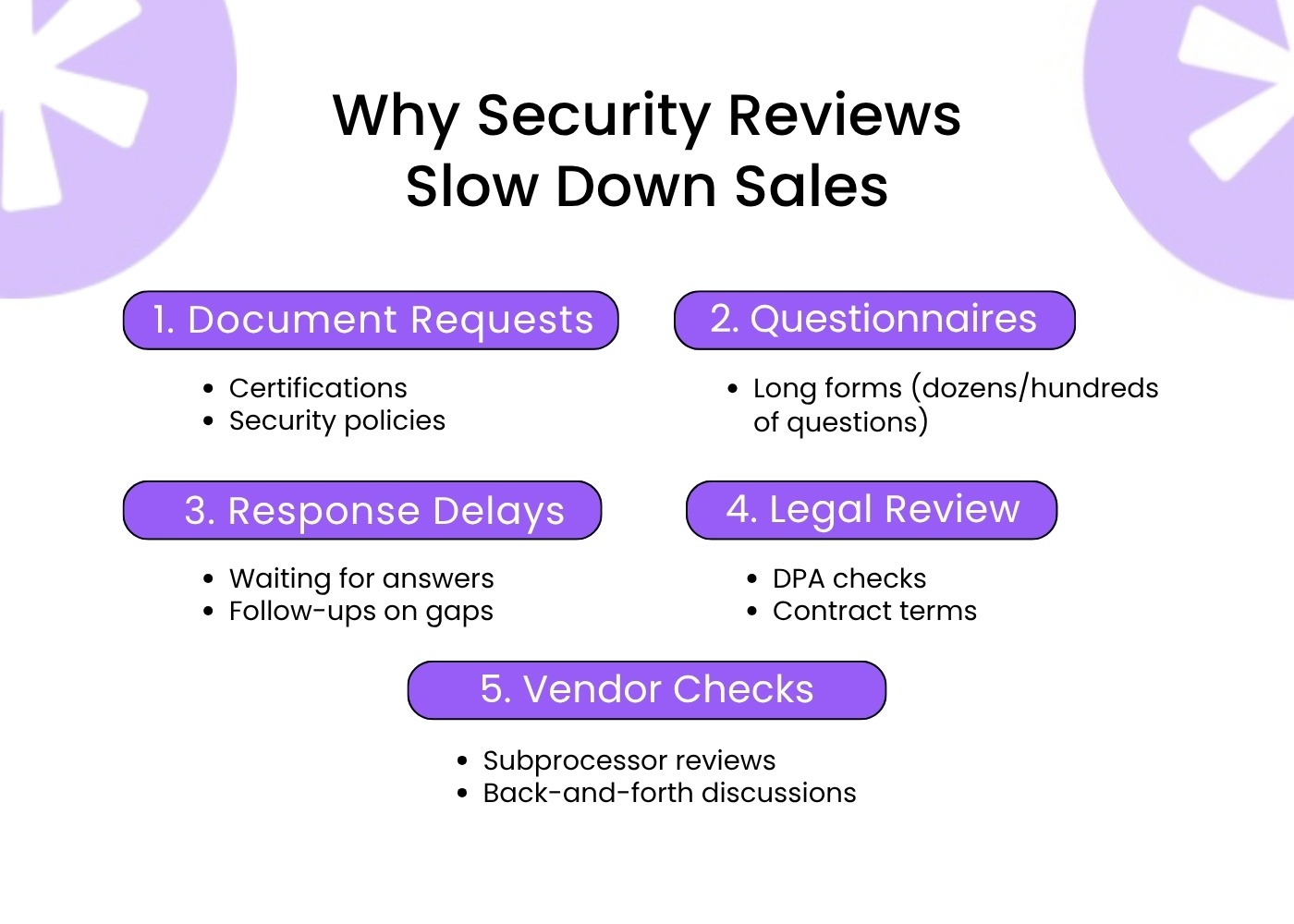
The vendor security review process typically involves:
- Requesting certifications and policies
- Sending a security questionnaire with dozens or hundreds of questions
- Waiting for answers, following up on gaps
- Legal review of DPA and contract terms
- Back-and-forth on subprocessor questions
Each of these steps can add days or weeks to your B2B sales cycle length. Multiply this across multiple deals, and the cumulative delay is significant.
What a Trust Center Does Differently
A customer-facing trust center puts all security and compliance documentation in one place, accessible on demand. Instead of a back-and-forth email chain, a prospect visits your trust center, finds what they need, and moves forward.
The impact on the enterprise sales cycle length comes from a few specific mechanisms:
Instant Document Access
Certifications, policies, and compliance statements are available immediately, often without needing to contact your team at all. Prospects in different time zones do not have to wait for business hours.
Pre-Answered Security Questionnaires
Security questionnaire automation is one of the highest-leverage features of a trust center. When you pre-populate answers to standard questionnaires like SIG Lite, CAIQ, or vendor-specific formats, you eliminate a major source of delay.
Some security teams report that a large share of questionnaire questions are answered the same way every time. Pre-completing these answers once, rather than repeating the exercise for every prospect, is one of the clearest ways to shorten the sales cycle.
Reduced Back-and-Forth With Your Security Team
Without a trust center, sales rely on security to respond to every prospect's documentation requests. With a trust center, security sets up the documentation once, and it handles routine requests automatically. Your security team can focus on exceptions rather than repetition.
What Buyers Actually Look For
When enterprise buyers evaluate a vendor's security posture, they are looking for evidence of:
- A current, valid SOC 2 Type II report
- Clear data residency and processing information
- A signed or ready-to-sign DPA
- Subprocessor transparency
- A documented incident response process
When all of this is in a well-organized trust center, buyers move through their security review process faster and with more confidence.
Trust Centers Work Especially Well in Regulated Sectors
For SaaS companies selling into banking, fintech, insurance, or healthcare, security reviews are not occasional. They are a standard part of every deal.
In India, with the DPDP Act shaping how enterprises think about vendor accountability, buyers are increasingly demanding clear evidence of compliance posture before signing contracts. A trust center that includes your DPDP compliance documentation and data processing policies directly addresses this.
Building a Trust Center That Actually Reduces Friction

A few principles that make a trust center genuinely useful rather than a marketing page:
- Keep documents current. An expired SOC 2 certificate in your trust center is worse than no certificate.
- Make access frictionless. Requiring a 10-field form to download a policy defeats the purpose.
- Include a questionnaire response system. Automated pre-answers to standard questionnaire formats save significant time.
- Show the last-updated date for every document. Buyers notice when documentation looks stale.
Conclusion
A customer-facing trust center is one of the most practical investments a SaaS company can make in its sales process. Less manual work for your team, fewer delays for your prospects, and a clearer signal that your organization takes security seriously.
Redacto's Security Trust Center module helps organizations build and maintain a compliance hub that makes security reviews faster and deals easier to close. Contact our team or message us on WhatsApp to see it in action.