%20Redacto%20logo_New.png)


9 Best PII Discovery Tools for Indian Enterprises in 2026


A customer PAN appears in a support export, a shared drive, and a test database. Security finds one copy, while the retention schedule and DSAR search miss the other two.
That gap matters because Section 8(5) of the Digital Personal Data Protection Act, 2023 requires reasonable security safeguards for personal data. Sections 8(6) and 8(7) connect the same inventory problem to breach notification and erasure.
The operational job is to find the data and attach context. It also needs an owner and evidence of what happened next.
Choosing a PII discovery tool depends on where the data lives and what the finding must trigger. Redacto is the closest fit when an Indian enterprise needs discovery connected to DPDPA records and privacy workflows. BigID goes deeper across large mixed estates.
Microsoft Purview makes sense when Microsoft 365 and Azure already dominate the stack.
TL;DR and quick shortlist
- Redacto: Best for Indian enterprises that want PII discovery to feed DPDPA data maps and response evidence.
- BigID: Best for a large hybrid estate that needs deep classification across structured and unstructured sources.
- Microsoft Purview: Best for Microsoft-heavy companies that want classification and governance inside an existing Microsoft control plane.
Different risks point elsewhere. OneTrust or Securiti can suit a global privacy program, while Varonis adds access context around files. Google and Amazon cover narrower cloud estates; Nightfall watches PII moving through SaaS and AI channels.
I checked price and product details on 25 September 2026. Enterprise quotes can change with data volume and connectors. Users and deployment scope also affect the bill.
How I evaluated these PII discovery tools
I evaluated each tool by whether it can turn an unknown copy of personal data into an owned compliance action. A high detector count matters less when the output cannot reach a retention rule or breach review. It also needs to support a DSAR search and reach an accountable system owner.
This assessment is based on official statutory material and vendors’ published product information, not hands-on product testing.
- Coverage: Can it inspect enterprise databases and repositories across SaaS, cloud, and on-premises estates?
- Indian identifier accuracy: Can teams tune classifiers for PAN and Aadhaar alongside sector-specific identifiers?
- Context: Does a finding show purpose, owner, and location? Can it also connect lineage, access, and sensitivity instead of returning only a pattern match?
- Action path: Can the team route a finding into a PIA or DSAR? Can it also trigger access review and remediation?
- Evidence and cost: Can reviewers export a dated record, and can procurement predict the effect of connectors, scan volume, and add-on modules?
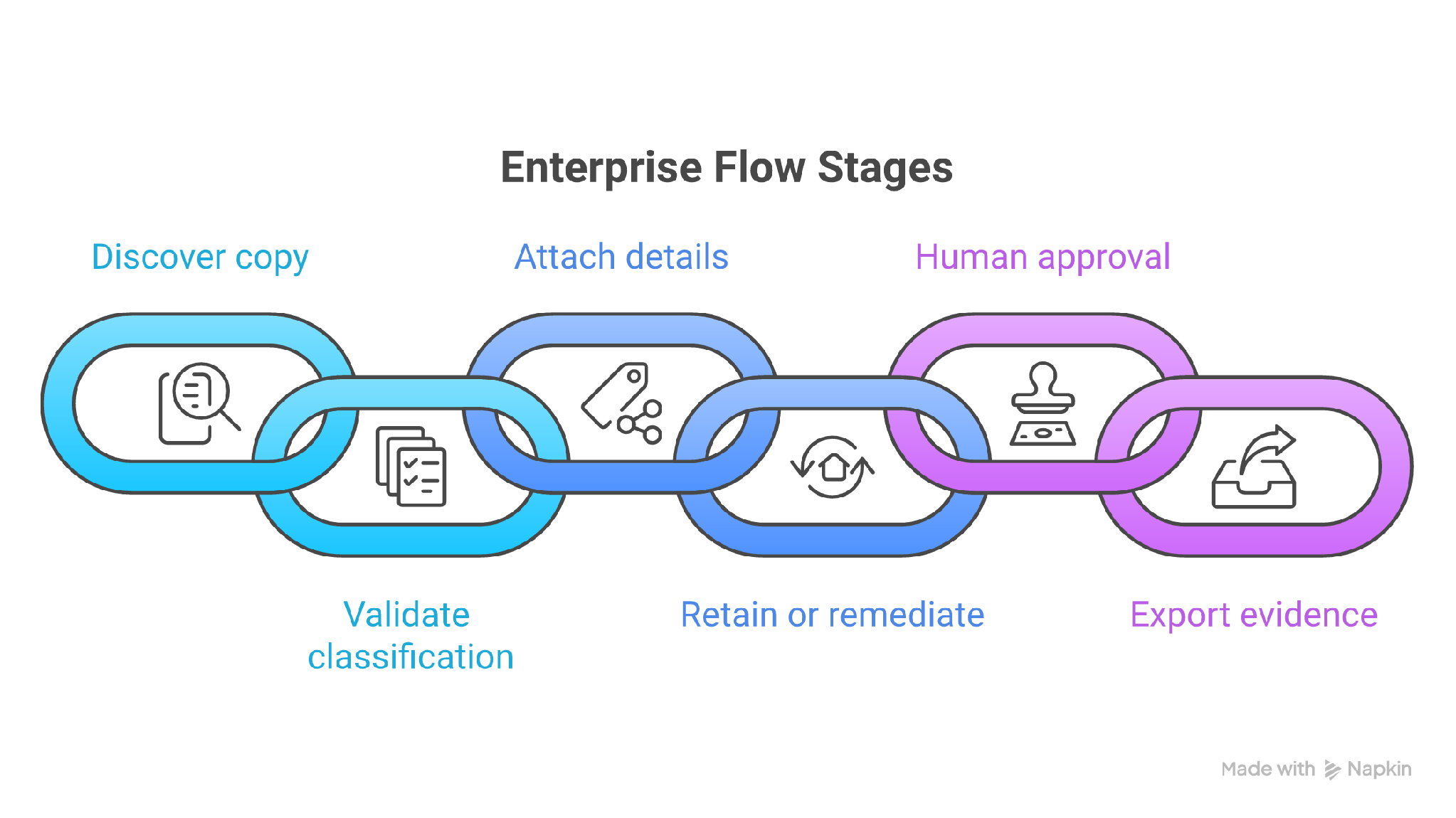
PII discovery tools compared
For an Indian enterprise, the first filter is whether a classifier recognises PAN and Aadhaar variants without treating every nearby number as a match. Test that rule in the 200-record pilot below, using Devanagari or another regional script where those records actually occur.
1. Redacto: Best for connecting discovery to DPDPA work
Redacto’s AI-Driven Data Discovery & Mapping crawls connected databases and cloud storage, classifies regulated records, and tags each finding. Privacy owners can route that inventory into DSAR, PIA, vendor-risk, and audit workflows.
A DPO can trace a PAN finding to its purpose and owner. The team can record its decision and remediation in the same operating environment. Legal and security still validate each match and decide which retention duty controls deletion.
Redacto discovery controls:
- Automated crawling inventories databases and cloud storage, then gives the privacy owner a source record that can be checked against the systems named in a PIA or DSAR search.
- Classification covers PII, health information, financial data, and custom categories.
- Data profiling and lineage show the attributes attached to each record and the downstream movement that an owner must review before changing retention or access.
- Intelligent tags support search and filtering, which helps the DPO separate an ordinary match from a processing activity that needs a risk review and documented follow-up.
- Continuous monitoring updates the inventory when sources change, which helps the DPO catch a new processing path before the next scheduled assessment.
- Connected privacy modules support DSAR and PIA work, while vendor-risk and audit records stay in the same operating environment, so a DPO can trace the original finding through the people who reviewed it, the decision they approved, the system where remediation occurred, and the dated evidence later produced for internal or regulatory oversight.
Cost disclosure:
License-based; contact Redacto. Redacto publishes no currency figure or self-serve free plan, so inventing one would mislead buyers.
Pros:
- India-first workflows make the scan useful to a DPO preparing DPDPA records.
- Discovery can feed privacy work without a separate integration project for each process, so the finding reaches the same evidence trail used for requests and assessments.
- Current capability names align with the product a buyer will evaluate, which keeps the proof-of-concept scope connected to the modules available during procurement.
- Continuous monitoring updates the inventory when a connected source changes.
- Data lineage helps owners trace regulated records after collection.
Cons:
- No public price makes budget comparison slower.
- Its India-first scope is less suitable for a program led by deep GDPR or US state-law requirements.
- The company has fewer public customer references and independent reviews than older suites.
- Buyers must validate connector coverage against their exact source inventory.
- Legal and security teams still approve classification and retention decisions.
Who should not choose Redacto:
A multinational seeking one mature platform for dozens of jurisdictions may prefer OneTrust. An AWS operator that only needs S3 inspection can buy a narrower tool such as Amazon Macie.
2. BigID: Best for deep discovery across a mixed estate
BigID scans structured and unstructured records across cloud, SaaS, on-premises systems, code repositories, and AI data stores. Pattern matching, machine learning, metadata, custom classifiers, and identity correlation help teams connect scattered records with a person or entity.
Security and governance teams can label, mask, restrict, or delete a validated finding. Access analysis adds ownership context before an operator takes action. Petabyte-scale deployments require a data governance team to tune classifiers and manage connectors.
BigID discovery controls:
- Hundreds of connectors cover cloud, SaaS, data centres, and development environments.
- Trainable classifiers add context beyond regular expressions, giving a specialist team room to distinguish an Indian identifier from a similar number inside an unrelated operational record.
- Identity correlation groups related personal records across separate repositories, giving investigators a more complete view before they approve deletion or restriction.
- Duplicate and redundant data detection supports minimisation work by showing where several repositories preserve the same record after its original purpose has ended.
- Access intelligence shows who can reach a classified record, so an owner can weigh actual exposure, the business need for continued access, and the cost of remediation before choosing to restrict a permission or begin a broader response that spans the source system and every downstream copy tied to the same identity.
- Remediation can label or mask a record before an owner reviews it, then preserve the decision when the approved response requires redaction or deletion across more than one repository, which matters when the same person’s details appear in a production system, an analytics copy, a support export, and a development environment owned by separate teams.
Pricing:
Quote-based, with a free trial. Buyer benchmarks often begin near $50,000 per year and rise with sources, connectors, deployment type, and add-on bundles.
Pros:
- Coverage and classifier depth suit complicated hybrid estates.
- Privacy, security, and governance teams can work from one inventory.
- Petabyte-scale options fit enterprises with a data platform team.
- Identity correlation groups records that belong to the same person.
- Remediation workflows support labeling, masking, restriction, and deletion.
Cons:
- Modular licensing makes total cost hard to estimate before scoping.
- Tuning and rollout demand specialist time because a broad connector estate creates more classifiers and ownership decisions than a focused scanner.
- A smaller Indian enterprise may buy more platforms than it can operate when connector tuning and governance ownership exceed the people available for the project.
- A broad connector estate creates substantial rollout work.
- Small teams may struggle to assign owners across every source.
BigID wins when discovery depth across a large mixed estate matters more than an India-specific compliance workflow, especially where a data-platform team can operate its connectors and tune classifiers over time.
3. Microsoft Purview: Best for Microsoft-heavy enterprises
Microsoft Purview records metadata in its Data Map and classifies content across Microsoft services, Azure sources, and connected hybrid systems. Information Protection carries supported labels into Microsoft 365 workflows. Data Explorer helps security teams investigate exposed records.
Companies that use Microsoft identity, endpoints, and E5 licences can reuse familiar controls. Procurement still needs to separate included entitlements from pay-as-you-go governance meters.
Purview governance controls:
- Data Map scans sources and records metadata, lineage, and classifications.
- Built-in and custom classifiers identify regulated content, while local tuning lets the Microsoft team adapt a general control to the identifiers present in its own estate.
- Sensitivity labels travel through supported Microsoft workloads, allowing the classification decision to follow a document after it leaves the source where the scan first found it.
- Data Loss Prevention policies can act on classified content once the team has agreed which labels warrant a block and which only require monitoring.
- Hybrid and multicloud connectors extend the catalogue beyond Microsoft’s own services, although each additional source still needs testing for coverage and a named owner for failed scans.
- Role controls use the existing Microsoft identity environment, which can reduce a separate access-management project while preserving the division between technical operators who manage scans and privacy owners who approve what happens to a validated finding.
Pricing:
Data Map has been listed around $0.411 per capacity-unit hour in public rate cards. One unit includes 25 operations per second and 10 GB of metadata. No standalone free trial is published; some capabilities come through Microsoft 365 licences.
Pros:
- Native Microsoft context reduces integration work for an E5 estate.
- Labels can continue from discovery into user and DLP controls.
- Consumption pricing lets teams start with a bounded source set.
- Data Map records metadata, lineage, and classifications.
- Data Loss Prevention policies can act on approved labels.
Cons:
- Product names, licences, and meters are difficult to model together.
- Non-Microsoft coverage needs careful connector testing, especially when the privacy inventory depends on records held beyond Microsoft 365 and Azure.
- A technical catalogue does not by itself create DPDPA privacy records because purpose and retention judgments still require an accountable owner outside the scanning service.
- Privacy owners must add purpose and retention judgments outside the scan.
- Capacity charges can become hard to predict as scan scope grows.
Purview is the practical winner when Microsoft already owns the control plane and the privacy function can build the missing handoff from a technical finding to a DPDPA record.
4. OneTrust: Best for a global privacy operating model
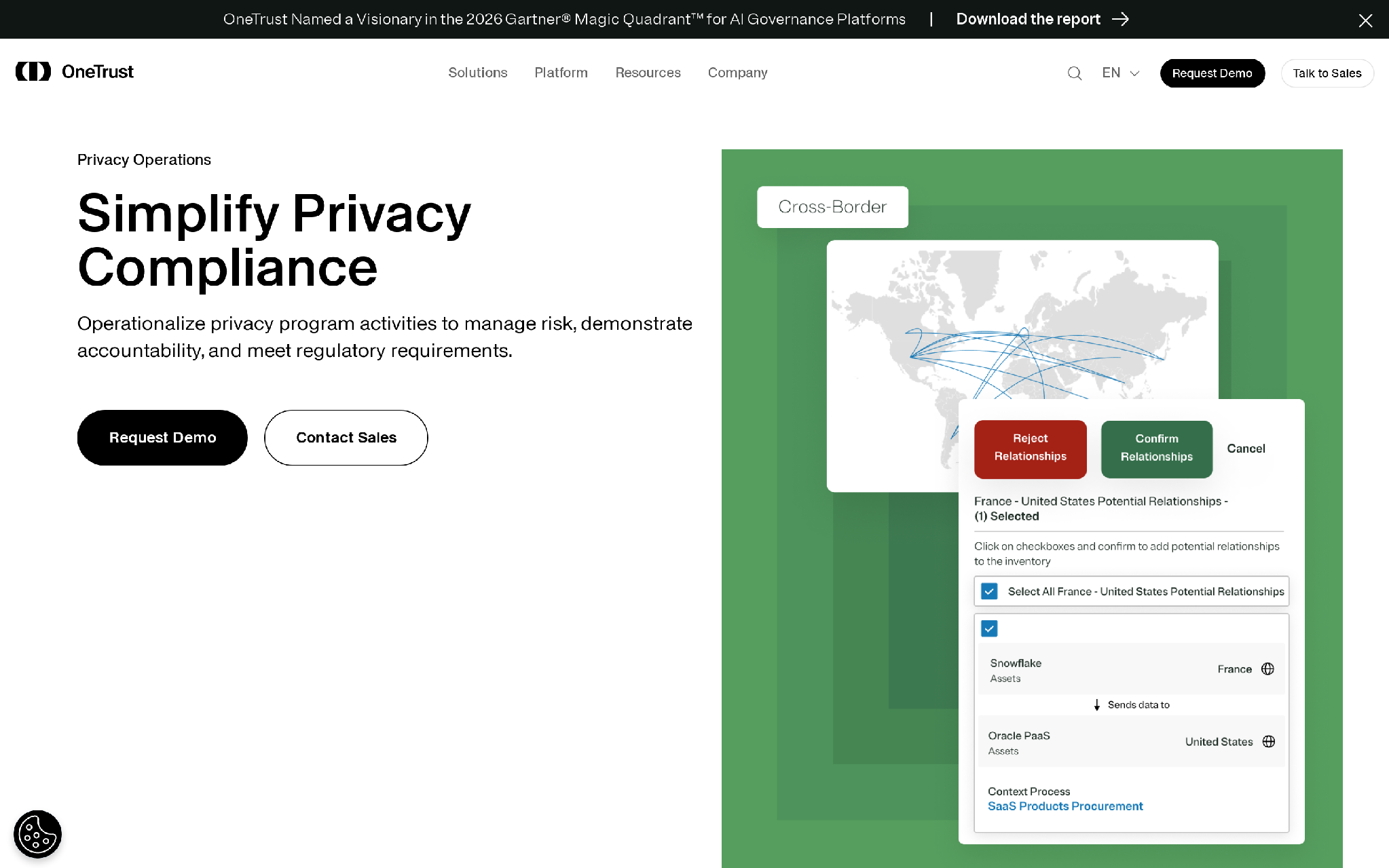
OneTrust combines discovery with privacy-management workflows. Its inventory can feed rights requests, consent records, assessments, and third-party risk work. Legal teams can attach processing purpose, owner, and jurisdiction to a technical finding.
Packages and usage meters shape the implementation. Buyers need a statement of work that names each source, administrator, profile, and remediation path.
OneTrust inventory controls:
- Discovery and classification feed a central data inventory, giving the privacy office one place to connect a technical match with the processing purpose and jurisdiction that govern the response.
- Privacy maps connect each system with a purpose and owner, then preserve the jurisdictional context that a multinational privacy office needs during review.
- DSAR and consent workflows use the same governance environment.
- Assessment modules support privacy and vendor reviews.
- Policy and automation options route tasks to accountable teams, provided the statement of work assigns owners before the inventory starts generating findings.
- Global regulatory content supports multi-jurisdiction programs.
Pricing:
OneTrust does not publish list prices or a free trial. Vendr’s 2026 transaction data reports a median annual contract near $12,000, with wide variation by package and scope.
Pros:
- Broad privacy workflows suit a mature global privacy office that can assign administrators across several modules and keep the resulting system records aligned with changes in local operations.
- Regulatory coverage extends beyond India.
- Inventory context can support rights and assessment work.
- Assessment modules support privacy and vendor reviews.
- Task routing assigns findings to accountable teams.
Cons:
- Packages and professional services can raise total cost.
- Configuration can become heavy for a small privacy team when several legal regimes and workflow modules arrive in the same rollout.
- India-specific implementation still needs local legal and operational design so the global inventory produces the evidence expected by the enterprise’s DPO and Indian stakeholders.
- Administrators must maintain jurisdiction rules as operations change.
- Indian implementation still requires local legal and operational design.
OneTrust beats Redacto for a multinational that values jurisdiction breadth over an India-first operating model, provided the privacy office has enough capacity to configure and govern the broader suite.
5. Securiti: Best for multicloud privacy and security orchestration
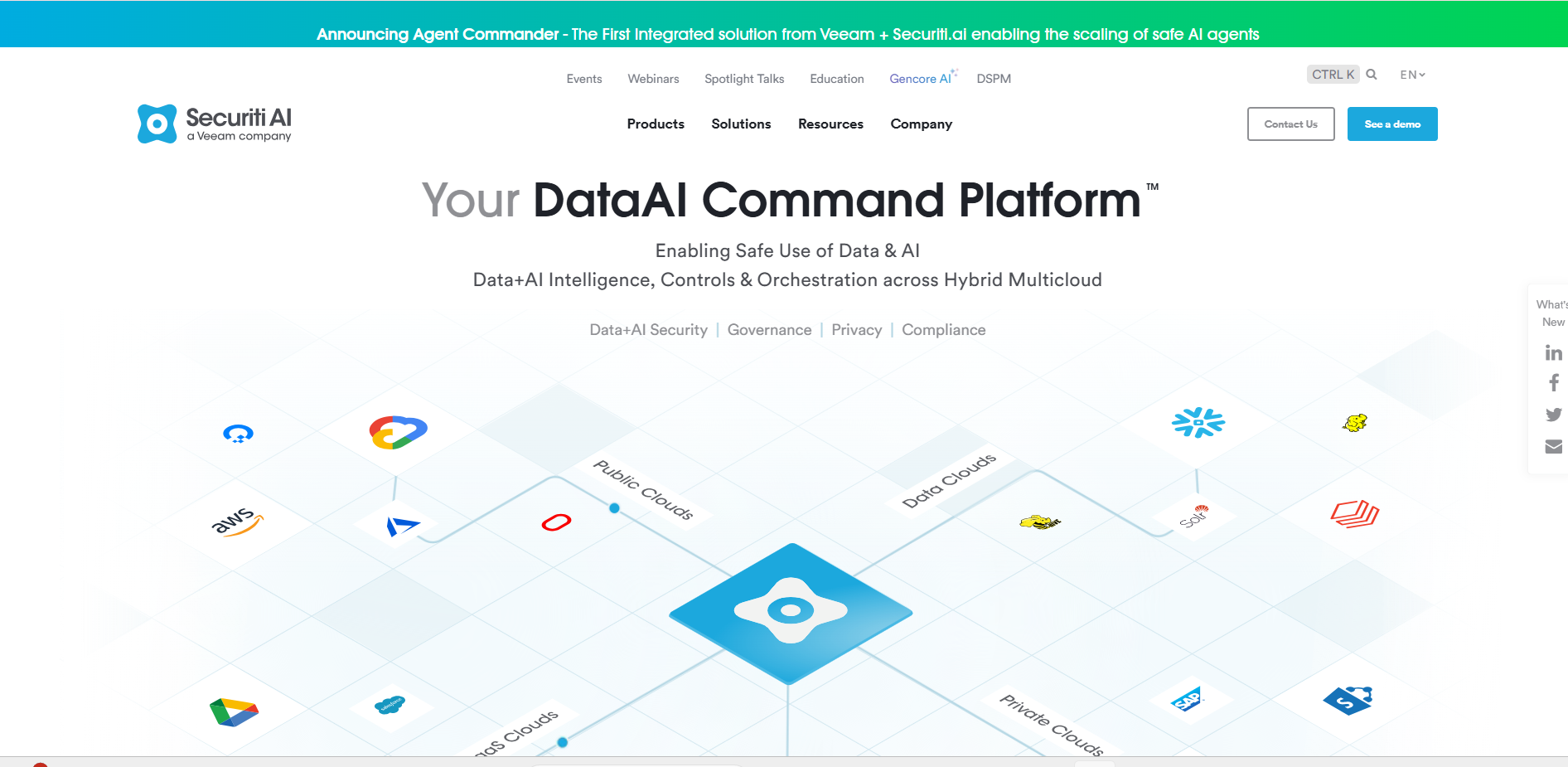
Securiti discovers and classifies data through its Data Command Center. Privacy and security teams can use the inventory for access intelligence, rights requests, policy work, and remediation across multicloud and SaaS environments.
A disciplined rollout matters because the catalogue, DSPM, and privacy modules create several ownership queues. Teams need to decide which findings move automatically and which require human review.
Securiti orchestration controls:
- Discovery spans cloud stores and databases as well as SaaS applications, giving a multicloud program enough source coverage to test whether one inventory can serve privacy and security teams.
- Sensitive-data intelligence adds identity and ownership context.
- Access governance highlights exposed records and risky permissions, helping the joint program distinguish an ordinary classification match from a copy that creates immediate security exposure.
- Privacy workflows support data requests and consent records.
- Policy orchestration can initiate remediation across systems after privacy and security teams agree which findings can move automatically and which need review.
- Dashboards combine security findings with privacy and governance context, giving the joint program a common queue where each exposed record can be assigned to an owner and followed until the required technical action and legal evidence are both complete.
Pricing:
Quote-based and sold annually. Buyer reports place entry deployments near $20,000 per year; there is no public self-serve free plan.
Pros:
- One inventory can serve security and privacy teams when both functions agree on classifier ownership, the response path for exposed records, and the evidence retained after remediation.
- Multicloud coverage suits enterprises spread across providers.
- Orchestration helps move findings beyond a dashboard.
- Policy orchestration routes approved remediation across systems.
- Dashboards assign findings and track them through closure.
Cons:
- Public pricing is limited.
- A broad platform increases configuration and ownership work because each cloud source still needs an accountable team and an approved response path.
- Teams should validate Indian identifiers with their own corpus because a general classifier may miss regional formatting or overmatch ordinary numbers that resemble PAN or Aadhaar.
- Each cloud source needs an accountable owner and response path.
- Teams must validate Indian identifiers with their own corpus.
Choose Securiti when the program needs multicloud security context and privacy operations in the same layer, with named owners available to govern both sides of the resulting inventory.
6. Varonis: Best for access context around unstructured PII
Varonis classifies content and maps its access paths. Permissions data, identity context, and user behaviour help analysts decide which exposed copy needs attention first. This focus suits file shares and Microsoft 365 repositories with inherited access.
Analysts can rank findings by exposure and remediate risky permissions. Privacy teams still need an operating record for consent, PIAs, DSAR coordination, and legal decisions.
Varonis access controls:
- Classification finds regulated content across files and supported SaaS repositories, which suits an estate where business records have spread through shared workspaces and inherited permissions.
- Permissions analysis exposes broad and stale access.
- Identity and behaviour analytics add user context.
- Automated remediation can reduce excessive permissions after the security team defines which inherited access is safe to remove without interrupting a business process.
- Activity monitoring helps investigators distinguish a broadly accessible file that nobody opens from an exposed record that a compromised or unusual account has started reading.
- Threat detection connects exposure with behaviour.
Pricing:
Quote-based, with no public free plan. Buyer reports commonly put initial enterprise contracts near $40,000 per year, depending on users and repositories.
Pros:
- Access context helps teams prioritise dangerous copies.
- Strong file and Microsoft 365 depth suits document-heavy estates where the central risk is no longer a missing classifier but the number of people who can reach each copy.
- Security controls can remediate exposure after discovery.
- Activity monitoring shows whether users open sensitive files.
- Automated remediation can reduce approved excess permissions.
Cons:
- Privacy workflow coverage is narrower than Redacto or OneTrust, so the DPO may need another system for consent and rights-request evidence.
- Cost can be hard to justify for discovery alone.
- Operation usually sits with a mature security function.
- Operation usually requires a mature security team.
- DPOs need another system for consent and rights-request evidence.
Varonis wins when the main question is who can reach each classified file and which permission creates the greatest exposure, while a full DPDPA program still needs another operating layer.
7. Google Sensitive Data Protection: Best for Google Cloud data
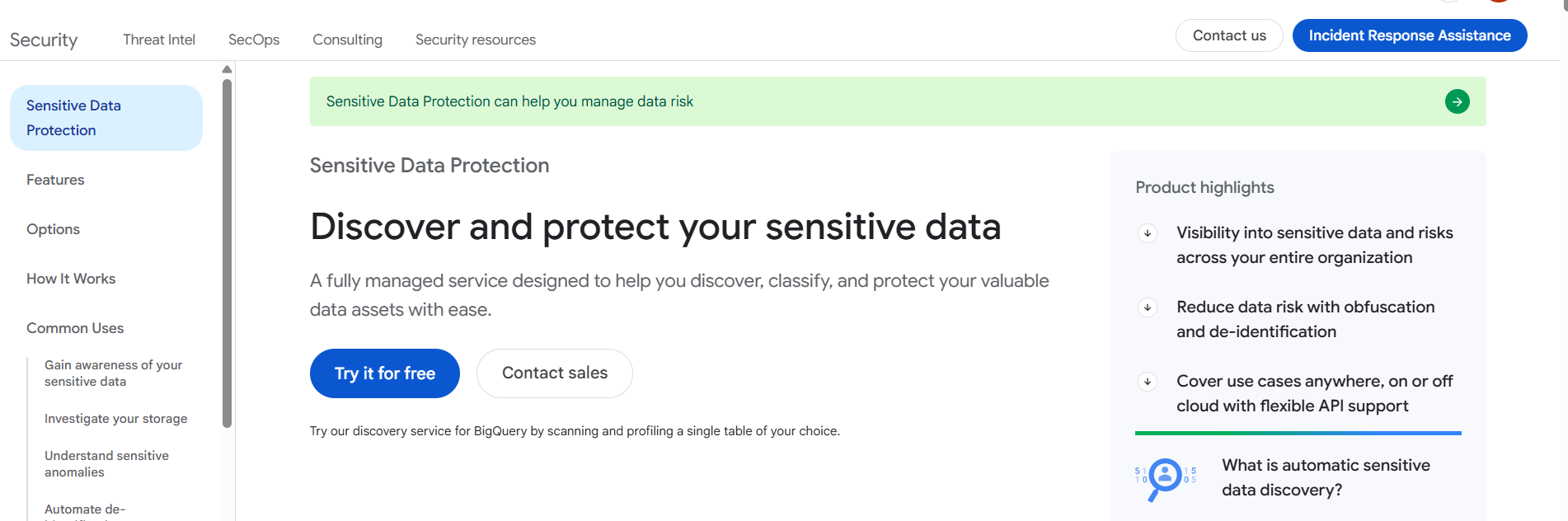
Google Sensitive Data Protection profiles and inspects data in Google Cloud. APIs give engineering teams control over detectors, custom dictionaries, inspection templates, and de-identification methods. Hybrid inspection accepts content submitted from outside Google Cloud.
Engineering teams must design the external transfer path and connect findings to privacy ownership, legal review, and evidence records.
Google inspection controls:
- Discovery profiles BigQuery, Cloud Storage, Cloud SQL, and supported Vertex AI data.
- Built-in infoTypes detect common personal and financial identifiers.
- Custom dictionaries and detectors support local formats, giving engineers a way to test PAN or internal account patterns without waiting for a new managed detector from the cloud provider.
- Inspection templates make scanning repeatable across engineering teams once they agree on the infoTypes and likelihood thresholds that count as a finding.
- Masking, tokenisation, and redaction protect matched content.
- Risk analysis measures re-identification risk in datasets.
Pricing:
Discovery starts at $0.03 per GB. Storage inspection starts at $1 per GB after the first free 1 GB each month; hybrid inspection starts at $3 per GB. There is no time-limited trial.
Pros:
- Usage pricing is transparent.
- APIs suit engineering-led control design where scan triggers and de-identification steps already sit inside a delivery process, and the team has another system for legal review.
- De-identification sits close to discovery.
- Inspection templates make recurring scans consistent.
- De-identification methods sit close to discovery.
Cons:
- Costs can climb when teams repeatedly scan large payloads, so the pilot needs to record both bytes inspected and the rescans triggered by changing engineering workflows.
- Coverage is strongest inside Google Cloud.
- Privacy cases and approvals require another workflow because the inspection API returns technical findings rather than a complete record of legal decisions.
- Hybrid inspection requires an engineered transfer path.
- The service does not maintain legal approvals or DPDPA case records.
Google is the better choice for a GCP-native engineering team that wants programmable inspection and de-identification, then plans to connect those technical findings with a separate privacy review process.
8. Amazon Macie: Best for PII discovery in Amazon S3
Amazon Macie inventories S3 buckets, evaluates access settings, and samples eligible objects for common PII and credentials. Security teams can add custom identifiers for patterns found in their own records.
An AWS team can begin with a bounded S3 deployment. Customer records held in Microsoft 365, SaaS applications, or on-premises databases remain outside the inventory.
Macie S3 controls:
- Automated discovery samples eligible S3 objects.
- Managed identifiers cover common personal and credential records, allowing the AWS team to begin a bounded S3 pilot before it invests time in custom patterns for its own datasets.
- Custom identifiers add organisation-specific patterns.
- Bucket inventory includes public access and encryption posture.
- Findings can route through EventBridge and Security Hub, letting an AWS security team use its existing alert path while the DPO retains a separate decision record.
- Multi-account administration supports AWS Organisations.
Pricing:
In US East, inventory starts at $0.10 per S3 bucket each month, plus inspection charges. A 30-day trial covers bucket monitoring and up to 150 GB of automated discovery per account; targeted jobs have a 1 GB monthly free tier.
Pros:
- Fast setup for an AWS security team.
- Transparent usage signals support a bounded pilot.
- Native alert routing fits existing AWS operations.
- EventBridge and Security Hub route findings into existing operations.
- AWS Organisations supports multi-account administration.
Cons:
- Discovery is limited to S3.
- Sampling may need targeted jobs for high-risk locations when an ordinary automated run does not inspect the bucket or object class that carries the greatest business risk.
- It does not manage DPDPA records or legal approvals, so an S3 finding still needs an owner and a documented retention decision elsewhere.
- Targeted inspection adds usage charges.
- Teams need another inventory for SaaS and on-premises sources.
Macie is the sensible narrow purchase when S3 is the known risk surface and the buyer wants to prove discovery value before funding a broader inventory across the enterprise.
9. Nightfall: Best for PII moving through SaaS and AI tools
Nightfall detects exposed content as employees use collaboration apps, browsers, endpoints, and supported AI channels. The control can block a risky action or ask a user to remediate it while the data moves.
Security teams can route alerts into an investigation workflow. Privacy owners still need to connect each affected system with its processing purpose, retention decision, and evidence record.
Nightfall channel controls:
- Pre-trained detectors cover PII, credentials, health data, and payment data.
- SaaS integrations inspect data at rest and in motion.
- Endpoint controls watch browser, clipboard, file, USB, print, and command-line channels.
- AI controls cover supported assistants, agents, and MCP activity.
- Automated actions can block or quarantine content after the team decides which channels permit user remediation and which require immediate intervention.
- SIEM integrations export alerts for investigation.
Pricing:
Annual per-user pricing is quote-based. Buyer reports commonly start near $15 per user each month. Nightfall offers a free seven-day proof of value; no self-serve plan is published.
Pros:
- Coverage follows data into SaaS and AI use.
- User remediation can reduce the security ticket load when an employee can correct an ordinary sharing mistake, leaving investigators to handle deliberate or repeated policy breaches.
- Deployment can start with a targeted channel, letting the team measure how often users remediate a finding before extending the control across the workforce.
- Endpoint controls cover browser, clipboard, file, USB, print, and command-line activity.
- SIEM integrations export alerts for investigation.
Cons:
- It is not a full data inventory or privacy management system.
- Per-user cost grows with workforce size.
- Repository coverage depends on supported integrations, which makes a source inventory essential before the buyer treats channel monitoring as a full discovery program.
- Teams need another system for processing purposes and retention decisions.
- A seven-day proof of value limits tests of rare data flows.
Nightfall fits an operations group whose urgent problem is PII movement through SaaS and endpoints, particularly when generative AI use has created a channel that repository scans cannot see.
What the DPDPA changes in a PII discovery purchase
The law does not name a scanner. It creates duties that are hard to perform when the organisation cannot locate personal data.
Reasonable security safeguards sit in Section 8(5) of the Digital Personal Data Protection Act, 2023. Breach intimation appears in Section 8(6). Section 8(7) addresses erasure after consent withdrawal or completion of the specified purpose, subject to legal retention.
The maximum scheduled penalty for a failure to take reasonable security safeguards is ₹250 crore. These provisions are visible in the official text of the Digital Personal Data Protection Act, 2023.
Timing needs care. On 13 November 2025, the Government brought specified institutional provisions into force. The notification places the principal processing duties in Sections 3 to 17 on an 18-month commencement track. The Digital Personal Data Protection Rules, 2025 use the same 18-month track for Rules 3 and 5 to 16. The official Rules notification therefore points to 13 May 2027 for those operational Rules. This article reflects the position on 25 September 2026.
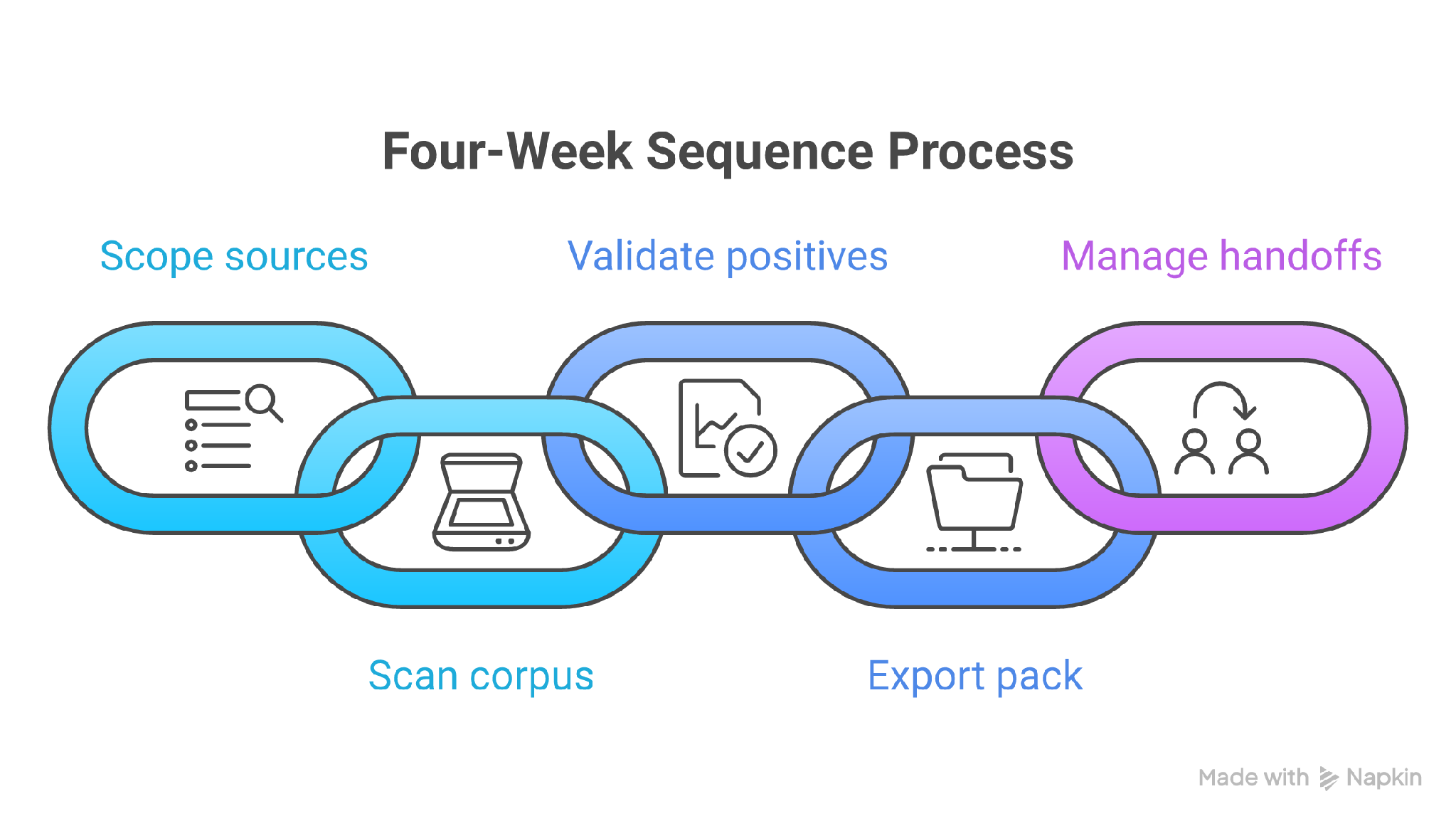
That runway should shape the proof of concept. A useful PII discovery pilot produces four artifacts:
- A source register with owners and scan status.
- A validated classifier set for the enterprise’s Indian identifiers.
- A remediation record showing retain, restrict, mask, or erase decisions.
- An export that connects each decision to a person and timestamp.
A decision guide for Indian enterprises
- Choose Redacto when the finding needs to flow into India-first privacy operations and DPDPA evidence.
- Put BigID on the shortlist for a large hybrid estate where discovery depth and classifier tuning justify a specialist platform.
- Use Microsoft Purview when Microsoft 365 and Azure already provide identity, labels, and security controls.
- Prefer OneTrust when a global privacy office needs broader jurisdiction coverage.
- Evaluate Securiti for a shared multicloud privacy and security layer.
- Select Varonis when risky permissions around files are the central problem.
- Keep Google’s service for programmable GCP inspection and de-identification.
- Start with Amazon Macie when the problem is specifically S3.
- Add Nightfall when PII movement through SaaS and AI tools matters more than a full data map.
Do not decide from a feature checklist. In the same 200-record corpus, measure precision and missed identifiers first. Then record scan cost, ownership context, and the time required to close each finding. Automation can prepare the decision and preserve evidence.
The DPO, legal team, and security owner still decide purpose, retention, and risk acceptance.
This Monday, pick three high-risk sources: a production database, a support export, and a shared drive. Add a cloud bucket or test environment only when it reflects the real estate. Name an owner for each. Run the same 200-record sample through two finalists and record every false positive, missed identifier, and broken handoff.
That evidence will tell you more than another vendor demo.