Table of contents

10 Best Consent Manager Tools in India for DPDP Compliance (Compared)

By
SK
Last Updated on:
May 5, 2026

Trying to pick a consent manager or consent management tool for DPDP, and not sure what actually qualifies as “compliant”?

Here’s the problem I keep seeing.

A lot of tools in the market still focus on cookie banners and basic preferences but DPDP doesn’t stop there.

You now need:

  • Purpose-linked consent (not generic “accept all”)
  • One-click withdrawal that actually stops processing
  • Audit logs you can show during reviews
  • And support across web, app, SMS, and even offline journeys

Most CMPs don’t cover this fully and here teams get stuck, because on the surface, every tool looks “DPDP-ready.”

But in reality, only a few handle the full consent lifecycle + compliance workflows.

With penalties going up to ₹250 crore, this isn’t something you can afford to guess.

So instead of listing random tools, this guide compares 10 platforms that are actively used for DPDP compliance in India, including India-native systems and global tools adapted for DPDP.

For each one, you’ll see:

  • What it actually handles
  • How well it fits DPDP requirements
  • Where it breaks in real use
  • And what kind of team it’s best suited for

TL;DR - Consent Manager Tools For DPDP Compliance

Here’s a quick breakdown of which consent manager tool makes sense based on what you’re actually trying to solve under DPDP:

  • Redacto works best if you want an all-in-one, India-first platform covering consent, DSAR, DPIA, vendor risk, and full data governance in one system.
  • Privy by IDfy is a better fit if you need enterprise-grade DPDP governance with strong audit readiness, data discovery, and BFSI-level compliance depth.
  • Consently makes the most sense if your priority is fast rollout with 22-language support, simple setup, and solid consent + audit workflows.
  • Consentin works best if you need to handle both digital and offline consent, including OTP, documents, and physical-to-digital flows.
  • OneTrust is a strong option if you already run global privacy programs and need DPDP mapped alongside GDPR and other regulations.
  • TrustArc fits better if your focus is scaling privacy operations with structured consent and data subject rights workflows.
  • Secure Privacy works well if you need consent management across web, mobile apps, and cross-device environments with flexible deployment.
  • KavachOne is useful if you want predictable pricing with unlimited consents and built-in DPIA, RoPA, and compliance modules.
  • Seqrite Data Privacy makes sense if you want consent management combined with data discovery, classification, and overall cybersecurity visibility.
  • DPDP Consultants are good options if you need India-specific implementation support, consulting, and faster compliance rollout.

CMP vs DPDP “Consent Manager” (Critical Difference)

This is where most teams get confused, and end up choosing the wrong tool. A Consent Management Platform (CMP) is what most vendors in this list offer.

It’s an internal tool that helps your company:

  • Collect consent
  • Store consent records
  • Manage withdrawals
  • Maintain audit logs

A CMP helps you stay compliant as a data fiduciary.

A DPDP “Consent Manager”, on the other hand, is a completely different concept. It is a regulated intermediary defined under the DPDP framework.

This entity is:

  • Registered with the Data Protection Board (DPB)
  • User-facing (built for individuals, not companies)
  • Designed to let users manage consent across multiple companies in one place

CMP is built for businesses to manage consent internally

Consent Manager is built for users to control consent across businesses

Right now, most companies are implementing CMPs, not Consent Managers. If you assume a CMP = Consent Manager, you’ll choose the wrong tool.

Most tools in this list (including platforms like OneTrust or TrustArc) are:

  • Not DPB-registered Consent Managers
  • They are compliance tools for your internal workflows

So your decision should be based on:

“Does this tool help me meet DPDP obligations today?”, not whether it is a future Consent Manager.

Right now, you need a CMP that handles full DPDP workflows. Consent Managers will become relevant later as the ecosystem matures.

What DPDP Requires From Consent Tools?

Here’s what your consent tool actually needs to handle if you want to stay compliant:

  • You need to collect consent in a way that clearly ties it to a specific purpose, not just a generic “accept all.”
  • You must let users withdraw consent easily, and when they do, your system should stop processing their data right away.
  • You should have audit logs that can’t be changed later, so you can prove when and how consent was given.
  • You need a proper system to handle user requests like access, correction, or deletion without doing it manually.
  • You should support multiple Indian languages and capture consent across web, apps, SMS, and even offline journeys.
  • You need your consent tool to connect with your CRM, marketing tools, and other systems so changes actually apply everywhere.

If your tool misses even one of these, you’re likely covering compliance on the surface, but not in reality.

How We Selected These Tools?

Here’s exactly how these tools made it into this list:

  • I prioritized tools that actually support DPDP requirements in practice, not just claim “GDPR-ready” and map it later.
  • I looked at whether the tool supports Indian languages and real localization, not just English-only consent flows.
  • I checked how deep the compliance features go, especially around audit logs, DSAR workflows, and risk handling.
  • I considered whether these tools are already used in Indian sectors like BFSI, healthcare, and e-commerce.
  • And I made sure to include a mix of India-native tools and global platforms so you can compare both properly.

10 Best Consent Manager Tools in India for DPDP compliance

Tool Best For DPDP Depth Key Strength Limitation
Redacto Full compliance (all-in-one) ⭐⭐⭐⭐⭐ Consent + DSAR + DPIA + vendor risk in one system Overkill for basic use
Privy by IDfy Enterprise governance ⭐⭐⭐⭐⭐ Strong audit readiness + data governance Complex + enterprise pricing
Consently Fast rollout + SMBs ⭐⭐⭐⭐ 22-language support + quick setup Limited deep governance
Consentin Hybrid consent workflows ⭐⭐⭐⭐⭐ Handles offline + API + document consent Setup needs coordination
OneTrust Global enterprises ⭐⭐⭐⭐ Multi-law (GDPR + DPDP) platform Heavy + long setup
TrustArc Scaling privacy ops ⭐⭐⭐⭐ Automation + centralized workflows Needs configuration
Secure Privacy Digital consent (web/app) ⭐⭐⭐ Strong cookie + global compliance Not India-first
KavachOne Flat pricing + scale ⭐⭐⭐⭐ No per-consent pricing + audit logs May need internal setup
Seqrite Data Privacy Privacy + security teams ⭐⭐⭐⭐ Data discovery + classification + consent More security-heavy
DPDP Consultants Consulting + execution ⭐⭐⭐⭐⭐ Experts + tools together Slower than SaaS tools

#1. Redacto

Best for - India-Focused DPDP Compliance Powered by AI

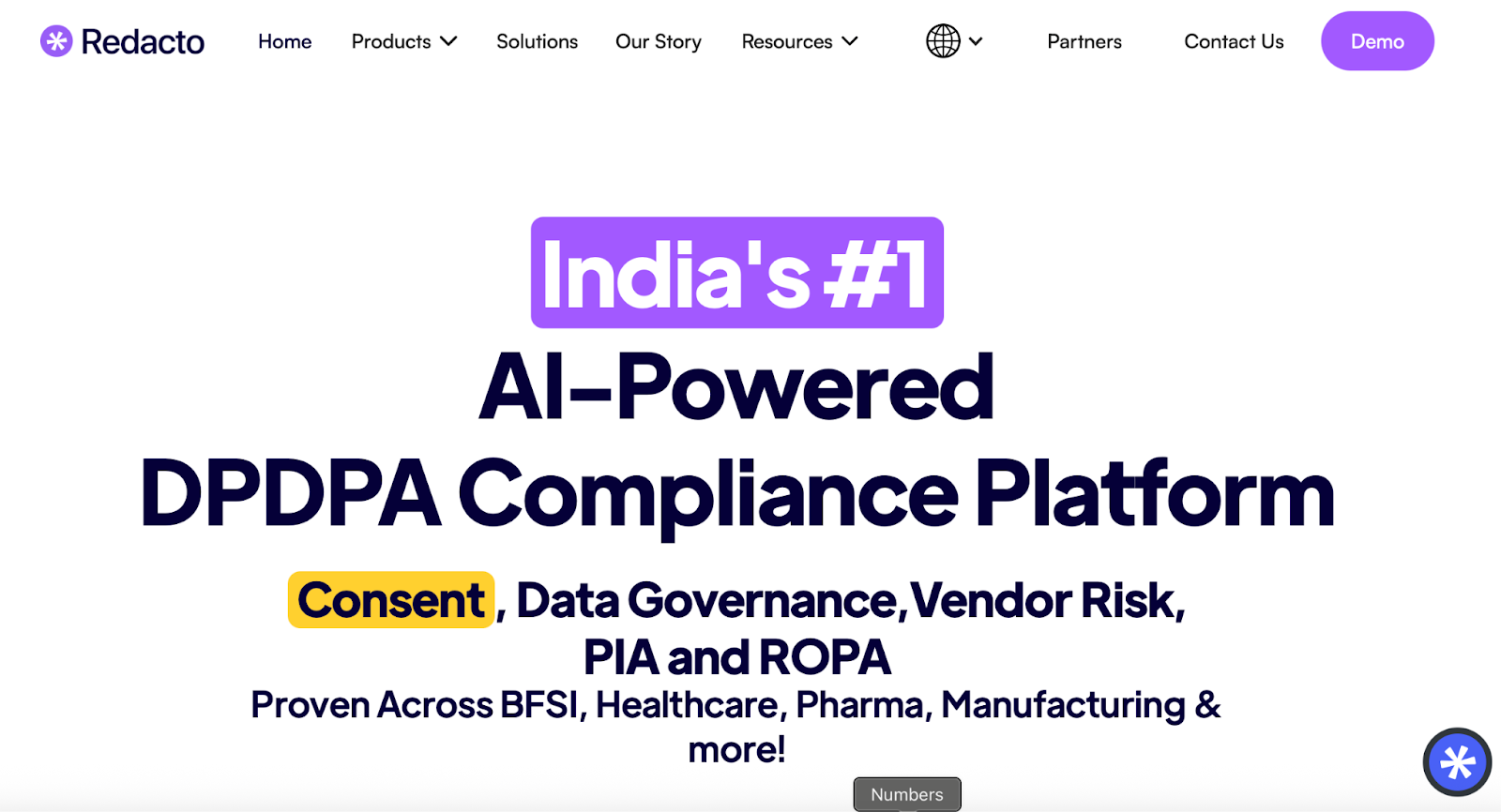
Redacto.ai Homepage
This image shows the Redacto.ai Homepage

Redacto is a Consent Manager platform built for India’s DPDPA compliance that helps businesses collect, manage, track, and prove user consent while connecting it with privacy workflows like data governance, vendor risk, and compliance reporting.

What makes it different

Unlike basic Consent manager platforms, Redacto is designed to handle the entire compliance lifecycle, not just consent collection. It focuses on reducing manual work through automation and bringing everything into a single platform.

Key features

DPDP fit

Redacto is built specifically for Indian compliance needs, covering consent, audit logs, DSAR, DPIA, and vendor risk in one workflow, which aligns closely with DPDP requirements.

Pros

  • You get everything in one platform instead of managing multiple tools
  • You can automate workflows like DPIA and vendor risk, saving time
  • You can integrate easily with your existing stack using plugins
  • You can deploy based on your needs (SaaS, private cloud, on-prem)

Cons

  • It may feel heavy if you only need basic cookie consent
  • Pricing is enterprise-focused, so smaller teams may find it expensive

Best for

Redacto works best if you need an India-first Consent Manager platform that can manage consent, track compliance, and connect consent records with broader DPDP workflows without using multiple separate tools.

#2. Privy by IDfy

Best for: Enterprise DPDP Governance Platform

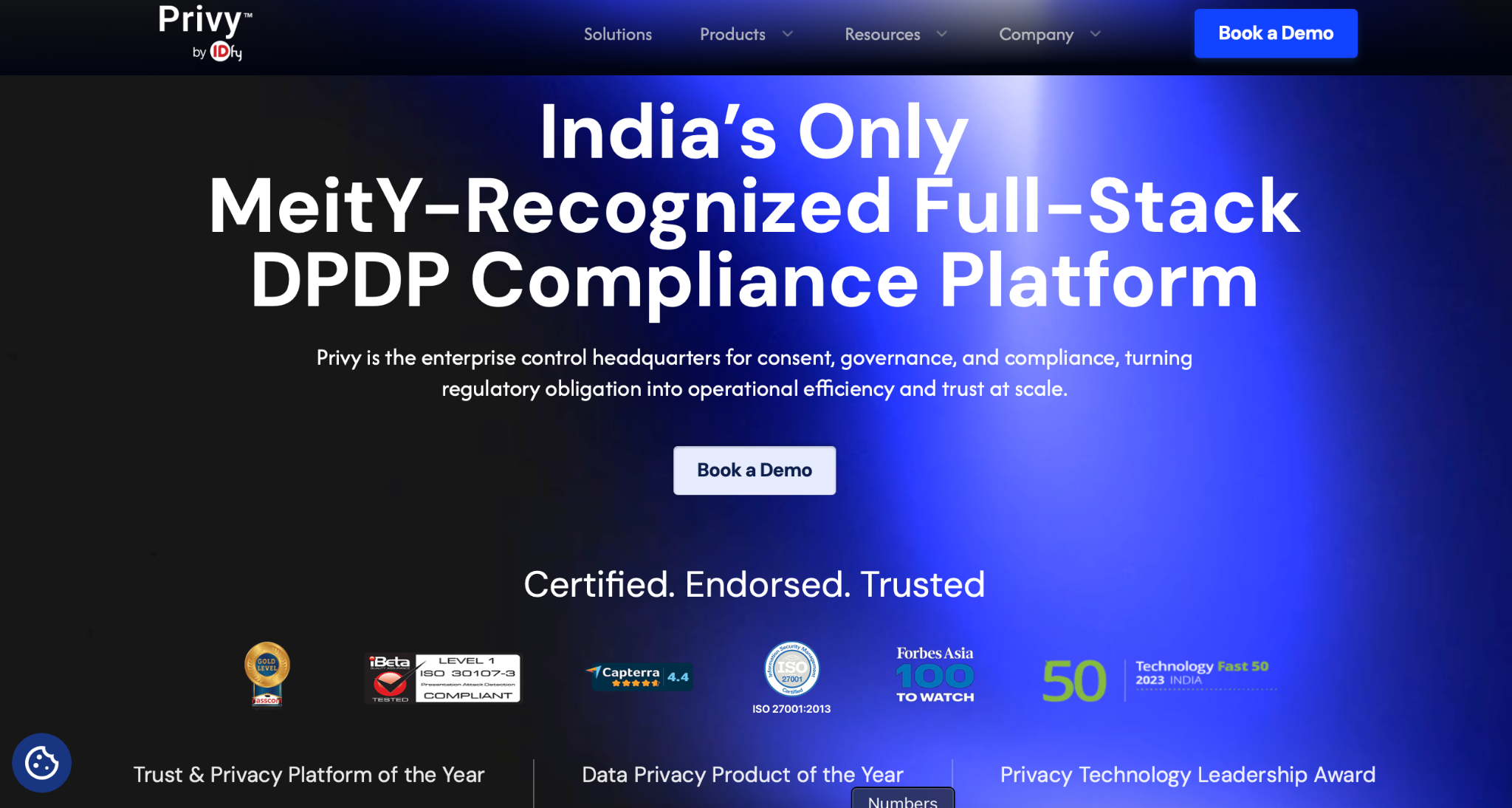
Privy by IDfy
This image shows the Privy by IDfy

Privy by IDfy is an enterprise-grade Consent Manager platform for DPDPA compliance that helps businesses manage user consent, governance, and data privacy workflows at scale.

What makes it different

Privy positions itself as a central control layer for privacy operations, not just a consent tool.

It combines consent, data discovery, and risk management with an AI layer (Inspect AI) to keep systems audit-ready.

Key features

  • End-to-end consent lifecycle management
  • Data principal rights (DSAR) automation
  • Cookie scanning and consent governance
  • Data discovery and classification (Data Compass)
  • AI-powered privacy monitoring (Inspect AI)
  • Risk and compliance management workflows
  • Built with DSCI collaboration and MeitY recognition

DPDP fit

Privy is strongly aligned with DPDP requirements, especially for enterprises that need consent tracking, audit readiness, data discovery, and governance in one system.

Pros

  • You get a complete privacy and governance platform, not just a CMP
  • You can automate DSAR and compliance workflows at scale
  • You benefit from strong credibility (MeitY recognition, BFSI adoption)
  • You can manage privacy operations centrally across teams
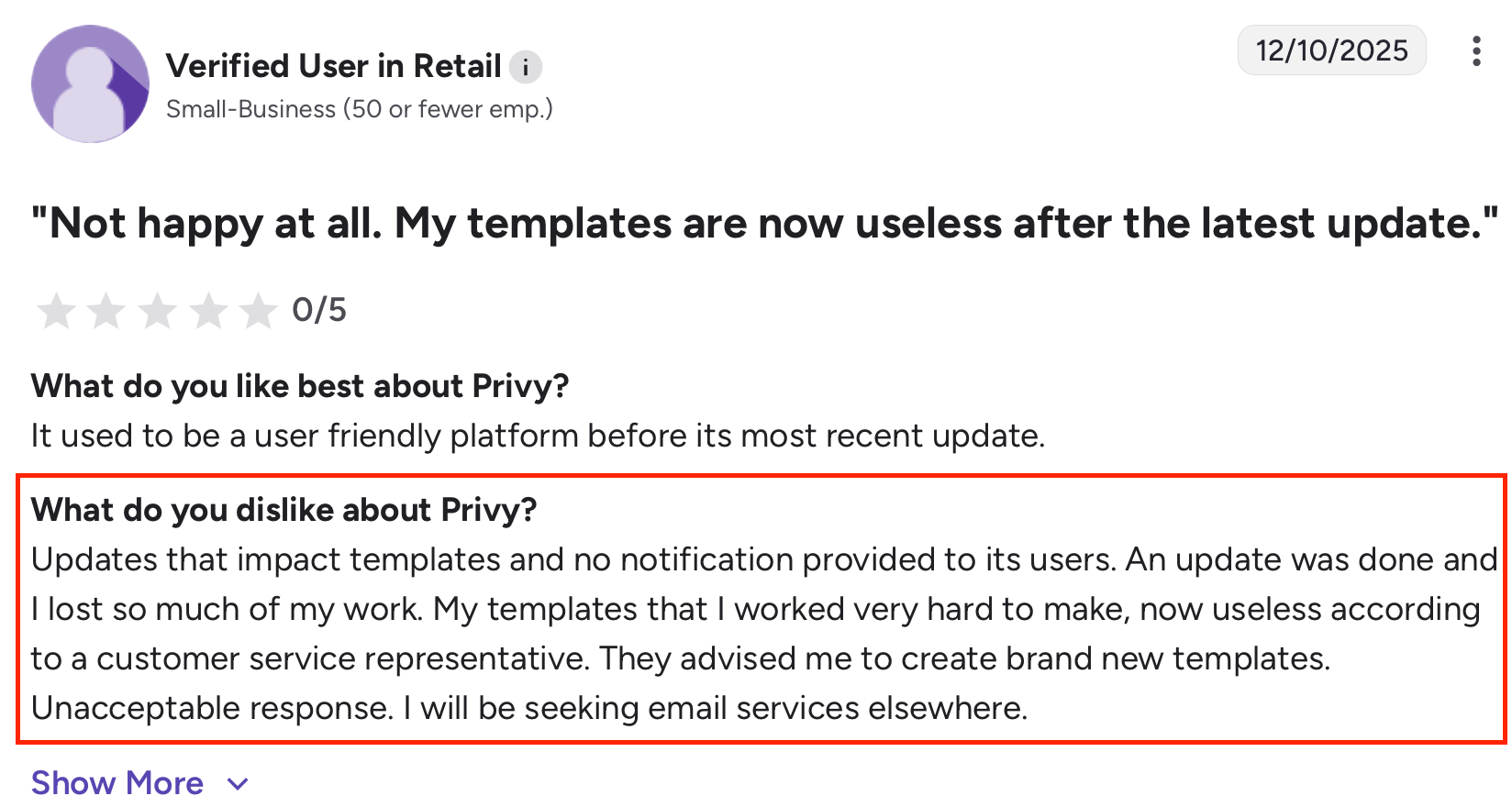
User review criticizing Privy update for breaking templates and causing data loss without prior notice.
This image shows the User review criticizing Privy update for breaking templates and causing data loss without prior notice.

Cons

  • It can feel complex if you only need basic consent management
  • Implementation may take time depending on your systems
  • Pricing is enterprise-focused and not publicly transparent

Best for

Privy works best for large organizations, especially BFSI, fintech, and enterprises, that need an enterprise-grade Consent Manager platform to control consent, manage governance, and run DPDP compliance operations at scale.

#3. Consently:

Best for: Multilingual Consent Tool for Fast DPDP Rollout

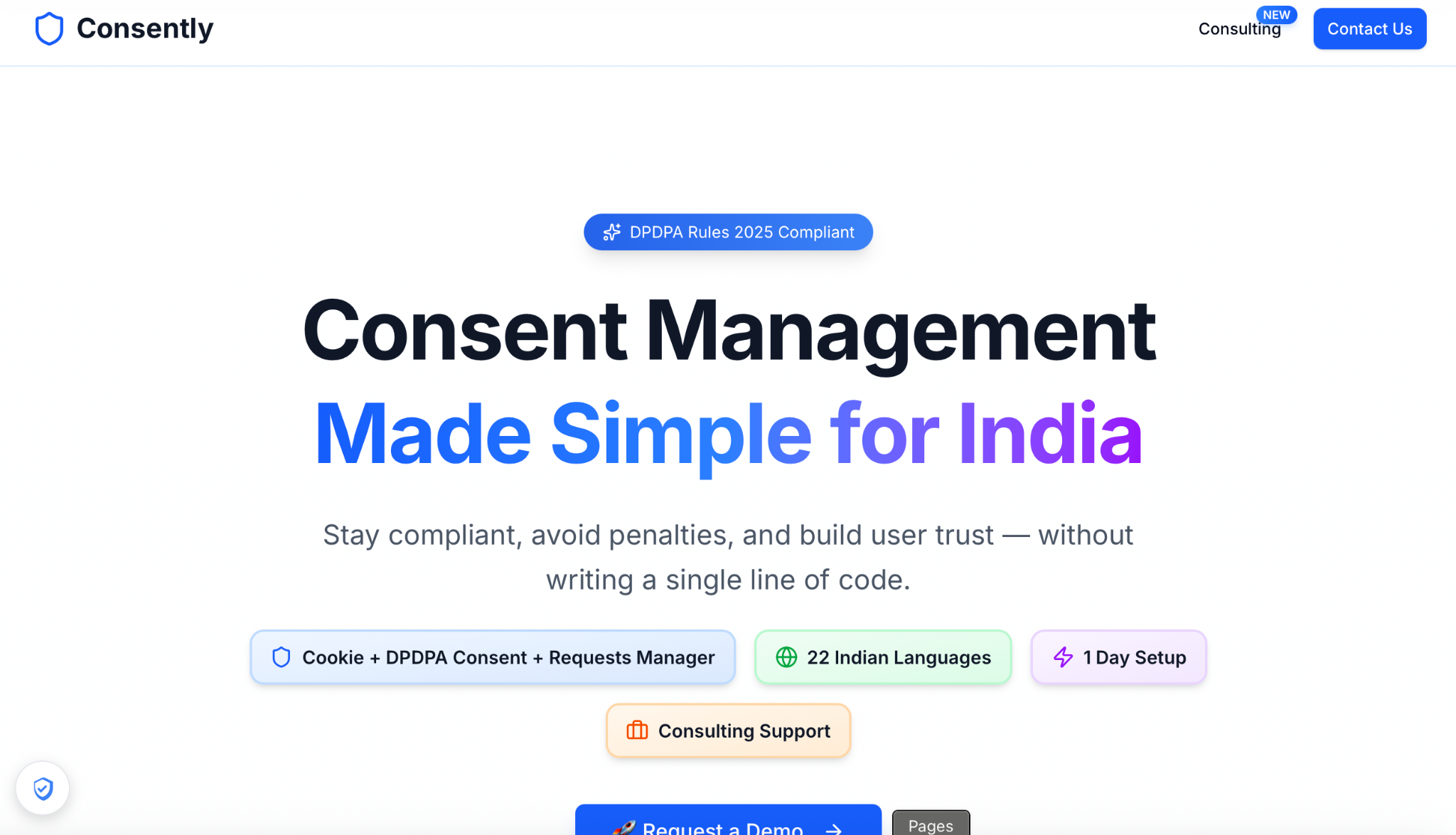
Consently Homepage
This image shows the Consently Homepage

Consently is an India-focused Consent Manager platform for DPDP 2023 compliance that helps businesses manage cookie consent, maintain consent records, and handle data subject requests in one place

What makes it different

Consently stands out for its 22 Indian language support and quick setup. It is a strong fit if you want to launch DPDP-ready consent flows without heavy technical work.

Key features

  • Consent banners in all 22 Schedule VIII Indian languages
  • Automated cookie scanning and cookie categorization
  • Purpose-level consent management
  • Consent records and history
  • Audit logs with exportable reports
  • Data subject rights workflows
  • Real-time consent analytics
  • India-hosted servers
  • Consulting support for DPDP rollout

DPDP fit

Consently fits DPDP well because it supports purpose-specific consent, multilingual notices, audit trails, withdrawal workflows, and data subject rights handling.

Pros

  • You can set it up quickly without heavy engineering help.
  • You get strong Indian language coverage for pan-India users.
  • You can scan cookies automatically instead of doing it manually.
  • You get audit reports in formats like CSV, JSON, and PDF.
  • You can combine the tool with consulting if you need rollout support.

Cons

  • It may not be as deep as enterprise platforms for full governance, DPIA, or vendor risk.
  • Pricing is not fully transparent and may depend on consent volume or custom needs.

Best for

Consently works best if you want a fast, multilingual, India-focused consent tool for DPDP compliance, especially for SMBs, SaaS companies, e-commerce brands, and growing Indian businesses.

#4. Consentin by Leegality

Best for: Hybrid Consent + Full Workflow Compliance

Consentin Homepage
This image shows the Consentin Homepage

Consentin is a DPDP-focused compliance platform that helps you manage consent, data rights, data discovery, and risk workflows across both digital and offline journeys.

What makes it different

Consentin is built for real-world consent flows, not just websites. It handles OTP, documents, APIs, and offline-to-digital consent, which most CMPs don’t support well.

Key features

  • Consent collection across web, app, IVR, and offline channels
  • 22 Indian language support for consent flows
  • Privacy centre for consent withdrawal and DSAR requests
  • Data discovery across structured and unstructured systems
  • Data mapping and lineage tracking
  • DPIA, PIA, and third-party risk assessments
  • Automated breach notifications
  • Webhooks and APIs for syncing consent across systems

DPDP fit

Consentin fits strongly with DPDP because it covers consent, withdrawal enforcement, data discovery, DSAR workflows, and risk assessments in one system.

Pros

  • You can manage both digital and offline consent in one place
  • You can sync consent across internal and third-party systems
  • You get strong data visibility with discovery and mapping features
  • You don’t pay per consent (flat pricing model)
  • You can go live relatively fast (around 2 weeks)

Cons

  • It may feel complex if you only need basic cookie consent
  • Data discovery features may depend on deployment type (on-prem vs SaaS)
  • Setup still requires some coordination across systems

Best for

Consentin works best if you need to manage end-to-end DPDP compliance across complex workflows, especially where consent happens across documents, APIs, and offline channels, not just websites.

Also read: 9 Best Leegality Alternatives for DPDPA Compliance

#5. OneTrust:

Best for: Global Privacy and Governance

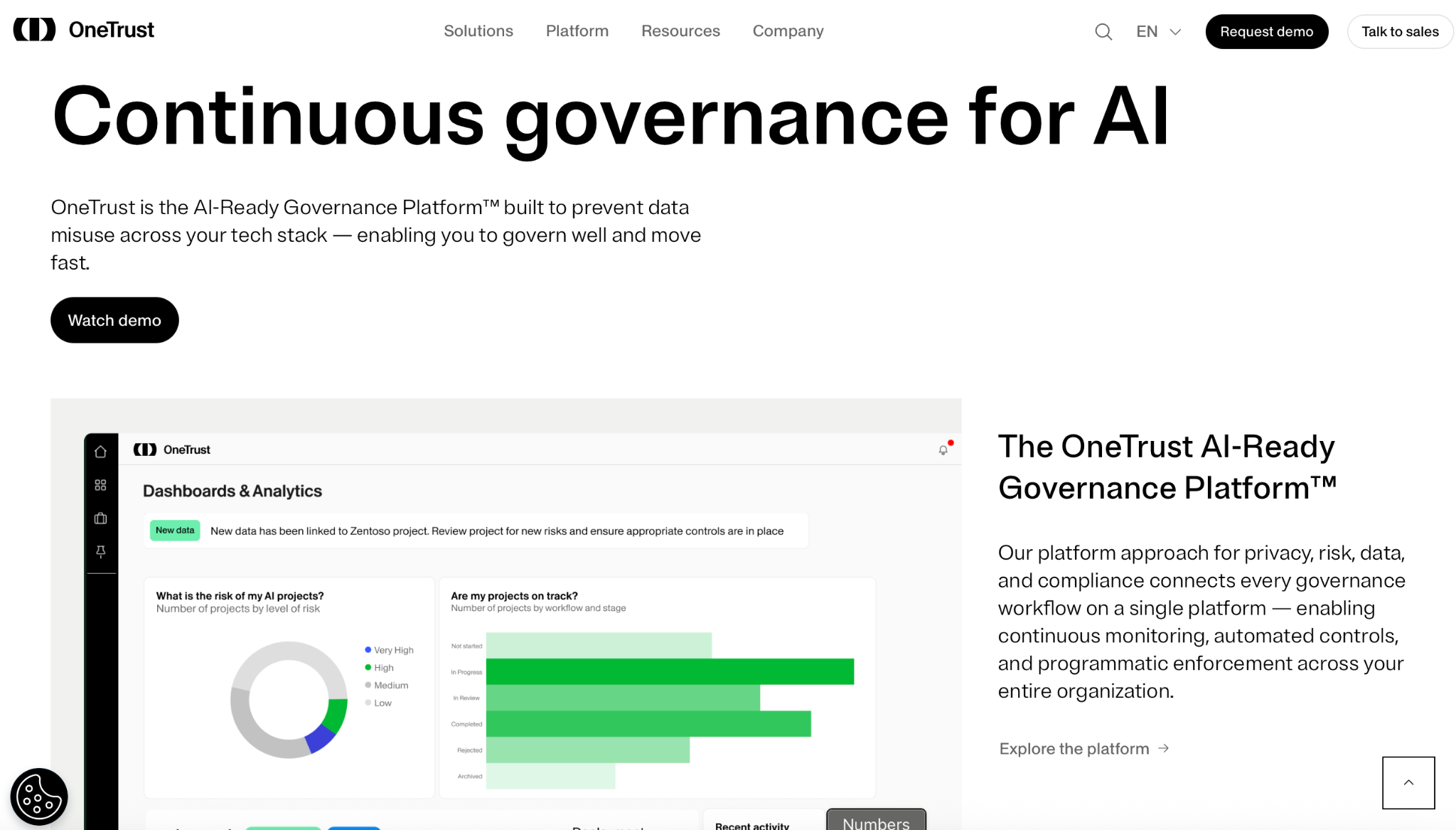
OneTrust Homepage
This image shows the OneTrust Homepage

OneTrust is a global privacy and governance platform that helps enterprises manage consent, data, risk, and compliance across multiple regulations.

What makes it different

OneTrust is not just a consent tool. It’s a full governance platform that connects privacy, risk, third-party management, and data workflows in one system.

Key features

  • Consent and preference management
  • Data mapping and data discovery tools
  • DPIA and privacy impact assessments
  • Vendor and third-party risk management
  • DSAR (data subject request) automation
  • AI governance and data use controls
  • 500+ integrations across enterprise systems

DPDP fit

OneTrust can support DPDP, but it is not built specifically for India.

You’ll need to configure workflows, consent structures, and localization to match DPDP requirements.

Pros

  • You get a mature, enterprise-grade platform used globally
  • You can manage multiple regulations (GDPR, DPDP, etc.) in one place
  • You get strong integrations across large tech stacks
  • You can scale privacy operations across teams and geographies
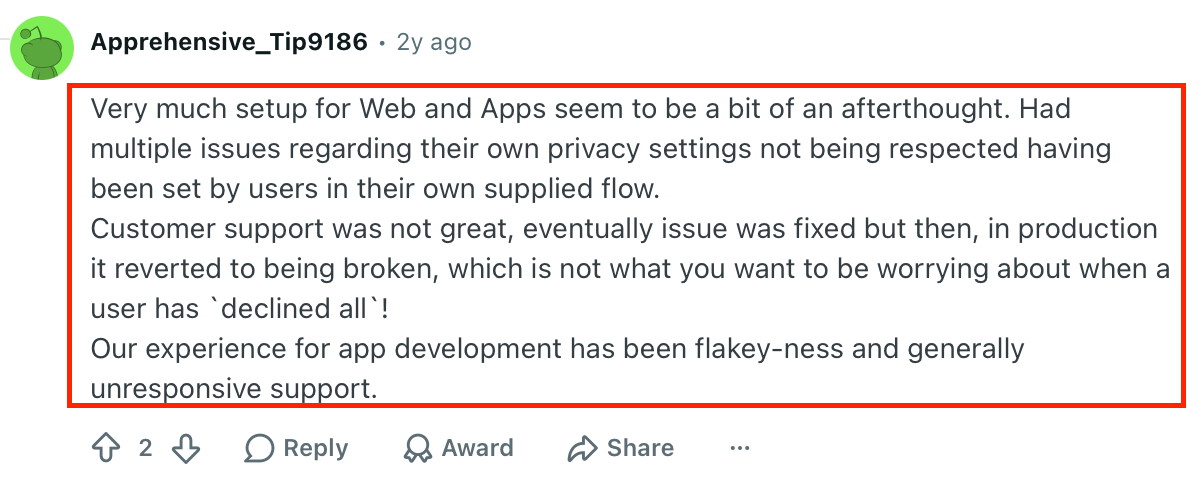
User review highlighting setup issues, broken privacy settings, and unreliable customer support.
This image shows the User review highlighting setup issues, broken privacy settings, and unreliable customer support.

Cons

  • It can take time to implement (often months, not days)
  • It may feel complex and heavy for smaller teams
  • It is expensive, especially for full-suite usage
  • Some users mention the platform needs proper setup and guidance to work well

Best for

OneTrust works best if you are a large or global organization that needs to manage multiple privacy regulations, not just DPDP, and has the resources for setup and customization.

Must Read: Top 5+ OneTrust Alternatives & Competitors for DPDPA Compliance in India (2026)

#6. TrustArc:

Best for: Scalable Privacy Operations

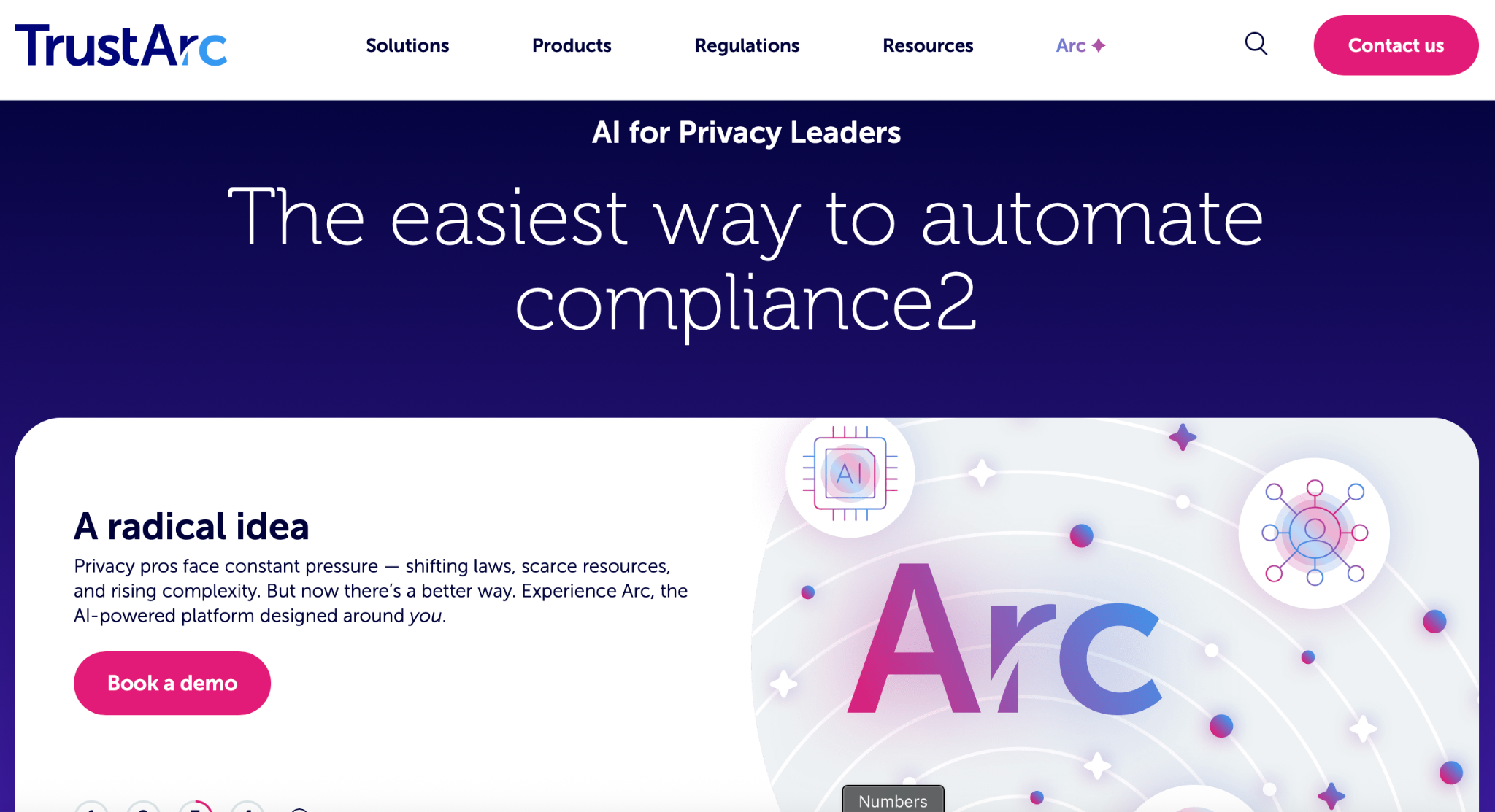
TrustArc Homepage
This image shows the TrustArc Homepage

TrustArc is a global privacy compliance platform that helps companies manage consent, cookie compliance, data requests, privacy assessments, vendor risk, and regulatory workflows.

What makes it different

TrustArc is strong when you want to move privacy work out of spreadsheets and into a structured system.

It focuses on automation, centralized workflows, and scalable privacy operations.

Key features

  • Cookie and tracker consent management
  • Consumer preference management
  • Data request automation
  • Data mapping and vendor risk management
  • DPIA, PIA, and privacy assessments
  • Privacy program management
  • Regulatory guidance and templates
  • AI support for privacy teams

DPDP fit

TrustArc can support DPDP workflows, especially around consent, DSAR, assessments, and privacy program management.

But like OneTrust, it is a global platform, so India-specific DPDP setup may need configuration.

Pros

  • You can centralize privacy work in one platform instead of using spreadsheets.
  • You get strong automation for DSARs, assessments, cookies, and data mapping.
  • You can manage global laws like GDPR, CCPA, and DPDP from one system.
  • You get useful support for enterprise privacy teams that need repeatable workflows.
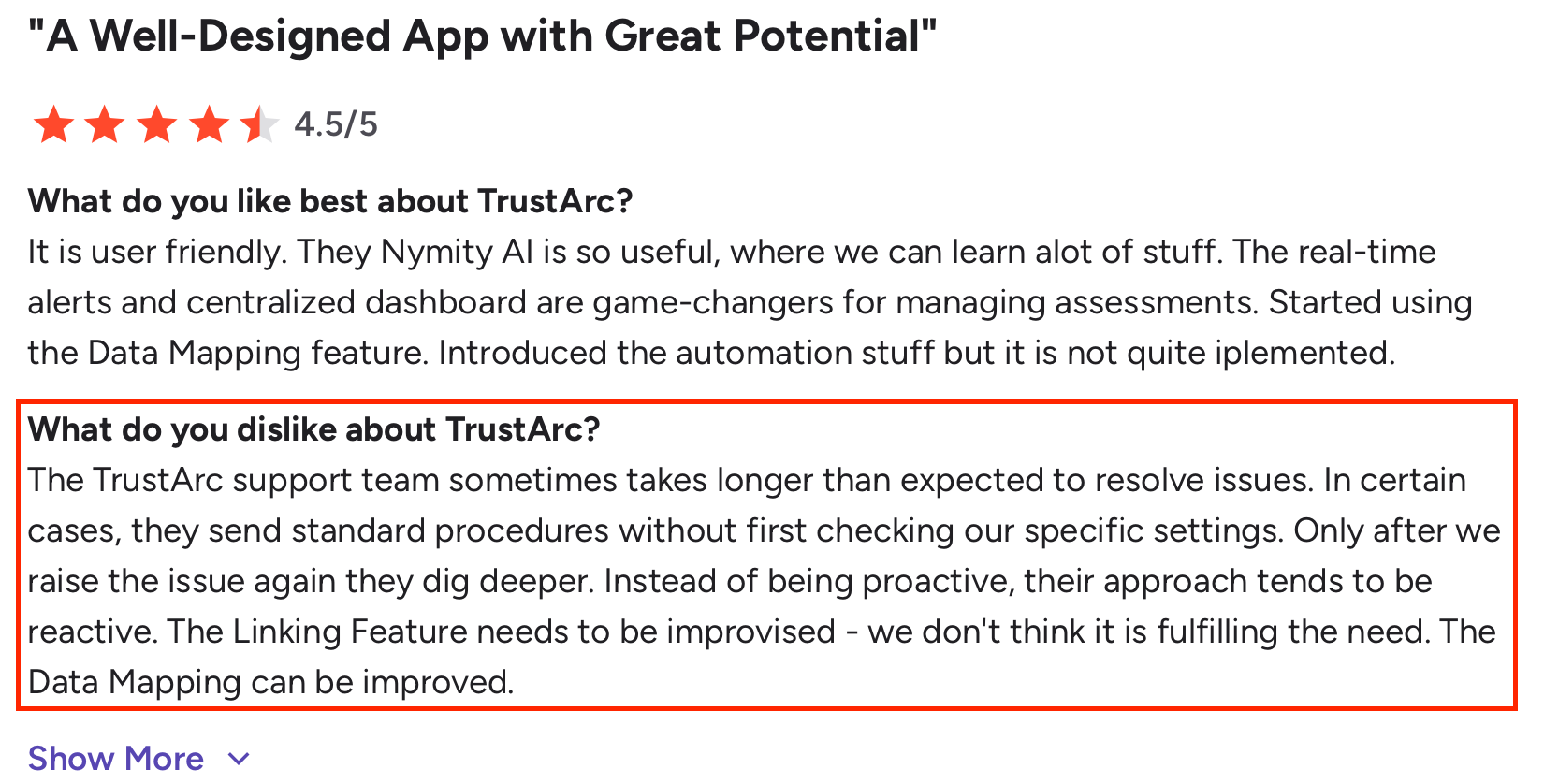
User review citing slow support, generic responses, and limitations in TrustArc features like linking and data mapping.
This image shows the User review citing slow support, generic responses, and limitations in TrustArc features like linking and data mapping.

Cons

  • It may feel expensive for smaller teams.
  • Some modules can take time to configure properly.
  • Certain customizations may need support instead of being fully self-service.
  • India-specific DPDP localization may need extra setup compared to India-native tools.

Best for

TrustArc works best if you already have a growing privacy program and want a centralized platform to scale privacy operations across regions, teams, and regulations.

#7. Secure Privacy (Best for Global Cookie Consent + Digital Consent Workflows)

Secure Privacy Homepage
This image shows the Secure Privacy Homepage

Secure Privacy is a global cookie consent and privacy compliance platform that helps teams manage consent across websites, apps, domains, and regions.

What makes it different

Secure Privacy is strongest for digital consent environments.

It works well if you need cookie banners, consent logs, preference centers, and integrations with tools like Google, Meta, HubSpot, Shopify, WordPress, and Google Tag Manager.

Key features

  • Cookie banners and consent management
  • Automated cookie and tracker scanning
  • Visitor preference center
  • Audit-ready consent logs
  • Cross-domain consent sharing
  • Google Consent Mode and Meta integration
  • Mobile and web consent support
  • Support for 65+ privacy laws and 70+ languages
  • DSAR, DPIA, vendor management, and risk management modules

DPDP fit

Secure Privacy can support DPDP consent workflows, especially for digital businesses that need website, app, cookie, and preference management.

But since it is a global platform, you may need extra configuration for India-specific DPDP workflows, language needs, and sector-specific consent structures.

Pros

  • You can manage cookie consent across websites, apps, and domains.
  • You get strong integrations with marketing, CMS, e-commerce, and tag management tools.
  • You can support global privacy laws from one platform.
  • You get automated cookie scanning and consent logs for audit readiness.
  • Users often find it easy to implement after initial setup.
User review noting limited customization options but overall satisfaction with Secure Privacy.
This image shows the User review noting limited customization options but overall satisfaction with Secure Privacy.

Cons

  • It is stronger for cookie and digital consent than full India-first DPDP governance.
  • India-specific DPDP workflows may need configuration.
  • Some users may need more tutorials or setup guidance.
  • Language and feature access may depend on the plan you choose.

Best for

Secure Privacy works best if you run a digital-first business and need cookie consent, website consent, app consent, and global privacy compliance from one platform.

#8. KavachOne ConsentiQo:

Best for: Flat Pricing and Unlimited Consent Scale

KavachOne Homepage
This image shows the KavachOne Homepage

KavachOne ConsentiQo is a DPDP-focused consent management platform built for Indian businesses that need purpose-based consent, privacy rights workflows, cookie management, and audit-ready records.

What makes it different

ConsentiQo’s biggest differentiator is its flat pricing model with no per-consent charges.

That makes it useful if your consent volume can grow quickly and you don’t want compliance costs increasing with every user action.

Key features

  • Purpose-based consent collection
  • Support for 22+ Indian languages
  • Cookie scanning and privacy notices
  • Real-time consent analytics
  • Privacy Rights Centre for DSARs
  • Audit logs with 7-year retention
  • Data mapping and lineage
  • DPIA and risk assessment workflows
  • CRM and system integrations
  • India-hosted dedicated tenant for enterprise plans

DPDP fit

ConsentiQo fits DPDP well because it covers purpose-specific consent, withdrawal, audit trails, data principal rights, grievance workflows, and multilingual consent experiences.

Pros

  • You don’t pay per consent, which helps if you manage high volumes.
  • You get 22-language support for Indian users.
  • You get audit logs, exports, and retention built into the platform.
  • You can manage consent, rights, cookies, DPIA, and data mapping in one suite.
  • You get pricing clarity compared to usage-based CMPs.

Cons

  • It may be more than you need if you only want a basic cookie banner.
  • Some advanced workflows may fit better for regulated or larger teams.
  • You may still need internal data mapping before the tool can work well.

Best for

KavachOne ConsentiQo works best if you want a DPDP-ready consent platform with predictable pricing, especially for startups, marketplaces, BFSI, fintech, telecom, healthcare, and other high-volume businesses.

#9. Seqrite Data Privacy:

Best for: Privacy + Cybersecurity Visibility

Seqrite Homepage
This image shows the Seqrite Homepage

Seqrite Data Privacy is a data privacy management solution from Seqrite that helps businesses discover sensitive data, manage consent, handle Data Principal rights, and simplify privacy compliance.

What makes it different

Seqrite is stronger than a basic consent tool because it connects privacy compliance with cybersecurity.

It helps you find, classify, protect, and govern personal data across your systems.

Key features

  • Sensitive data discovery and classification
  • 150+ prebuilt classifiers and custom classifiers
  • Universal consent and preference management
  • Cookie consent management
  • Data Principal rights request workflows
  • DPIA, RoPA, and gap assessment automation
  • Tokenization and encryption
  • Bhashini-powered 22 Indian language support
  • Integrations with DLP and ITSM tools

DPDP fit

Seqrite fits DPDP well because it supports consent management, multilingual notices, Data Principal rights, breach notifications, privacy assessments, and sensitive data discovery.

Pros

  • You can discover and classify personal data across many systems.
  • You get consent management plus data protection in one platform.
  • You can automate DPIA, RoPA, gap assessments, and rights requests.
  • You get stronger security controls like encryption and tokenization.
  • It is useful if your privacy team works closely with security teams.
User review noting Seqrite’s limited support and features for Mac and Linux systems.
This image shows the User review noting Seqrite’s limited support and features for Mac and Linux systems.

Cons

  • It may feel too security-heavy if you only need a simple CMP.
  • Some Seqrite reviews mention stronger support for Windows than Mac/Linux, though those reviews are mostly about Seqrite security products, not specifically Data Privacy.
  • It may need careful setup because discovery, classification, and privacy workflows depend on your data sources.

Best for

Seqrite Data Privacy works best if you want DPDP compliance with strong data discovery, classification, and cybersecurity controls, especially for enterprises, regulated sectors, and security-led privacy teams.

#10. DPDP Consultants:

Best for: Consulting + Compliance Execution

DPDP Consultants
This image shows the DPDP Consultants

DPDP Consultants is a consulting-led DPDP compliance provider that combines advisory services, audits, and automation tools to help businesses become fully compliant.

What makes it different

This is not just a software tool.

You get experts and tools together, which helps if your team doesn’t know where to start with DPDP.

Key features

  • Gap assessment and DPDP readiness review
  • Consulting, legal audit, and compliance advisory
  • Data Protection Officer (DPO) as a service
  • Consent management (DPCM tool)
  • Grievance redressal workflows
  • DPIA and third-party risk assessments
  • Privacy training programs
  • Contract and DPA review
  • Multi-channel consent (including legacy/paper data)

DPDP fit

DPDP Consultants fits well if you need end-to-end compliance support, including consent, DSAR, DPIA, vendor risk, and policy setup, not just a CMP.

Pros

  • You get expert guidance, not just software.
  • You can handle both digital and legacy (paper) consent.
  • You can outsource DPO responsibilities if needed.
  • You get structured workflows for audits, policies, and risk.
  • It works well for industries like BFSI, healthcare, and enterprises.

Cons

  • It is more consulting-heavy than product-first tools.
  • It may take longer to implement compared to plug-and-play CMPs.
  • Pricing depends on scope, not always transparent upfront.

Best for

DPDP Consultants works best if you want hands-on support to achieve compliance, especially if you don’t have an internal privacy team or need audit and legal and tech together.

Which Consent Management Tool Should You Choose?

If you’re trying to decide quickly, here’s the simplest answer 👇

  • If you want everything in one place (consent + DSAR + DPIA + vendor risk) → go with Redacto
  • If you’re an enterprise and need strong governance + control → go with Privy by IDfy
  • If you just need fast consent banners + multilingual support → go with Consently
  • If you want simple consent + basic privacy workflows → go with Consentin
  • If you’re handling global compliance (GDPR + DPDP together) → go with OneTrust
  • If you want to scale privacy operations with automation → go with TrustArc
  • If your focus is security + privacy together → go with Seqrite Data Privacy
  • If you want flat pricing + predictable costs → go with KavachOne
  • If you need consulting + execution support → go with DPDP Consultants

Conclusion

Consent is no longer just a checkbox on your website.

It’s a system you need to manage, track, and prove when required.

With the DPDP Act, compliance is not about adding a banner.

It’s about having the right workflows for consent, withdrawal, audits, and user rights.

If you pick the wrong tool, you’ll feel it later during audits, operations, and scale.

If you pick the right one, compliance becomes part of your daily workflow, not a last-minute fix.

If you’re looking for a simpler way to handle this in India, Redacto is built specifically for DPDP and can reduce a lot of that rollout complexity.

Compliance

10 Best Consent Manager Tools in India for DPDP Compliance (Compared)

SK
The Privacy Sarathi

Trying to pick a consent manager or consent management tool for DPDP, and not sure what actually qualifies as “compliant”?

Here’s the problem I keep seeing.

A lot of tools in the market still focus on cookie banners and basic preferences but DPDP doesn’t stop there.

You now need:

  • Purpose-linked consent (not generic “accept all”)
  • One-click withdrawal that actually stops processing
  • Audit logs you can show during reviews
  • And support across web, app, SMS, and even offline journeys

Most CMPs don’t cover this fully and here teams get stuck, because on the surface, every tool looks “DPDP-ready.”

But in reality, only a few handle the full consent lifecycle + compliance workflows.

With penalties going up to ₹250 crore, this isn’t something you can afford to guess.

So instead of listing random tools, this guide compares 10 platforms that are actively used for DPDP compliance in India, including India-native systems and global tools adapted for DPDP.

For each one, you’ll see:

  • What it actually handles
  • How well it fits DPDP requirements
  • Where it breaks in real use
  • And what kind of team it’s best suited for

TL;DR - Consent Manager Tools For DPDP Compliance

Here’s a quick breakdown of which consent manager tool makes sense based on what you’re actually trying to solve under DPDP:

  • Redacto works best if you want an all-in-one, India-first platform covering consent, DSAR, DPIA, vendor risk, and full data governance in one system.
  • Privy by IDfy is a better fit if you need enterprise-grade DPDP governance with strong audit readiness, data discovery, and BFSI-level compliance depth.
  • Consently makes the most sense if your priority is fast rollout with 22-language support, simple setup, and solid consent + audit workflows.
  • Consentin works best if you need to handle both digital and offline consent, including OTP, documents, and physical-to-digital flows.
  • OneTrust is a strong option if you already run global privacy programs and need DPDP mapped alongside GDPR and other regulations.
  • TrustArc fits better if your focus is scaling privacy operations with structured consent and data subject rights workflows.
  • Secure Privacy works well if you need consent management across web, mobile apps, and cross-device environments with flexible deployment.
  • KavachOne is useful if you want predictable pricing with unlimited consents and built-in DPIA, RoPA, and compliance modules.
  • Seqrite Data Privacy makes sense if you want consent management combined with data discovery, classification, and overall cybersecurity visibility.
  • DPDP Consultants are good options if you need India-specific implementation support, consulting, and faster compliance rollout.

CMP vs DPDP “Consent Manager” (Critical Difference)

This is where most teams get confused, and end up choosing the wrong tool. A Consent Management Platform (CMP) is what most vendors in this list offer.

It’s an internal tool that helps your company:

  • Collect consent
  • Store consent records
  • Manage withdrawals
  • Maintain audit logs

A CMP helps you stay compliant as a data fiduciary.

A DPDP “Consent Manager”, on the other hand, is a completely different concept. It is a regulated intermediary defined under the DPDP framework.

This entity is:

  • Registered with the Data Protection Board (DPB)
  • User-facing (built for individuals, not companies)
  • Designed to let users manage consent across multiple companies in one place

CMP is built for businesses to manage consent internally

Consent Manager is built for users to control consent across businesses

Right now, most companies are implementing CMPs, not Consent Managers. If you assume a CMP = Consent Manager, you’ll choose the wrong tool.

Most tools in this list (including platforms like OneTrust or TrustArc) are:

  • Not DPB-registered Consent Managers
  • They are compliance tools for your internal workflows

So your decision should be based on:

“Does this tool help me meet DPDP obligations today?”, not whether it is a future Consent Manager.

Right now, you need a CMP that handles full DPDP workflows. Consent Managers will become relevant later as the ecosystem matures.

What DPDP Requires From Consent Tools?

Here’s what your consent tool actually needs to handle if you want to stay compliant:

  • You need to collect consent in a way that clearly ties it to a specific purpose, not just a generic “accept all.”
  • You must let users withdraw consent easily, and when they do, your system should stop processing their data right away.
  • You should have audit logs that can’t be changed later, so you can prove when and how consent was given.
  • You need a proper system to handle user requests like access, correction, or deletion without doing it manually.
  • You should support multiple Indian languages and capture consent across web, apps, SMS, and even offline journeys.
  • You need your consent tool to connect with your CRM, marketing tools, and other systems so changes actually apply everywhere.

If your tool misses even one of these, you’re likely covering compliance on the surface, but not in reality.

How We Selected These Tools?

Here’s exactly how these tools made it into this list:

  • I prioritized tools that actually support DPDP requirements in practice, not just claim “GDPR-ready” and map it later.
  • I looked at whether the tool supports Indian languages and real localization, not just English-only consent flows.
  • I checked how deep the compliance features go, especially around audit logs, DSAR workflows, and risk handling.
  • I considered whether these tools are already used in Indian sectors like BFSI, healthcare, and e-commerce.
  • And I made sure to include a mix of India-native tools and global platforms so you can compare both properly.

10 Best Consent Manager Tools in India for DPDP compliance

Tool Best For DPDP Depth Key Strength Limitation
Redacto Full compliance (all-in-one) ⭐⭐⭐⭐⭐ Consent + DSAR + DPIA + vendor risk in one system Overkill for basic use
Privy by IDfy Enterprise governance ⭐⭐⭐⭐⭐ Strong audit readiness + data governance Complex + enterprise pricing
Consently Fast rollout + SMBs ⭐⭐⭐⭐ 22-language support + quick setup Limited deep governance
Consentin Hybrid consent workflows ⭐⭐⭐⭐⭐ Handles offline + API + document consent Setup needs coordination
OneTrust Global enterprises ⭐⭐⭐⭐ Multi-law (GDPR + DPDP) platform Heavy + long setup
TrustArc Scaling privacy ops ⭐⭐⭐⭐ Automation + centralized workflows Needs configuration
Secure Privacy Digital consent (web/app) ⭐⭐⭐ Strong cookie + global compliance Not India-first
KavachOne Flat pricing + scale ⭐⭐⭐⭐ No per-consent pricing + audit logs May need internal setup
Seqrite Data Privacy Privacy + security teams ⭐⭐⭐⭐ Data discovery + classification + consent More security-heavy
DPDP Consultants Consulting + execution ⭐⭐⭐⭐⭐ Experts + tools together Slower than SaaS tools

#1. Redacto

Best for - India-Focused DPDP Compliance Powered by AI
Redacto.ai Homepage
This image shows the Redacto.ai Homepage

Redacto is a Consent Manager platform built for India’s DPDPA compliance that helps businesses collect, manage, track, and prove user consent while connecting it with privacy workflows like data governance, vendor risk, and compliance reporting.

What makes it different

Unlike basic Consent manager platforms, Redacto is designed to handle the entire compliance lifecycle, not just consent collection. It focuses on reducing manual work through automation and bringing everything into a single platform.

Key features

DPDP fit

Redacto is built specifically for Indian compliance needs, covering consent, audit logs, DSAR, DPIA, and vendor risk in one workflow, which aligns closely with DPDP requirements.

Pros

  • You get everything in one platform instead of managing multiple tools
  • You can automate workflows like DPIA and vendor risk, saving time
  • You can integrate easily with your existing stack using plugins
  • You can deploy based on your needs (SaaS, private cloud, on-prem)

Cons

  • It may feel heavy if you only need basic cookie consent
  • Pricing is enterprise-focused, so smaller teams may find it expensive

Best for

Redacto works best if you need an India-first Consent Manager platform that can manage consent, track compliance, and connect consent records with broader DPDP workflows without using multiple separate tools.

#2. Privy by IDfy

Best for: Enterprise DPDP Governance Platform
Privy by IDfy
This image shows the Privy by IDfy

Privy by IDfy is an enterprise-grade Consent Manager platform for DPDPA compliance that helps businesses manage user consent, governance, and data privacy workflows at scale.

What makes it different

Privy positions itself as a central control layer for privacy operations, not just a consent tool.

It combines consent, data discovery, and risk management with an AI layer (Inspect AI) to keep systems audit-ready.

Key features

  • End-to-end consent lifecycle management
  • Data principal rights (DSAR) automation
  • Cookie scanning and consent governance
  • Data discovery and classification (Data Compass)
  • AI-powered privacy monitoring (Inspect AI)
  • Risk and compliance management workflows
  • Built with DSCI collaboration and MeitY recognition

DPDP fit

Privy is strongly aligned with DPDP requirements, especially for enterprises that need consent tracking, audit readiness, data discovery, and governance in one system.

Pros

  • You get a complete privacy and governance platform, not just a CMP
  • You can automate DSAR and compliance workflows at scale
  • You benefit from strong credibility (MeitY recognition, BFSI adoption)
  • You can manage privacy operations centrally across teams
User review criticizing Privy update for breaking templates and causing data loss without prior notice.
This image shows the User review criticizing Privy update for breaking templates and causing data loss without prior notice.

Cons

  • It can feel complex if you only need basic consent management
  • Implementation may take time depending on your systems
  • Pricing is enterprise-focused and not publicly transparent

Best for

Privy works best for large organizations, especially BFSI, fintech, and enterprises, that need an enterprise-grade Consent Manager platform to control consent, manage governance, and run DPDP compliance operations at scale.

#3. Consently:

Best for: Multilingual Consent Tool for Fast DPDP Rollout
Consently Homepage
This image shows the Consently Homepage

Consently is an India-focused Consent Manager platform for DPDP 2023 compliance that helps businesses manage cookie consent, maintain consent records, and handle data subject requests in one place

What makes it different

Consently stands out for its 22 Indian language support and quick setup. It is a strong fit if you want to launch DPDP-ready consent flows without heavy technical work.

Key features

  • Consent banners in all 22 Schedule VIII Indian languages
  • Automated cookie scanning and cookie categorization
  • Purpose-level consent management
  • Consent records and history
  • Audit logs with exportable reports
  • Data subject rights workflows
  • Real-time consent analytics
  • India-hosted servers
  • Consulting support for DPDP rollout

DPDP fit

Consently fits DPDP well because it supports purpose-specific consent, multilingual notices, audit trails, withdrawal workflows, and data subject rights handling.

Pros

  • You can set it up quickly without heavy engineering help.
  • You get strong Indian language coverage for pan-India users.
  • You can scan cookies automatically instead of doing it manually.
  • You get audit reports in formats like CSV, JSON, and PDF.
  • You can combine the tool with consulting if you need rollout support.

Cons

  • It may not be as deep as enterprise platforms for full governance, DPIA, or vendor risk.
  • Pricing is not fully transparent and may depend on consent volume or custom needs.

Best for

Consently works best if you want a fast, multilingual, India-focused consent tool for DPDP compliance, especially for SMBs, SaaS companies, e-commerce brands, and growing Indian businesses.

#4. Consentin by Leegality

Best for: Hybrid Consent + Full Workflow Compliance

Consentin Homepage
This image shows the Consentin Homepage

Consentin is a DPDP-focused compliance platform that helps you manage consent, data rights, data discovery, and risk workflows across both digital and offline journeys.

What makes it different

Consentin is built for real-world consent flows, not just websites. It handles OTP, documents, APIs, and offline-to-digital consent, which most CMPs don’t support well.

Key features

  • Consent collection across web, app, IVR, and offline channels
  • 22 Indian language support for consent flows
  • Privacy centre for consent withdrawal and DSAR requests
  • Data discovery across structured and unstructured systems
  • Data mapping and lineage tracking
  • DPIA, PIA, and third-party risk assessments
  • Automated breach notifications
  • Webhooks and APIs for syncing consent across systems

DPDP fit

Consentin fits strongly with DPDP because it covers consent, withdrawal enforcement, data discovery, DSAR workflows, and risk assessments in one system.

Pros

  • You can manage both digital and offline consent in one place
  • You can sync consent across internal and third-party systems
  • You get strong data visibility with discovery and mapping features
  • You don’t pay per consent (flat pricing model)
  • You can go live relatively fast (around 2 weeks)

Cons

  • It may feel complex if you only need basic cookie consent
  • Data discovery features may depend on deployment type (on-prem vs SaaS)
  • Setup still requires some coordination across systems

Best for

Consentin works best if you need to manage end-to-end DPDP compliance across complex workflows, especially where consent happens across documents, APIs, and offline channels, not just websites.

Also read: 9 Best Leegality Alternatives for DPDPA Compliance

#5. OneTrust:

Best for: Global Privacy and Governance
OneTrust Homepage
This image shows the OneTrust Homepage

OneTrust is a global privacy and governance platform that helps enterprises manage consent, data, risk, and compliance across multiple regulations.

What makes it different

OneTrust is not just a consent tool. It’s a full governance platform that connects privacy, risk, third-party management, and data workflows in one system.

Key features

  • Consent and preference management
  • Data mapping and data discovery tools
  • DPIA and privacy impact assessments
  • Vendor and third-party risk management
  • DSAR (data subject request) automation
  • AI governance and data use controls
  • 500+ integrations across enterprise systems

DPDP fit

OneTrust can support DPDP, but it is not built specifically for India.

You’ll need to configure workflows, consent structures, and localization to match DPDP requirements.

Pros

  • You get a mature, enterprise-grade platform used globally
  • You can manage multiple regulations (GDPR, DPDP, etc.) in one place
  • You get strong integrations across large tech stacks
  • You can scale privacy operations across teams and geographies
User review highlighting setup issues, broken privacy settings, and unreliable customer support.
This image shows the User review highlighting setup issues, broken privacy settings, and unreliable customer support.

Cons

  • It can take time to implement (often months, not days)
  • It may feel complex and heavy for smaller teams
  • It is expensive, especially for full-suite usage
  • Some users mention the platform needs proper setup and guidance to work well

Best for

OneTrust works best if you are a large or global organization that needs to manage multiple privacy regulations, not just DPDP, and has the resources for setup and customization.

Must Read: Top 5+ OneTrust Alternatives & Competitors for DPDPA Compliance in India (2026)

#6. TrustArc:

Best for: Scalable Privacy Operations
TrustArc Homepage
This image shows the TrustArc Homepage

TrustArc is a global privacy compliance platform that helps companies manage consent, cookie compliance, data requests, privacy assessments, vendor risk, and regulatory workflows.

What makes it different

TrustArc is strong when you want to move privacy work out of spreadsheets and into a structured system.

It focuses on automation, centralized workflows, and scalable privacy operations.

Key features

  • Cookie and tracker consent management
  • Consumer preference management
  • Data request automation
  • Data mapping and vendor risk management
  • DPIA, PIA, and privacy assessments
  • Privacy program management
  • Regulatory guidance and templates
  • AI support for privacy teams

DPDP fit

TrustArc can support DPDP workflows, especially around consent, DSAR, assessments, and privacy program management.

But like OneTrust, it is a global platform, so India-specific DPDP setup may need configuration.

Pros

  • You can centralize privacy work in one platform instead of using spreadsheets.
  • You get strong automation for DSARs, assessments, cookies, and data mapping.
  • You can manage global laws like GDPR, CCPA, and DPDP from one system.
  • You get useful support for enterprise privacy teams that need repeatable workflows.
User review citing slow support, generic responses, and limitations in TrustArc features like linking and data mapping.
This image shows the User review citing slow support, generic responses, and limitations in TrustArc features like linking and data mapping.

Cons

  • It may feel expensive for smaller teams.
  • Some modules can take time to configure properly.
  • Certain customizations may need support instead of being fully self-service.
  • India-specific DPDP localization may need extra setup compared to India-native tools.

Best for

TrustArc works best if you already have a growing privacy program and want a centralized platform to scale privacy operations across regions, teams, and regulations.

#7. Secure Privacy (Best for Global Cookie Consent + Digital Consent Workflows)
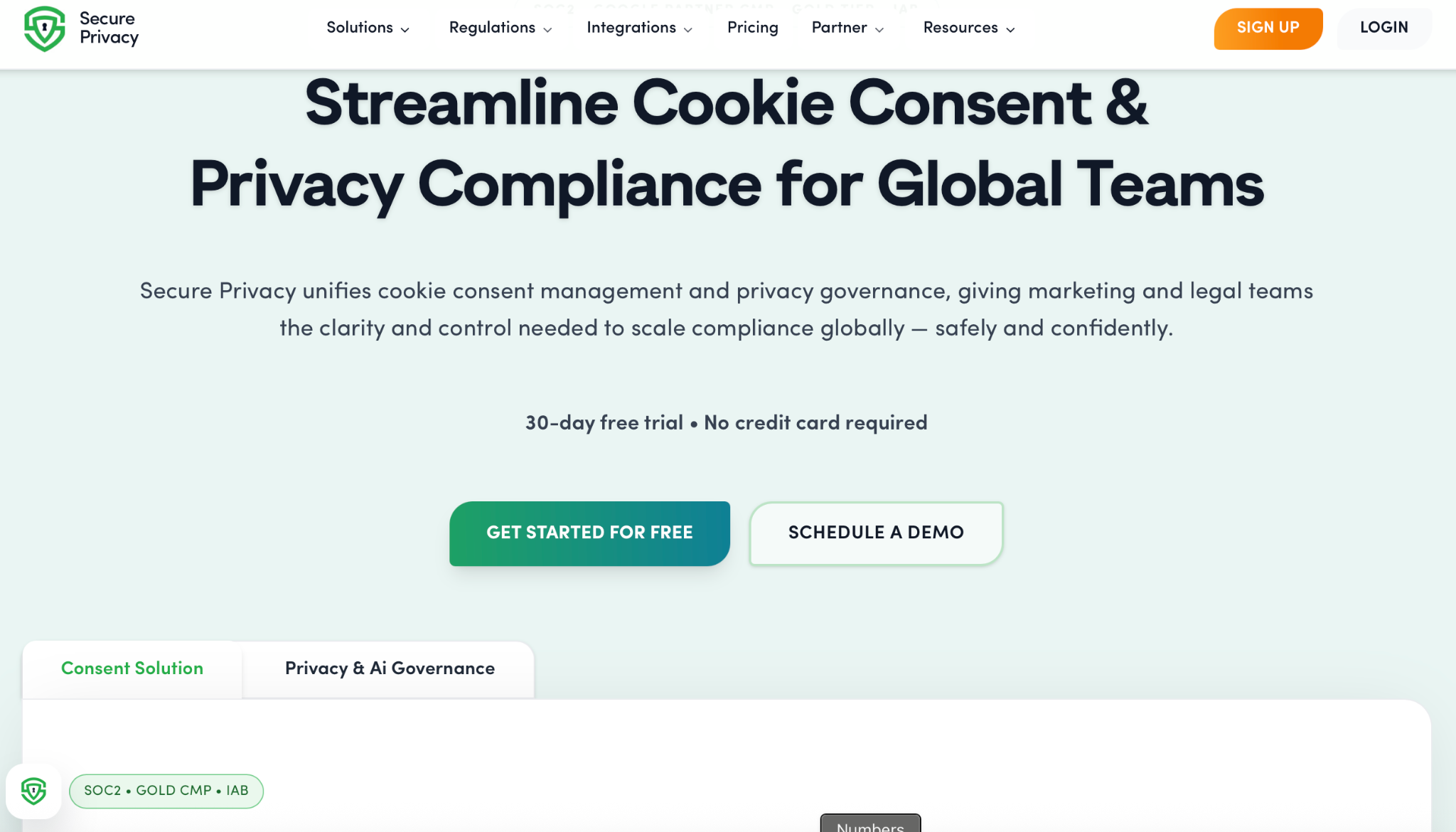
Secure Privacy Homepage
This image shows the Secure Privacy Homepage

Secure Privacy is a global cookie consent and privacy compliance platform that helps teams manage consent across websites, apps, domains, and regions.

What makes it different

Secure Privacy is strongest for digital consent environments.

It works well if you need cookie banners, consent logs, preference centers, and integrations with tools like Google, Meta, HubSpot, Shopify, WordPress, and Google Tag Manager.

Key features

  • Cookie banners and consent management
  • Automated cookie and tracker scanning
  • Visitor preference center
  • Audit-ready consent logs
  • Cross-domain consent sharing
  • Google Consent Mode and Meta integration
  • Mobile and web consent support
  • Support for 65+ privacy laws and 70+ languages
  • DSAR, DPIA, vendor management, and risk management modules

DPDP fit

Secure Privacy can support DPDP consent workflows, especially for digital businesses that need website, app, cookie, and preference management.

But since it is a global platform, you may need extra configuration for India-specific DPDP workflows, language needs, and sector-specific consent structures.

Pros

  • You can manage cookie consent across websites, apps, and domains.
  • You get strong integrations with marketing, CMS, e-commerce, and tag management tools.
  • You can support global privacy laws from one platform.
  • You get automated cookie scanning and consent logs for audit readiness.
  • Users often find it easy to implement after initial setup.
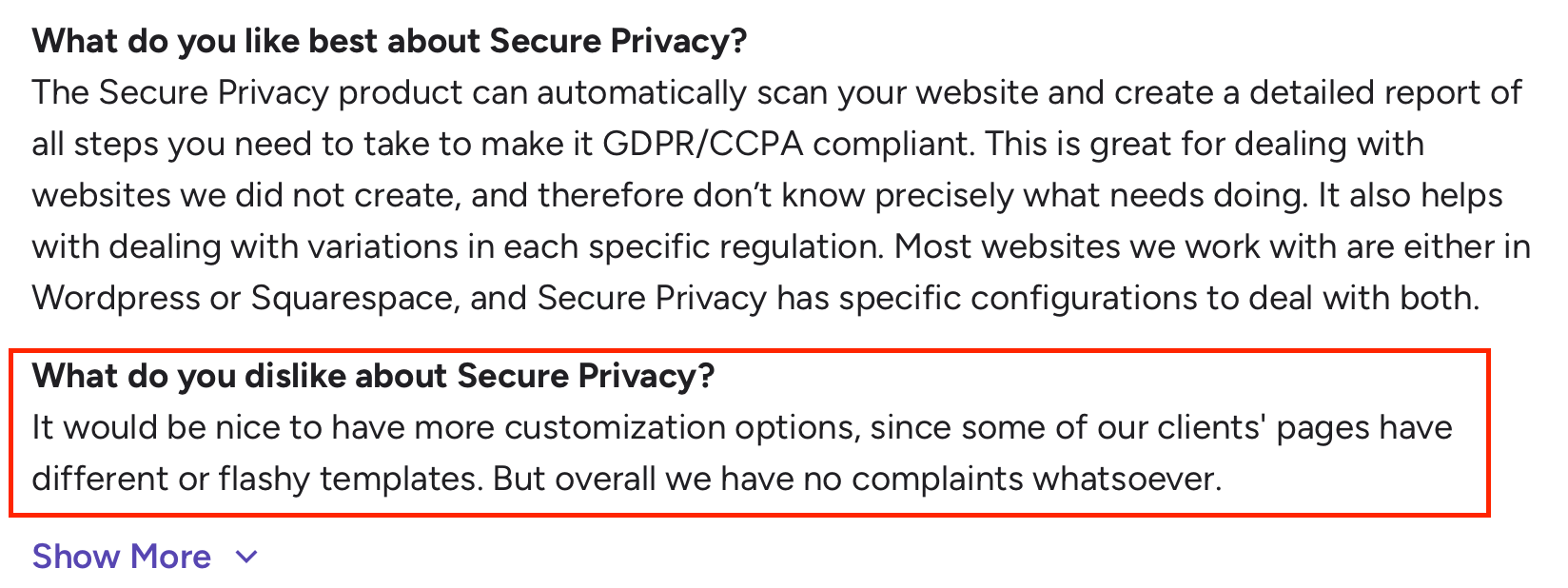
User review noting limited customization options but overall satisfaction with Secure Privacy.
This image shows the User review noting limited customization options but overall satisfaction with Secure Privacy.

Cons

  • It is stronger for cookie and digital consent than full India-first DPDP governance.
  • India-specific DPDP workflows may need configuration.
  • Some users may need more tutorials or setup guidance.
  • Language and feature access may depend on the plan you choose.

Best for

Secure Privacy works best if you run a digital-first business and need cookie consent, website consent, app consent, and global privacy compliance from one platform.

#8. KavachOne ConsentiQo:

Best for: Flat Pricing and Unlimited Consent Scale
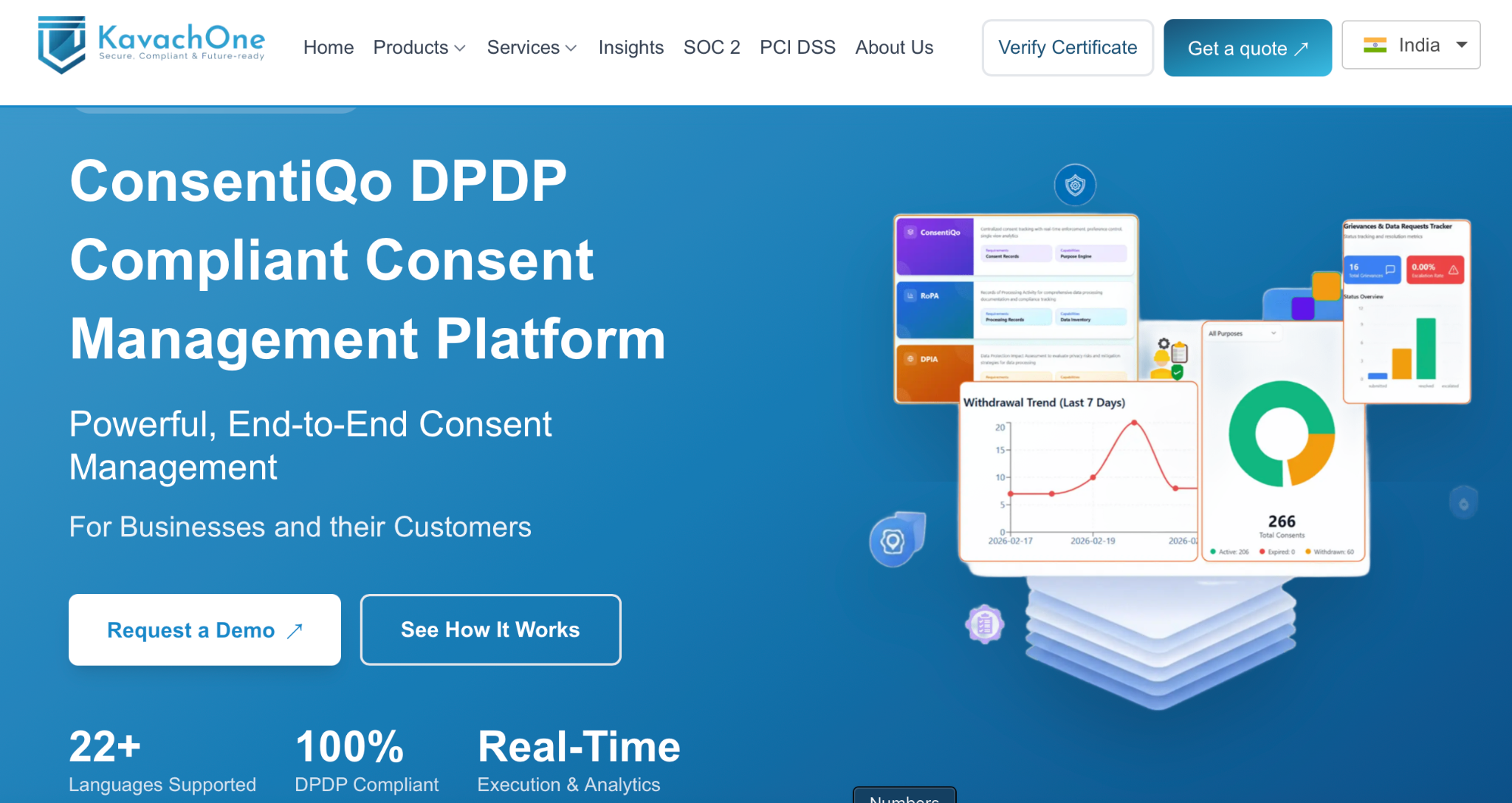
KavachOne Homepage
This image shows the KavachOne Homepage

KavachOne ConsentiQo is a DPDP-focused consent management platform built for Indian businesses that need purpose-based consent, privacy rights workflows, cookie management, and audit-ready records.

What makes it different

ConsentiQo’s biggest differentiator is its flat pricing model with no per-consent charges.

That makes it useful if your consent volume can grow quickly and you don’t want compliance costs increasing with every user action.

Key features

  • Purpose-based consent collection
  • Support for 22+ Indian languages
  • Cookie scanning and privacy notices
  • Real-time consent analytics
  • Privacy Rights Centre for DSARs
  • Audit logs with 7-year retention
  • Data mapping and lineage
  • DPIA and risk assessment workflows
  • CRM and system integrations
  • India-hosted dedicated tenant for enterprise plans

DPDP fit

ConsentiQo fits DPDP well because it covers purpose-specific consent, withdrawal, audit trails, data principal rights, grievance workflows, and multilingual consent experiences.

Pros

  • You don’t pay per consent, which helps if you manage high volumes.
  • You get 22-language support for Indian users.
  • You get audit logs, exports, and retention built into the platform.
  • You can manage consent, rights, cookies, DPIA, and data mapping in one suite.
  • You get pricing clarity compared to usage-based CMPs.

Cons

  • It may be more than you need if you only want a basic cookie banner.
  • Some advanced workflows may fit better for regulated or larger teams.
  • You may still need internal data mapping before the tool can work well.

Best for

KavachOne ConsentiQo works best if you want a DPDP-ready consent platform with predictable pricing, especially for startups, marketplaces, BFSI, fintech, telecom, healthcare, and other high-volume businesses.

#9. Seqrite Data Privacy:

Best for: Privacy + Cybersecurity Visibility
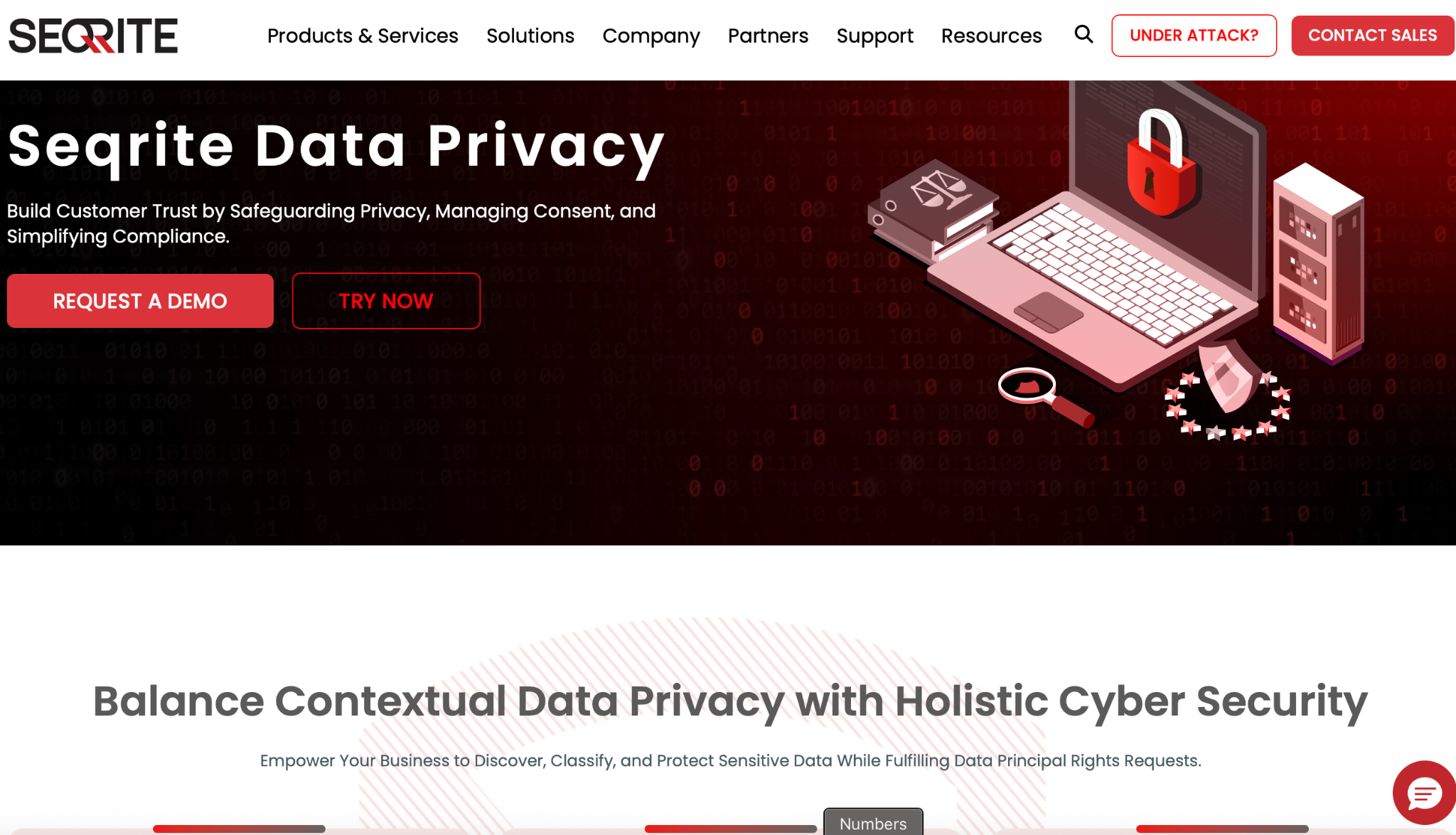
Seqrite Homepage
This image shows the Seqrite Homepage

Seqrite Data Privacy is a data privacy management solution from Seqrite that helps businesses discover sensitive data, manage consent, handle Data Principal rights, and simplify privacy compliance.

What makes it different

Seqrite is stronger than a basic consent tool because it connects privacy compliance with cybersecurity.

It helps you find, classify, protect, and govern personal data across your systems.

Key features

  • Sensitive data discovery and classification
  • 150+ prebuilt classifiers and custom classifiers
  • Universal consent and preference management
  • Cookie consent management
  • Data Principal rights request workflows
  • DPIA, RoPA, and gap assessment automation
  • Tokenization and encryption
  • Bhashini-powered 22 Indian language support
  • Integrations with DLP and ITSM tools

DPDP fit

Seqrite fits DPDP well because it supports consent management, multilingual notices, Data Principal rights, breach notifications, privacy assessments, and sensitive data discovery.

Pros

  • You can discover and classify personal data across many systems.
  • You get consent management plus data protection in one platform.
  • You can automate DPIA, RoPA, gap assessments, and rights requests.
  • You get stronger security controls like encryption and tokenization.
  • It is useful if your privacy team works closely with security teams.
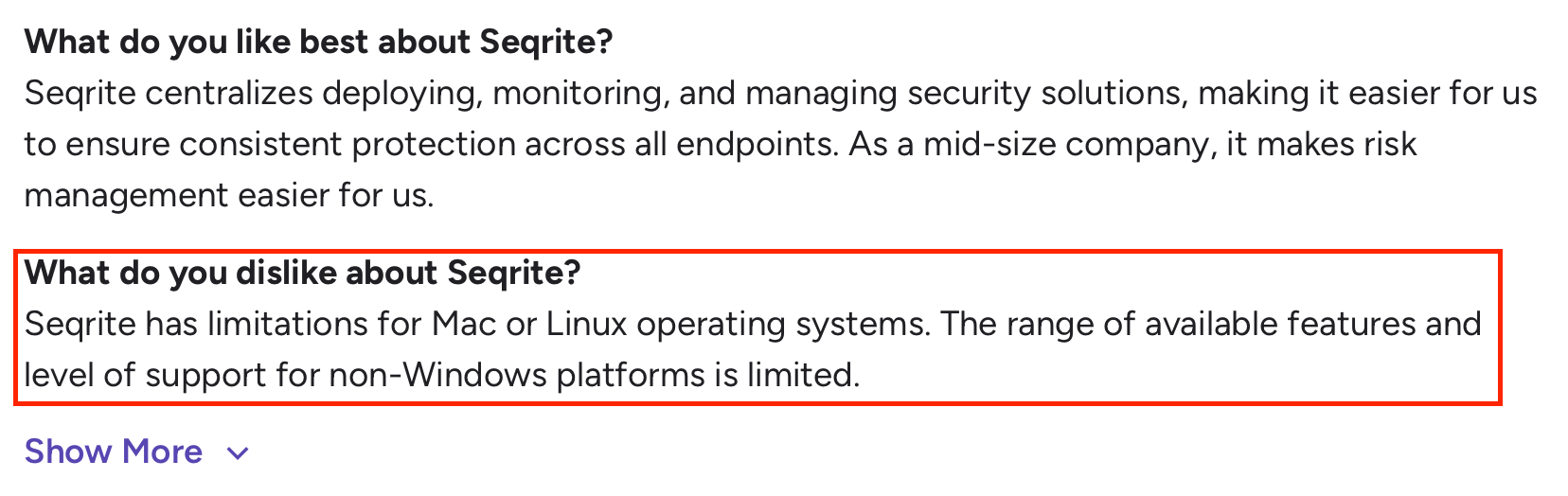
User review noting Seqrite’s limited support and features for Mac and Linux systems.
This image shows the User review noting Seqrite’s limited support and features for Mac and Linux systems.

Cons

  • It may feel too security-heavy if you only need a simple CMP.
  • Some Seqrite reviews mention stronger support for Windows than Mac/Linux, though those reviews are mostly about Seqrite security products, not specifically Data Privacy.
  • It may need careful setup because discovery, classification, and privacy workflows depend on your data sources.

Best for

Seqrite Data Privacy works best if you want DPDP compliance with strong data discovery, classification, and cybersecurity controls, especially for enterprises, regulated sectors, and security-led privacy teams.

#10. DPDP Consultants:

Best for: Consulting + Compliance Execution
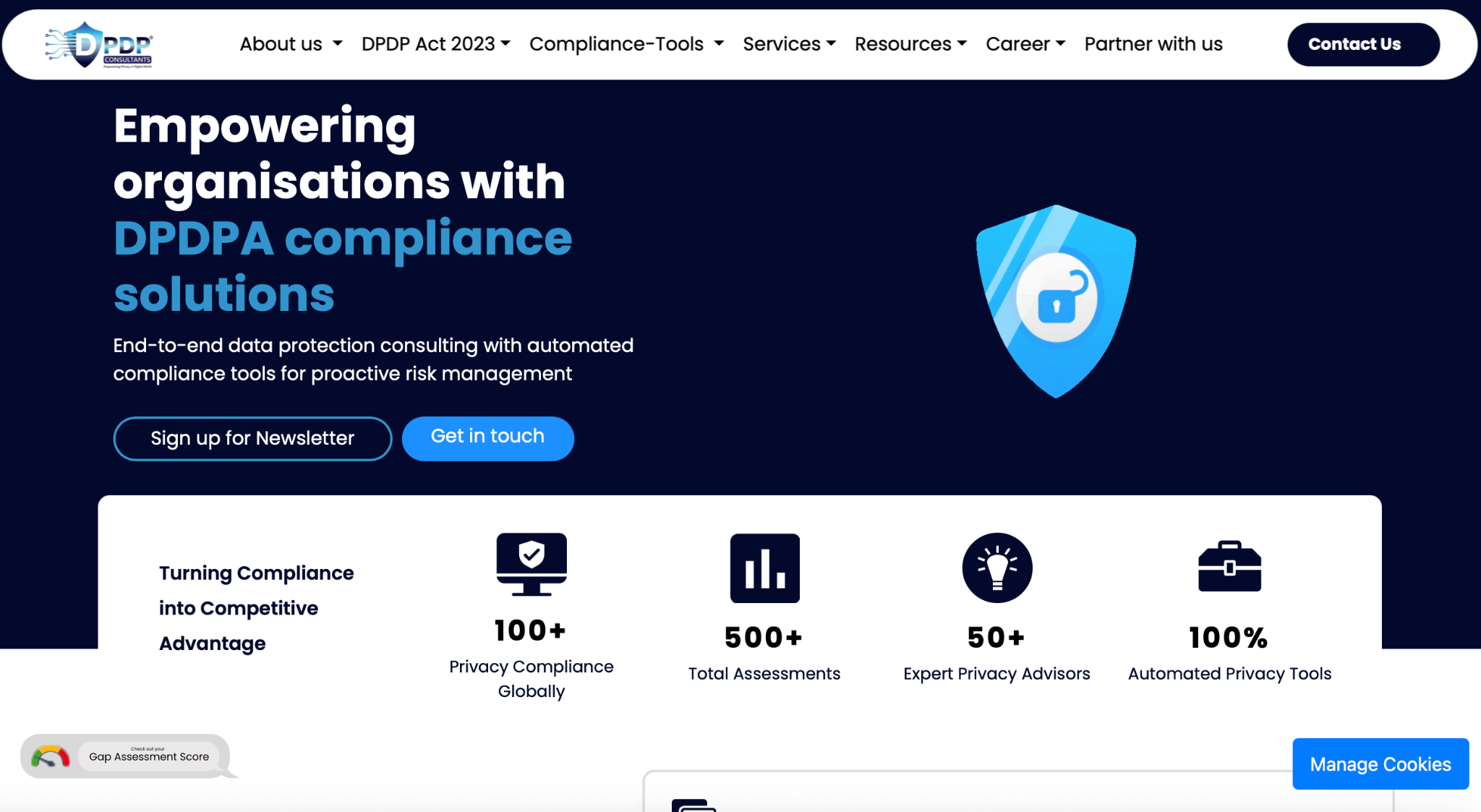
DPDP Consultants
This image shows the DPDP Consultants

DPDP Consultants is a consulting-led DPDP compliance provider that combines advisory services, audits, and automation tools to help businesses become fully compliant.

What makes it different

This is not just a software tool.

You get experts and tools together, which helps if your team doesn’t know where to start with DPDP.

Key features

  • Gap assessment and DPDP readiness review
  • Consulting, legal audit, and compliance advisory
  • Data Protection Officer (DPO) as a service
  • Consent management (DPCM tool)
  • Grievance redressal workflows
  • DPIA and third-party risk assessments
  • Privacy training programs
  • Contract and DPA review
  • Multi-channel consent (including legacy/paper data)

DPDP fit

DPDP Consultants fits well if you need end-to-end compliance support, including consent, DSAR, DPIA, vendor risk, and policy setup, not just a CMP.

Pros

  • You get expert guidance, not just software.
  • You can handle both digital and legacy (paper) consent.
  • You can outsource DPO responsibilities if needed.
  • You get structured workflows for audits, policies, and risk.
  • It works well for industries like BFSI, healthcare, and enterprises.

Cons

  • It is more consulting-heavy than product-first tools.
  • It may take longer to implement compared to plug-and-play CMPs.
  • Pricing depends on scope, not always transparent upfront.

Best for

DPDP Consultants works best if you want hands-on support to achieve compliance, especially if you don’t have an internal privacy team or need audit and legal and tech together.

Which Consent Management Tool Should You Choose?

If you’re trying to decide quickly, here’s the simplest answer 👇

  • If you want everything in one place (consent + DSAR + DPIA + vendor risk) → go with Redacto
  • If you’re an enterprise and need strong governance + control → go with Privy by IDfy
  • If you just need fast consent banners + multilingual support → go with Consently
  • If you want simple consent + basic privacy workflows → go with Consentin
  • If you’re handling global compliance (GDPR + DPDP together) → go with OneTrust
  • If you want to scale privacy operations with automation → go with TrustArc
  • If your focus is security + privacy together → go with Seqrite Data Privacy
  • If you want flat pricing + predictable costs → go with KavachOne
  • If you need consulting + execution support → go with DPDP Consultants

Conclusion

Consent is no longer just a checkbox on your website.

It’s a system you need to manage, track, and prove when required.

With the DPDP Act, compliance is not about adding a banner.

It’s about having the right workflows for consent, withdrawal, audits, and user rights.

If you pick the wrong tool, you’ll feel it later during audits, operations, and scale.

If you pick the right one, compliance becomes part of your daily workflow, not a last-minute fix.

If you’re looking for a simpler way to handle this in India, Redacto is built specifically for DPDP and can reduce a lot of that rollout complexity.


Frequently asked  questions

SK
Product Designer
This is the most obvious creative techniques and endless whiteboard is just perfect for it. The basis of brainstorming is a generating ideas in a group situation based on the principle of suspending judgment – a principle which scientific research has proved to be highly productive in individual effort as well as group effort.

Contact Us

Thank you! Your submission has been received!
Oops! Something went wrong while submitting the form.

Your Trusted partner