Personalized Outbound Strategy
Get The Right Outbound Strategy In Minutes
Enter your email to get a custom plan & stack recommendation for your business
It's being carefully crafted by AI
Please check your mailbox in 5 minutes
%20Redacto%20logo_New.png)



DPDPA requires consent to be clear, recorded, and easy to withdraw.
Most companies still rely on cookie banners or manual logs.
That’s not enough for audits or real compliance.
If you're comparing consent management platforms in India, the key question is simple: which tools actually meet DPDPA requirements?
In this guide, we’ll break down:
This will help you choose the right CMP based on your compliance needs.
A Consent Management Platform (CMP) is a system that helps organizations manage how user consent is handled across their data workflows.
It defines how you:
Under DPDPA, this becomes critical.
Consent must be:
Without a CMP, meeting these requirements becomes difficult to manage at scale.
Not every CMP is built for DPDPA. On the surface, many tools look similar, but the gaps show up when you try to manage real workflows.
These are the basics every compliant setup should handle:
If any of this is missing, compliance starts breaking.
This is where more complete platforms stand out:
At this level, consent is no longer just a checkbox.
It becomes part of how your entire compliance system runs.
What Happens If You Don't Comply with DPDPA Requirements
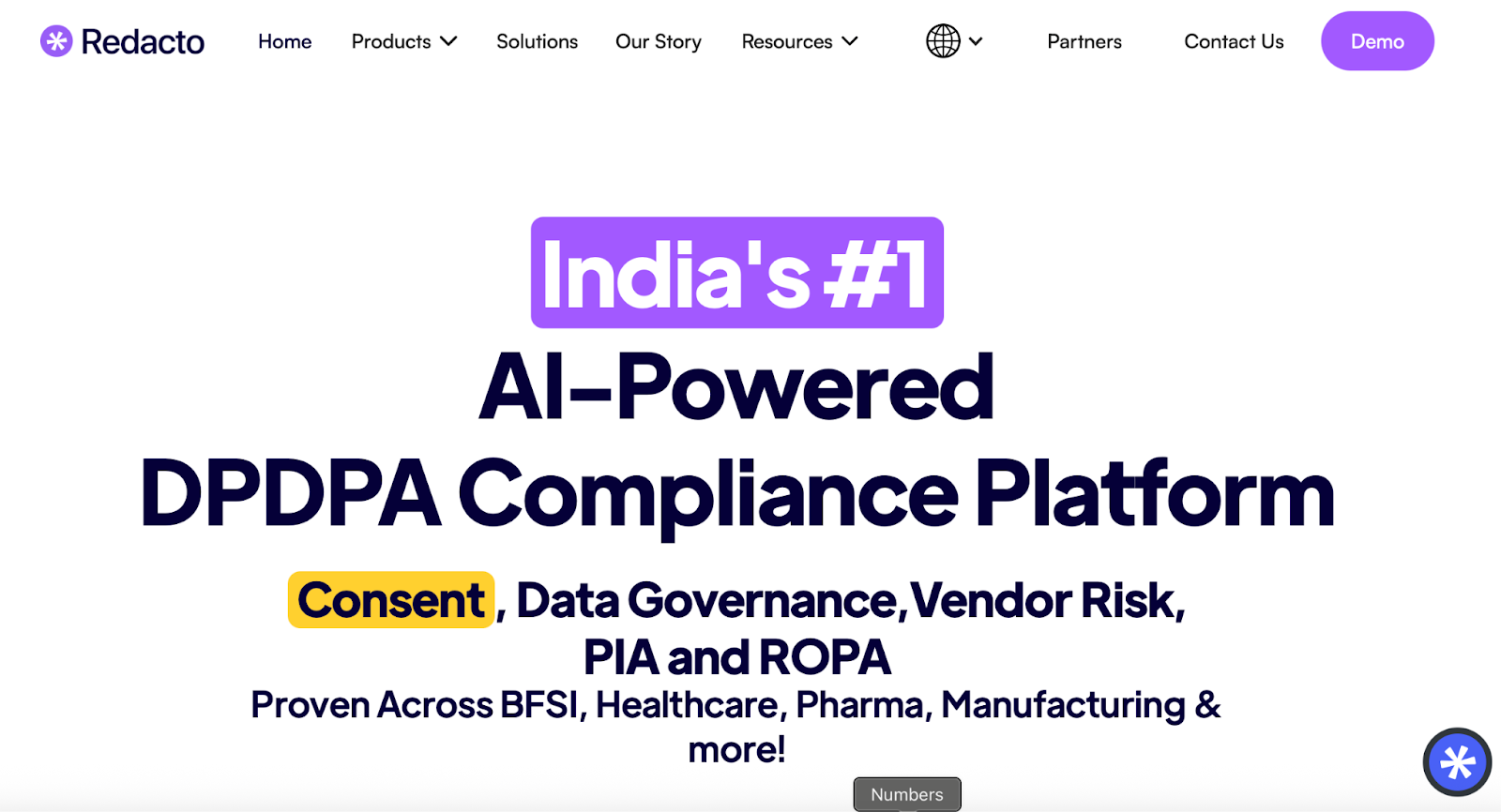
Redacto is designed around how DPDPA compliance actually works in India, not adapted from global frameworks.
It focuses on handling consent as part of a larger compliance system, rather than treating it as a standalone feature.
It supports consent collection across web, apps, and POS environments, while maintaining detailed audit logs.
Alongside that, it connects consent with DPIA workflows, vendor risk management, and data discovery.
What stands out is how consent is tied to the full lifecycle. Instead of just capturing consent, it links it with how data is processed, shared, and governed across systems.
This includes visibility into cross-border data flows and data minimization practices.
Organizations that want consent management integrated with broader DPDPA compliance workflows
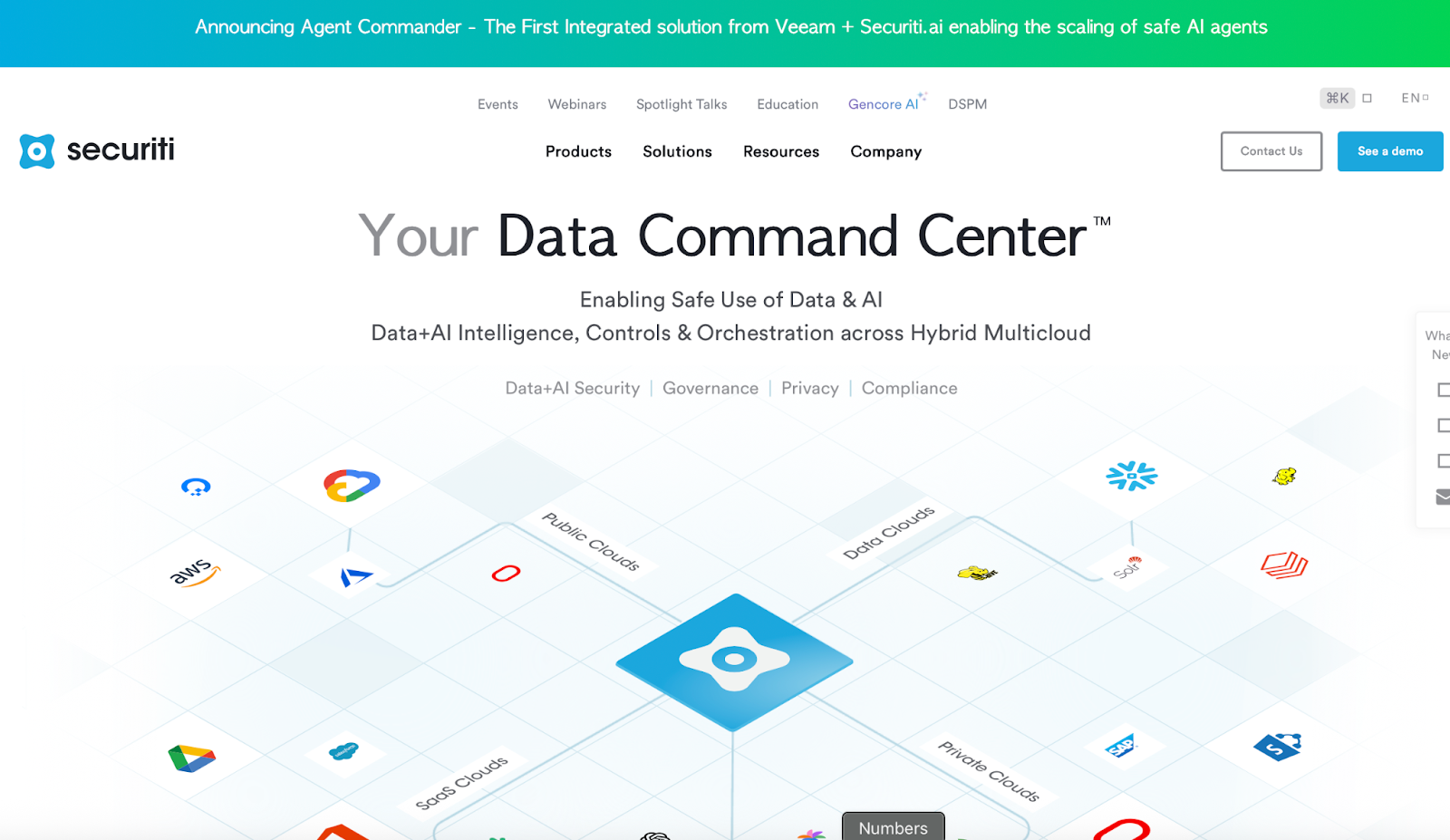
Securiti.ai is a global privacy platform that combines consent management with broader data governance capabilities.
It is built for large enterprises that need automation across multiple compliance areas.
It offers strong consent management features, including collection, tracking, and auditability.
These are integrated with data discovery, risk management, and compliance workflows.
The platform leans heavily on automation, which helps manage large-scale data environments.
However, it is designed primarily for global regulations, so adapting it to DPDPA-specific workflows may require additional configuration.
Large enterprises managing global compliance along with DPDPA requirements
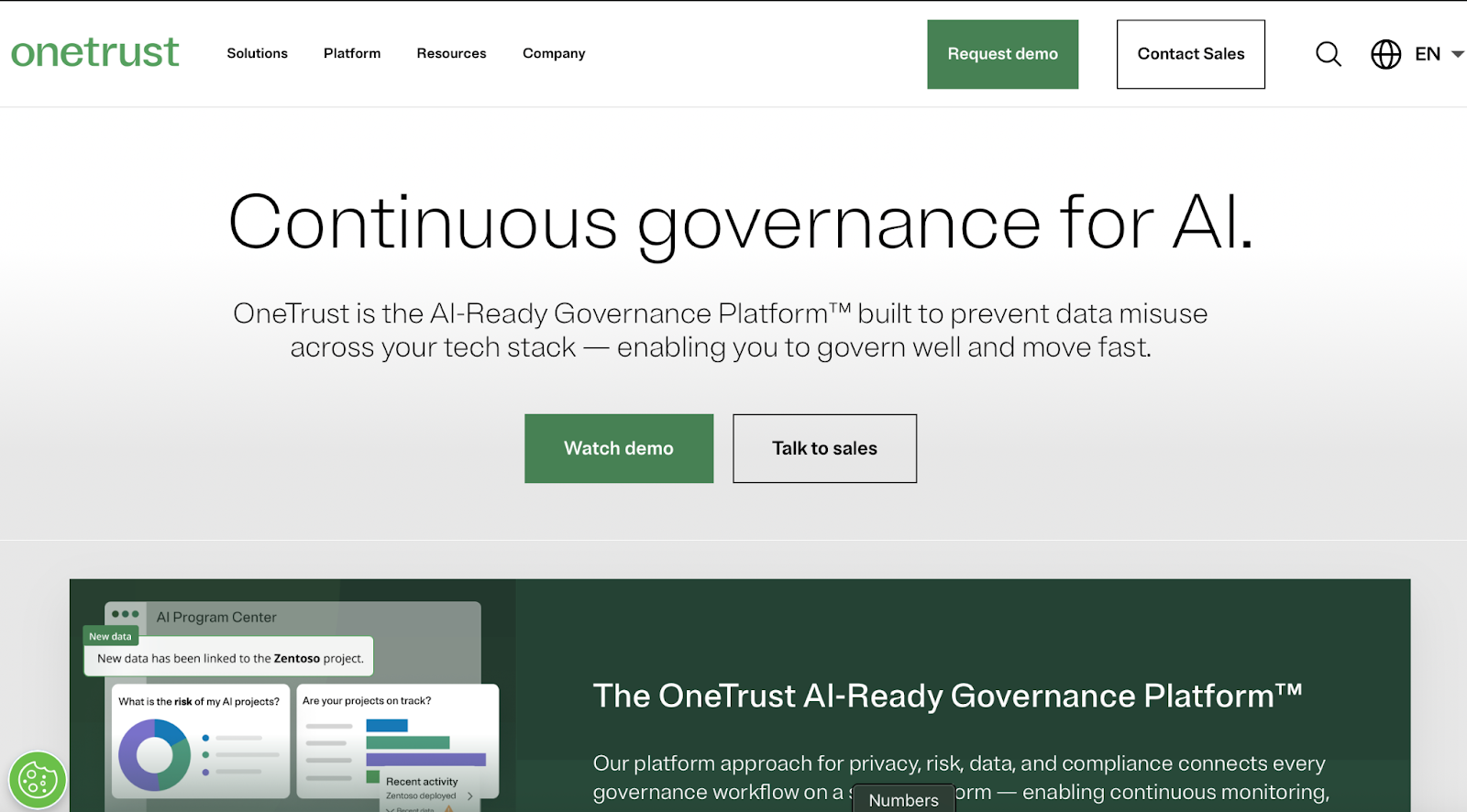
OneTrust is one of the most widely used consent management platforms globally.
It offers mature consent collection and management capabilities, especially for web and cookie-based tracking.
The platform provides strong tools for consent capture, preference management, and audit logging.
It also integrates with broader privacy and governance modules, making it suitable for organizations already using its ecosystem.
That said, OneTrust is built primarily around GDPR and other global regulations.
While it can support DPDPA, it is not specifically designed for India-first workflows, which can make implementation more complex.
Enterprises already using global compliance tools and extending to India
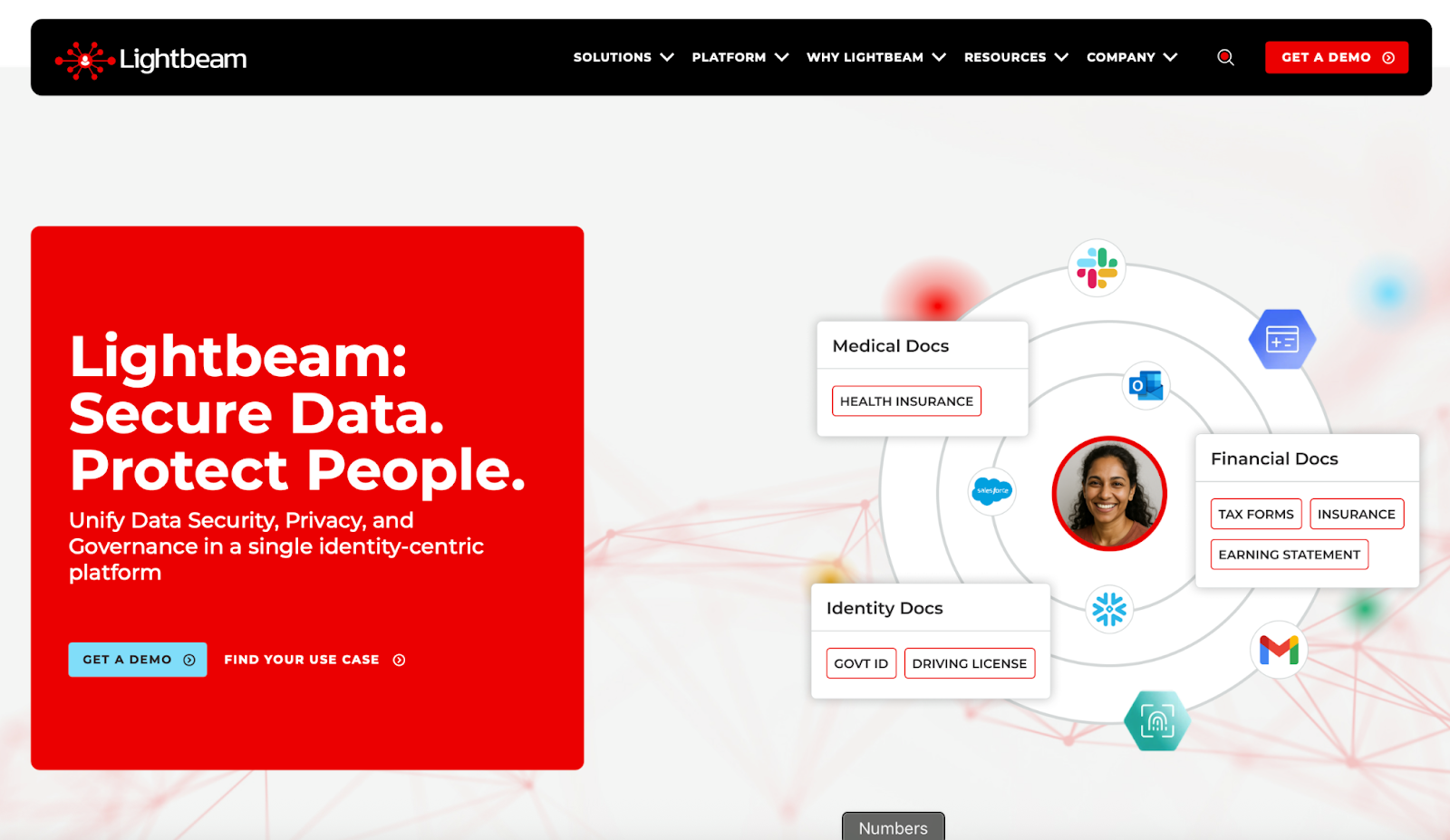
Lightbeam focuses on simplifying privacy operations through structured workflows.
It offers consent management as part of a broader compliance platform that includes data mapping and governance.
It supports consent collection and tracking, along with visibility into how data moves across systems.
This makes it useful for organizations trying to connect consent with operational workflows.
However, compared to some other platforms, its depth in DPDPA-specific requirements is still evolving.
It may require additional setup to fully align with Indian compliance expectations.
Mid to large organizations looking for structured privacy workflows
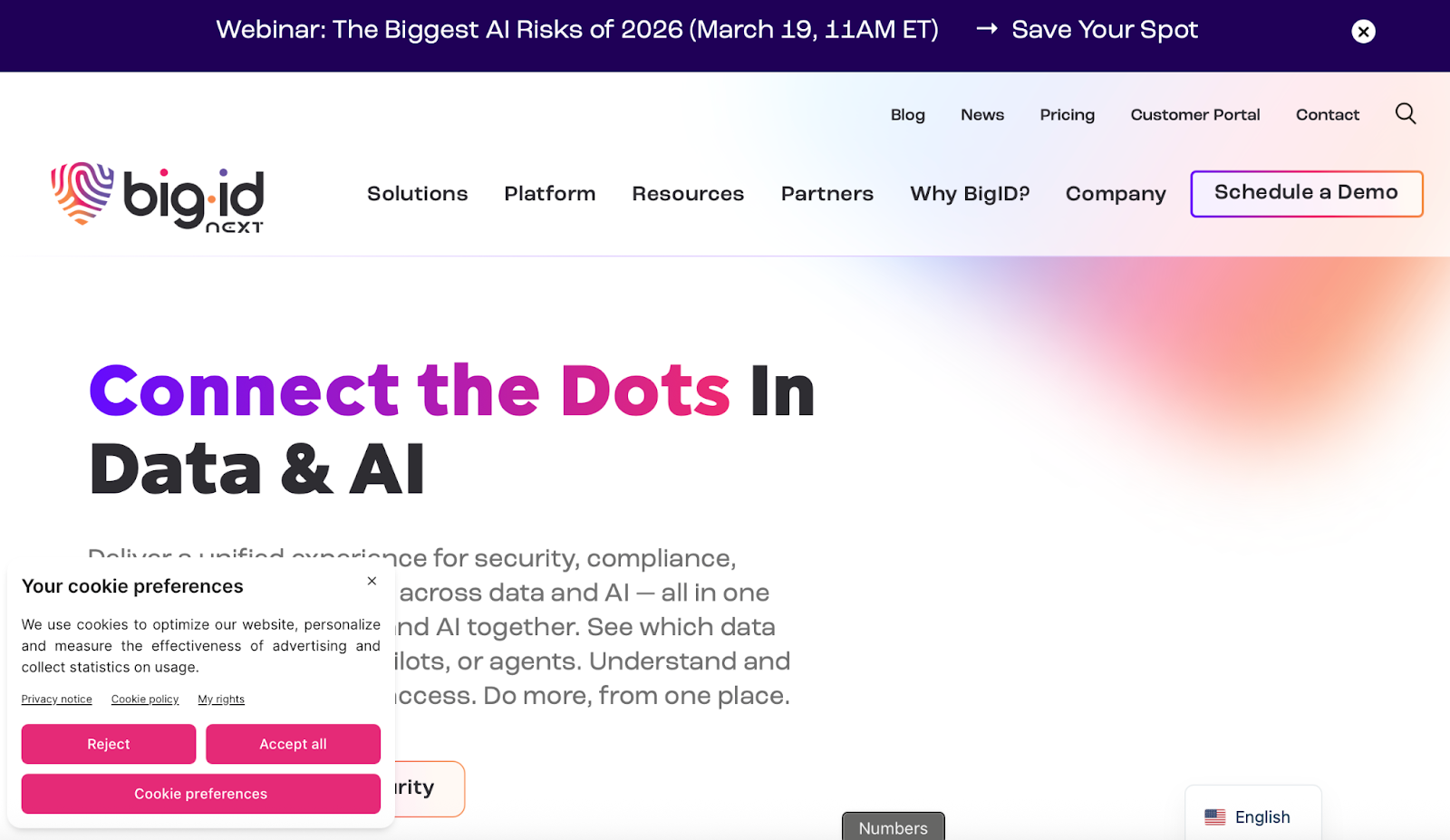
BigID is known primarily for its strength in data discovery and classification.
It helps organizations understand where their data exists, which becomes important for linking consent to actual data usage.
It includes consent management capabilities, but these are not the primary focus. Instead, the platform is centered around data visibility, risk identification, and governance.
For companies dealing with large and complex data environments, this can be valuable.
But if the goal is consent-first implementation, it may feel less direct.
Data-heavy enterprises prioritizing discovery and governance
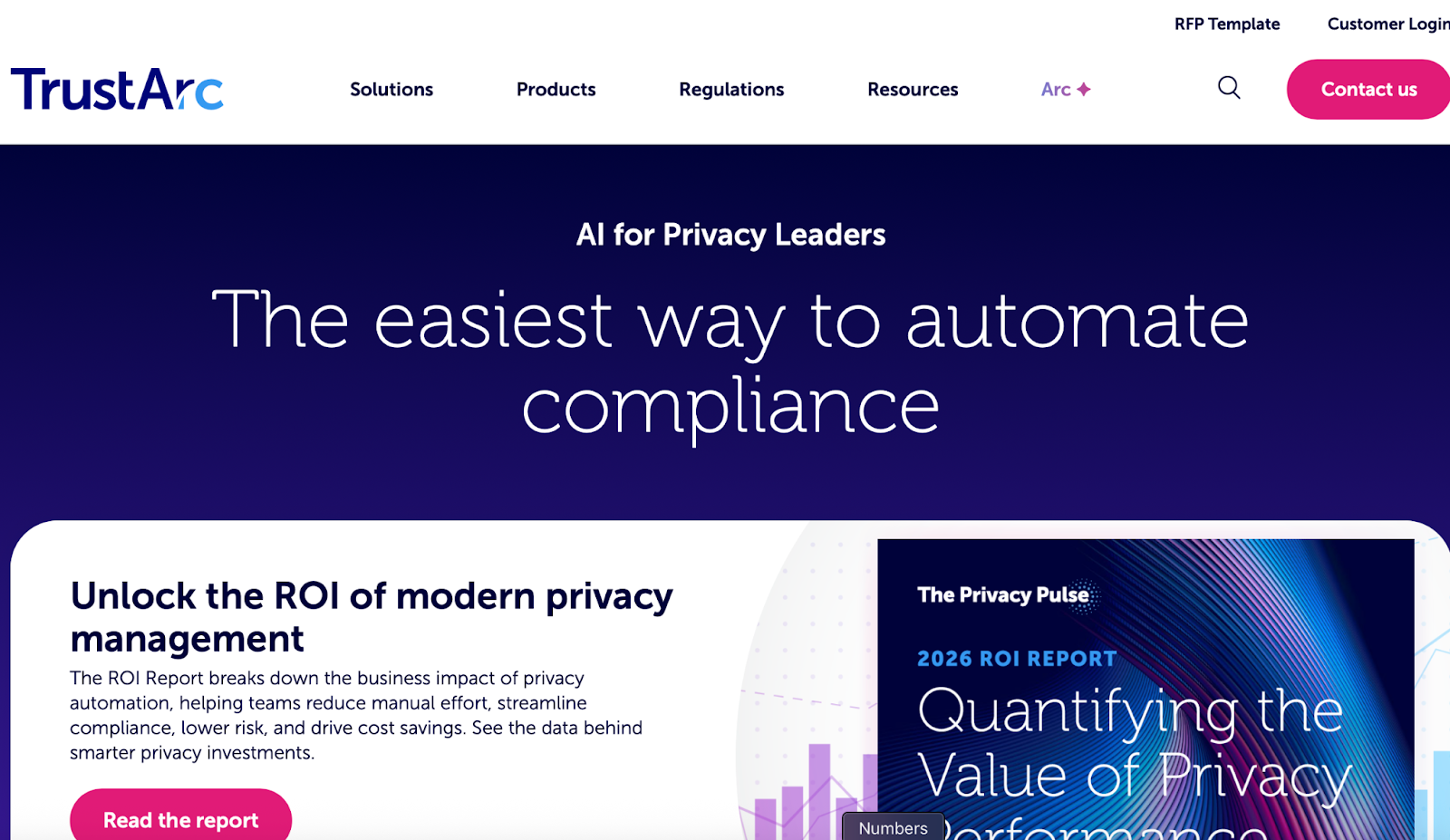
TrustArc is an established name in the privacy compliance space.
It offers a full suite of tools, including consent management, risk assessments, and governance workflows.
Its consent management capabilities are reliable and well-tested, covering collection, storage, and audit requirements.
It also integrates with broader compliance processes.
However, being a legacy platform, customization and deployment can take longer compared to newer tools.
It is also more aligned with global compliance frameworks than DPDPA-specific workflows.
Enterprises looking for a proven, full-suite compliance platform
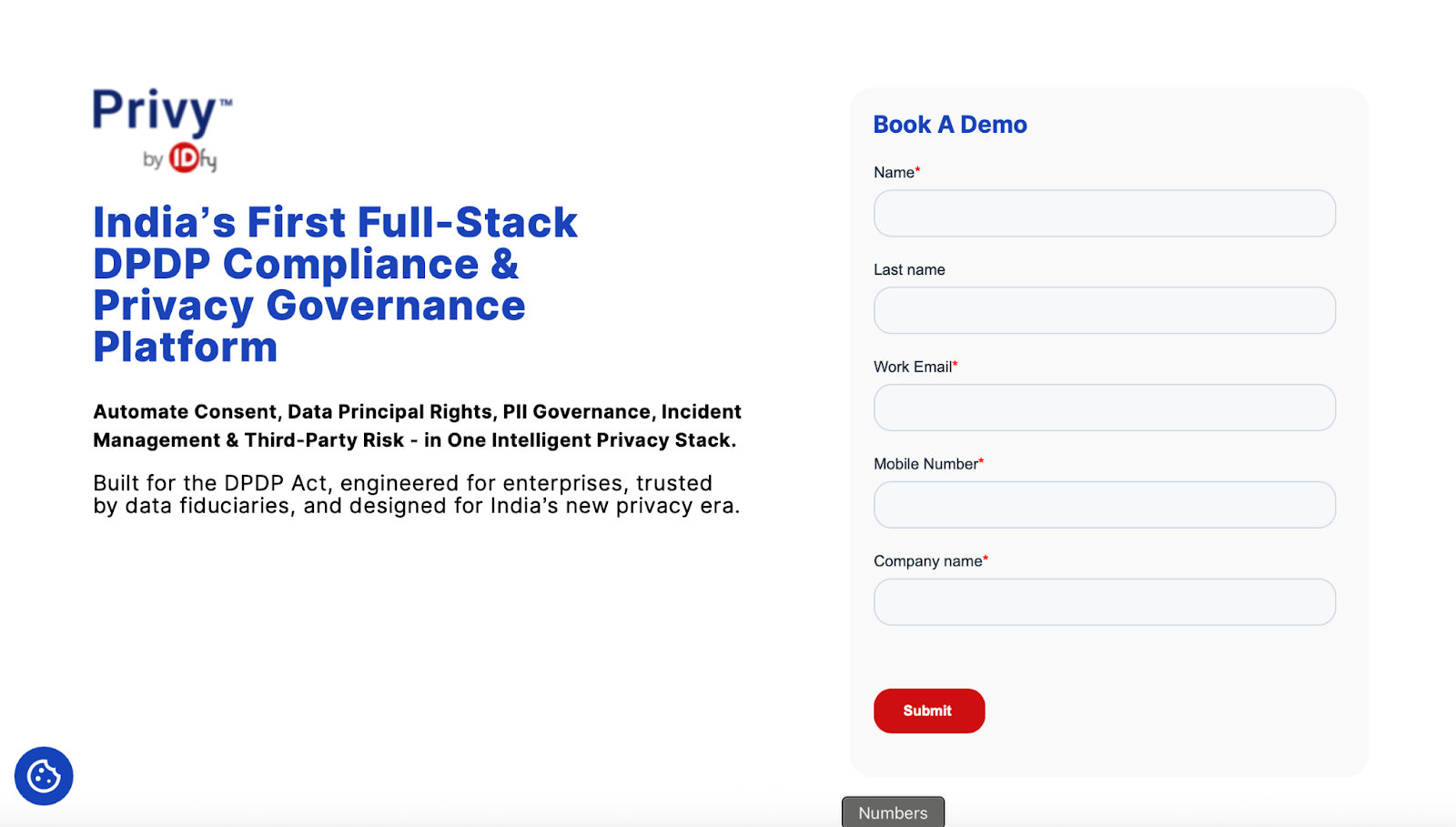
IDfy’s Privy platform is built with Indian enterprises in mind.
It focuses on compliance requirements specific to the local regulatory environment, including DPDPA.
It provides consent management along with related capabilities like data governance, audit tracking, and risk management.
The platform is designed to align more closely with Indian workflows compared to global tools.
Because of this, it may require less customization when implementing DPDPA-related processes.
Indian enterprises prioritizing local compliance alignment
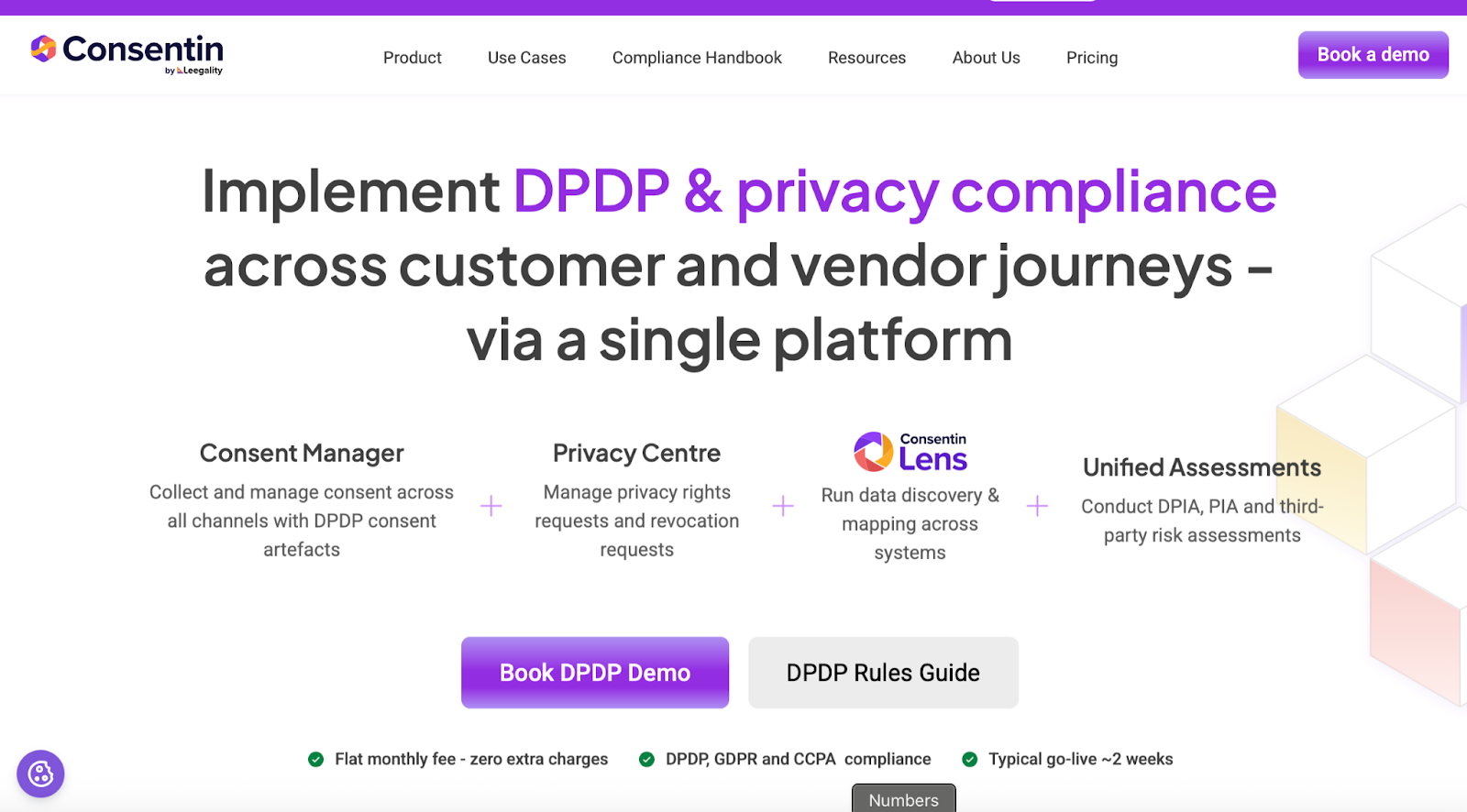
Consentin focuses primarily on consent collection and agreement management.
It is simpler compared to full-stack compliance platforms and is easier to deploy.
It handles consent capture, storage, and basic tracking, making it useful for companies that need a straightforward solution without heavy governance layers.
However, it does not offer deeper capabilities like DPIA, vendor risk management, or full data lifecycle visibility.
This makes it less suitable for organizations with complex compliance needs.
SMBs or companies needing basic consent management without full compliance overhead
In the end, the right CMP depends on how complex your data, compliance needs, and workflows actually are.
Enter your email to get a custom plan & stack recommendation for your business
Please check your mailbox in 5 minutes
Choosing the right consent management platform comes down to how complex your compliance needs are.
If your use case is simple, a basic CMP can work.
But if you’re preparing for DPDPA audits or handling sensitive data, you’ll need a platform that connects consent with the full compliance workflow.
The difference is not in features, it’s in how well the system handles real scenarios like audits, revocation, and data usage.
👉 If you're evaluating options, the fastest way to decide is to see how it works in practice.
You can book a quick demo of Redacto to see how consent, audits, and DPDPA workflows are handled end-to-end for your use case.


.jpg)


