%20Redacto%20logo_New.png)


What Happens If You Don't Comply with DPDPA Requirements



Think your business can survive a ₹250 crore fine? That's exactly what you're risking if your organization isn't ready for India's Digital Personal Data Protection Act enforcement. With full compliance required by May 2027, this isn't just another regulation to tick off your list. It's a complete transformation of how businesses handle personal data, and getting it wrong could destroy your company.
Payment companies, NBFCs, banks, fintech startups, insurance companies, and enterprises across India are all waking up to the same harsh reality: DPDPA compliance isn't optional anymore. The penalties are massive, the enforcement is real, and the timeline is incredibly tight. Most organizations still don't grasp what non-compliance actually costs or how these penalties work in practice.
The smart money is already investing in unified solutions. Redacto's Privacy Engine automates the data discovery headache, while ConsentFlow handles consent management without breaking your user experience. Add VendorShield for third-party oversight and TrustCentre for complete transparency, and you've got a comprehensive defense against these crushing penalties.
Why DPDPA Penalties Matter for Your Business
Here's the uncomfortable truth: data breaches are getting more expensive every year. Research shows the average cost of a data breach in India reached ₹19.5 crore in 2024, representing a 9% increase from the previous year. Now add potential DPDPA penalties on top, and you're looking at business-ending financial exposure.
The Data Protection Board of India has sweeping powers to investigate violations, shut down operations, and impose penalties that make even large enterprises reconsider their data strategies. DPDPA covers everything from consent failures to data classification and security breaches, creating multiple pressure points where one mistake can trigger massive fines.
What Actually Triggers a ₹250 Crore Fine

The maximum penalty isn't handed out randomly. It specifically targets failures in implementing reasonable security safeguards to prevent personal data breaches. This means your cybersecurity and data loss prevention strategies become direct compliance requirements, not just IT priorities.
Unlike GDPR's percentage-based approach, DPDPA uses fixed penalty amounts. For smaller organizations, this creates proportionally massive risks. For larger enterprises, the fixed caps might seem manageable compared to GDPR's potential 4% of global turnover, but there's a catch: you can face multiple penalties for different violations.
The penalty structure isn't just about punishment. It's about prevention. Security safeguard failures get the maximum ₹250 crore because the government wants organizations to invest in protection, not pay for cleanup after disasters happen.
How DPDPA's Fine Structure Actually Works
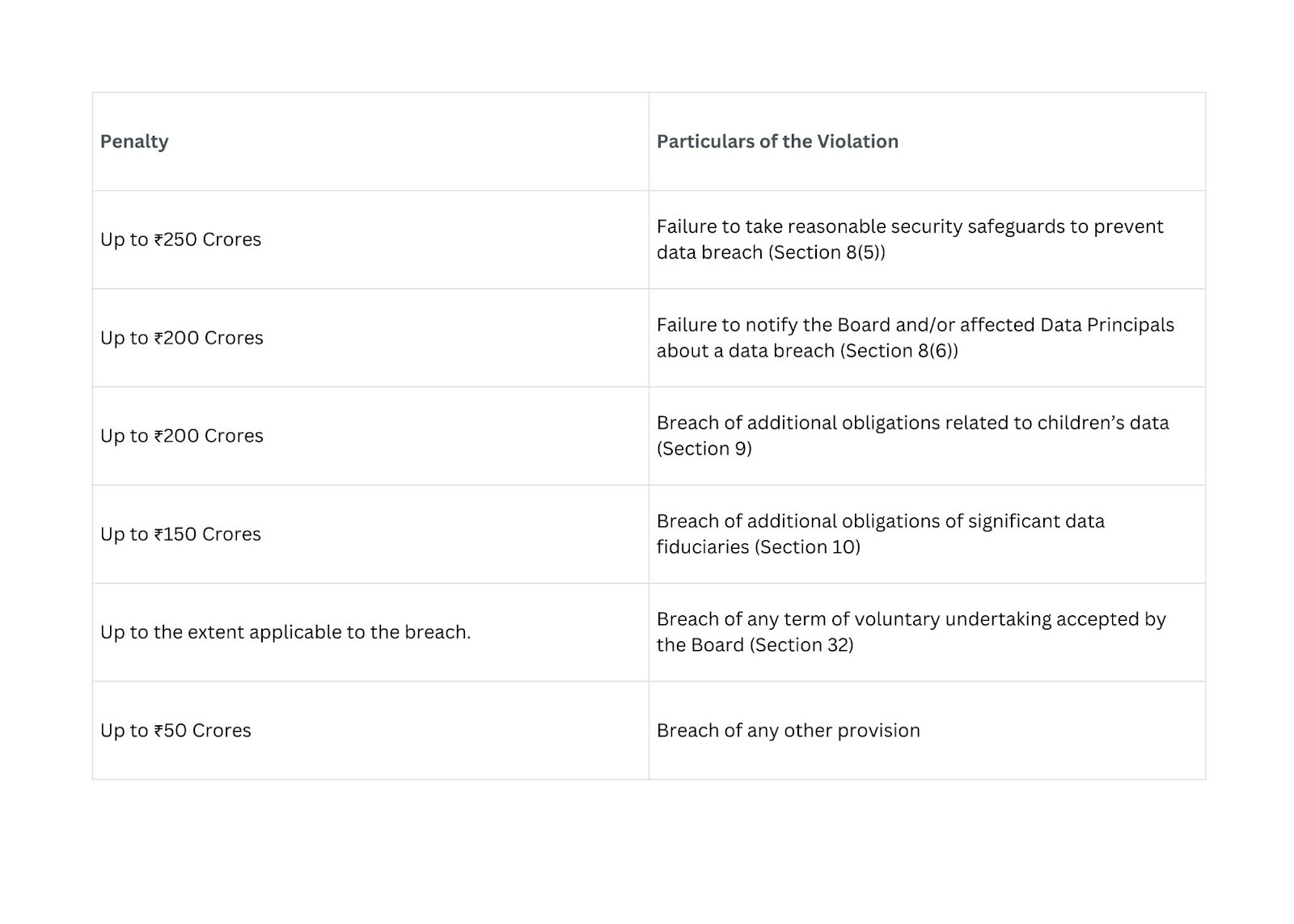
The penalty framework creates a clear hierarchy of violations. General processing violations, including consent management failures and data principal rights violations, face penalties up to ₹50 crore. These might seem like "smaller" fines, but they're still company-ending amounts for most businesses.
Children's data violations and breach notification failures both carry ₹200 crore penalties. This dual focus reflects the Act's commitment to protecting vulnerable populations and ensuring transparency when things go wrong. Breach notification failures happen when organizations don't inform the Data Protection Board within the required timeframes, often because they lack proper incident detection systems.
Significant Data Fiduciary violations face ₹150 crore penalties for enhanced obligations, including mandatory audits and impact assessments. The message is clear: if you're processing data at scale, you need enterprise-grade governance systems, not basic compliance checkboxes.
The Most Common Violations That Trigger Penalties
Consent-related failures top the violation list because most organizations get the basics wrong. Pre-checked consent boxes, difficult withdrawal processes, and unclear privacy notices all trigger penalties. Organizations implementing automated consent collection systems need bulletproof compliance.
Security safeguard violations carry the highest penalties for good reason. Unencrypted personal data, inadequate access controls, and insufficient monitoring create massive liability exposures. Comprehensive cybersecurity frameworks have become mandatory compliance requirements.
How Enforcement Actually Works in Practice
The Data Protection Board serves as the primary enforcement authority with extensive investigation powers. They can demand information, conduct technical system inspections, and examine your entire data processing operation. Complaints start with affected individuals who must first try your internal grievance mechanisms.
Penalty determination considers violation severity, compliance history, harm caused, and mitigation efforts. Your response to violations matters almost as much as preventing them. Organizations with documented compliance efforts typically face lower penalties than those showing negligence.
Real-World Impact Beyond the Headlines
Operational consequences often prove more damaging than financial penalties. Organizations face enhanced reporting requirements, potential service blocking, and long-term reputational damage that destroys customer trust. Third-party risk management becomes critical since organizations face penalties for vendor violations.
Who Faces the Highest Risk of Massive Fines
Organizations with high data processing volumes, complex customer interactions, and limited compliance infrastructure represent the highest-risk category. Fintech startups, e-commerce platforms, healthcare organizations, and social media platforms face particular scrutiny due to their data processing complexity and user impact scale.
Traditional enterprises entering digital transformation also face elevated risks. Legacy systems, distributed data processing, and unclear data flows create multiple potential violation points that require systematic identification and remediation before enforcement deadlines.
Your Roadmap to Avoiding Devastating Penalties
Preventing DPDPA penalties requires comprehensive privacy programs addressing technical, operational, and governance requirements simultaneously. Technical compliance includes implementing consent management platforms, automated data discovery systems, encryption protocols, access controls, and incident response capabilities.
Operational compliance demands clear privacy policies, designated Privacy Officers, comprehensive staff training programs, regular audit schedules, and effective breach notification protocols. The most successful organizations invest in unified platforms that automate compliance monitoring and provide real-time risk assessment capabilities.
Redacto's comprehensive privacy management platform addresses all these requirements in a single integrated solution, transforming compliance from a cost center into a competitive advantage through automated governance and continuous risk monitoring.
Ready to protect your organization from potentially devastating DPDPA penalties? Contact our privacy experts to discuss how Redacto's unified platform can safeguard your business from enforcement risks, or connect with us directly to explore customized compliance solutions that actually work.