%20Redacto%20logo_New.png)


Mobile and Web Consent Unification Tools for 2026
.jpg)


Need a mobile app that's more than just compliant on paper? Think again if you believe adding a privacy policy makes your app ready for 2026. With app revenue projected to hit $288 billion by 2030, according to Sensor Tower's market research, the stakes for getting mobile consent right have never been higher.
Here's the thing most developers get wrong - mobile consent isn't web consent with a mobile wrapper. Between Apple's App Tracking Transparency, Google's enhanced privacy requirements, and India's DPDP Act enforcement beginning May 2027, your app needs consent infrastructure that actually works.
That's where Redacto comes in. Our Privacy Engine automatically discovers data collection, ConsentFlow manages consent seamlessly, VendorShield monitors third-party risks, and TrustCentre keeps everything transparent.
What Is Mobile App Consent Management in 2026?

Mobile app consent management goes beyond cookie banners. In 2026, it's about SDK-based consent collection for iOS and Android, real-time permission management, and syncing across your digital ecosystem.
Here's what makes mobile different - while web consent deals with cookies and tracking scripts, mobile consent handles platform-specific identifiers like Apple's IDFA and Google's Android ID, device permissions, and in-app tracking technologies that don't exist on websites.
Web consent platforms show banners and block scripts. Mobile consent platforms live inside your app code through SDKs, managing permissions before they're requested and storing consent decisions locally.
Why Cross-Platform Consent Management Matters for Apps and Web
Most organizations mess this up by treating apps and websites like separate privacy universes. But users move fluidly between your mobile app, mobile website, and desktop experience, expecting their privacy choices to follow them everywhere.
Cross-platform consent management ensures unified preferences across all touchpoints. This isn't just a better user experience - it's what regulators increasingly expect for compliance.
How Consent Management for Mobile Apps Works
Modern mobile consent management operates through native SDKs that integrate directly into iOS and Android applications. These SDKs handle consent collection, storage, and enforcement at the code level, ensuring tracking technologies stay dormant until permissions are obtained.
Organizations leveraging automated consent collection for fintech apps discover that SDK-based approaches reduce implementation complexity while ensuring compliance.
Connect directly with Redacto to discuss requirements.
Key Features to Look for in Mobile Consent Management Tools (2026)
Mobile consent demands technical capabilities that web-focused platforms can't deliver. Native mobile SDKs for iOS and Android are baseline requirements, but implementation quality varies.
Look for platforms offering Flutter and React Native support, cross-platform consent syncing, Google Consent Mode v2, Apple's App Tracking Transparency compatibility, and granular consent categories for device-specific permissions.
Organizations managing consent across multiple regions benefit from platforms that automatically detect location and present appropriate consent flows.
Why Redacto ConsentFlow Leads Mobile Consent Management
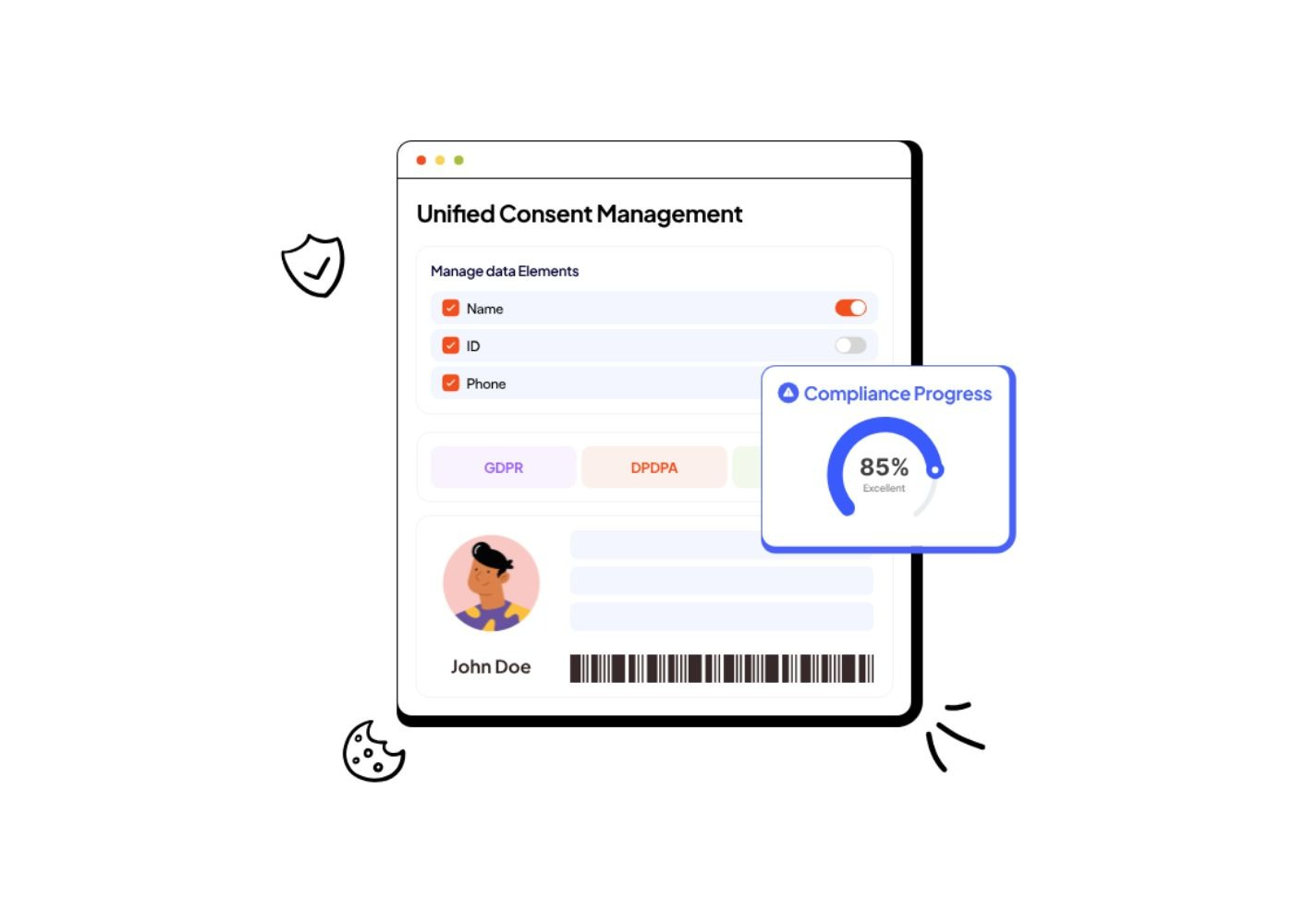
Redacto ConsentFlow stands apart with AI-powered automation designed for financial services, healthcare, and enterprise applications. Built for India's DPDP Act compliance, ConsentFlow delivers comprehensive mobile SDK support with cross-platform synchronization.
ConsentFlow provides native iOS and Android SDKs with Flutter support, real-time consent synchronization between apps and websites, and AI-powered optimization that improves acceptance rates while maintaining compliance.
The platform excels for banks, fintech companies, insurance providers, and healthcare organizations needing enterprise-grade consent management.
Mobile vs Web CMPs: What Most Businesses Get Wrong
The biggest mistake? Using cookie banners inside mobile apps. Mobile apps don't use cookies - they use platform-specific tracking technologies requiring completely different consent approaches.
Missing SDK-level enforcement represents another critical gap. Web platforms can block JavaScript scripts, but mobile apps need SDK integration to prevent tracking activation until consent is obtained.
Organizations implementing consent management platforms for retail find that mobile-first approaches deliver superior experiences.
How to Choose the Right Mobile Consent Management Platform
App-first companies need platforms designed specifically for mobile environments, not web platforms with mobile afterthoughts. Regional compliance requirements heavily influence selection. Companies serving Indian users need DPDP Act support, European apps require GDPR compliance, while US companies must handle CCPA.
Organizations using third-party risk management tools benefit from integrated platforms like Redacto's solution.
Mobile Consent Management Compliance in 2026
GDPR and ePrivacy regulations explicitly cover mobile applications, requiring the same consent standards as websites. Mobile apps targeting EU users must provide granular consent options, regardless of the developer's location.
India's DPDP Act creates unique challenges with its consent-first approach and enforcement beginning May 2027. Unlike GDPR's multiple lawful bases, the DPDP Act requires explicit consent for most data processing.
Final Thoughts on Unifying Mobile and Web Consent the Right Way
Unified consent platforms make sense when organizations operate multiple digital touchpoints. Future-proofing requires platforms that adapt automatically to regulatory changes. Redacto ConsentFlow provides the mobile-first solution growing businesses need.
Ready to implement unified mobile and web consent management? Contact Redacto's privacy experts