%20Redacto%20logo_New.png)


Best Consent Management Platforms for Enterprise (2025)



Enterprise organizations managing customer data across GDPR, CCPA, and India's DPDP Act jurisdictions face unprecedented compliance complexity. The consent management market reached $1.82 billion in 2025, with large enterprises accounting for 61% of adoption, driven by enforcement escalation and multimillion-dollar penalties.
Enterprise-grade consent platforms differ fundamentally from SMB solutions. Organizations require cross-domain consent synchronization, comprehensive audit logs, custom API integrations, multi-region support, and dedicated implementation teams. Banking, fintech, healthcare, and insurance sectors face particularly stringent requirements.
Choosing the right platform requires evaluating regulatory coverage, integration depth, scalability, and enforcement capabilities. Here's what enterprise buyers need to know.
Top Enterprise Consent Management Platforms
1: Redacto:
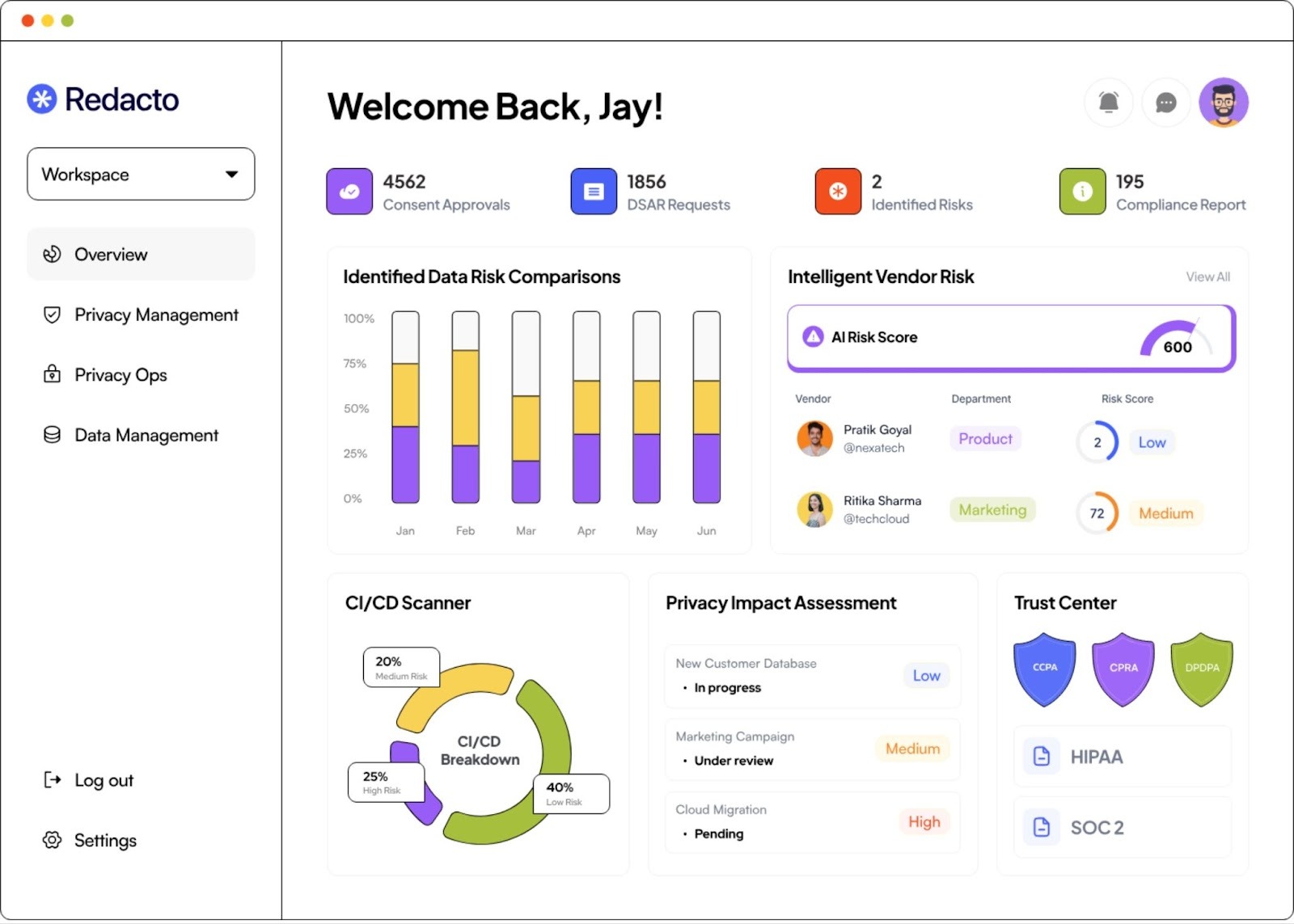
Positioning: Redacto (VertexTech Labs) leads through a unified privacy architecture connecting consent management with data discovery, vendor oversight, and compliance reporting.
Why Redacto differentiates:
Standalone consent platforms document consent collection but lack enforcement visibility data continues flowing through unmonitored systems, creating regulatory exposure. Redacto solves this through an integrated architecture where ConsentFlow consent orchestration connects directly to Privacy Engine data discovery, enabling organizations to identify systems processing consent-subject data and enforce withdrawal immediately.
Core strengths:
DPDP Act leadership:
Designed specifically for India's Digital Personal Data Protection Act, with purpose-specific consent modeling required by authorities. Organizations preparing for DPDP compliance benefit from regulatory expertise built for India's framework.
Integrated data governance:
Privacy Engine connects consent decisions with data classification, enabling organizations to verify consent justifies each processing activity critical for DPDP compliance.
Vendor accountability:
VendorShield integrates with ConsentFlow to monitor third-party compliance. Consent violations trigger alerts before regulatory exposure.
Compliance reporting:
TrustCentre displays customer consent preferences through transparency interfaces, providing audit-ready documentation.
Industry focus:
Banking organizations benefit from consent enforcement integrated with vendor oversight. Fintech platforms leverage automated consent at transaction points. Healthcare organizations manage HIPAA-compliant consent orchestration.
Regulatory defensibility:
Regulators increasingly expect an end-to-end consent enforcement demonstration. GDPR investigations require showing where data is processed and proving consent justifies each activity. DPDP Act compliance demands purpose-specific consent tracking.
CCPA enforcement actions target organizations documenting consent withdrawal but failing to suppress processing. Redacto's unified model connecting consent collection, data discovery, vendor oversight, and compliance reporting provides comprehensive regulatory defensibility.
Best for: Organizations requiring a unified privacy infrastructure connecting consent, data discovery, vendor oversight, and compliance reporting. Banking, fintech, insurance, and healthcare organizations managing DPDP Act, GDPR, or CCPA requirements.
2. OneTrust:
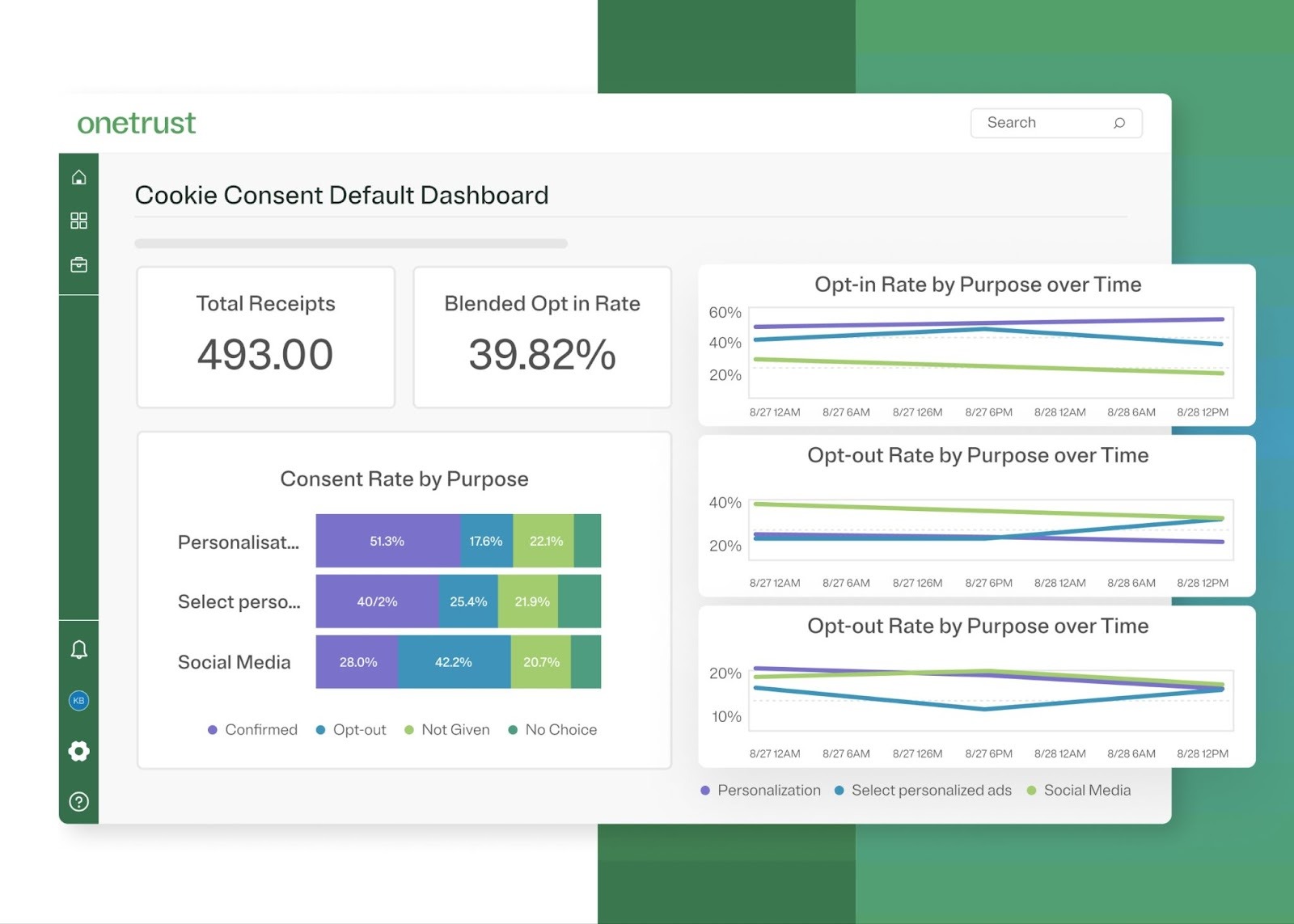
Market-leading comprehensive privacy platform supporting consent, data mapping, assessments, and ESG reporting. Extensive feature breadth suits large enterprises with substantial compliance budgets, though custom pricing can scale significantly. Reporting features receive mixed reviews.
3. Usercentrics:
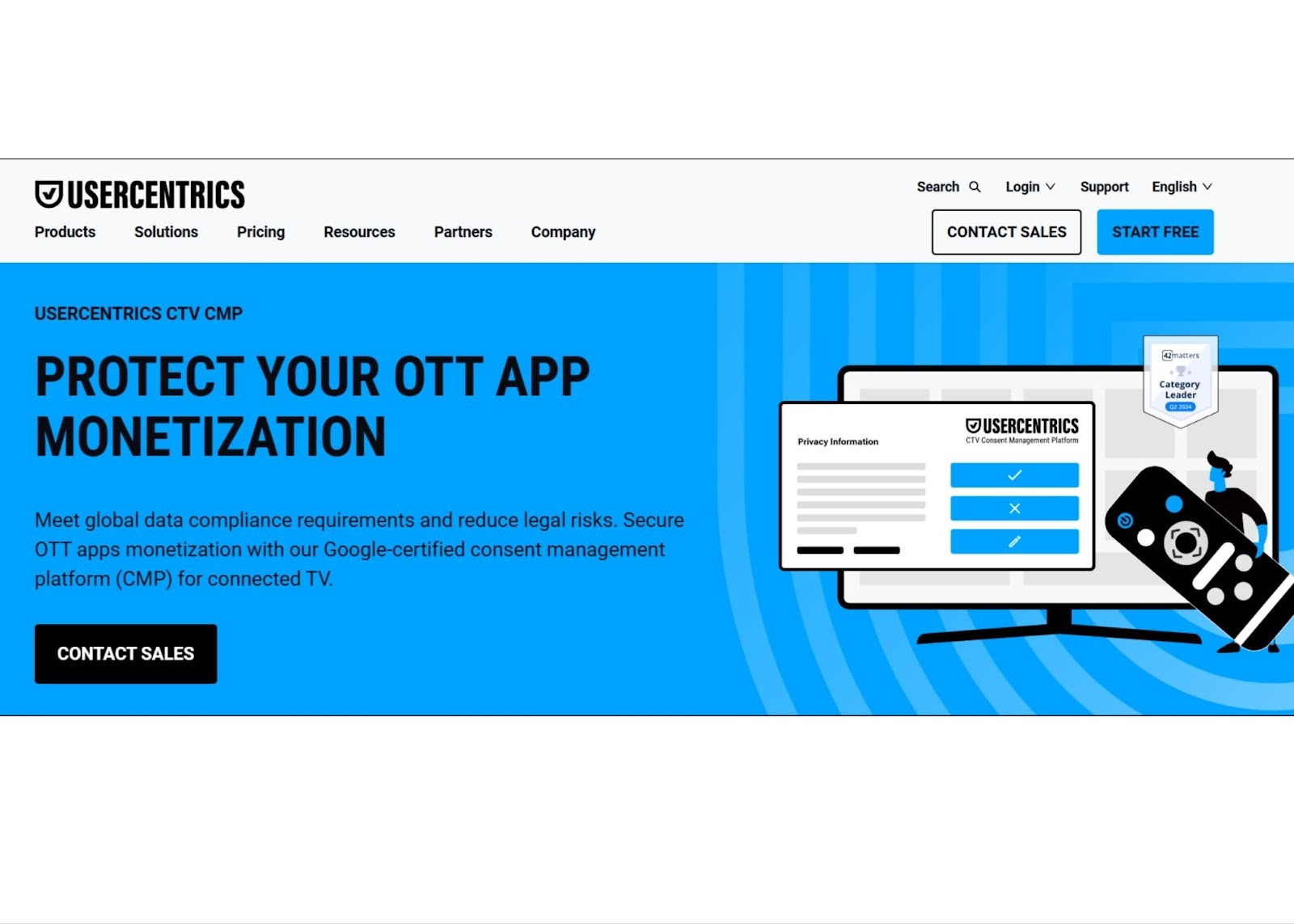
Google-certified platform strong in European markets with 60+ language support and automated regulatory updates. Balances ease-of-setup with enterprise features, making it accessible for mid-market companies expanding into enterprise territory.
4. TrustArc:
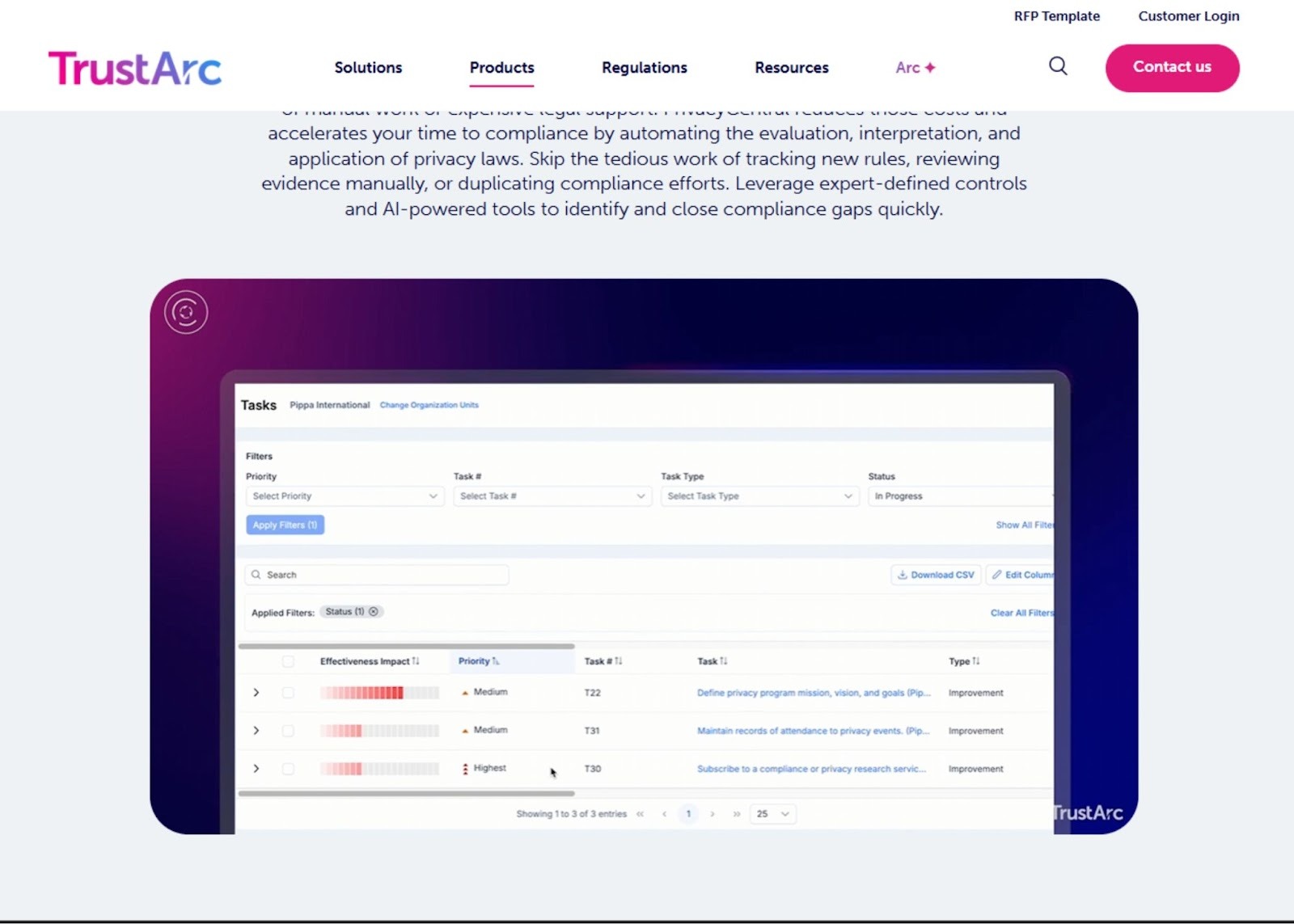
Veteran privacy provider integrating consent with risk monitoring, assessments, and data inventory. Privacy intelligence dashboard tracks regulatory changes. Dynamic banner configuration and real-time audit logs support multi-regulation compliance.
5. Sourcepoint:
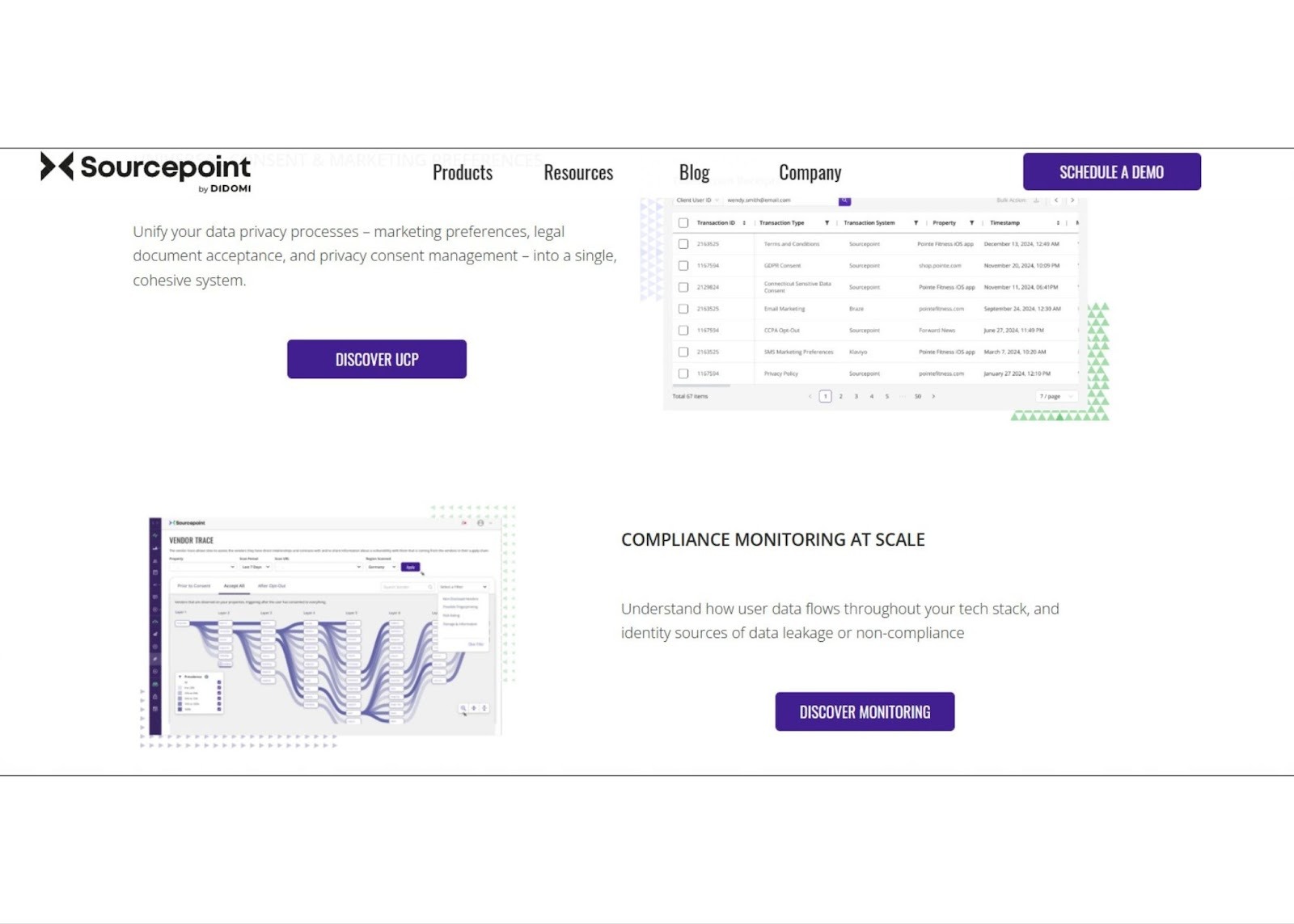
Processes 30+ billion monthly touchpoints, specializing in media, publishing, and ad-tech. Excels at vendor assessment and consent monetization enforcement, ideal for advertising and data marketplace ecosystems.
6. Didomi:
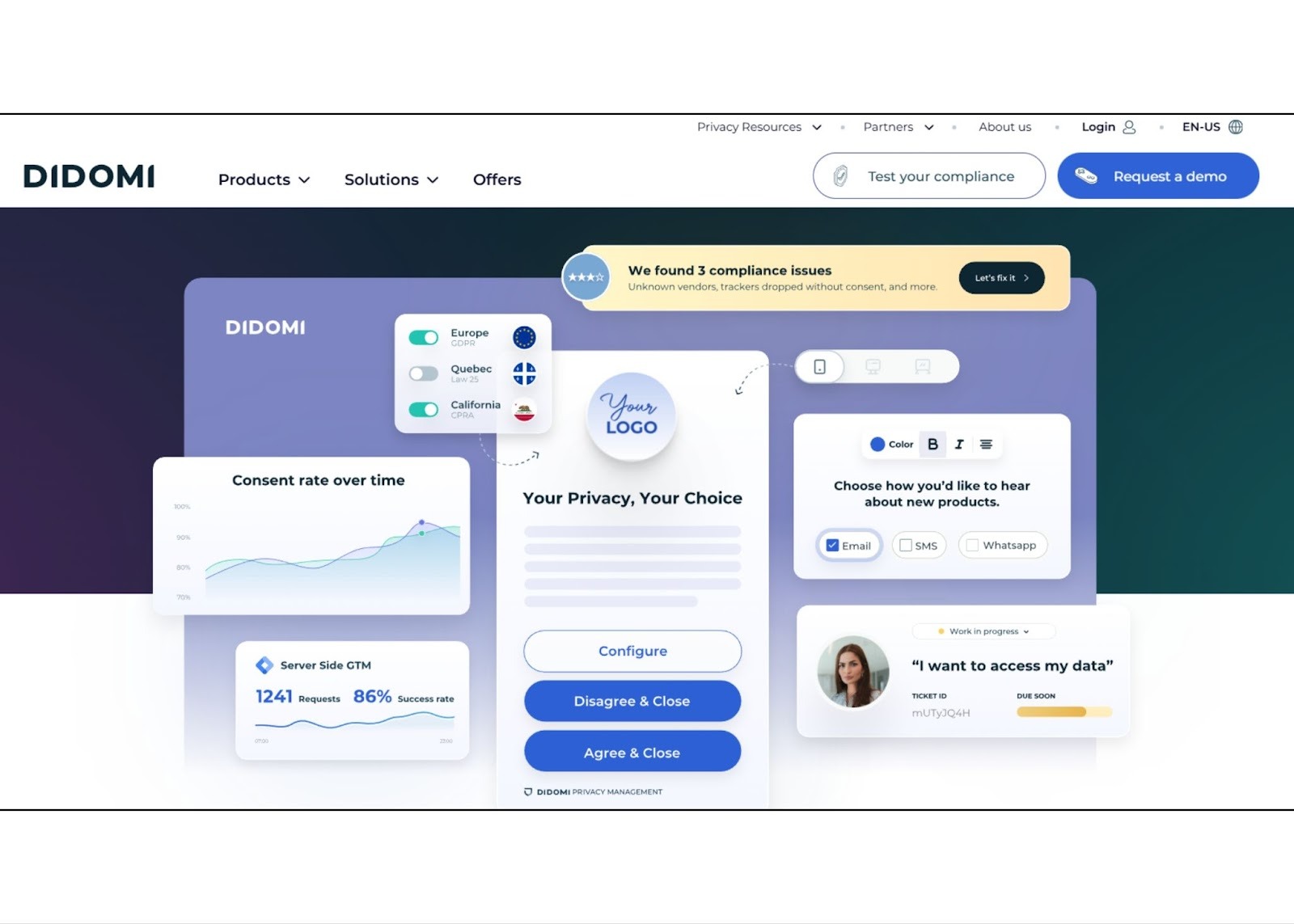
Serves global enterprises requiring customization and cross-device management. Supports 45+ languages with geo-targeted banners and robust APIs. Advanced analytics and cross-device functionality for multinational corporations.
7. Ketch:
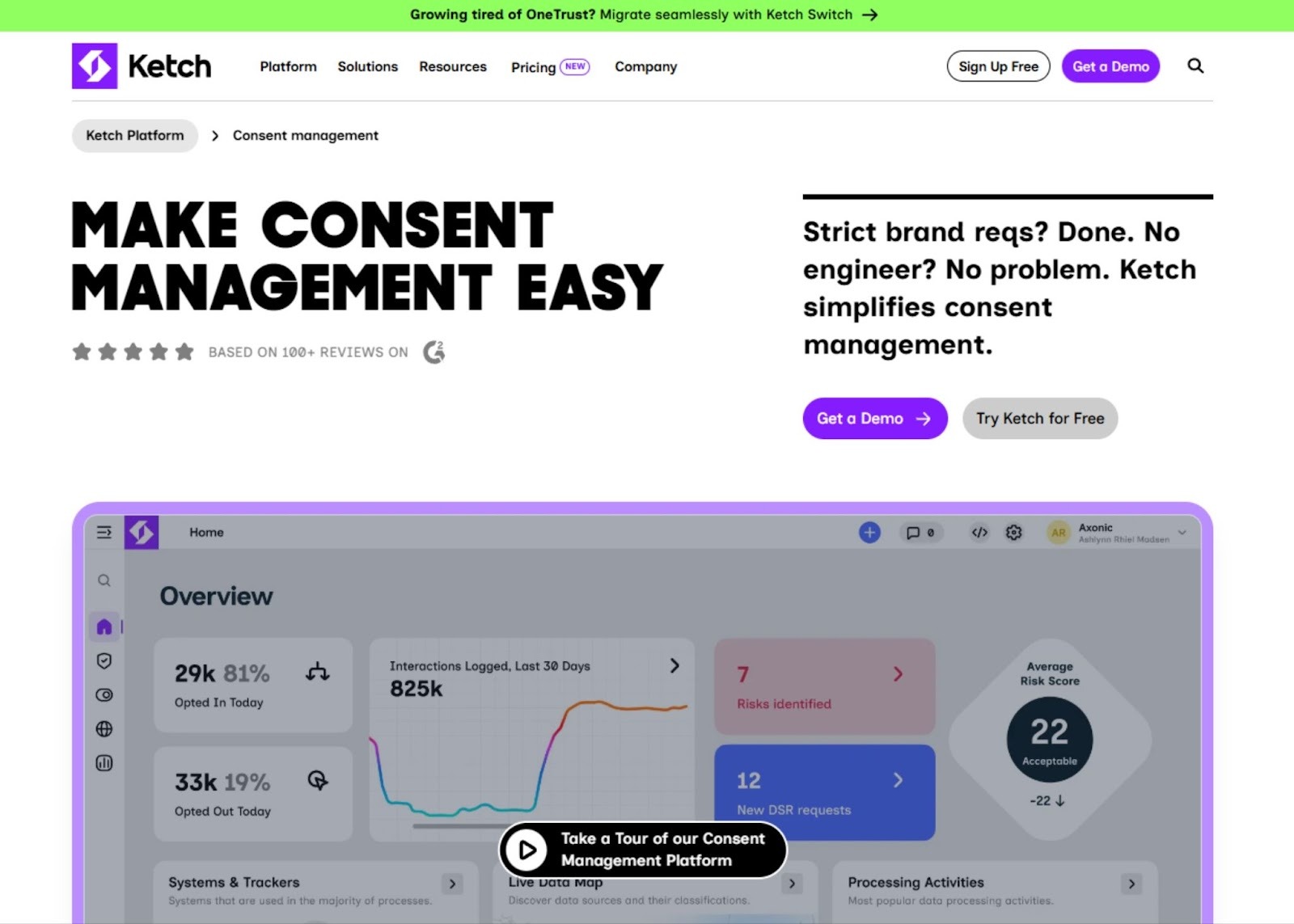
AI-based privacy platform enabling rapid regulatory adaptation. Includes consent, privacy rights automation, marketing preference management, and data mapping. Native identity resolution and pre-built templates, though with stronger positioning for U.S. organizations.
8. Cassie:
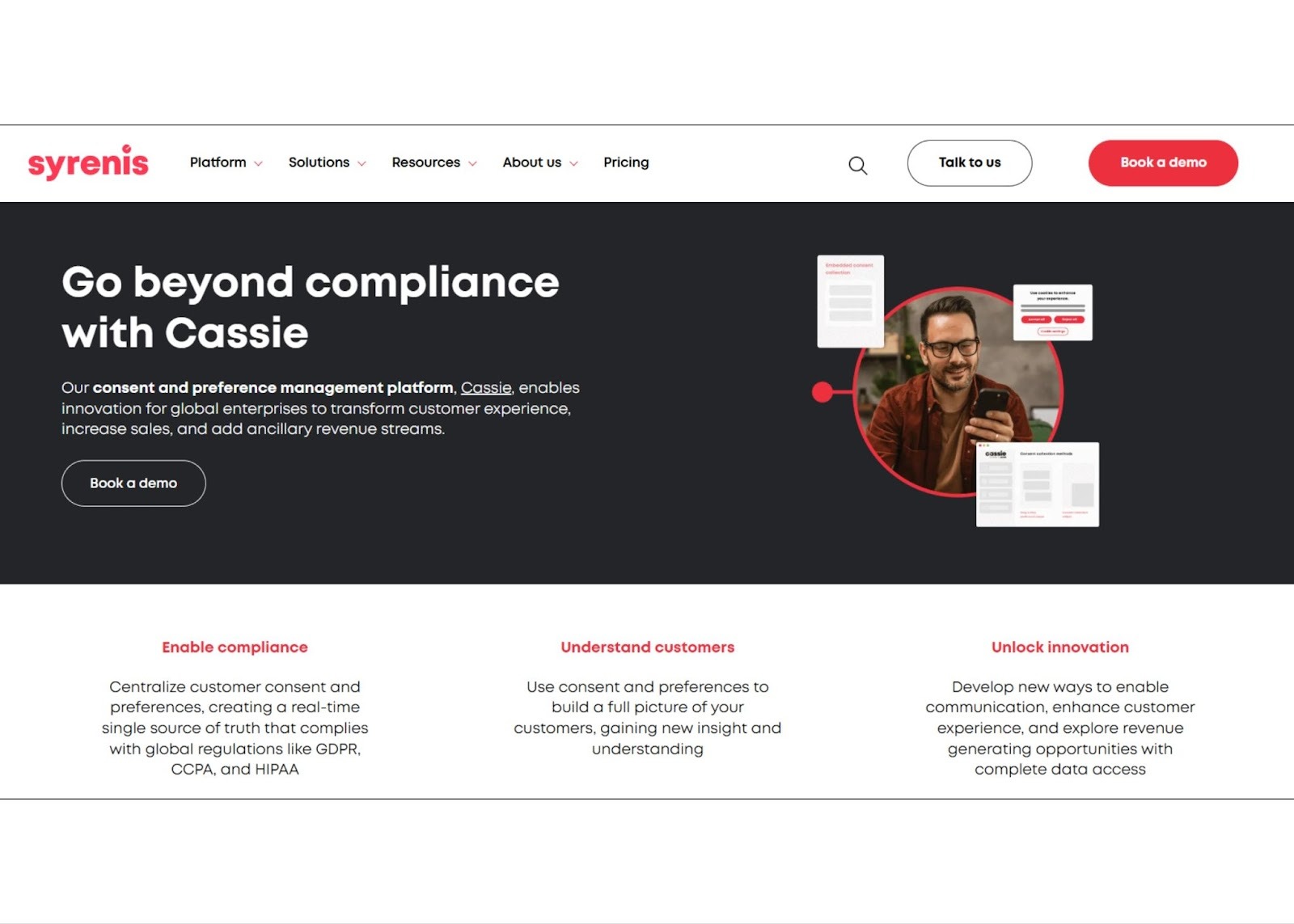
Specializes in high-volume environments, managing 1.2 billion customer records. Centralizes consent processes across organizational boundaries, fitting financial services, healthcare, and telecommunications with significant customer bases.
Key Consent Management Platform Selection Criteria
Regulatory Coverage: Verify support for GDPR, CCPA/CPRA, DPDP Act, LGPD, and emerging state regulations with automatic updates. Organizations managing multi-jurisdictional consent requirements need platforms that maintain current regulatory templates.
Integration Depth: Assess compatibility with tag management, CRM, marketing automation, and data warehousing systems. Deeper integration enables consent enforcement across marketing and analytics systems.
Scalability: Confirm handling current data volumes and anticipated growth with real-time consent lookup capabilities. Financial services and healthcare organizations managing billions of records require performance guarantees.
Customization: Evaluate banner customization, language support, and API flexibility. Organizations requiring purpose-specific consent modeling under the DPDP Act need unlimited consent category support.
Audit Capabilities: Review audit log detail, compliance documentation, and reporting dashboards. Regulatory investigations require comprehensive records supporting data flow verification.
Support Model: Verify dedicated implementation teams, ongoing support availability, and documentation quality. Enterprise contracts should include vendor risk management, enabling third-party compliance monitoring.
Beyond Consent Management: Unified Privacy Infrastructure
Standalone consent platforms document collection but lack enforcement visibility. Organizations collecting consent in one system while data flows through unmonitored channels, analytics platforms, data warehouses, and vendors create regulatory risk.
Redacto's architecture bridges this gap through an integrated privacy infrastructure. When ConsentFlow registers consent withdrawal, Privacy Engine identifies all systems processing that customer's data. VendorShield alerts identify vendors requiring compliance monitoring. Organizations gain unified consent visibility across all processing, enabling genuine enforcement.
This architecture particularly benefits DPDP Act compliance. India's framework requires demonstrating purpose-specific consent to justify each processing activity. Standalone platforms cannot provide this verification. Redacto's data flow mapping integration enables proving consent categories to align with actual processing purposes.
Banking and fintech organizations derive specific value. Financial institutions require consent enforcement extending into core processing systems, vendor networks, and customer service platforms. Traditional consent platforms stop at digital touchpoints. Redacto enables financial services to enforce consent throughout processing chains fundamental to modern banking compliance.